
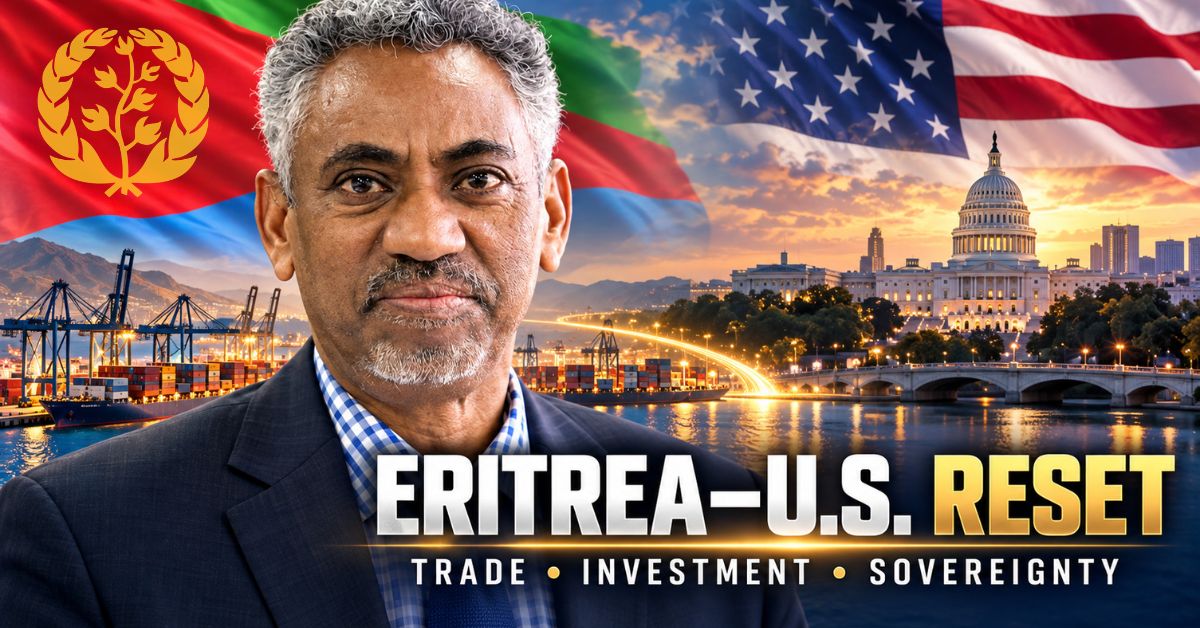
Eritrean Information Minister Yemane Gebremeskel has signaled that the expiration of U.S. sanctions could open a new phase of economic and diplomatic engagement with Washington, confirming that preliminary discussions have focused on preparing broader cooperation in investment and trade. Yemane told Asharq Al-Awsat that earlier contacts between Eritrean and American officials were intended to lay the groundwork for more comprehensive discussions at appropriate levels.
The contacts included a meeting between Eritrean Foreign Minister Osman Saleh and Massad Boulos, senior adviser to the U.S. president for Arab and African affairs, during a recent visit to Cairo. The minister said Eritrea hopes the removal of the sanctions will accelerate those discussions and create opportunities to recover economic prospects lost during the sanctions period. He described the American action as reflecting constructive political goodwill and removing an obstacle that had discouraged investment and wider international engagement.
Yemane’s statement provides the clearest indication yet that he views the sanctions expiration as more than an administrative correction. According to the minister, Eritrea is prepared to use the opening to pursue a broader relationship with Washington centered on economic cooperation rather than political dependency.
However, no investment agreements, commercial projects or timetable for formal negotiations have yet been announced. He said the detailed areas of cooperation would be determined through the appropriate diplomatic channels. The legal action taken by Washington was broader than an Eritrea-specific agreement. On September 18, the U.S. Treasury Department’s Office of Foreign Assets Control announced that the national emergency established under Executive Order 14046 had expired. OFAC subsequently removed from its sanctions list the individuals and entities designated solely under that authority.
The removals included the People’s Front for Democracy and Justice, the Eritrean Defense Forces, the Red Sea Trading Corporation and Eritrean officials previously sanctioned in connection with the war in northern Ethiopia. Washington originally imposed the measures in November 2021, accusing the designated Eritrean entities and officials of contributing to the conflict and humanitarian crisis in Ethiopia. Eritrea consistently rejected the accusations and maintained that the sanctions were politically motivated and unsupported by credible evidence.
Yemane said the measures caused substantial economic damage by discouraging potential investors and creating uncertainty around legitimate commercial engagement with Eritrea. Their removal, he argued, sends a broader message to international institutions and businesses that opportunities in Eritrea can again be considered without the same sanctions-related obstacles. The minister emphasized, however, that Eritrea’s openness to investment does not represent an abandonment of its longstanding commitment to national independence and self-reliance.
He said Eritrea would pursue sustainable partnerships based on equal and mutual benefits while avoiding disproportionate advantages and “structural dependency.” That distinction is important: Yemane is welcoming renewed American engagement, but he is not presenting the opening as an invitation for external control over Eritrean policy or strategic assets. The practical significance of the diplomatic opening will therefore depend on whether it produces concrete trade, financing and investment arrangements. Removing the sanctions clears an important legal and political obstacle, but it does not automatically resolve the other difficulties that have limited Eritrea’s access to international capital and Western markets.
Washington has also not publicly announced the scope of the bilateral cooperation under consideration. The next important development would be a formal meeting, official economic delegation or agreement identifying priority sectors and the rules governing investment. For Eritrea, the opening presents an opportunity to attract capital and technology while maintaining control over its development priorities. For Washington, improved relations could restore a channel of engagement with a strategically located Red Sea country at a time when maritime insecurity and regional competition have increased Eritrea’s geopolitical importance.
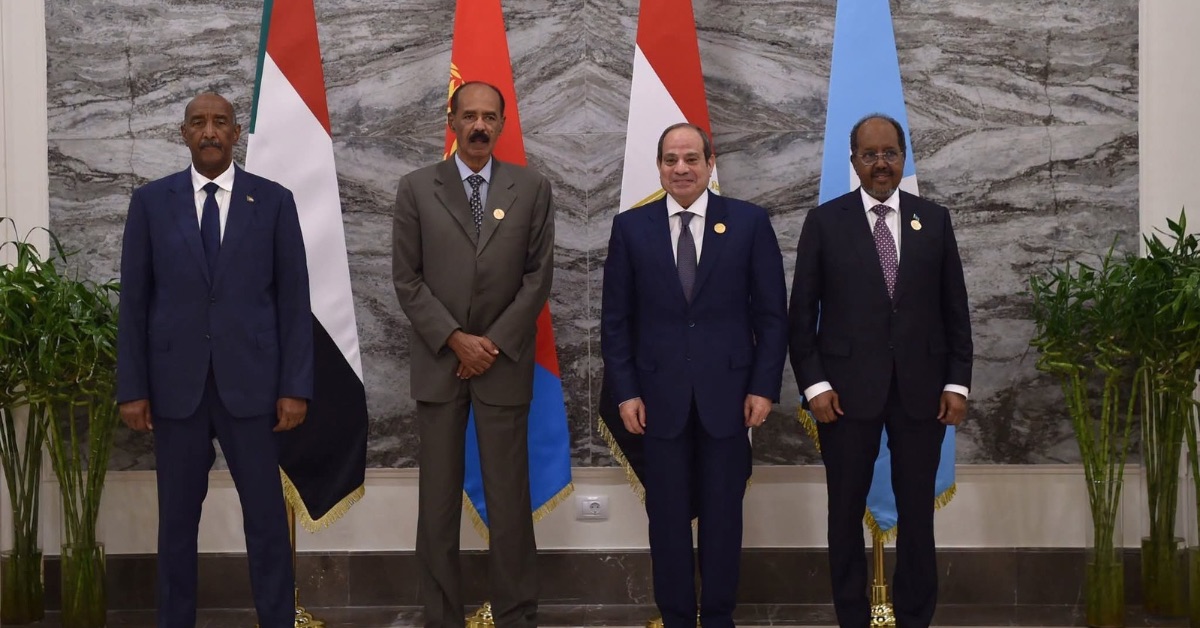
In addition, Yemane highlighted Eritrea’s growing cooperation with Egypt and other coastal states on Red Sea security. He said relations between Eritrea and Egypt have developed rapidly because the two countries share an interest in protecting the Red Sea maritime corridor and strengthening the role of coastal states in managing regional security. The minister said Eritrea, Egypt and other like-minded countries have moved beyond political declarations toward mechanisms for joint action. He identified the Council of Arab and African Coastal States of the Red Sea and Gulf of Aden as an important platform, while also pointing to shared positions concerning the conflicts in Sudan and Somalia.
Taken together, Yemane’s statements suggest that Eritrea is pursuing a carefully balanced diplomatic opening: expanding economic engagement with Washington, strengthening strategic cooperation with Egypt and other regional partners, and preserving an Eritrea-first policy grounded in sovereignty, equality and freedom from external dependency.