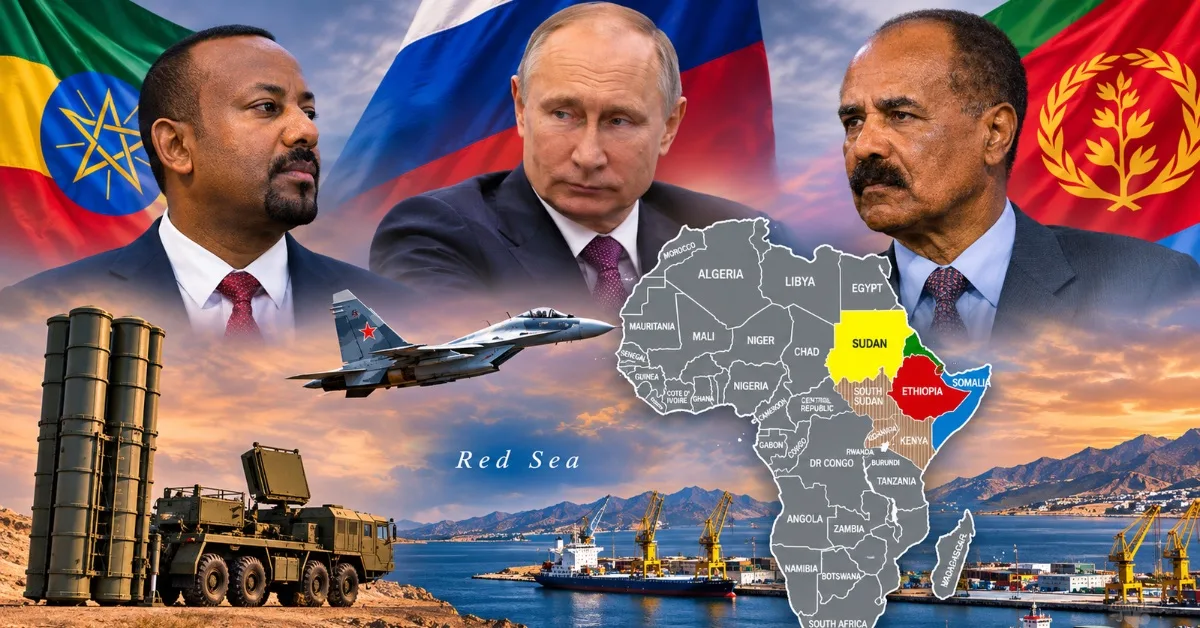
Russia has placed itself in an uncomfortable position in the Horn of Africa. On 28 October, Ethiopian Prime Minister Abiy Ahmed announced the delivery of Russian Su-35 fighter jets and plans to acquire four S-400 air-defence batteries. Two days later, Russian President Vladimir Putin welcomed Eritrean President Isaias Afwerki to the Kremlin for discussions on economic cooperation and bilateral relations. Moscow has also offered to mediate between the two neighbours, whose diplomatic relations have collapsed amid renewed fighting in northern Ethiopia and Addis Ababa’s longstanding campaign for access to the Red Sea. The contradiction is difficult to overlook. Russia is strengthening Ethiopia’s military capabilities while presenting itself as a friend of Eritrea and a potential broker of peace between them.
The arms announcement came at a particularly sensitive moment. Abiy described the acquisition as an important step towards strengthening Ethiopia’s national security and deterring aggression. He announced a package of 12 Su-35 fighters, although Russia’s state arms exporter confirmed an initial delivery of two aircraft. The S-400 systems are expected later, with no publicly confirmed delivery date. Neither government disclosed the cost or intended deployment locations. The aircraft represent a significant improvement in Ethiopia’s air capabilities, with advanced radar, long-range operations and the ability to carry sophisticated weapons. While Ethiopia has the right to modernise its armed forces, the timing raises legitimate concerns, particularly when the country remains engaged in internal conflicts and relations with Eritrea are at their lowest point in years.
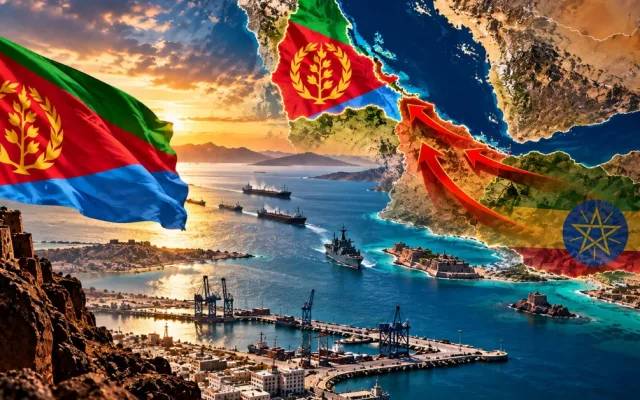
The concern is not simply that Ethiopia is purchasing modern weapons. It is the political environment in which those weapons are arriving. Since October 2023, Abiy has repeatedly presented access to the Red Sea as essential to Ethiopia’s future. His government maintains that it seeks a peaceful arrangement, but references to sovereign maritime access, particularly involving Eritrea’s port of Assab, have created deep suspicion in Asmara. Eritrea has accused Ethiopia of pursuing an aggressive territorial agenda, while Addis Ababa has accused Eritrea of interfering in its internal conflict. Both governments reject the accusations made against them. What is beyond dispute is that their relations have deteriorated sharply, making any significant expansion of military capabilities a matter of regional concern.
Eritrea’s position on the maritime question rests on a clear legal foundation. Ethiopia’s dependence on foreign ports is a genuine economic challenge, and peaceful commercial arrangements could benefit both countries. But access to trade routes does not confer ownership of another country’s territory. Eritrea’s sovereignty over Assab, Massawa and its Red Sea coastline is internationally recognised. Any agreement involving those ports must be negotiated with Asmara, not imposed through political pressure or military threats. Russia, which maintains diplomatic relations with both governments, should have no difficulty recognising that distinction.
The military implications extend beyond the Eritrean border. Ethiopia continues to face armed opposition in Tigray, Amhara and other regions. Its previous war in Tigray demonstrated how important air power, particularly armed drones, could become in determining battlefield outcomes. The arrival of advanced fighter aircraft may strengthen the government’s military position, but it also raises concerns about how those capabilities might be used in future operations. There is no verified evidence that the newly delivered Su-35 aircraft have been deployed against Eritrea or used against Ethiopian civilians. Nevertheless, Ethiopia’s record of internal warfare makes civilian protection and military accountability legitimate subjects of international scrutiny.
Against this background, the economic priorities of the Ethiopian government deserve attention. Millions of Ethiopians continue to face poverty, displacement and serious humanitarian needs, while the country’s infrastructure and public services remain under pressure. Modern military equipment is expensive not only to purchase but also to maintain, operate and support. The full value of the Russian agreement has not been disclosed, making it impossible to calculate its precise financial burden. Yet the contrast between expanding military expenditure and urgent civilian needs is difficult to ignore. Ethiopia’s leadership must explain how additional weapons contribute to lasting national security when the political disputes driving its internal conflicts remain unresolved.
For Eritrea, the Moscow summit presented a different set of opportunities. During their 30 October meeting, Putin and Isaias discussed cooperation in energy, mining, agriculture, food security, technology and infrastructure. Russia expressed interest in expanding transport links and exploring investment opportunities involving Eritrea’s roads, ports and other facilities. These sectors matter because Eritrea’s long-term security depends not only on military preparedness but also on economic strength. Better infrastructure, productive investment and expanded trade could support national development and reduce dependence on external assistance.
However, diplomatic discussions should not be mistaken for completed economic agreements. No major binding investment package, financing arrangement or construction timetable emerged publicly from the meetings. Eritrea has heard promises of international cooperation before, and the real measure of any partnership will be what it delivers. Russian investment would be valuable if it creates employment, strengthens local institutions, improves infrastructure and leaves strategic assets under Eritrean control. A relationship built primarily on political declarations would offer considerably less.
Moscow’s offer to mediate between Eritrea and Ethiopia introduces another complication. Russian Foreign Minister Sergey Lavrov indicated that his government was prepared to facilitate talks if both sides were interested. Such an initiative could provide a useful diplomatic channel at a time when direct communication has largely disappeared. But mediation requires confidence in the process. Russia’s decision to accelerate advanced weapons deliveries to Ethiopia, while simultaneously offering to help resolve the confrontation, inevitably raises questions about its impartiality. This does not automatically disqualify Moscow from facilitating dialogue, but it means any initiative must be transparent and grounded in respect for internationally recognised borders.
Russia also has its own strategic interests. Ethiopia offers a large market, military partnerships and opportunities in energy and infrastructure, while Eritrea occupies an important position along the Red Sea. Moscow has little incentive to abandon either relationship. Its approach appears designed to maintain influence across the region rather than choose between the two countries. That is understandable from Russia’s perspective, but Eritrea must judge the relationship according to its own national interests rather than assume that diplomatic friendship guarantees strategic support.
The wider Horn of Africa can ill afford another military confrontation. Sudan remains devastated by war, northern Ethiopia is experiencing renewed instability, and the Red Sea continues to face competing security pressures. An Ethiopia–Eritrea conflict would threaten civilian lives, disrupt trade and create opportunities for further foreign intervention. It would also undermine the economic potential of Eritrea’s coastline at a time when the country needs investment and greater commercial connectivity.
Eritrea should therefore approach its relationship with Russia with both openness and caution. Economic cooperation deserves serious consideration, particularly where it strengthens national self-reliance. At the same time, Asmara should maintain credible defensive capabilities, diversify its diplomatic relationships and avoid becoming dependent on any single foreign power. The country’s security cannot rest on assumptions about Moscow’s intentions or its willingness to restrain Addis Ababa.
Russia’s growing involvement in the Horn of Africa presents an opportunity for economic development, but it also exposes the limits of great-power diplomacy. Moscow may see no contradiction in supplying Ethiopia with advanced weapons while offering Eritrea investment and friendship. For Eritrea, however, the consequences of another war would be far too serious to overlook that contradiction.
The real test of Russia’s relationship with Eritrea will not be the warmth of presidential meetings or promises of future investment. It will be whether Moscow respects Eritrea’s sovereignty, supports peaceful resolution of regional disputes and avoids contributing to a military escalation that could devastate the Horn of Africa.
Eritrea must welcome cooperation where it advances national development, but its independence, territorial integrity and security must remain beyond the calculations of outside powers.