

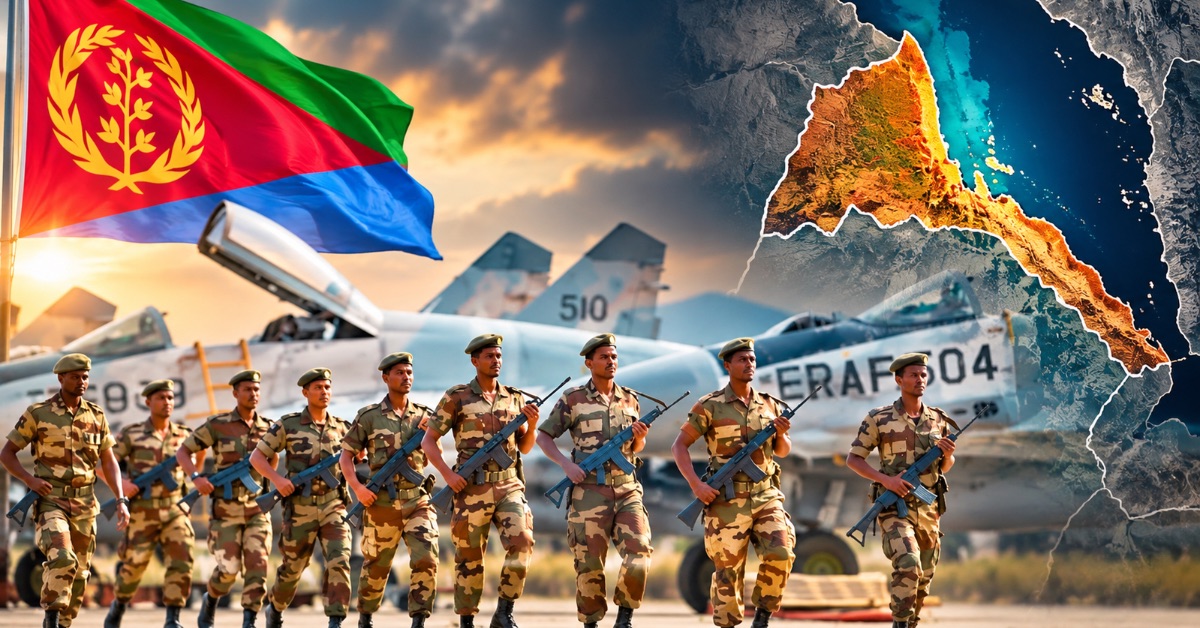
Eritrea cannot wait for danger to arrive at its doorstep before recognizing it. That is not warmongering. It is the most basic responsibility of a sovereign state.
The war unfolding in northern Ethiopia is changing quickly. Federal forces and their allies have retaken Mekelle, the TPLF has withdrawn from the regional capital, and the military contest is increasingly shifting northward. The fall of Mekelle is unquestionably a major setback for the TPLF, but it does not mean the war is over. The TPLF says it intends to continue fighting, and the question now is where that fighting goes next and how far Ethiopian forces intend to advance.
For Eritrea, geography makes that question impossible to ignore.
As Ethiopian forces move farther north, the physical distance separating a major Ethiopian military campaign from Eritrea becomes smaller. That does not prove that Ethiopia intends to invade Eritrea, and it would be irresponsible to present it as proof. But countries do not defend themselves by waiting until another government announces its intentions and troops appear at a border crossing. They watch capabilities, deployments, political rhetoric and the direction in which events are moving.
That is especially true when relations between Asmara and Addis Ababa have deteriorated so severely.
Ethiopia has accused Eritrea of supporting forces fighting the federal government. Eritrea denies it. Recent reports have also claimed the presence of Eritrean troops in northern Tigray, while Eritrean officials have rejected those reports and argued that such allegations are being used to manufacture a justification for aggression. Where independent verification is absent, these claims must remain exactly what they are: claims.
But something does not need to be proven true for the atmosphere surrounding it to become dangerous. Accusations repeated by political leaders can shape military calculations. Troop movements can be misread. A drone strike can trigger retaliation. A local confrontation can become a national one. Once two militaries begin preparing for what they believe the other side might do, events can develop their own momentum.
That is why Eritrea should remain calm, but it should not remain passive.
The Red Sea Changes the Calculation
If this were simply another round in Ethiopia’s long internal political struggle, Eritrea’s position would be much easier. Stay out of it. Secure the border. Allow Ethiopians to determine Ethiopia’s political future.
But there is another issue hanging over everything happening today: the Red Sea.
For roughly three years, Ethiopian officials, including Prime Minister Abiy Ahmed, have repeatedly elevated access to the sea from an economic concern into a strategic national question. Addis Ababa says it wants to resolve the issue peacefully and through negotiation. That qualification matters and should not be ignored.
But words also matter.
There is a profound difference between access to a port and sovereign access to the sea.
Ethiopia is a landlocked country of enormous economic weight. It has every right to negotiate better commercial arrangements with Djibouti, Somalia, Kenya, Eritrea or any other willing partner. It can seek port leases, logistics agreements, transit corridors, investment partnerships and long-term commercial guarantees. None of that threatens anyone’s sovereignty.
Sovereignty is different.
Sovereign access cannot be created by economic necessity. If sovereignty is being sought, territory is involved. And if the territory in question belongs to another internationally recognized state, then the issue is no longer commerce. It becomes territorial.
For Eritrea, there can be no ambiguity about that distinction.
Assab is Eritrean. Massawa is Eritrean. The Red Sea coastline within Eritrea’s internationally recognized boundaries is Eritrean. It is not a historical grievance waiting to be reopened, and it is not compensation owed to Ethiopia because the political map of the Horn changed three decades ago.
Ethiopia’s economic needs deserve serious discussion. Eritrea’s sovereignty does not.
This is why Ethiopian military movements in northern Tigray cannot be examined in complete isolation from Ethiopia’s continuing Red Sea rhetoric. That does not mean one proves the other. It means Eritrea would be irresponsible not to consider both when assessing its national security environment.
Eritrea Should Stay Out of Ethiopia’s War
None of this is an argument for Eritrea to enter the war in Tigray.
Ethiopia’s political crisis belongs first and foremost to Ethiopians. Whether the federal government defeats the TPLF, whether the TPLF reorganizes as an insurgency, whether the opposition alliance survives, whether a new administration governs Tigray or whether Pretoria can somehow be revived are questions that ultimately must be resolved inside Ethiopia.
Eritrea gains little from being dragged into that struggle.
The previous war demonstrated the cost of allowing Ethiopia’s internal contradictions to become regional conflicts. Another war would bring deaths, displacement, economic disruption and instability to populations that have already paid far too much for the political failures of the Horn.
Eritrea should therefore exercise restraint.
But restraint is not the same thing as vulnerability.
There is nothing provocative about strengthening defensive positions inside Eritrean territory. There is nothing aggressive about increasing readiness when a major war is moving closer to the border. There is nothing unreasonable about closely monitoring Ethiopian troop movements, improving surveillance, reinforcing vulnerable approaches and ensuring that Eritrean forces are prepared for different contingencies.
That is what states do when their neighborhood becomes dangerous.
The message should be simple enough that nobody can misunderstand it: Eritrea will not enter Ethiopia to fight Ethiopia’s war, but Ethiopia must not bring that war into Eritrea.
Deterrence Can Prevent War
Some will inevitably interpret Eritrean military preparedness as escalation. That would be a mistake.
A country does not preserve peace by making itself incapable of responding to aggression. Sometimes the clearest path to peace is ensuring that the price of violating another country’s sovereignty is understood before anyone attempts it.
That is deterrence.
Eritrea does not need threatening speeches. It does not need theatrical military announcements. It does not need to match every hostile statement coming from Ethiopia with another hostile statement from Asmara.
It needs readiness.
Quiet preparedness can speak louder than political rhetoric. Eritrea can strengthen its defenses while simultaneously telling Ethiopia, the African Union, the United States, the European Union and neighboring governments that it seeks no confrontation and claims no Ethiopian territory.
That position gives Eritrea both strategic and diplomatic clarity.
We want peace.
We will respect your border.
You must respect ours.
And if you cross it with hostile intent, Eritrea will defend itself.
There is nothing contradictory about those positions.
Do Not Wait for Certainty
The most dangerous mistake Eritrea could make would be waiting for absolute certainty about Ethiopia’s intentions.
Absolute certainty usually arrives too late.
National security planning exists precisely because governments rarely receive advance notice of another state’s final decision. Leaders change their calculations. Battlefield conditions change. Alliances shift. Political rhetoric hardens. What seemed unlikely one month can become possible the next.
That does not justify attacking another country because it might become a threat. Preventive war based on speculation would create precisely the catastrophe Eritrea should be trying to avoid.
But there is an enormous space between attacking someone and doing nothing.
That space is where Eritrea should operate today.
Watch carefully. Prepare seriously. Strengthen the border. Maintain intelligence awareness. Communicate with regional and international actors. Avoid unnecessary provocations. Keep diplomatic channels open wherever possible. And make Eritrea’s red line unmistakable.
No violation of Eritrean territory.
The distinction is important because Eritrea’s strongest position is not one of fear or aggression. It is one of confidence.
Eritrea does not need Ethiopian territory. It does not need another war. It does not need to determine who governs Ethiopia. It does not need to participate in the struggle between Addis Ababa and Tigray.
What Eritrea needs is to ensure that Ethiopia’s internal war remains Ethiopia’s internal war.
And if the conflict begins moving toward Eritrean sovereignty, the country must already be prepared.
Peace, But Not at the Price of Sovereignty
Eritrea has lived through enough war to understand its cost. That experience should make the country more committed to peace, not less. But it should also make Eritrea unwilling to gamble its security on assurances, assumptions or hope.
The best outcome remains a de-escalation of the conflict in northern Ethiopia, restoration of meaningful political dialogue among Ethiopians and a reduction in tensions between Addis Ababa and Asmara. The Horn desperately needs a period in which governments concentrate on development instead of mobilization and trade instead of territorial disputes.
But peace requires boundaries.
Ethiopia has legitimate economic interests in the Red Sea. Eritrea has sovereignty over its Red Sea territory. Those two facts can coexist perfectly well if sovereignty is respected.
Commercial access can be negotiated.
Transit can be negotiated.
Port services can be negotiated.
Investment can be negotiated.
Eritrean territory cannot be negotiated by anyone except Eritreans.
That should remain the foundation of Eritrea’s position as events unfold to its south.
Stay out of Ethiopia’s internal war. Do not exaggerate unverified reports. Do not mistake every Ethiopian military movement for an invasion. Keep the door to diplomacy open.
But prepare.
Because peace without preparedness can become vulnerability, and vulnerability in a region this unstable can invite the very confrontation everyone claims to want to avoid.
Eritrea should neither seek war nor fear preparing against one.
Its position should be calm, disciplined and unmistakable:
Eritrea seeks peace with Ethiopia. Eritrea respects Ethiopia’s sovereignty. Ethiopia must respect Eritrea’s sovereignty in return. Eritrea’s internationally recognized borders are not negotiable. Its Red Sea coast is not negotiable. And if Eritrean territory is threatened, Eritrea has both the right and the responsibility to defend it.

