
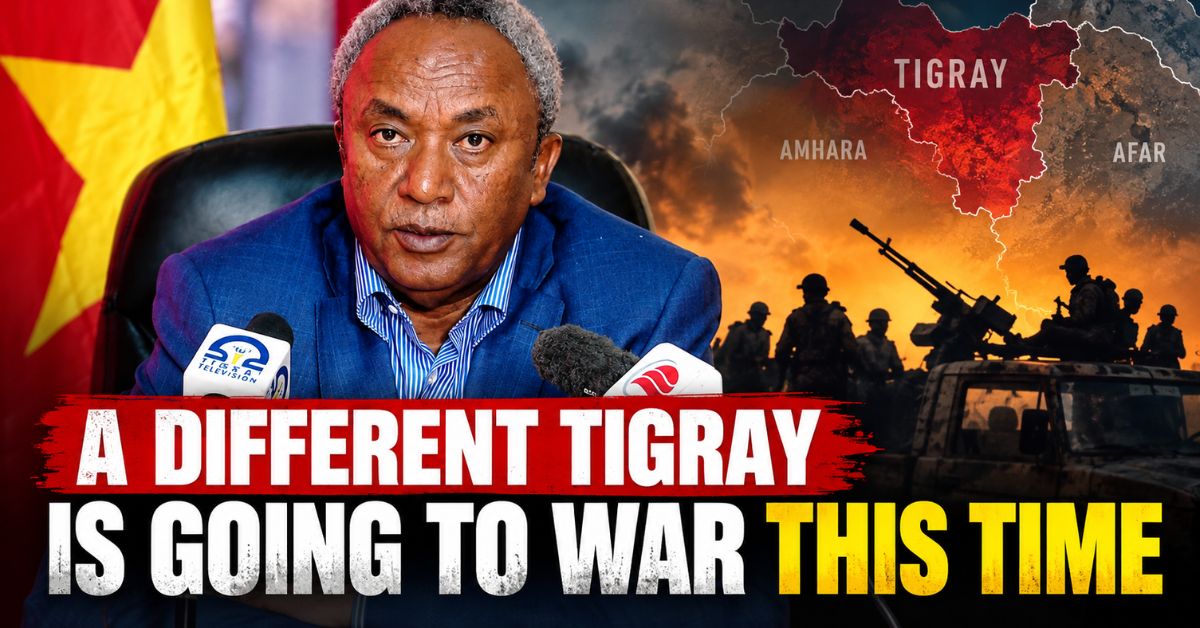
Something important is happening inside Tigray, and it may eventually prove as consequential as what is happening on the battlefield. The war is expanding. Fighting has moved beyond Tigray into parts of Afar and Amhara. Tigrayan forces have taken control of the airports in Mekelle, Axum and Shire, while fighting around Lalibela has disrupted civilian flights. But while much of the attention is understandably focused on the front lines, another story is developing inside Tigray itself. Veteran military leaders are being detained. Old political divisions are resurfacing at the worst possible moment. Former Tigrayan fighters are reportedly appearing on opposing sides of the conflict.
And questions are emerging about whether the TPLF still commands the kind of political and military unity that sustained Tigray during the 2020–2022 war. That may become one of the defining questions of this conflict. Why Tadesse Werede Matters?
Reuters reported on Thursday that four veteran Tigrayan military figures who had expressed reservations about the new war were detained overnight. Among them is Lt. Gen. Tadesse Werede. G. Tadesse is not an ordinary political opponent. He commanded the Tigray Defence Forces during the previous war and later headed Tigray’s interim administration. Whatever his current political standing, he spent years at the center of Tigray’s military establishment. His detention therefore raises an obvious question: why now?
Tadesse and other figures associated with the former interim administration have already been politically marginalized for months. If the objective were simply to remove them from political power, much of that had already happened. Restricting senior military figures just as another major war begins suggests that the issue may now be broader than politics. It may be about control.
That does not prove claims circulating online that Tadesse or the other detained commanders intended to cooperate with federal forces. There is not enough evidence to reach that conclusion. There is an important difference between distrusting someone and having evidence that the person intends to defect. But the timing still deserves attention.
The current leadership apparently considers the independence of these figures—or perhaps simply their ability to communicate with military and political networks—important enough to restrict during wartime. That tells us something about the atmosphere inside Tigray. This Is Not the Tigray of November 2020. One mistake outside observers can make is assuming that because Tigray mobilized overwhelmingly during the previous war, it will automatically do so again. The circumstances are different.
In November 2020, federal troops entered Tigray. Eritrean forces subsequently became deeply involved. Amhara forces entered disputed territories. Whatever political disagreements existed among Tigrayans were quickly overshadowed by a common perception of an existential threat. That produced extraordinary mobilization. Today’s political environment is considerably more complicated. Tigray has endured years of economic hardship and displacement. The TPLF itself has experienced serious internal divisions. Veterans have protested over their conditions. Rival political organizations have challenged the old political order.
There have also been allegations of forced recruitment in recent months. The TPLF denies conducting forced recruitment. None of this means Tigray cannot mobilize again. It means that mobilization should not simply be assumed. That distinction matters enormously. Wars are not sustained by weapons alone. They require people willing to fight, communities willing to support them, functioning command structures and enough political legitimacy to absorb enormous sacrifices.
Tigray paid an extraordinary price during the last war. Asking the population to make those sacrifices again is not a small political decision. More Allies Outside, More Questions Inside. There is an irony in the present situation. The TPLF appears to be confronting greater internal political divisions than it did during the previous war, but it now has something it did not possess in November 2020: armed allies elsewhere in Ethiopia.
The recently announced Alliance for Survival brings together seven organizations opposed to Prime Minister Abiy Ahmed’s government. Remarkably, this includes both the TPLF and an Amhara Fano organization. There are reports of Tigrayan and Fano forces fighting alongside one another against federal forces. Only a few years ago, forces from these communities were fighting one another. That tells us how dramatically Ethiopia’s political landscape has changed. But it also raises another question. How durable can this alliance really be?
Opposition to a common adversary can bring former enemies together. It does not automatically resolve the disputes between them. The territorial dispute involving Tigrayan and Amhara actors remains particularly difficult. A battlefield partnership today tells us very little about what happens if their immediate objectives are achieved tomorrow. The alliance should therefore be taken seriously. But it should not yet be treated as a unified national military movement before it demonstrates that level of political and operational cohesion. Then There Is the Western Command Question.
Reports are also circulating about problems within the TDF’s Western Command. General Migbey has reportedly been removed and replaced by General Dinku. There are additional claims that Migbey resisted handing over command. Those details remain insufficiently corroborated and should be treated carefully. But they deserve watching. If this turns out to be an ordinary command change, its significance may be limited.
If, however, a senior commander is refusing orders from the political or military leadership while other veteran commanders are simultaneously being detained, we would be looking at something considerably more serious. It would suggest that Tigray’s political divisions are beginning to enter the military chain of command. We are not yet in a position to say that confidently. That uncertainty itself is why independent verification matters.
Tigrayans May Already Be Fighting Tigrayans. Another development makes the picture even more complicated. Former TDF personnel associated with the so-called Tigray Peace Forces have reportedly aligned with federal forces, while TDF units are fighting alongside some of the federal government’s other armed opponents. If that pattern expands, describing the conflict simply as “Ethiopia versus Tigray” will become increasingly inaccurate. Tigrayan political and military actors could find themselves on opposing sides.
This would also help explain why communication with former commanders has suddenly become such a sensitive issue. Someone like Tadesse Werede does not need to personally command an army to remain influential. Years at the top of the TDF inevitably created relationships throughout the military establishment. In wartime, those networks matter. The question is not necessarily whether Tadesse intends to use those relationships against the current leadership.
The leadership may simply be unwilling to take the risk. Don’t Watch Only the Battlefield There is a tendency during fast-moving wars to obsess over maps. Who captured this town? Who controls that road? Where did the latest drone strike occur?
But I would pay just as much attention to what happens inside Tigray over the coming days and weeks. Do the military commanders remain united? Do additional senior figures break with the leadership? Do ordinary Tigrayans respond to mobilization as they did during the previous war? Does the new alliance with other Ethiopian armed groups survive the pressure of actual warfare? And what happens to the detained commanders?
These questions may ultimately tell us more about the direction of this war than today’s battlefield map. A Very Different Equation. The TPLF’s survival during the previous war demonstrated what can happen when an adversary underestimates Tigray’s capacity to mobilize. It would be equally mistaken today to assume that the political unity produced by that war still exists unchanged. The TPLF enters this confrontation with more potential allies outside Tigray. But it also appears to be entering it with deeper disagreements inside Tigray. The federal government faces its own difficult equation. Addis Ababa possesses significantly greater drone and military capabilities than it did at the beginning of the previous war. At the same time, it faces armed opponents across several parts of Ethiopia. Neither side therefore enters this confrontation under the same conditions that existed in 2020.
That makes comparisons with the previous war useful—but only up to a point. The Question Behind Tadesse’s Detention. This is why the detention of Tadesse Werede should not be dismissed as another episode in Tigray’s internal political struggle. The important question is not whether Tadesse supports Addis Ababa. There is insufficient evidence to say that. The more interesting question is why Tigray’s current leadership considers it necessary to restrict experienced military figures at precisely the moment it needs maximum political and military unity.
Perhaps the leadership is simply eliminating uncertainty before entering a difficult war. Perhaps it fears that alternative centers of military influence could emerge. Perhaps the divisions are deeper than outsiders currently understand. We should resist pretending to know which explanation is correct before more evidence emerges. But the detention of veteran commanders, reports of disputes within the military hierarchy and the existence of former TDF personnel on opposing sides all point toward a question that deserves much closer attention. Can today’s TPLF reproduce the political and military cohesion that sustained Tigray during the previous war? We do not yet know.
And that may be the most important point. The Tigray entering this war is not the same Tigray that entered war in November 2020. Neither is Ethiopia the same Ethiopia. The alliances have changed. The military balance has changed. Political loyalties have shifted. Old enemies are cooperating, while former comrades appear increasingly divided. That makes the current conflict potentially more complicated—and much less predictable—than the one that came before it. For now, the battlefield will continue producing dramatic headlines. But some of the most consequential developments may be happening away from the front lines, behind closed doors in Mekelle and inside the command structures of Tigray’s military. That is where I would keep watching.