
Something important is taking shape across the Red Sea.The new defense alignment bringing together Saudi Arabia, Türkiye and Pakistan is still young, and we should be careful not to exaggerate what it has already become. But the direction is becoming clearer. These three countries are trying to coordinate their military and political power more closely at precisely the moment when the security environment around the Gulf and Red Sea is becoming more dangerous.
For Eritrea, this is not a distant Middle Eastern development. Saudi Arabia sits directly across the Red Sea. Türkiye already has a significant presence in the Horn of Africa, particularly in Somalia. Pakistan brings considerable military weight and a nuclear deterrent into the partnership. And between these relationships sits a Red Sea that is becoming increasingly central to regional politics.
More Than a Political Statement Saudi Arabia, Türkiye and Pakistan signed the Mecca Joint Defence Agreement on August 7. At the heart of the agreement is a collective-defense commitment: an attack against one member would be treated as an attack against all three. More on that, Türkiye provided more detail on August 13.
According to Ankara, the three governments plan to establish political and military coordination mechanisms involving senior foreign and defense officials and military commanders. Cooperation is expected to include joint exercises across land, sea, air and cyber domains, as well as work on drones, electronic warfare, artificial intelligence and defense production. That tells us this is intended to be more than a ceremonial agreement. Each country also brings something different to the table.
Saudi Arabia has money, energy influence and strategic geography. Türkiye has a powerful military, NATO experience and one of the region’s fastest-growing defense industries. Pakistan has a large and experienced military and, significantly, nuclear weapons. It is too early to know how tightly integrated this partnership will eventually become. But the motivation is understandable: all three countries want more room to protect their interests without depending entirely on outside powers.
Why Is This Happening Now?
Look at the region around them. The Gulf has become increasingly vulnerable to missiles, drones and disruption of shipping. The confrontation involving Iran has once again demonstrated how quickly tension around the Strait of Hormuz can affect energy markets and international trade. On Saudi Arabia’s western side, the situation is no less serious.
Houthi attacks have made commercial shipping through Bab el-Mandeb and the Red Sea increasingly dangerous. Recent attacks have caused deaths, disrupted maritime traffic and forced shipping companies to rethink routes and security procedures. Saudi Arabia is therefore looking in two directions at once: east toward the Gulf and west toward the Red Sea.
That helps explain why Riyadh is not only strengthening its relationship with Türkiye and Pakistan but also seeking wider cooperation to protect Red Sea shipping. And this is where the story begins to move closer to Eritrea. The Middle East and Horn Can No Longer Be Separated. We often talk about the Middle East and Horn of Africa as though they are two separate political worlds. Geography tells us otherwise. The Red Sea ties them together.
What happens in Yemen affects shipping passing Eritrea and Djibouti. Instability in Sudan affects Egypt, Saudi Arabia and Eritrea. Türkiye’s role in Somalia affects the wider balance in the Horn. Gulf competition increasingly reaches into African ports, infrastructure and security relationships. The two shores of the Red Sea are becoming part of the same strategic conversation. There is also discussion about whether the new Türkiye–Saudi–Pakistan arrangement could eventually expand. Egypt has been mentioned publicly as one possible future participant. Nothing should be assumed until that happens.
But consider what such an expansion would mean. A security relationship involving Türkiye, Saudi Arabia, Pakistan and Egypt would stretch from the eastern Mediterranean and Suez Canal through the Red Sea and Arabian Peninsula toward the Indian Ocean. At that point, the African coastline of the Red Sea could hardly remain on the margins. Neither could Eritrea.
Where Does Eritrea Fit?
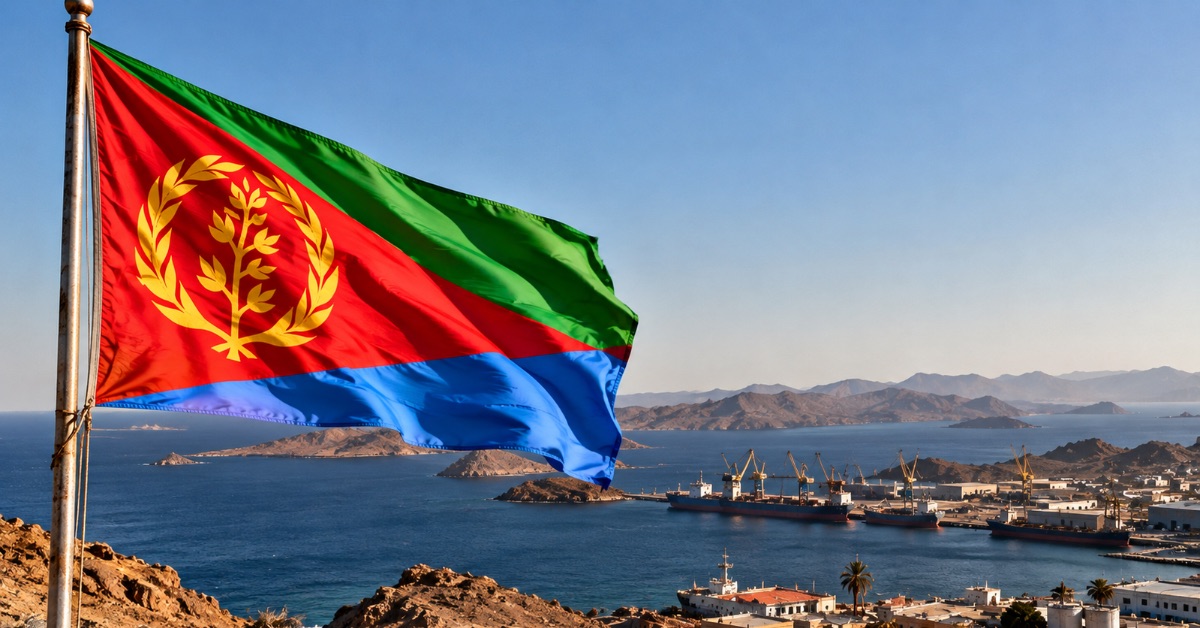
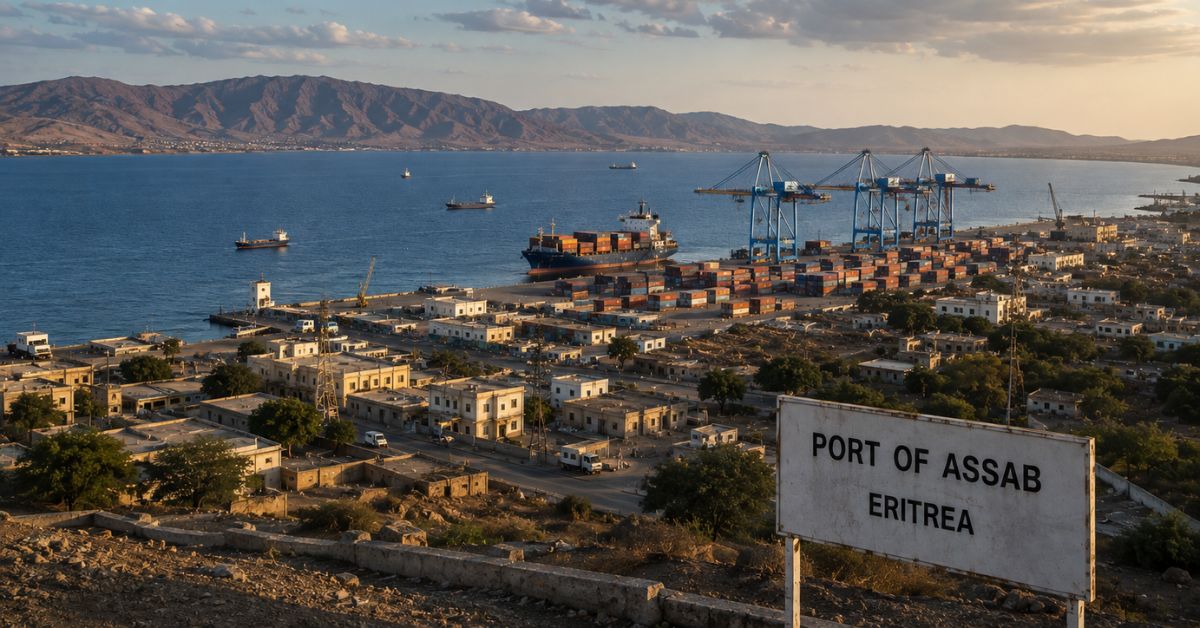
Eritrea has something that cannot be manufactured or relocated: geography. Its coastline runs along one of the world’s most important maritime corridors. Massawa faces the central Red Sea. Assab sits much closer to Bab el-Mandeb and the route connecting the Red Sea with the Gulf of Aden and Indian Ocean. That gives Eritrea genuine strategic importance. But Eritreans should also be careful about celebrating geography for its own sake. A strategically located country is not necessarily a powerful country.
The real question is whether Eritrea can turn its location into something that improves the country’s security, economy and future. That means ports that generate commerce. It means better maritime surveillance and coastal security. It means protecting fisheries and territorial waters. It means search-and-rescue capabilities, logistics, energy infrastructure and Eritreans trained to operate increasingly sophisticated maritime systems. Massawa and Assab should matter because they are helping build Eritrea not simply because foreign powers find them useful during periods of regional tension. That distinction significant.
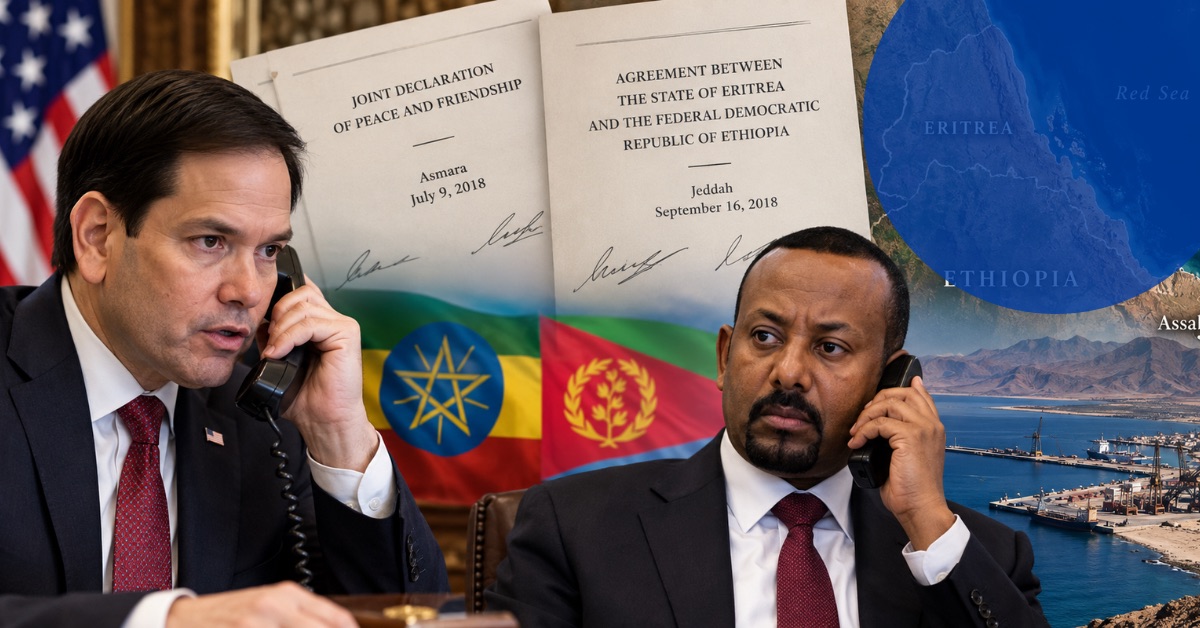
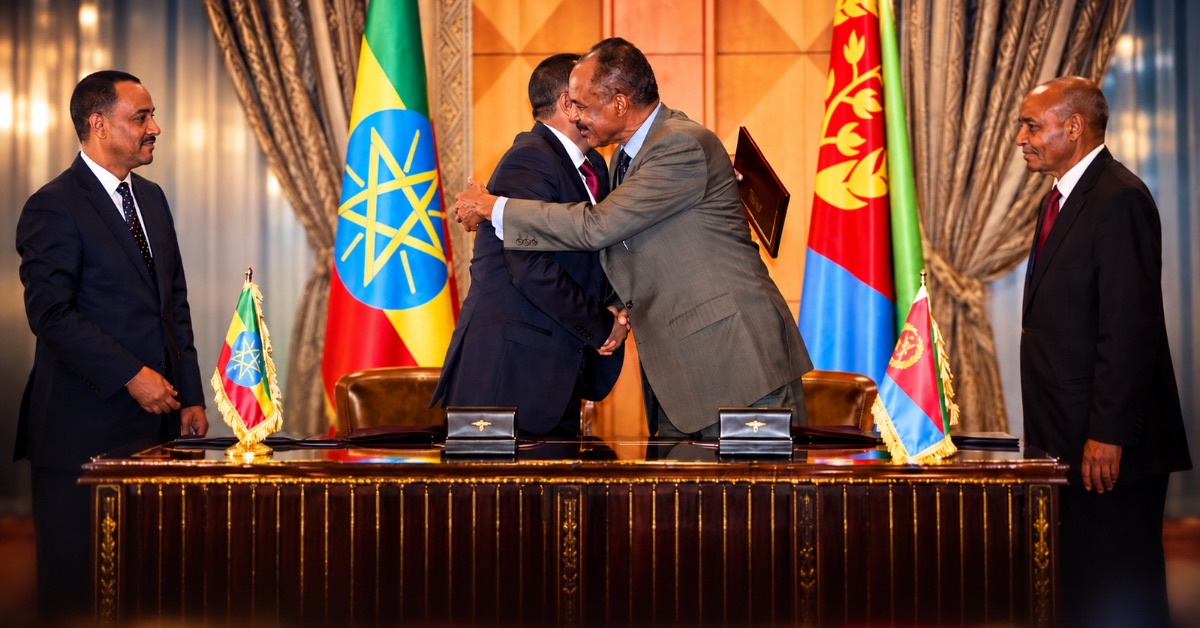
Ethiopia also Cannot Be Removed From the Conversation. There is another reason Eritrea should follow these developments carefully. For roughly three years, Ethiopia has been running a sustained political campaign around the Red Sea. What began publicly as an argument about economic necessity has increasingly been framed in strategic, historical and national-security terms. Assab has repeatedly entered that conversation.
Ethiopia’s economic concern is understandable. A country of its size naturally wants reliable, affordable and diversified routes to international markets. But Ethiopia already has commercial access to the sea. So the important question is not whether Ethiopia should have access. It is what kind of access is being demanded. There is an enormous difference between using a port and possessing sovereign rights over another country’s coastline.
Eritrea can trade with Ethiopia. Assab can serve Ethiopian commerce. Roads, railways, pipelines and economic corridors can be negotiated if both countries see a benefit. None of those arrangements requires Eritrea to surrender sovereignty. Access can be negotiated. Sovereignty cannot.
The changing Red Sea environment makes that distinction even more important. No One Else Will Define Eritrea’s Interests, There may be a temptation to look at the emerging alignment and assume that countries such as Saudi Arabia, Türkiye or potentially Egypt will naturally protect Eritrean interests. That would be a mistake. Countries have interests, not permanent obligations to Eritrea.
Saudi Arabia wants secure shipping and a stable western coastline. Türkiye wants strategic influence, markets and defense partnerships. Pakistan has its own security and economic calculations. Egypt sees the Horn partly through its concerns over the Nile, Ethiopia and Red Sea security. Sometimes those interests will overlap with Eritrea’s. Sometimes they will not. Eritrea therefore needs relationships with these countries, but it also needs enough national strength to say yes when cooperation makes sense and no when it does not. That is what sovereignty looks like in practice.
There Are Real Opportunities Here: None of this means Eritrea should stand on the sidelines. Quite the opposite. Saudi Arabia could become a much more important economic partner for Eritrea. The geographical proximity is obvious, and there is room for cooperation in ports, energy, logistics, agriculture, fisheries and investment. Türkiye also has much to offer. Its companies have extensive experience in construction, manufacturing and infrastructure, while its defense industry has grown rapidly. Pakistan offers possibilities in military training, agriculture, education, industry and technical cooperation. Eritrea should explore these relationships confidently.
But every major agreement should ultimately answer one simple question: What does Eritrea gain five, ten or twenty years from now? A good partnership should leave behind skills, infrastructure, technology, jobs and stronger Eritrean institutions. Otherwise, Eritrea risks becoming strategically useful to everyone except Eritreans themselves.
Is This an “Islamic NATO”?
Probably not, at least not yet. The comparison makes for an attractive headline, but NATO took decades to develop its command structures, institutions, military planning and political mechanisms. The Mecca agreement is only beginning. We still do not know exactly how collective defense would work in practice, how decisions would be made during a crisis or how deeply the three militaries will eventually integrate. Türkiye itself has said the agreement is not intended to replace its existing alliances. What we can say is that these countries appear to want greater control over their own security environment.
That may prove more important than the label attached to the agreement. What Eritrea Should Take From This? Eritrea does not need to rush into anyone’s camp. It also cannot afford to ignore what is happening around it. The sensible course is engagement without dependency. Talk to Saudi Arabia. Strengthen relations with Türkiye. Explore opportunities with Pakistan. Maintain strategic dialogue with Egypt and other Red Sea states. Work with partners where Eritrean and regional interests genuinely meet.
But build Eritrean capacity at the same time. The Red Sea is changing. Saudi Arabia is reassessing its security. Türkiye is becoming more influential across the region. Pakistan is moving deeper into Middle Eastern security affairs. Egypt may become more closely connected to these arrangements. Yemen remains unstable. Sudan remains at war. Ethiopia continues its Red Sea campaign.
Eritrea sits in the middle of this changing landscape. That can be a vulnerability, or it can become an advantage. The difference will not be determined in Ankara, Riyadh, Islamabad, Cairo or Addis Ababa. It will ultimately be determined by what Eritrea builds at home. A country with a stronger economy, capable institutions, secure borders, productive ports, maritime awareness and national cohesion has far more freedom to navigate competing powers than one that depends on outsiders to protect its interests.
The emerging Türkiye–Saudi–Pakistan alignment deserves Eritrea’s attention. But Eritrea’s strategy should not begin with the question of which alliance to join. It should begin with a more important question: How does Eritrea become strong enough to cooperate with everyone without becoming dependent on anyone?