The Ministry of Justice of the State of Eritrea is currently hosting a three-day dialogue titled “Justice, Development, and Geopolitics of the Horn” from September 4th to 6th, 2024. This event builds upon an earlier discussion held in April 2024, which focused on the role of Eritrean values in shaping the country’s sustainable development process.
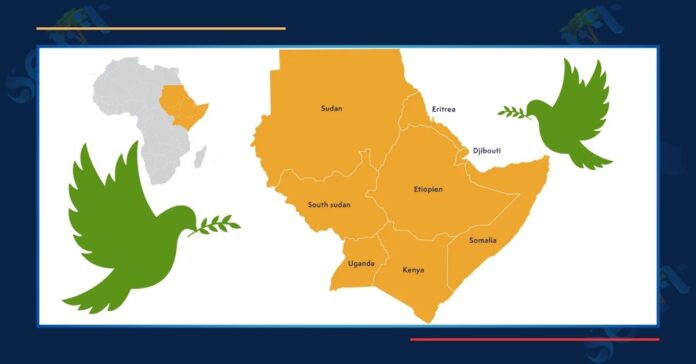
The ongoing dialogue aims to examine the broader geopolitical landscape of the Horn of Africa, the Nile Basin, and the Red Sea region, as well as the global power dynamics that influence these areas. Discussions are centered on the challenges and opportunities these geopolitical factors present for Eritrea’s nation-building and development efforts.
A key focus of the event is the interrelation between global and regional geopolitics, particularly in the context of African development and regional integration. The dialogue seeks to address how shifting global power structures are impacting the African continent, and how countries within the region can navigate these changes while fostering cross-border cooperation.
Participants are exploring the evolution of regional collaboration efforts, analyzing opportunities and challenges in initiatives that span the Horn of Africa, the Red Sea region, and the Nile Basin. The dialogue also aims to reconsider development frameworks in Africa, ensuring that strategies are better aligned with the continent’s diverse social, cultural, and economic realities.
The event is serving as a platform for sharing experiences and best practices, with the goal of fostering a common understanding of the synergies that underpin regional development processes. Insights and recommendations from the discussions are expected to guide future efforts toward sustainable development and regional integration across Africa.
As Ethiopia sounds the alarm over the transition from the African Union Transition Mission in Somalia (ATMIS) to a new peace support mission, the real question is whether this change could finally offer the Horn of Africa a shot at lasting peace. Ethiopia’s concerns are understandable, given its fraught history with Somalia and the complex regional dynamics at play, but there’s a strong case to be made that this transition could be exactly what the region needs.
Ethiopia’s apprehensions are deeply rooted in a history that cannot be ignored. In 2006, Ethiopian forces marched into Somalia, aiming to oust the Islamic Courts Union (ICU) and install the Transitional Federal Government (TFG). The invasion was intended to stabilize Somalia but ended up fueling a prolonged insurgency led by al-Shabaab, a militant group that capitalized on widespread resentment toward Ethiopia. The conflict not only deepened Somalia’s instability but also created ripple effects across the region, leading to humanitarian crises and sustained insecurity.
Moreover, it is worth mentioning that Ethiopia’s 2006 invasion of Somalia, despite its claims of helping to stabilize the country, was highly questionable—not just because the outcome contradicted those claims, but because the invasion itself violated international law. International law prohibits the invasion of sovereign countries, and the United Nations had imposed an arms embargo on Somalia, which Ethiopia’s actions flagrantly disregarded. The invasion was not merely a misguided attempt at regional stabilization; it was also motivated by Ethiopia’s internal political struggles. At the time, Ethiopia was reeling from the fallout of the 2005 elections, which were marred by allegations of fraud and subsequent political unrest. The invasion of Somalia served as a convenient diversion from these domestic issues, redirecting both local and international attention.
The subsequent establishment of AMISOM, later renamed ATMIS, was a direct response to the chaos that followed. While ATMIS has made some headway, it has also faced significant challenges. The mission’s inability to fully stabilize Somalia has been a point of contention, not just for Ethiopia but for the entire region. Now, as ATMIS prepares to step aside for a new peace support mission, Ethiopia fears that the region is being led into “uncharted waters.”
But perhaps it is precisely these uncharted waters that offer the most promise. The new mission, backed by both the African Union and the United Nations, is an opportunity to rethink strategies, build stronger alliances, and tackle the deep-seated issues that have plagued Somalia for decades. Fresh perspectives and innovative approaches could break the cycle of violence that has trapped the region in a seemingly endless loop of conflict.
However, it’s impossible to discuss the current crisis in Somalia without addressing Ethiopia’s recent moves to secure a sea outlet through agreements with a breakaway region of Somalia. This pursuit, driven by Ethiopia’s strategic interests, violates Somalia’s sovereignty and territorial integrity and has significantly exacerbated the complexity of the situation. Ethiopia’s actions have not only added to Somalia’s internal challenges but have also created new tensions across the Horn of Africa, complicating efforts to stabilize the region.
Critics might argue that Ethiopia’s concerns about the new mission are less about regional stability and more about safeguarding its own geopolitical ambitions. There’s truth in this observation. Ethiopia has long been a dominant player in the region, and the transition could signal a shift in the balance of power. But rather than resisting this change, Ethiopia could seize the moment to reinforce its role as a leader in peace-building. Embracing the transition could allow Ethiopia to shape the new mission in ways that serve both its interests and those of the wider region.
The new mission also opens the door to deeper diplomatic engagement. For too long, the approach to Somalia has been heavily militarized, with little emphasis on the political and social reconciliation necessary for sustainable peace. By focusing on dialogue and rebuilding trust among conflicting parties, the new mission could achieve what ATMIS struggled to do: create the conditions for lasting stability.
But for this to happen, Ethiopia and other regional players must be willing to set aside short-term gains and territorial ambitions in favor of a collective approach that prioritizes peace and stability. The international community, led by the AU and UN, is ready to support this effort. Still, the success of the mission depends heavily on the cooperation and goodwill of Somalia’s neighbors.
In the end, the transition from ATMIS might just be the fresh start the region needs. But it will only succeed if all parties, including Ethiopia, commit to a future where regional stability takes precedence over individual interests. The stakes are high, and the region’s leaders must recognize that the potential benefits of this transition could far outweigh the risks—if they are willing to embrace a more cooperative and peaceful future.
As I begin writing this article on September 2nd, 2024, it marks a week since Berhane Abrehe passed away at Asmara Air Force Hospital, following a stroke he suffered in prison – an event that ultimately claimed his life. When I heard the news, I was saddened but not entirely surprised. Berhane’s health has been deteriorating for years, even during his tenure as a Finance Minister. Denying him access to medical treatment abroad while keeping him in prison was essentially a death sentence, and of course a gross violation of human rights.
Berhane Abrehe was the catalyst for my deeper engagement with Eritrean politics. I vividly remember being on a family vacation in Fort Lauderdale, Florida, when I first heard his announcement about the publication of his book.
Before learning about the former finance minister, my understanding of Eritrean politics was naive and superficial. However, when Berhane announced the release of his two part books (Hagerey Eritrea 1 & 2), which was highly critical of the Eritrean government, I was both curious and taken aback. Despite my limited knowledge on Eritrean politics at the time, I knew enough to realize that making such a bold statement could easily lead to imprisonment.
It wasn’t until two years later that I connected with Berhane Abrehe’s son, Efrem, online. We set up a Zoom call, during which I learned more about his family, his father’s cause, and Efrem’s efforts to continue his father’s struggle. Efrem is very much a reflection of his father – he speaks softly, remains calm, and is direct when discussing topics concerning the issues in Eritrea, never beating around the bush. Like his father, he is a man with principles and values.
Two years after that call, Efrem informed be that preparations were underway to translate Berhane Abrehe’s book “Hagerey Eritrea” into English – a translation that is now available on Amazon. Since I couldn’t read Tigrinya, this was my chance to finally understand Berhane’s thoughts and perspectives.
From reading the book, my observation was that Berhane Abrehe’s “Hagerey Eritrea” offers a deep analysis of Eritrea’s history, politics, and its strategic position, shedding light on the nation’s anti-Western sentiment and the challenges it faces. The book provided valuable insights into shaping Eritrea’s foreign relations. In the second part, Berhane elaborates his experience as a Finance Minister, highlighting the mismanagement under President Isaias and the need for a transitional government. This book was the third (and more recent one) that allowed me to learn about the inter-party/government dissent.
Berhane knew the risks he was taking, yet he chose to proceed and ultimately paid with his life. When news of his passing spread, condolences poured in not only from the opposition, but from also people that support the government! Surprisingly, the veteran-turned-finance minister was buried in full military honors-a gesture that highlights the peculiar nature of Eritrean politics.
Regardless of the intent behind his burial at the Asmara Patriots Cemetery with military honors, Berhane truly deserved it. From organizing the Eritrean revolution in Addis Ababa University and within the diaspora in the United States, to returning to the motherland to dedicate his life to the struggle, Berhane was undeniably a patriot. What makes him even more patriotic, however, is his unwavering courage to stand up for his beliefs, even when he stood alone with only the support of the diaspora.
While I wish that Berhane would have lived long enough to be freed from prison and meet his kids for several more years, I am somewhat comforted that he is no longer suffering and is at peace. Heaven has gained a new angel. My condolences goes out to Berhane’s, and his 4 amazing children Efrem, Adiam, Miriam, and Simon, as well as his wife Almaz.
Ethiopian Airlines has announced the suspension of all flights to and from Asmara, Eritrea, effective today. The decision comes in response to what the airline described as “very difficult operating conditions” within Eritrea, which it claims are beyond its control.
This suspension follows a notice issued by the Eritrean government in July, which had already cast doubt on the airline’s continued operations in the country. Many Eritreans had previously expressed grievances over what they perceived as unfair treatment and excessive pricing by the airline. Some experts suggest that these widespread complaints may have influenced the Eritrean government’s decision to issue the notice. The suspension of flights now adds another layer of complexity to the already strained relations between the two nations.
Since its inception in 1963, the Organization of African Unity (OAU) and its successor, the African Union (AU), have been hosted by Ethiopia. Emperor Haile Selassie of Ethiopia was its first OAU chairman. Among the major pillars of the African Union’s mission is safeguarding the sovereignty and territorial integrity of member states. Affirming commitments to its objectives, in its Cairo Declaration of Article 2 of resolution 16(1), the OAU pledged the independent African states to respect their inherited colonial borders. Through the Cairo Declaration, the OAU asserted that colonial borders are a sacrosanct boundary of African countries. In its effort to promote peace and security throughout the continent, the African Union established the Peace and Security Council in December 2003. The specific goal of the Peace and Security Council (PSC) is the “prevention, management, and resolution of conflicts.” In line with the above agreements and objectives of the African Union, we will see why the African Union’s headquarters needs to be removed from Addis Ababa, Ethiopia.
ETHIOPIA IS A THREAT TO REGIONAL PEACE.
Somalia:
Contrary to the objectives of the African Union, Ethiopia has been a source of instability in the Horn of Africa region. Following the 1977–1978 border war with Somalia, Ethiopia worked hard to make Somalia a failed state for three decades. In 2006, when Somalis started to organize themselves under the Union of Islamic Courts and began to bring normalcy to Somalia, Ethiopia invaded Somalia. The invasion of Somalia by Ethiopia created Al-Shabaab. In the pretext of fighting Al-Shabaab, Ethiopia is still in Somalia. According to the United Nations monitoring group report, Ethiopia, coupled with Yemen, is a major source of arms and logistics for Al-Shabaab. Until this day Ethiopia is working hard to create friction between the Somalia federal states and the federal government. Ethiopia arms the federal states of Somalia without the knowledge of the federal government. Its army crosses to Somalia as if Somalia were no man’s land. It invites Somalian federal state presidents to Addis Ababa without the knowledge of the federal government. As a continuation of its persistent effort to disremember Somalia, recently Ethiopia has signed a Memorandum of Understanding (MOU) with the breakaway unrecognized Somaliland. The MOU states that, in exchange for a share in Ethiopian Airlines and recognition of Somaliland as an independent country, Ethiopia will get a 20 km seacoast for building a naval base and commercial port. Such an agreement has all the signs that indicate Ethiopia wants Somalia to remain a failed state.
Here is why:
• The MOU does not involve the Government of the Federal Republic of Somalia. Signing an agreement with Somaliland, which the world recognizes as part of Somalia, is in contravention of the African Union’s commitment to respect the territorial integrity and sovereignty of a member nation Somalia. If Ethiopia wanted to get a seacoast from Somalia, it should have negotiated with the Federal Government of the Republic of Somalia.
• Ethiopia is taking advantage of a neighboring country that is going through multiple challenges. Recently Somalia has been showing progress, especially in its security sector. Neighboring countries like Eritrea have trained future Somalian Navy, Airforce, and Mechanized units. Such an effort to reconstitute Somalia did not bode well with Ethiopia. That is why Ethiopia is rushing to derail the effort to bring Somalia back from the Abyss. Again, without the knowledge of the Somali Federal government, it is training and supporting the Somaliland police and paramilitary groups. The bottom line is Ethiopia does not recognize the sovereignty and territorial integrity of Somalia, which is in contravention of the Cairo Declaration of Article 2 of Resolution 16(1).
• The MOU could antagonize Ethiopia with China, Turkey, Spain, and other countries that have similar secessionist problems. In the case of China, a major lender to Ethiopia, the recognition of Somaliland could pave the way for Taiwan to be recognized by the United States and some countries in Europe. Accordingly, China is expected to oppose the possible recognition of Somaliland by Ethiopia or any other country.
• The MOU does not have economic benefits to Ethiopia. The straight-line distance between Addis Ababa to Lughaya, Somaliland is 930 km. To build a road, a commercial port, and a naval base in Lughaya, Ethiopia will need billions of dollars that it does not have. Moreover, Ethiopia must pay an annual lease to Somaliland calculated based on an average of what Djibouti gets from leasing its land to foreign countries that have bases in Djibouti. For instance, the US base in Djibouti is 500 acres or 2.2 square km. and it pays $60 million a year. You can imagine how much Ethiopia needs to pay for the 20-kilometer seacoast. Even if Ethiopia pays half of what the USA pays to Djibouti, it is going to be a significant amount of money. All this money will be expended to show the world that Ethiopia has a navy on a leased base in Somaliland.
• The MOU is a danger to Ethiopia itself. Ethiopia is currently fighting with an Oromo separatist group, and the Tigrayans have harbored their long-held interest in separating from Ethiopia. Thus, the recognition of Somaliland by Ethiopia could open a floodgate for other countries including Somalia to recognize and support Ethiopian secessionist groups.
Eritrea:
After being colonized by Italy for 50 years (1889-1941) and ten years (1941-1951) under the British Interim Administration, the United Nations forced Eritrea to be federated with Ethiopia in 1952. In 1962, Ethiopia’s Emperor Haile Selassie unilaterally dissolved the Federation and annexed Eritrea, triggering a 30-year armed struggle in Eritrea. Eritrea, which had a distinct flag, parliament, and national boundaries based on the 1900, 1902, and 1908 colonial agreements between Ethiopia and Italy, was turned into an administrative region of Ethiopia. Although the annexation of Eritrea happened two years before the 1964 Cairo declaration, it was a clear indication that Ethiopia had not been committed to peace and security in Africa. After 30 years of war and destruction, the Eritrean People’s Liberation Front (EPLF) completely liberated Eritrea in 1991. Through the UN and the AU-monitored referendum, Eritrea became an independent country on May 24, 1993. Again, in violation of the 1964 Cairo declaration, in 1998 Ethiopia claimed the Badme region of Eritrea and conducted a two-year devastating war against Eritrea. In 2002, the Eritrea and Ethiopia boundary commission based on the colonial agreements of 1900, 1902, and 1908 declared Badme was an Eritrean territory. Ethiopia rejected the ruling and occupied Badme and other Eritrean territories for twenty years. As a continuation of the Ethiopian leader’s act of undermining colonial boundaries recently, the current Prime Minister of Ethiopia Dr. Abiy Ahmed attempted to replace the 1964 Cairo declaration with Ethnic-based boundaries. He argued that because the Afar Ethnic group lives in both Eritrea and Ethiopia, the Ethiopian Afars should have a say on the Eritrean Red Sea. He continued to say because Somalis live in both Ethiopia and Somalia the Ethiopian Somalis should have a say on the Indian Ocean. In violation of the 1964 OAU declaration, he claimed to have a historical right to own a port and corridor to the sea. Recently he has allowed an Afar ethnic secessionist group conference to be held in Ethiopia. These statements indicate that Ethiopia is not serious about the 1964 Cairo declaration and the 1982 UN convention or Law of the Sea.
Sudan:
Ethiopia’s continuous border conflict with Sudan in the Alfashaga region also indicates Ethiopia’s lack of commitment to settle international border problems in line with the 1964 Cairo Declaration. When the Tigray war started, Sudan reclaimed what it called land that was occupied by Ethiopia. The border problem between Sudan and Ethiopia is a dormant conflict that could erupt at any time. Also, recently, some news has been circulating that Ethiopia has become the United Arab Emirates’ weapon transshipment destination for Sudan’s reengage general Mohammad Hamdan Dagalo aka “Hemedti”. Again, such interference in the affairs of a sovereign nation is another evidence that Ethiopia is a destabilizing factor in the Horn of Africa.
ETHIOPIA HAS A LONG HISTORY OF VIOLENT REGIME CHANGES AND PERSISTENT CONFLICTS:
Focusing on the history of modern Ethiopia, Emperor Haile Selassie, the first OAU chairman, was overthrown in a violent military coup by a Marxist–Leninist junta, the Derg. On the morning of 23 November 1974, the Derg executed 54 Haile Selassie’s Ministers, and six were killed in a shootout with the executioners. Haile Selassie was assassinated on 27 August 1975 by the then Ethiopian Military Junta. The catastrophic famine of 1983–1985 was what brought the Derg junta government the most international attention. Mengistu’s government is estimated to be responsible for the deaths of 500,000 to 2,000,000 Ethiopians, mostly during the 1983–1985 famine in Ethiopia, and close to 750,000 people due to the red terror execution of civilians. Consistent with what the Derg military Junta did to Haile Selassie, after waging a war for 17 years, the Tigray Liberation Front (TPLF) toppled the Derg Marxist Leninist Junta in 1991. Although the TPLF is credited with what resembles an economic change in Ethiopia, the ethnic-based federalism system it established continues to be a time bomb in Ethiopia. Ethnic conflicts in Ethiopia are believed to have killed close to two million and displaced five million Ethiopians. The Oromo and Amhara youth uprising toppled the Tigray liberation front-led government in 2018 and brought the current Prime Minister, Dr. Abiy Ahmed, to power. Although in the beginning, the transition of power seemed peaceful, it was followed by a deadly conflict between the Ethiopian Federal Government and the TPLF. The conflict resulted in the death of close to two million people in Tigray, Amhara, and Afar and the widespread destruction of property and infrastructure. Regardless of the ongoing wars in Amhara and Oromo, recently the Prime Minister of Ethiopia Dr. Abiy Ahmed made a dangerous speech to his parliament that could destabilize the whole Horn of Africa region. Ethiopian leaders continue to have a strong appetite for conflict, and they do not seem to survive without it. In the meantime, people in Tigray and Amhara are dying of hunger, and the federal government is warning the state governments not to say anything about it. The Abiy government does not want anything that interferes with his hot propaganda topic that Ethiopia got access to the sea. The news has become a staple of state-controlled activists, Radio, and TV, and it will continue for months to come. Again, such statements indicate that Ethiopia is not serious about the 1964 Cairo declaration and the 1982 UN convention or Law of the Sea.
CONCLUSION:
Why would the African Union station its headquarter in a country like Ethiopia that does not respect its overall mission and specific agreements, signed and ratified by member states? The saddest part of the story is a leader, Prime Minister Abiy Ahmed, whom Ethiopians and people of the neighboring countries hoped would change the trajectory of war and conflicts in Ethiopia and received a noble prize, has become the prime instigator of war in Ethiopia. On top of the ongoing wars in Amhara and Oromo and the dormant deadly conflict in Tigray, Prime Minister Abiy Ahmed is eying an invasion of neighboring countries, especially Somalia and Eritrea. Therefore, Ethiopia’s continuous disregard for the 1964 Cairo declaration on colonial boundaries and its persistent internal conflicts do not reflect the values of the African Union. The Ethiopian utter disregard for the African Union’s declarations and agreements is making the African Union weaker and partial. The recent threat of the Prime Minister on neighboring countries and its MOU with the unrecognized breakaway state of Somalia should be a warning bell to the African Union. Ethiopia has continued undermining the African Union’s declarations and agreements, and it is time for the African Union to put an agenda, about moving its headquarters from Ethiopia, on its upcoming annual leaders’ summit. Given the strong grip Ethiopia has on the African Union, putting such an agenda for discussion may not be easy. However, if the African Union wants to remain relevant, it must send a strong warning to Ethiopia. Ethiopia is a bad example to Africa and the African Union should not become an accessory to that bad behavior.
September 1, 2024 — Egypt has formally appealed to the United Nations Security Council regarding recent developments related to the Grand Ethiopian Renaissance Dam (GERD), intensifying diplomatic tensions in the already volatile Horn of Africa. The appeal, delivered by Egypt’s Foreign Minister, comes in response to Ethiopia’s unilateral actions concerning the fourth and final filling of the dam, which Egypt views as a direct threat to its water security and regional stability.
The Egyptian Ministry of Foreign Affairs’ statement reaffirmed Egypt’s firm opposition to Ethiopia’s actions, labeling them a violation of international law. It emphasized that Ethiopia’s approach jeopardizes the water security of downstream countries, particularly Egypt and Sudan, and poses a significant threat to regional peace.
Adding another layer of complexity to the situation, Egypt’s appeal to the Security Council coincides with heightened regional tensions following its military deployment in Somalia—a move that has been strongly condemned by both Somaliland and Ethiopia. This deployment has further strained relations between the nations, with Ethiopia grappling with accusations of destabilizing actions in Somalia, raising concerns about its broader regional intentions.
As Egypt remains committed to protecting its rights in the Nile Basin, these intertwined disputes underscore the fragile nature of regional security in the Horn of Africa. The growing concerns over water security and military presence in the region highlight the potential for conflict escalation, making the situation increasingly contentious.
The ongoing GERD dispute, coupled with military developments in Somalia, reflects broader geopolitical struggles in the region. Ethiopia finds itself at the center of multiple conflicts that threaten to destabilize the Horn of Africa, placing immense pressure on the international community to mediate and prevent further deterioration of peace and stability.
As Egypt continues its diplomatic efforts to resolve the GERD issue through negotiations, it calls on the international community to play a more active role in facilitating a peaceful resolution. With the stakes higher than ever, the region—and the world—awaits the outcome of this critical juncture in the Horn of Africa’s future.
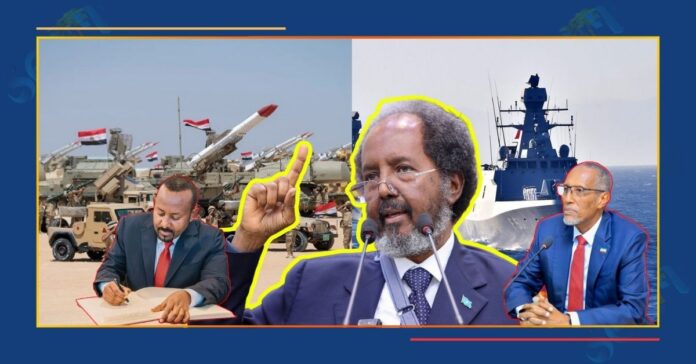
Diplomatic tensions in the Horn of Africa have reached a new height as Somaliland and Ethiopia find themselves at odds with Egypt over military deployments in Somalia, signaling a potential escalation of conflict in the region.
On August 29, 2024, Somaliland’s government condemned Egypt’s recent deployment of military forces in Somalia, warning that this move threatens the fragile peace and stability in the Horn of Africa. Somaliland’s press release emphasized that the introduction of foreign military forces into Somalia under any pretext could have catastrophic consequences, urging the international community to condemn Egypt’s actions. The statement also called on neighboring countries to reject foreign military presence that jeopardizes regional stability.
Adding to the complexities of the situation, the same day, Somaliland announced via social media that Ethiopia had appointed an ambassador, Teshome Shunde Hamito, to its consular office in Hargeisa. This appointment marks a significant development in Ethiopia-Somaliland relations, with President Muse Bihi Abdi receiving Ambassador Teshome’s credentials and discussing regional security, economic cooperation, and the strengthening of bilateral ties during their meeting. The Somaliland government indicated that Ethiopia had effectively upgraded its consular office in Hargeisa to the status of an embassy, though Ethiopian authorities have yet to officially confirm this change.
This diplomatic shift comes against the backdrop of Ethiopia’s concerns over the transition from the African Union Transition Mission in Somalia (ATMIS) to a new peace support mission. In a press statement issued on August 28, 2024, Ethiopia’s Ministry of Foreign Affairs expressed alarm over the regional instability and accused external actors, including Egypt, of actions that could destabilize the region. Ethiopia reaffirmed its commitment to monitoring the situation closely, emphasizing that it could not stand idle while its national security was threatened.
The recent developments underscore a growing rift in the Horn of Africa, where competing interests and foreign interventions are raising the stakes. The situation is further complicated by the reported deployment of up to 10,000 Egyptian soldiers in Somalia, which has drawn strong reactions from both Somaliland and Ethiopia. Somaliland, in particular, has condemned the military buildup, vowing not to stand by as its peace and stability are put at risk.
As these tensions escalate, the Horn of Africa faces the real possibility of conflict, with regional powers asserting their positions amid an increasingly volatile security environment. The international community is now under pressure to respond to the unfolding crisis and seek diplomatic solutions to prevent further destabilization in this strategically important region.
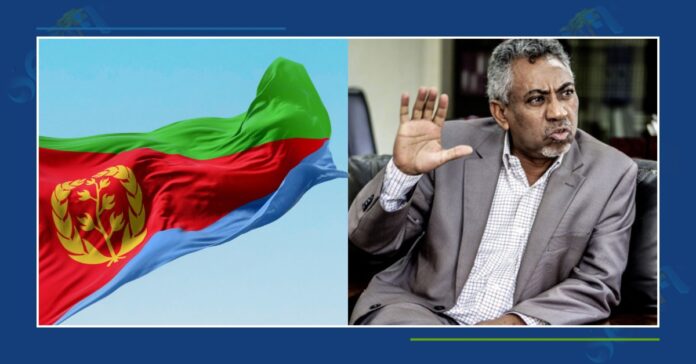
In a recent post on X (formerly Twitter), Eritrea’s Information Minister Yemane Ghebremeskel issued a stern warning against what he describes as growing provocations from “regressive-cum-revisionist elements” seeking to undermine Eritrea’s territorial sovereignty. The minister’s post emphasized the dangers of “ignorance, reckless arrogance, and imperial hubris,” suggesting that these forces are at play in attempts to challenge Eritrea’s inalienable rights over its lands.
Yemane’s message highlighted the disconnect between these aggressive actions and the desires of the broader populations in the region, who favor peace and stability. He characterized the provocative actions as “perilous red lines” and “political/legal apostasies” that should not be considered under any circumstances.
This statement from Eritrea’s government comes at a time of heightened tensions in the Horn of Africa, where territorial disputes and regional instability are increasingly at the forefront of political discourse. Eritrea’s firm stance reflects its commitment to defending its sovereignty and maintaining regional peace amid external pressures.
In a demonstration of its commitment to regional security, the Eritrean Navy recently engaged in a proactive maritime operation, enhancing safety along the strategic shipping lanes near the Eritrean coast. The operation, which took place approximately 95 nautical miles northeast of Massawa, Eritrea, underscores the nation’s growing role in safeguarding the Red Sea.
During the operation, a small coastal freighter operating in the region was approached by a vessel identified as part of the Eritrean Navy. The Eritrean patrol boat, manned by several Marines, conducted a routine inspection, ensuring that the area remains secure for international maritime traffic. Reports of small arms fire remain unconfirmed, and the situation was resolved without further incident.
Eritrea, known for its dedication to maintaining peace and stability in the Red Sea, has steadily developed its naval capabilities since gaining independence in 1993. The Eritrean Navy, originally formed with assets inherited from Ethiopia, has grown into a formidable force, recently showcasing modern high-speed patrol boats during a visit from Russian warships earlier this year.
This operation marks Eritrea’s continued efforts to prevent potential threats in its waters and contribute to the overall security of the Red Sea. The region has witnessed various challenges, including approaches by non-state actors such as Houthi fighters. However, Eritrea’s vigilant naval activities are helping to deter such threats and maintain safe passage for commercial vessels.
On the same day, additional security operations were conducted in the region, with international forces responding to potential threats, including the sighting of boats flying the Houthi flag. A Chinese floating armory also played a role in deterring an unidentified vessel, with the Italian warship, part of the EUNAVFOR Aspides operation, being dispatched for further investigation.
Eritrea’s active participation in securing the Red Sea aligns with broader international efforts to ensure the safety of one of the world’s most crucial maritime corridors. The continued presence of multinational forces, including recent contributions from Eritrea and other nations, highlights the collaborative approach to maintaining stability in the region.
The reports of this incident were first published on the Maritime Executive website, bringing attention to Eritrea’s significant role in the ongoing efforts to secure the Red Sea.
Landlocked Ethiopia agreed to lease 20 km (12 miles) of coastline from Somaliland to set up a naval base and commercial port in exchange for Ethiopia’s possible recognition of Somaliland as an independent state.
Background
The prime minister of Ethiopia, Doctor Abiy Ahmed, on several occasions and speeches, promised Ethiopians that he was willing to work and collaborate with friends to revive and bring to life the Ethiopian Navy soon. Some retired generals and navy crews of the DERGEE regime and those advocating for Ethiopia’s sea access see this as an opportunity to revive their long-held desire. They contend that a country like Ethiopia should not have ports or shores. Several higher-profile government members had openly stated their desire that Ethiopia should play a significant leading role and start stretching its muscles to influence the region. They categorically oppose any foreign presence in the Red Sea and claim historical and geopolitical rights to defend the region. The country’s leadership seeks to extend Ethiopia’s regional influence and wants to lead in dispute resolution and economic integration. In addition to its strength on land and in the air, Ethiopia also wants to protect its commercial ships and have access to ports for economic development. The rhetoric may serve as a political strategy to garner domestic support and rally Ethiopians during the conflicts in the Tigray, Amhara, and Oromia regions, where the government’s stability was threatened.
The January 2024 memorandum of understanding
In January of this year, the prime minister of Ethiopia and his counterpart from the autonomous republic of Somaliland reiterated their agreement to build a port and establish a base in the offshores of Somaliland. The countries in the Horn of Africa were stunned by the news, particularly the potential impact the Ethiopian authorities’ recognition of Somaliland as a country could have on the already volatile region. This decision has sparked controversy and exacerbated tensions between Ethiopia and the Federal Republic of Somalia. The concerns of Somalians regarding the actions of their Ethiopian neighbors are unmistakable. The tumultuous history of conflict and division between the two countries has left many Somalis feeling resentful and distrustful of Ethiopia. Ethiopia’s ownership of the Berbera port of Somaliland and its lease for a military base exacerbates these concerns, undermining Somalia’s unity and integration. Somalis are not inclined to engage in any dispute or war with Ethiopia and would not welcome Ethiopian military navy ships in their waters. This agreement could disrupt regional stability.
Initiatives to resolve the rift between both countries have not brought any results yet, but they need to be appreciated, and both parties should be encouraged to continue the dialogue. In their recent speech to their respective parliaments, both leaders accused each other. Prime Minister Abey somewhat sarcastically advised the government of Somalia to stop moving around and asking countries for mediation and support on resolving the problem because traveling costs a lot and suggested they could have spent this money on building schools and Hospitals in Somalia. He also reported that the Ethiopian government took the initiative for the MOU in response to dull and complete silence to our question, which was simple, “We need sea access.”
For his part, the president of the Republic of Somalia accused the Ethiopian government of meeting in Istanbul to discuss the issues because the Ethiopian government requested mediation from the Turkish government. However, he insisted that the Ethiopians abandon the meeting as they had done to another similar initiative by Kenya. Hence, he wished they would act differently against the Turks in the expected informal summit in September in Istanbul.
Conclusion
As a nation of considerable size and economic influence, Ethiopians firmly believe their country deserves to possess a navy. However, the approach to accomplishing this objective is a topic of active discussion. While some argue for aggressive measures, such as invading and taking control of other nations’ waters, others suggest a more collaborative approach emphasizing mutual respect and trust between Ethiopia and other maritime powers. Ultimately, the decision will have significant implications for the nation’s welfare and security, and it is the responsibility of Ethiopians to make a prudent choice.
Safeguarding commercial ships from piracy or attacks is of great importance for any state. However, it is imperative to carefully consider several factors before creating a naval force. The size and strength of the military navy must be examined, along with the country’s willingness to seek assistance from powerful nations and collaborate with the naval forces of neighboring countries in the region. In addition, it is crucial to engage in open and transparent discussions with the countries in the area regarding the reasons and intentions behind the revival of the navy. Such talks should address any concerns or reservations these nations may have and underscore the positive impact that a robust naval presence could have on the entire region.
Whether they will pursue this objective by establishing a naval force or improving political and diplomatic ties with neighboring nations remains to be seen. It is of utmost significance for Ethiopia to prioritize peace, stability, and prosperity in the region. The country can achieve this by fostering mutual trust and cooperation with the region’s countries. However, past events have led to suspicion and unease toward Ethiopian power, as it has shown historical aggressions toward neighboring nations. Therefore, Ethiopia must maintain strong political and diplomatic ties to achieve its economic goals without causing unnecessary tension or conflict.