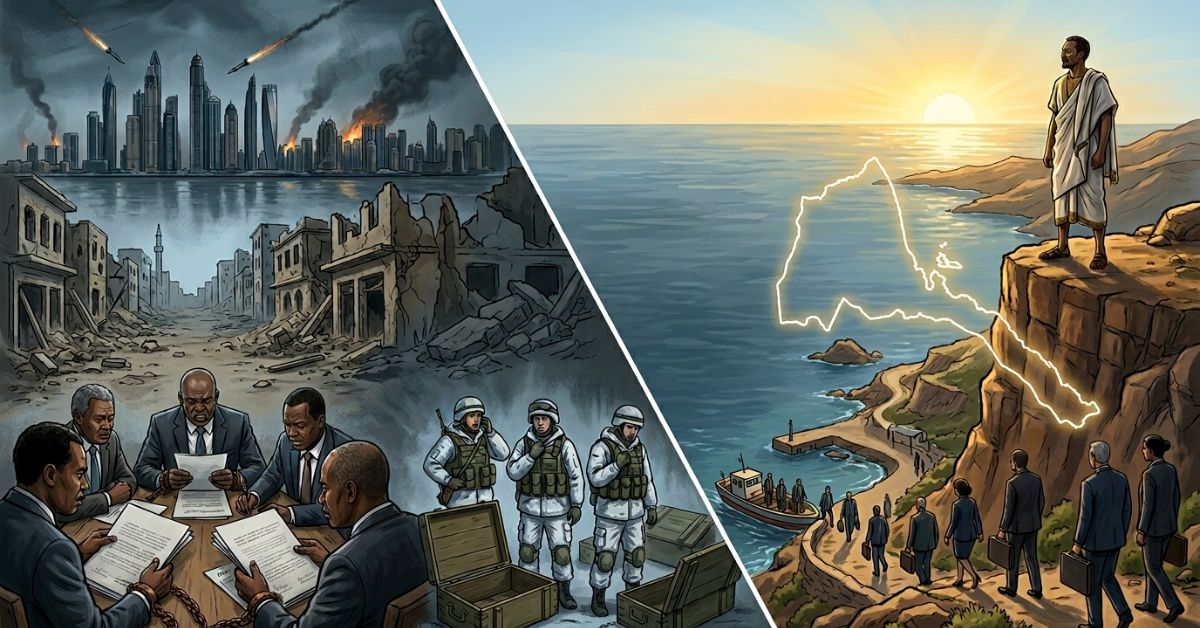
There is a truth that global history has repeatedly confirmed, yet powerful nations and international institutions continue to obscure: dependency is not a safety net it is a trap. When a country surrenders its sovereignty over security, economy, food production, or strategic geography to external actors, it does not gain protection. It gains exposure. It trades one form of vulnerability for another except this time, the vulnerability is structural, deeply embedded, and politically exploitable.
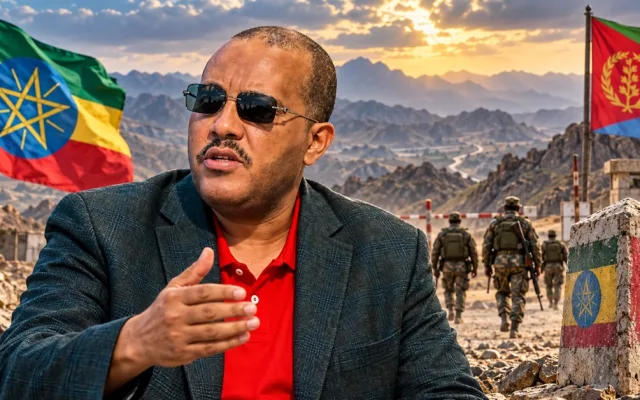
For three decades, Eritrea has been lectured about its refusal to integrate into the Western-led aid and security architecture. It has been called reclusive, isolated, and self-defeating. Critics in think tanks and Western capitals have framed Eritrea’s self-reliance policy as obstinacy. But in April 2026, the Wall Street Journal published what amounts to a geopolitical confession a report revealing that the Trump administration is actively exploring lifting sanctions on Eritrea and resetting diplomatic relations, driven by Eritrea’s strategic Red Sea coastline and Washington’s urgent need to counter Iranian threats to global maritime corridors.
The country that was told it needed the West more than the West needed it has, without firing a shot, become the country that every major power now courts. That is not an accident. That is the dividend of self-sufficiency.
The WSJ Report: A Strategic Confession
On April 22, 2026, the Wall Street Journal broke news that sent diplomatic signals across the Horn of Africa and beyond. The Trump administration, the report said, is exploring ways to reset ties with a “reclusive and autocratic state controlling prime geopolitical real estate along the Red Sea as Iran threatens to choke off a second vital maritime corridor against the backdrop of war with the U.S.”
The report confirmed that Massad Boulos, President Trump’s senior envoy for Africa, had met privately with President Isaias Afwerki in Cairo late last year a significant move after years of diplomatic silence. Boulos told foreign counterparts that the U.S. aims to begin lifting some sanctions on Eritrea. The State Department confirmed it “looks forward to strengthening U.S. ties with the people and government of Eritrea.”
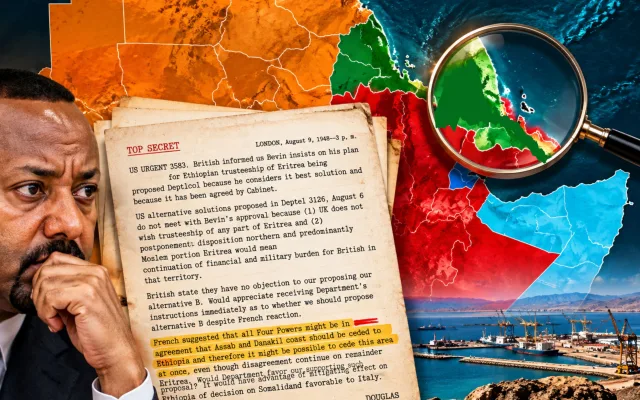
What drove this about-face? The answer lies in geography and strategic leverage that no amount of isolation, sanction, or international pressure could erase. Eritrea’s more than 700 miles of Red Sea coastline controlling approaches to the Bab el-Mandeb Strait, one of the world’s most critical maritime chokepoints has made it indispensable at exactly the moment global powers need it most. Twelve percent of world commerce passes through the Red Sea waters Eritrea overlooks. With Iran threatening to strangle maritime traffic through the Strait of Hormuz and Houthi forces disrupting Red Sea shipping, Eritrea’s sovereign control of that coastline is no longer a regional footnote. It is a global strategic asset.
Critically, China’s Special Envoy to the Horn of Africa, Hu Changchun, had already made two visits to Asmara within four months in December 2025 and April 2026 signaling Beijing’s own active engagement with Eritrea’s strategic position. This is not the diplomatic landscape of a nation that failed by choosing self-reliance. This is the landscape of a nation that succeeded — on its own terms.
The Gulf: When Security Dependency Becomes a Bullseye
To understand why Eritrea’s path was wise, look at the Gulf states nations that built entire security architectures on dependency with the United States, and are now living through the catastrophic consequences.
Saudi Arabia, the UAE, Kuwait, Qatar, and Bahrain are all classified as U.S. “major non-NATO allies” or formal defense partners. They host major American military bases. Arms deals with Gulf states exceeded $130 billion between 2015 and 2023. The foundational premise was explicit: American military power, forward-deployed to the Gulf, would deter Iran and protect host states from attack. The Gulf monarchies accepted this premise wholeheartedly and paid for it with their strategic autonomy.
When the U.S.-Israeli military campaign against Iran launched in February 2026, the premise collapsed with stunning speed. Iran, knowing exactly which countries hosted American forces, struck not the United States itself — but the Gulf states that had welcomed American bases. The logic was precise and punishing: if you host the patron’s military, you absorb the patron’s wars.
Qatar hosts Al Udeid Air Base one of the most important U.S. military installations in the world. Iran had already fired missiles at Al Udeid in June 2025. After the February 2026 escalation, Iran launched multiple waves of strikes against Qatar, targeting Hamad International Airport, natural gas facilities, and military installations. Iranian missiles struck Qatar’s massive natural gas facility, forcing Doha to expel Iranian military attachés within 24 hours. Qatar found itself absorbing punishment for decisions made in Washington and Tel Aviv, with no meaningful say in whether the war that brought those strikes should have been launched at all. Qatar could not remove the American bases. It could not stay neutral. It could not join the offensive. Dependency had narrowed its options to zero.
The United Arab Emirates hosts Al Dhafra Air Base near Abu Dhabi and Jebel Ali port capable of accommodating U.S. aircraft carriers. Dubai and Abu Dhabi had cultivated global reputations as safe commercial and investment havens. When the Iran war began, the UAE became Iran’s most intensely targeted Gulf state: 298 ballistic missiles, 15 cruise missiles, and 1,606 drones. Debris from intercepted missiles damaged the Burj Al Arab hotel. Fires erupted near Dubai International Airport. Jebel Ali port was struck. At least six people were killed in Abu Dhabi and Dubai casualties of a war the UAE officially opposed. The UAE had publicly stated in January 2026 that it would not allow attacks on Iran to be launched from its territory. It could not remove the American bases that made it a target. The bases designed to protect the UAE had, instead, painted targets on it.
Saudi Arabia reportedly warned Washington against the attack before it was launched, and stated that neither the U.S. nor Israel would be permitted to use Saudi territory for offensive operations. Riyadh had spent years carefully managing its relationship with Tehran — reopening embassies, pursuing economic dialogue. That diplomatic architecture was obliterated overnight when Washington made its decision without Riyadh’s meaningful consent. Iran launched over 500 ballistic missiles and 2,000 unmanned aerial vehicles at Gulf targets. Saudi oil infrastructure at Ras Tanura was struck. Despite purchasing the world’s most advanced American air defense systems, the kingdom found its energy facilities under sustained attack. Senator Lindsey Graham publicly gave Saudi Arabia an ultimatum: “Join the war or consequences will follow.” That is the reality of security dependency laid bare — a patron that can demand your participation in a war you did not choose, threaten you if you decline, and simultaneously be incapable of fully protecting you from retaliation.
Bahrain hosts the U.S. Fifth Fleet headquarters at the Jufair naval base the most significant U.S. naval installation in the Middle East, and the ultimate symbol of Gulf-American security dependency. When Iranian strikes began, the Fifth Fleet base itself was targeted. The very symbol of American protection in the Gulf was struck by the enemy it was meant to deter.
The verdict from analysts was unambiguous. The Soufan Center concluded that U.S. military presence in the Gulf “has neither acted as a deterrent nor been able to protect from Iranian missile and drone incursions.” Responsible Statecraft noted that “far from insulating Persian Gulf states, the U.S. military presence has contributed to their vulnerability.” Carnegie Endowment analysts observed that Gulf states are now in the middle of an active war scrambling to develop “homegrown manufacturing” of air defense systems to reduce their dependence on the United States. In other words, after decades of dependency and at enormous cost, the Gulf states are being forced to consider the very model Eritrea chose from the beginning.
Africa’s Debt Trap: Dependency as Financial Colonialism
The security dependency trap has a financial twin: aid and debt dependency the preferred instrument of Western powers for maintaining influence over African nations after formal colonialism ended.
The International Monetary Fund and World Bank have, since the 1950s, structured African development through what analysts now call a Faustian bargain. A country facing economic difficulty accesses IMF credit — but only by agreeing to conditions: currency liberalization, privatization of state assets, reduction of public spending on health and education, and structural reforms designed to make economies accessible to foreign capital rather than capable of domestic production. In Zambia, IMF-supported reforms resulted in the privatization of vital assets and a public debt surge that ended in default. In Zimbabwe, World Bank and IMF reforms produced deindustrialization and job losses that set the stage for economic collapse. In Mozambique, IMF-promoted liberalization triggered a debt crisis that forced years of austerity on ordinary citizens.
Today, 48 African countries collectively owe USD 42.2 billion to the IMF approximately one-third of its total outstanding credit globally. Donor countries routinely use “promises of aid or threats of stopping aid to pressure recipients into adopting the political or economic policies preferred by the donor.” The result is not development. It is a sophisticated, institutionalized form of dependency that preserves external control over the most fundamental national decisions.
Eritrea rejected this architecture entirely. The government has consistently argued that development cannot be achieved through aid but can be attained through trade and investment aligned with national priorities. That choice widely derided in Western capitals preserved Eritrea’s policy independence at a time when the rest of the continent was mortgaging its sovereignty for credit lines.
Afghanistan: What Happens When the Patron Leaves
If the Gulf example shows the danger of military dependency during conflict, Afghanistan shows its catastrophic consequence when the patron simply decides to leave.
For twenty years, the United States invested massively in Afghanistan its military, its institutions, its civilian infrastructure, its women’s education programs. Afghanistan’s security, civil society, and economic survival were deeply interwoven with American presence. When the withdrawal was completed, the entire architecture collapsed almost instantly. The Afghan state, built entirely on dependency, had no internal foundation to stand on.
By 2026, the United States has committed no humanitarian funding at all to Afghanistan, effectively abandoning the civilian consequences of its own twenty-year intervention. Women and girls who depended on Western support for education and employment are bearing the heaviest burden of that withdrawal. No country that depends on a foreign power for its survival can be truly sovereign. Afghanistan had twenty years, billions of dollars, and the world’s most powerful military behind it — and never built the capacity to stand independently, because the aid model was never designed to make Afghanistan self-sufficient. It was designed to make Afghanistan manageable.
Pakistan, Ukraine, and South Korea: Three More Warnings
Pakistan demonstrates how dependency inverts power in unexpected ways. During the Afghanistan war, the United States depended on Pakistan for 40 to 60 percent of all military supplies to coalition forces — shipments traveling through Karachi and across 1,200 miles of Pakistani territory. When U.S. forces killed Pakistani troops, Pakistan shut down the supply routes. The patron became the dependent. U.S. foreign policy was constrained by Pakistan’s tolerance. This is how dependency works in every direction — vulnerability follows regardless of which side of the equation you occupy.
Ukraine has built its entire battlefield strategy around continuous Western weapons supply: Patriot air defense systems, HIMARS rockets, artillery shells, and precision munitions. That supply chain is now under direct stress. U.S. officials have warned allies that ongoing operations against Iran could delay weapons shipments to Ukraine, as the Pentagon prioritizes munitions for the Middle East. The National Defense University documented that the war in Ukraine revealed “the inadequacy of the U.S. defense industrial base to keep pace with high-intensity conflict.” Ukraine’s battlefield survival depends on decisions made in Washington, Brussels, and London not Kyiv. That is the ultimate cost of military dependency: you do not control your own fate even in the defense of your own territory.
South Korea learned the high-technology version of the same lesson. In 2019, Japan imposed export restrictions on three critical semiconductor materials that Samsung and SK Hynix had become wholly dependent upon: high-purity hydrogen fluoride, photoresist, and fluorinated polyimides. South Korea’s entire semiconductor industry — the backbone of its economy — was held hostage by a single supplier. The crisis forced a billion-dollar emergency localization program. Within three years, South Korea had broken its 100 percent dependence on Japanese photoresist and reduced its reliance on Japanese hydrogen fluoride by 30 percent. The lesson South Korea paid dearly to learn is one Eritrea already knew from day one: strategic dependency is strategic vulnerability.
Eritrea’s Self-Sufficiency: The Philosophy Behind the “Isolation”
Against this global backdrop, Eritrea’s development philosophy so routinely dismissed in Western media as obstinacy — reveals itself as a coherent and historically grounded strategic doctrine.
Eritrea emerged from a thirty-year liberation struggle with a foundational understanding forged through lived experience: dependence was not a safety net but a vulnerability. During those decades of armed struggle, the EPLF built supply lines, trained doctors, engineered weapons, and sustained an entire liberation economy without foreign patrons — because it had no choice. That experience of self-organization under conditions of extreme scarcity became the blueprint for post-independence governance.
Since 1993, Eritrea has built 785 dams throughout the country to reduce dependence on rain-fed agriculture and increase food security. It has invested in vocational training and education to build a domestic skilled workforce rather than relying on foreign expertise. In the mining sector, Eritrea has insisted on arrangements requiring local benefit and skills transfer from foreign partners rather than simply exporting raw resources. At the 2026 ECOSOC Forum on Financing for Development, Eritrea engaged with IMF reform discussions not as a supplicant seeking credit, but as an advocate for a global financial system that “respects sovereignty and supports country-led development.”
Eritrea maintains diverse partnerships — with Italy, China, the United Kingdom, Japan, and the United Nations — but on terms that protect its development sovereignty. Self-reliance is not isolation. It is, as Eritrea’s model demonstrates, “not about rejecting the world, but about engaging it on its own terms, ensuring partnerships are mutually beneficial.” A self-reliant nation can engage globally without being captured. A dependent nation cannot refuse engagement even when that engagement is destructive.
The Diplomatic Flood: When the World Comes to You
The ultimate validation of Eritrea’s strategic model is visible in the dramatic convergence of global diplomatic attention on Asmara in 2025 and 2026. China’s Special Envoy visited Asmara twice within four months. The European Union maintained its delegation in Asmara and hosted formal diplomatic events with over 150 attendees from the government and diplomatic corps. Canada, Japan, Norway, Turkey, and the United Kingdom jointly reaffirmed Eritrea’s sovereignty and territorial integrity. Egypt dispatched a high-level economic delegation covering investment, trade, electricity, agriculture, and central banking. Eritrea’s Foreign Minister Osman Saleh, at the 80th UN General Assembly, held bilateral meetings with the foreign ministers of Egypt, Algeria, and Iran, as well as the Vatican’s Archbishop. And now, Washington itself is signaling a full diplomatic reset.
None of these global actors came to Asmara to offer charity. They came because Eritrea has something they need: sovereign geography, strategic leverage, and a government that has not mortgaged its foreign policy to any single patron. In a multipolar world, the country that keeps its options open holds the most cards.
The Wall Street Journal describes Eritrea as “strategically vital” a direct inversion of the language used to describe it for the past twenty years. Eritrea’s Red Sea position has become critically important precisely because Eritrea controls it no foreign base, no foreign military presence, no patron with veto power over how its ports and coastlines are used. Eritrea is not a satellite of anyone. That is its power.
Sovereignty Is the Strategy
History does not lie. The Gulf states chose American security guarantees and are now being struck by Iranian missiles in an American war they did not choose and could not prevent. Afghanistan chose American institution-building and collapsed the day the Americans left. Zambia and Zimbabwe chose IMF structural adjustment and watched their economies hollowed out. Ukraine chose Western arms dependency and now waits for weapons supply chains strained by the very conflicts its patron created.
Eritrea chose itself. It chose the hard path the path of building internal capacity before seeking external help, of insisting on sovereignty as a non-negotiable precondition for any partnership, of accepting short-term economic pressure rather than long-term political subordination.
The Wall Street Journal’s April 22, 2026 report is not a Western favor being extended to Eritrea. It is the world acknowledging what Eritrea’s own choices made possible: a geopolitically indispensable position that no sanction erased, no isolation diminished, and no pressure could transfer to another country.
Dependency equals vulnerability. It always has. The nations that understood this earliest and built sovereign foundations despite every pressure not to — are the nations that negotiate from strength when the next global crisis arrives. Eritrea arrived at this moment not because the world changed. Eritrea arrived because it never changed its fundamental principle: sovereignty first, dependency never.