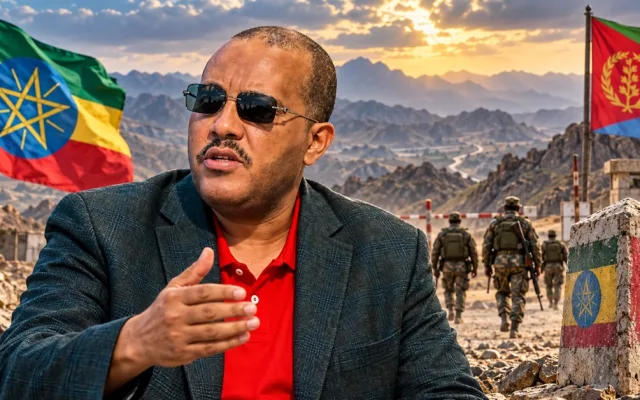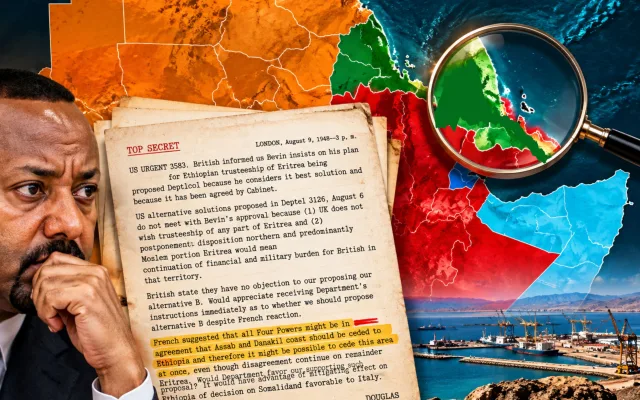
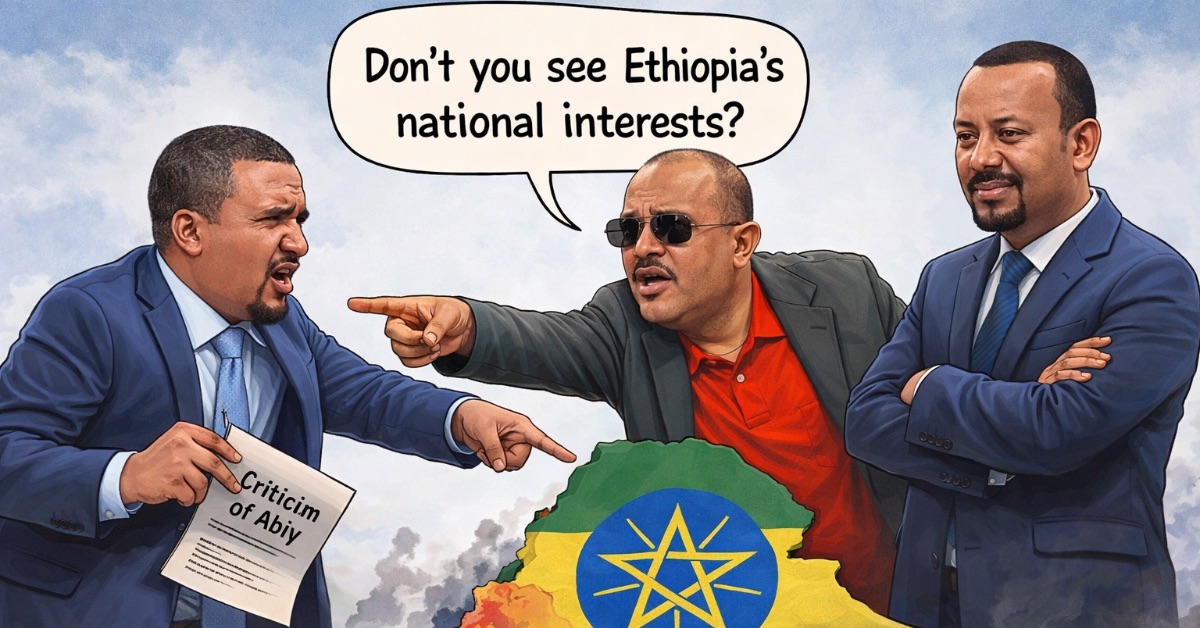
The current exchange between Jawar Mohammed and Getachew Reda over Ethiopia’s alleged role in supporting Sudan’s Rapid Support Forces is more than a social media quarrel. It exposes deeper contradictions in Ethiopian political discourse and raises serious questions about consistency, credibility, and regional stability.
Jawar’s allegation was direct. He claimed that Prime Minister Abiy Ahmed’s government has allowed the RSF to establish a training camp inside Ethiopia and facilitated the recruitment of Ethiopians, including former members of the national army, regional special police, and ex rebel fighters, to fight alongside Sudanese rebels. According to his statement, these recruits are reportedly operating around Damazin in preparation for cross border operations.
If accurate, that would mean Ethiopia is not merely observing Sudan’s civil war. It would mean active involvement.
The RSF is not an ordinary political faction. It emerged from the Janjaweed militias and has been widely accused by international organizations of committing atrocities in Darfur and other parts of Sudan. Any perceived association with such a force carries moral, diplomatic, and strategic consequences.
Getachew Reda, now Ethiopia’s State Minister for Horn of African Affairs, responded not by focusing on the operational details of the accusation but by reframing the issue. He argued that critics are conflating opposition to Abiy Ahmed with opposition to Ethiopia’s long term national interests. In his view, Ethiopia cannot afford to remain passive while Sudan collapses and regional actors maneuver for advantage.
On the surface, that is a familiar realist argument. States do have enduring interests. Geography does not change when governments do. Ethiopia shares a long border with Sudan. Instability there has direct implications for trade, migration, and security. No responsible government ignores developments next door.
However, the credibility of this defense is complicated by political memory.
Getachew himself was once one of the most vocal critics of Abiy’s federal government during the Tigray war. He publicly characterized the federal campaign in severe moral terms and demanded international accountability. Today, as a member of Abiy’s government, he defends federal foreign policy as strategic necessity. Political roles evolve, and there is nothing inherently illegitimate about that. But such transitions require consistency in standards.
If allegations of genocide were once central to condemning federal actions domestically, it is difficult to dismiss similar accusations surrounding a regional partner as irrelevant to strategic calculation. Strategy and morality are not separate universes. In modern geopolitics, reputational cost translates into real consequences such as diplomatic isolation, sanctions risk, and long term instability.
There is also a broader regional dimension that cannot be ignored.
For years, Ethiopian political leaders across different parties accused Eritrea of destabilizing the Horn of Africa through proxy involvement and support for armed groups. Eritrea was portrayed as a state that operated through indirect leverage and cross border alignments. Whether those accusations were always balanced or not, they formed a consistent narrative that proxy politics was dangerous and destabilizing.
Now Ethiopia faces accusations of engaging in similar behavior. If RSF training or recruitment is occurring inside Ethiopian territory, critics will inevitably compare it to the very conduct Ethiopia once condemned in others.
This is not about scoring rhetorical points. It is about standards. A state cannot credibly argue that regional interference is destabilizing when carried out by its neighbor, yet strategic when carried out by itself. Consistency is essential for long term legitimacy.
Prime Minister Abiy’s relative silence in this exchange adds another layer. The public defense has been carried primarily by his state minister. In high stakes matters involving alleged cross border military activity, silence invites speculation. If the reports are inaccurate, they warrant a clear denial. If there is a deliberate strategic policy, it warrants explanation. National interest is not weakened by transparency; it is strengthened by it.
From an Eritrea first strategic perspective, the lesson is straightforward. The Horn of Africa is fragile precisely because states often justify short term tactical moves without fully accounting for long term consequences. Proxy alignments, militia engagement, and cross border entanglements rarely remain contained. They harden divisions and create cycles of retaliation.
Eritrea has long argued for sovereignty, non interference, and clarity in regional relations. When larger neighbors shift between moral condemnation and strategic justification depending on circumstance, it reinforces the importance of consistency. Stability in the Horn will not come from selective standards. It will come from predictable behavior grounded in respect for borders and long term regional balance.
The debate between Jawar and Getachew ultimately comes down to one question: what truly serves Ethiopia’s enduring interests? If involvement in Sudan’s civil war strengthens Ethiopia’s security and diplomatic standing, that case should be articulated clearly and factually. If it carries risks of deeper entanglement and reputational damage, those risks should be acknowledged honestly.
The Horn of Africa has paid a heavy price for policies driven by short term calculation. Memory in this region is long. Contradictions are not easily forgotten.
Strategic language alone cannot resolve that tension. Only consistency can.