In a demonstration of its commitment to regional security, the Eritrean Navy recently engaged in a proactive maritime operation, enhancing safety along the strategic shipping lanes near the Eritrean coast. The operation, which took place approximately 95 nautical miles northeast of Massawa, Eritrea, underscores the nation’s growing role in safeguarding the Red Sea.
During the operation, a small coastal freighter operating in the region was approached by a vessel identified as part of the Eritrean Navy. The Eritrean patrol boat, manned by several Marines, conducted a routine inspection, ensuring that the area remains secure for international maritime traffic. Reports of small arms fire remain unconfirmed, and the situation was resolved without further incident.
Eritrea, known for its dedication to maintaining peace and stability in the Red Sea, has steadily developed its naval capabilities since gaining independence in 1993. The Eritrean Navy, originally formed with assets inherited from Ethiopia, has grown into a formidable force, recently showcasing modern high-speed patrol boats during a visit from Russian warships earlier this year.
This operation marks Eritrea’s continued efforts to prevent potential threats in its waters and contribute to the overall security of the Red Sea. The region has witnessed various challenges, including approaches by non-state actors such as Houthi fighters. However, Eritrea’s vigilant naval activities are helping to deter such threats and maintain safe passage for commercial vessels.
On the same day, additional security operations were conducted in the region, with international forces responding to potential threats, including the sighting of boats flying the Houthi flag. A Chinese floating armory also played a role in deterring an unidentified vessel, with the Italian warship, part of the EUNAVFOR Aspides operation, being dispatched for further investigation.
Eritrea’s active participation in securing the Red Sea aligns with broader international efforts to ensure the safety of one of the world’s most crucial maritime corridors. The continued presence of multinational forces, including recent contributions from Eritrea and other nations, highlights the collaborative approach to maintaining stability in the region.
The reports of this incident were first published on the Maritime Executive website, bringing attention to Eritrea’s significant role in the ongoing efforts to secure the Red Sea.
Landlocked Ethiopia agreed to lease 20 km (12 miles) of coastline from Somaliland to set up a naval base and commercial port in exchange for Ethiopia’s possible recognition of Somaliland as an independent state.
Background
The prime minister of Ethiopia, Doctor Abiy Ahmed, on several occasions and speeches, promised Ethiopians that he was willing to work and collaborate with friends to revive and bring to life the Ethiopian Navy soon. Some retired generals and navy crews of the DERGEE regime and those advocating for Ethiopia’s sea access see this as an opportunity to revive their long-held desire. They contend that a country like Ethiopia should not have ports or shores. Several higher-profile government members had openly stated their desire that Ethiopia should play a significant leading role and start stretching its muscles to influence the region. They categorically oppose any foreign presence in the Red Sea and claim historical and geopolitical rights to defend the region. The country’s leadership seeks to extend Ethiopia’s regional influence and wants to lead in dispute resolution and economic integration. In addition to its strength on land and in the air, Ethiopia also wants to protect its commercial ships and have access to ports for economic development. The rhetoric may serve as a political strategy to garner domestic support and rally Ethiopians during the conflicts in the Tigray, Amhara, and Oromia regions, where the government’s stability was threatened.
The January 2024 memorandum of understanding
In January of this year, the prime minister of Ethiopia and his counterpart from the autonomous republic of Somaliland reiterated their agreement to build a port and establish a base in the offshores of Somaliland. The countries in the Horn of Africa were stunned by the news, particularly the potential impact the Ethiopian authorities’ recognition of Somaliland as a country could have on the already volatile region. This decision has sparked controversy and exacerbated tensions between Ethiopia and the Federal Republic of Somalia. The concerns of Somalians regarding the actions of their Ethiopian neighbors are unmistakable. The tumultuous history of conflict and division between the two countries has left many Somalis feeling resentful and distrustful of Ethiopia. Ethiopia’s ownership of the Berbera port of Somaliland and its lease for a military base exacerbates these concerns, undermining Somalia’s unity and integration. Somalis are not inclined to engage in any dispute or war with Ethiopia and would not welcome Ethiopian military navy ships in their waters. This agreement could disrupt regional stability.
Initiatives to resolve the rift between both countries have not brought any results yet, but they need to be appreciated, and both parties should be encouraged to continue the dialogue. In their recent speech to their respective parliaments, both leaders accused each other. Prime Minister Abey somewhat sarcastically advised the government of Somalia to stop moving around and asking countries for mediation and support on resolving the problem because traveling costs a lot and suggested they could have spent this money on building schools and Hospitals in Somalia. He also reported that the Ethiopian government took the initiative for the MOU in response to dull and complete silence to our question, which was simple, “We need sea access.”
For his part, the president of the Republic of Somalia accused the Ethiopian government of meeting in Istanbul to discuss the issues because the Ethiopian government requested mediation from the Turkish government. However, he insisted that the Ethiopians abandon the meeting as they had done to another similar initiative by Kenya. Hence, he wished they would act differently against the Turks in the expected informal summit in September in Istanbul.
Conclusion
As a nation of considerable size and economic influence, Ethiopians firmly believe their country deserves to possess a navy. However, the approach to accomplishing this objective is a topic of active discussion. While some argue for aggressive measures, such as invading and taking control of other nations’ waters, others suggest a more collaborative approach emphasizing mutual respect and trust between Ethiopia and other maritime powers. Ultimately, the decision will have significant implications for the nation’s welfare and security, and it is the responsibility of Ethiopians to make a prudent choice.
Safeguarding commercial ships from piracy or attacks is of great importance for any state. However, it is imperative to carefully consider several factors before creating a naval force. The size and strength of the military navy must be examined, along with the country’s willingness to seek assistance from powerful nations and collaborate with the naval forces of neighboring countries in the region. In addition, it is crucial to engage in open and transparent discussions with the countries in the area regarding the reasons and intentions behind the revival of the navy. Such talks should address any concerns or reservations these nations may have and underscore the positive impact that a robust naval presence could have on the entire region.
Whether they will pursue this objective by establishing a naval force or improving political and diplomatic ties with neighboring nations remains to be seen. It is of utmost significance for Ethiopia to prioritize peace, stability, and prosperity in the region. The country can achieve this by fostering mutual trust and cooperation with the region’s countries. However, past events have led to suspicion and unease toward Ethiopian power, as it has shown historical aggressions toward neighboring nations. Therefore, Ethiopia must maintain strong political and diplomatic ties to achieve its economic goals without causing unnecessary tension or conflict.
The current Eritrean government and its predecessor, the Eritrean People’s Liberation Front (EPLF), have long opposed any secessionist tendencies in Ethiopia. Eritrea has consistently opposed any mechanism or policy that divides Ethiopians along language and ethnic lines. For example, one of the issues that sparked conflict between Eritrea and the then-Ethiopian government, the Tigray People’s Liberation Front (TPLF), was the latter’s tendency to divide Ethiopians based on language and ethnicity. The Eritrean government’s reasoning for opposing the TPLF’s divide-and-rule policy was that it posed a danger not only to Ethiopia but also to all countries in the Horn of Africa. Eritrea’s firm and principled policy toward Ethiopia has endured through decades of turbulent relations between the two countries. Finally, this policy bore fruit when the TPLF attacked the Northern Command on November 4, 2020, and Ethiopia faced the danger of disintegration. The Eritrean army’s swift action provided the new Ethiopian government with respite and an opportunity to stabilize. Despite Eritrea’s goodwill towards Ethiopia, it has not been possible to establish a long-term relationship between the two countries. Here are some reasons why:
The “Ethiopia is for all, and neighboring countries are private” False Thinking
Recently, the Ethiopian Prime Minister complained that while neighboring countries benefit from Ethiopia, they do not want to share their resources with Ethiopia. Mr. Prime Minister, Eritrea has given everything to Ethiopia without receiving anything in return. Thousands of young Eritreans gave their lives to save you from being toppled by the TPLF. What did you give Eritrea in return? What did Eritrea ask of Ethiopia in return? Without shame, you are the one who officially threatened the sovereignty and territorial integrity of Eritrea. Did Eritrea ask for anything other than for you to respect the rule of law? You are the one treating neighboring countries as common while considering Ethiopia as private. Despite living in Ethiopia for generations, Eritreans are either yellow card holders or refugees. In 1998, Ethiopia confiscated their properties and inhumanely expelled them. In contrast, those Ethiopians who have been living in Eritrea for more than 40 years received automatic citizenship, and the newcomers have a yellow card. Now, their children in Europe, Israel, and the United States are attacking Eritrean festivals, and recently, at your invitation, one of them was seen organizing an anti-Eritrean conference in the heart of Addis Ababa. There are no Ethiopian refugees in Eritrea. Mr. Prime Minister, Eritreans cannot even use Ethiopian Airlines as paying customers. When Eritreans use Ethiopian Airlines, the staff and administration mistreat them, hike the prices, and steal their baggage. In any other world, a customer is treated as king. On the contrary, Ethiopian Airlines treats Eritreans as cash cows to be milked. It’s no wonder why Eritrea does not want to buy electricity from Ethiopia. Believe me, the line would be cut off the first day it starts operating. Thus, Eritrea’s prior investments in diplomatic relations with the TPLF and the President of Sudan have brought nothing but unimaginable loss. Durable, long-term benefits need to be built on incremental short-term gains, and it is time for Eritrea to adopt a transactional approach.
Ethiopia and Eritrea Have Different Political Cultures
Eritrea has an independent political culture. It does not want its politics to be dictated by any external party. Eritrea believes in self-reliance and does not accept aid. Accordingly, Western governments, which have a habit of dictating African politics, do not like independent Eritrea. They consider Eritrea a bad example for Africa. If other African countries were to take Eritrea as a role model, Western influence in Africa would be in jeopardy. On the other hand, Ethiopia, with its multiple free-flowing rivers, fertile land, and cheap labor, cannot afford to stay away from the IMF, World Bank debt trap, and other food donors that kill citizens’ productivity. Accordingly, as previously mentioned by several Ethiopian officials, Western countries put pressure on Ethiopia to cool its relationship with Eritrea. To get loans and aid, Ethiopia has no other choice but to comply with their demands. Thus, even if Ethiopia wants to, it cannot establish a long-term relationship with Eritrea. For that to happen, Eritrea would need to be in the Western sphere of influence, which is highly unlikely. In such a situation, it is time for Eritrea to think smart and adopt a transactional approach with Ethiopia.
United Arab Emirates’ Interest in the Horn of Africa
The United Arab Emirates (UAE) is a prosperous country with global ambitions. Multinational port operator DP World is the country’s international arm of influence. To advance the UAE’s interest in the Horn of Africa, DP World signed a contract with Djibouti in 2006 to develop its port. However, Djibouti later canceled the contract and expelled DP World, complaining that DP World intended to ensure Djibouti’s port would not be a competitor to Dubai. China replaced DP World in Djibouti. Angered by Djibouti’s actions, the UAE signed a short-term lease with Eritrea in 2015 to use the Assab port for its military operations in Yemen. Although the war in Yemen was the driving factor for the UAE to sign the lease with Eritrea, it was later revealed that the UAE had an interest in developing the Port of Assab. The UAE’s minister openly tweeted about his country’s interest in developing Assab. However, the Eritrean information minister dismissed the idea, saying Assab was not for sale. Since then, the UAE has withdrawn from Assab and established a strong relationship with the major port service user in the Horn of Africa, Ethiopia. This relationship, among other things, would help the UAE manipulate port use in the Horn of Africa. Accordingly, the development of the Berbera port in Somalia and the Ethiopian Prime Minister’s unwise speech about his claim to the Red Sea are some of the consequences. Despite its negative consequences, the Ethiopian elite welcomes any political and economic interest that helps them weaken Eritrea. That is why Eritrea’s relationship with Ethiopia cannot be strategic and needs to be purely transactional.
Successive Ethiopian Rulers’ Ambition to Weaken Eritrea
In addition to conspiracies and open threats, Ethiopian elites believe Ethiopia should get everything while giving nothing in return to Eritrea. This kind of thinking is a continuation of the bankrupt policies of Haile Selassie, the Derg, and the TPLF against Eritrea. After the peace agreement between Eritrea and Ethiopia was signed, Eritrea contributed significantly to peace in Ethiopia. Eritrea gave up thousands of opposition groups that it had nurtured over the last twenty years, dropped its precondition of Ethiopian withdrawal from sovereign Eritrean territory, and agreed to open its borders for trade. As part of the peace agreement, Ethiopian Airlines flies to Eritrea daily. It uses Eritrea’s airspace for its flights to the United States, Europe, and Middle Eastern countries, saving millions of dollars in fuel costs. Ethiopian ships are doing business in Eritrean ports. Above all, the Ethiopian government enjoyed the full military and diplomatic support of the Eritrean government during the TPLF-initiated civil war. What did Eritrea get from Ethiopia in return? Some may mention the lifting of sanctions, but those should never have been imposed in the first place. Don’t they know that it was Ethiopia’s doing? Although the truth is the reverse, Ethiopian elites complain about Eritrea benefiting from Ethiopia. If you ask them how, they would not utter a word. It is just long-held ignorance about the wealth of Eritrea. Eritrea does not need anything from Ethiopia, just to be left alone.
Conclusion
Although there is nothing wrong with having a policy that benefits both Ethiopia and Eritrea as neighbors, it is important not to be carried away by the hope that Eritrea’s long-term good deeds will lead to long-term benefits. In theory, it would be ideal and an excellent characteristic of visionary leadership. Unfortunately, Ethiopian elites have a different mindset. Even though they are the ones dependent on Eritrea, they think Eritrea is dependent on Ethiopia. When Eritrea saves them from disintegration, they claim Eritrea is working to destroy Ethiopia. When Eritrea hands over opposition groups to Ethiopia and Ethiopia fails to integrate them into civil life, they say Eritrea-trained opposition groups are creating havoc in Ethiopia. Their political culture is inconsistent and always changes in search of short-term benefits. That is why it is important for Eritrea’s relationship with Ethiopia to be transactional. If not, Ethiopians would not hesitate to take advantage of Eritrea.
Introduction: Judging or casting judgment on an individual, group, or entity is a fundamental aspect of human behavior. We all form opinions and perspectives based on our observations. However, the methodology behind forming these judgments varies widely among individuals. Some take the time to meticulously analyze a situation before articulating their thoughts, while others may hastily form opinions, driven more by emotion than by thorough analysis. I, too, sometimes find myself in this position, especially when attempting to set aside political considerations. It’s simpler to base judgments on emotions rather than dedicating time to deliberate observation. This is a pitfall we must all be conscious of and strive to avoid.
When I encounter this dilemma, I often reflect on why certain groups react the way they do. I came to realize that your intentions are internal, personal, and known only to you. However, the perception of your intentions is external, and the responsibility lies with those observing you to comprehend what you are attempting to achieve.
The Issue: In 2020, a profound rift emerged within the Eritrean political landscape as factions of the opposition became divided over whether to support the Tigray Defense Forces (TDF) during the Tigray conflict or to set aside political differences and rally behind the Eritrean Defense Forces in response to the missile attack launched by the TDF on Asmara. This schism led to a transformation in strategy among some prominent opposition figures, who began to reconsider their approach to opposing the Eritrean government, seeking to build bridges with more government-leaning Eritreans. Consequently, these individuals were branded as “traitors,” “slaves,” and subjected to other derogatory labels by segments of the opposition, suggesting that they had forsaken their core values and principles.
Undeniably, some Eritreans who once opposed the government have now shifted to supporting it, which can be perceived as counterproductive in the quest for reform. This shift often originates from a loss of confidence in the opposition. While I can comprehend this stance, I do not endorse it. It is essential to evolve your approach to achieving social, political, and economic change in the country rather than abandoning your fundamental values.
For Eritreans who once opposed the government but are now advocating for unity and diplomacy, they have not relinquished their core values, and many have made this abundantly clear. However, when a strategy has been employed repeatedly for years, if not decades, without success, doesn’t it make sense to reassess your approach to attaining your objectives? It’s crucial to remember that all Eritrean opposition groups operate from outside the country, serving more as pressure groups than political parties, which would otherwise directly influence the quality of life for Eritreans. Frequently, the pressure exerted on Eritrea regarding its human rights, political, and economic situation backfires, transforming into political ammunition for the government.
Conclusion and Solution: You can always dissent from someone’s approach to problem-solving, but condemning an individual who alters their strategy without first evaluating whether they’ve compromised their principles is purely an emotional reaction. I recognize that emotions can obscure our ability to assess Eritrean politics objectively, given the country’s history and the poor decisions made by the government over time. However, meaningful change will arise from creating a forum where Eritreans from both the government and the opposition can meet halfway, exchange ideas, and find common ground. What has been fragmented cannot be the same as what was once united. True progress will emerge from unity. In short, national reconciliation and candid discussions about Eritrea’s past, coupled with strategies for addressing its challenges and moving forward, are indispensable.
According to the United Nations, the conflict in the past 14 months has killed around 14,000 people and wounded 33,000. However, humanitarian and rights groups claim that the numbers could be much higher.
The ongoing war in Sudan is not only destroying cities but also causing unprecedented human suffering. One cannot overlook the horrific scenes in Gaza and the destruction committed by the Israeli military; however, it is imperative not to lose sight of the other devastating war ravaging an entire country.
Many are aware of the war crimes committed by the Bashir regime in Darfur. Sadly, a similar incident is now unfolding in the same region of Sudan, possibly even graver than the one in 2005. In addition to the destruction of the capital, Khartoum, the war has spread to the east, west, and south of the country. Wali-Madani, Sudan’s second-largest city, is now under the control of the Rapid Support Force (RSF). Thousands of people fear being trapped in the city of Al-Fasher, the provisional capital of North Darfur, where fierce fighting has been ongoing for weeks. According to The Sudan Conflict Monitor, a group of experts and rights activists, the control of Singa, the provincial capital of Sennar, could have devastating humanitarian consequences. This includes potential disruption of large-scale agricultural programs in the nearby provinces of Blue Nile, White Nile, and Jazira, which once formed Sudan’s breadbasket. The situation is further complicated and dangerous because the war is taking on a tribal and political dimension, which could result in unprecedented bloodshed in the region.
According to a UN report (UN.news.org, 18/06/2024), Sudan has the highest number of displaced people in the world, with 9.5 million people forcibly displaced—7.3 million internally displaced and 1.9 million in neighboring countries. The majority of these people are facing famine after more than a year of conflict. The refugee crisis in Sudan is becoming untenable because most of the countries bordering Sudan are poor and/or suffering from internal political instability, civil wars, and famine.
The Sudanese crisis demands immediate action from the international community and unwavering support for a peaceful resolution. Although the regional organization IGAD is trying to mediate between the warring parties and other factions in Sudan, the outcome has been unsatisfactory. The initiative taken by the Saudis and the USA in Jeddah has reached a deadlock, with both signatories violating the agreement for a ceasefire and peaceful resolution of the conflict. Despite these setbacks, countries in the region must continue working to resolve the conflict by engaging directly with warring parties through dialogue and impartial mediation.
In addition to the peace initiatives by regional organizations and the African Union, the UN Security Council should play a leading role by investigating war crimes and crimes against humanity committed by all parties and bringing the perpetrators to an international court. Moreover, the council should impose sanctions on any state or group contributing to the situation by supporting military groups financially and militarily. Furthermore, an arms embargo on the warring parties that cripples their ability to engage in prolonged warfare must be swiftly enforced.
In conclusion, the conflict has the potential to escalate into widespread turmoil and bloodshed in the Horn of Africa and the Red Sea basin. If the regional countries, and particularly the Sudanese elite, fail to act responsibly, Sudan’s sovereignty and integrity will be in peril. The familiar map of Sudan risks disappearing, and the creation of new, smaller states could serve as a dangerous precedent for insurgency wars of secession across the African continent.
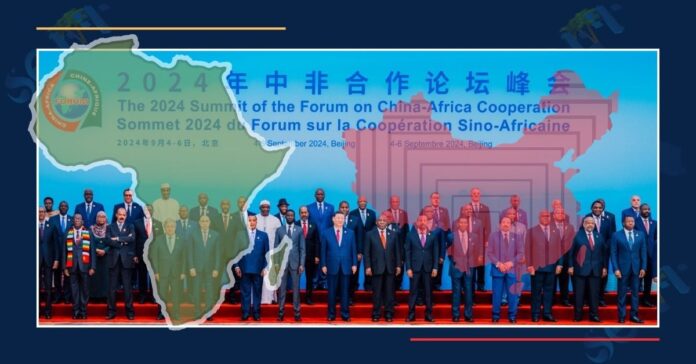
In a recent interview with TASS, the official Russian journal, the ambassador of the Russian Federation to Eritrea revealed a significant development. Asmara is actively strengthening its ties with major global players like Russia and China. This strategic move is not just for security and development but also to support Russia’s growing presence on the African continent, a move seen as a counterbalance to the dominance of Western states, similar to the USSR. The state of Eritrea voted against resolutions at the UN General Assembly denouncing the invasion of Ukraine. This was a clear signal to the Russians that the government of Eritrea (GOE) has an independent foreign policy regarding international conflicts and desires a strong strategic relationship.
As Russia and China expand their global influence, both countries are investing heavily in building alliances that can withstand Western pressure. In this high-stakes game, Eritrea, with its strategic location and crucial role in maritime and trade routes, is emerging as a key player. Eritrea’s potential to serve as a gateway to international maritime routes is a significant advantage, particularly for Russia, which is grappling with unprecedented sanctions, and China, for its Belt and Road projects. This underscores the strategic importance of Eritrea’s foreign policy shift and its potential to reshape regional geopolitics.
Since the peace agreement between Eritrea and Ethiopia in 2018, the UNSC has lifted the unjustified sanctions on the country, and the Eritrean government has come out of international isolation. To foster diplomatic relations, the president and foreign minister have been visiting several countries and participating in various international summits, contributing to the efforts to develop the nation.
According to the UN Department of Economic and Social Affairs Economic Analysis (Least Developed Countries Triennial Review 2024), Eritrea is among the least developed countries. The Eritrean government desperately needs assistance across various sectors to uplift the nation. The president of Eritrea has specifically highlighted the need for support in developing infrastructure, fishing, mining, energy, human resources, banking, and communication sectors. The country is also grappling with challenges in the agricultural industry, including famine, deforestation, and climate change, and requires assistance to overcome these. Furthermore, security is a paramount issue; hence, the Eritrean government opposes the unilateral presence of Western powers in the Red Sea and is against using the Red Sea basin as their base to attack Yemen.
To conclude, the shift to the east by the GOE to enhance its development and prosperity is under severe scrutiny by thousands of Eritreans living and working in Western countries. Many Eritreans have not forgotten the betrayal of the Western powers in the 1950s when they silenced the voice of the Eritrean people’s right to independence and decided to federate Eritrea with Ethiopia for their geopolitical interests. Moreover, in the recent border conflict with Ethiopia, the West, led by the USA, stood with Ethiopia even after the International Court of Justice’s decision. They failed to pressure Ethiopia to withdraw its troops from the occupied territories and instead imposed heavy sanctions and embargoes against Eritrea. However, Eritreans would still like to see a pragmatic approach from the Eritrean government regarding its relationship with Russia and China. They should not be part of the fight between the great powers because it will not benefit the people and the country. Finally, what this significant development holds for Eritrea’s future growth and security remains to be seen.
A Brigade of Tigrayan Avengers that started violence against peaceful Diaspora Eritreans in Europe, Canada, and the United States, to obscure Tigray Peoples Liberation Front’s (TPLF) defeat on the battlefield, is now creating havoc in a Tel Aviv neighborhood called Shkhunat Ha Tikva. The group emerged on the scene in November 2020 raising funds for the TPLF and shouting the Tigray wins slogan. It publicly declared it was a branch of the Tigray Defense Forces (TDF). When the TPLF was defeated and signed a surrender agreement in Pretoria, in November 2022, the gang changed its shirt to an old Eritrean flag and started attacking anything that was Eritrean. It has been angry at the Eritrean army’s support to the Ethiopian federal army during the 2020-2022 Ethiopian civil war and its motto is revenge.
Unlike in Israel, the law in Europe, Canada, and the United States caught up and the terrorist gang’s members were hunted down by the police and ending in prison cells. The foot soldiers have received criminal records in their files and lost their status in the countries where they reside as refugees. The Dutch government has started an investigation to determine if the group can be formally designated as a terrorist. Many of its members are fleeing Europe and trekking to the United States through Mexico. The legal measures in Europe, Canada, and the United States are expected to continue, and hundreds are yet to be prosecuted. However, for unknown reasons, unlike in Europe, Canada and the United States, in Israel the group is allowed to roam the streets of Shkhunat Ha Tikva freely, attack, robe, and kill peaceful Eritrean refugees. The members of the Terrorist group live in the Safaria, Tel Aviv neighborhood, and come to Shkhunat Ha Tikva in groups to find their victims. The group has a military-style structure and possesses a spy wing. A recently leaked video indicates that the group’s spy wing, made of women, conspiring on how a Young Eritrean refugee mother of two can be killed. In other countries this video could be enough to prosecute the conspirators, but not in Israel.
The group collects taxes from Eritrean migrants in Israel and attacks those who refuse to pay. The recent killing of an Eritrean small business owner, a father of three young kids, is a typical example how the gang terrorizes the community without any consequences. The story goes like this. A group of Brigade N’Hamedu gang members visited his small grocery store in broad daylight and asked him to increase his monthly pay previously set at $600. The grocery store owner told them because he had a big family to support, he could not increase the extortion monthly pay. The gang members ordered him to vacate his small grocery store in twenty-four hours. When he failed to do so, they came back the next day and killed him.
Reporting to the police does not get you protection and this is happening in the eyes of the sophisticated Israeli security apparatus. Observers indicate that members of the Ethiopian Israeli Felasha community who hail from the Tigray region of Ethiopia may be offering support to the gang group. Overall, because of the unhinged attack by the gang, Eritrean refugees in Israel cannot go to work, worship in a church, or take their kids to school. Again, this is happening in the eyes of the Israeli police. Gathering to celebrate their culture and baptizing their kids in a church is also unthinkable. Recently another Eritrean who left a hospital to buy a child seat for his newly born child was killed by the gang and never had a chance to see his child and wife again. The gang’s orders are specific, anyone who hangs an Eritrean flag, celebrates Eritrean holidays or does not pay protection tax is a primary target. The objective is to Erase the Eritrean identity of the refugees and instill obedience to the gang. The leaders are known to the Israeli police and spew violence on their you-tube channels every day with no consequences. Peaceful gathering is the cornerstone of Israeli democracy. But that does not apply to Eritrean refugees in Israel. Even funeral gatherings are dispersed by the Israeli police using brute force. A recent picture that shows Ethiopian Israeli police attacking Eritreans who were mourning the killing of the grocery store owner was another evidence that the Israeli police have a soft corner for the gang. Who are the Members of the Gang?
Tigrayans Who claimed Refugee states as Eritreans.
After the 1998-2000 Eritrea and Ethiopia Border War ended, TPLF and its Western handlers devised a plan to deplete Eritrean human resources and weaken its defense capabilities. As part of the strategy, they established refugee camps a few miles away from the Eritrean border, in Tigray, Ethiopia, and disseminated a wide angled propaganda to lure young Eritreans to the refugee camps. Concurrently the United Nations Higher Commissioner for Refugees (UNHCR) put a guideline that gives Eritreans automatic acceptance as refugees in any country in the world. After securing such privileges the TPLF confiscated the identification cards of the Eritreans who arrived at the refugee camps and passed them to Tigrayans who impersonated the Eritreans. The Tigrayans ended up settling as Eritrean refugees in Europe, Australia, and North America, and the Eritreans were left to languish in the refugee camps in Tigray for more than a decade. When the 2020 war between the Ethiopian Federal government and the TPLF combatants started, to revenge the government of Eritrea’s support to the Ethiopian Federal government the TPLF combatants killed and raped the Eritrean refugees who were in the Tigray refugee camps. Currently, the Tigrayan, Eritrean impersonators, are the ones who are extending the revenge act in Europe, Israel, and North America and storming Eritrean festivals and attacking unsuspecting diaspora Eritrean communities who have no interest other than celebrating their culture and history.
Eritrea Born Tigrayans and Tigrayans who Married to Eritreans.
Due to the decades-long war between Eritrea and Ethiopia, cross-border marriage between Tigrayans and Eritreans is often discouraged. Accordingly, this group has an identity crisis and dreams beyond its means. For this group to be valued in both Eritrea and Tigray It wants to create a new country in East Africa that incorporates Tigray and Eritrea. It often uses its proximity to the Eritrean and Tigrayan cultures and tries to create hate and confusion against the Eritrean Muslim community. This group often hails from the highlands of Eritrea and the Tigray region and considers the Eritrean Moslems as an obstacle to its agenda. Except for working hard to be validated in both Eritrea and Tigray, it does not have any political program. It wants to erase Eritrean history, does not believe in Eritrean independence, and desecrates everything that advances Eritreanism. It openly advocates Eritreanism as its enemy because it does not include Tigray. This group would attack anyone who carries the official Eritrean flag and expresses his/her proud Eritrean heritage. It is against everything that Eritrea is meant for Eritreans. It has a deep inferiority complex and is very violent.
Youtubers and Power-Hungry Individuals, So-Called Activists.
As we all know YouTube business flourishes when there is conflict, war, and unrest. Previously obscure YouTubers made a lot of money out of the recent (2020-2022) Ethiopian civil war. When TPLF was defeated and signed a surrender agreement in Pretoria, South Africa, they were scared that their business would dry up. Under the direction of the TPLF, they started propping up terrorist gangs, who have financial and personal problems and prepped them to throw stones and storm Eritrean diaspora community festivals. Accordingly, YouTubers such as Tefetawi Talk show, Assena, Erisat, J. Studio, ERIPM and Finan App infotech are deeply emersed in creating such a bridge that would transition them from broadcasting breaking news from Tigray to broadcasting breaking news from Europe and North America. To be clear these groups of YouTubers have had relationships with the TPLF for a considerable period and served as a channel for the TPLF to distribute money to the Terrorist gangs. In fact, at a certain point, these YouTubers were also funded by TPLF. Also, in this camp, there are power-hungry failed activists who serve as TPLF interlocutors whose main interest is to guide the terrorist activities and share money with the YouTubers and other external parties that have a vested interest in the terrorist activity against the Eritrean Diaspora communities.
Money Hungry Foot Soldiers and Disgruntled Eritreans.
TPLF invests a huge amount of money to advance these Terrorist activities. A few years ago, a TPLF financing agent, by the Nickname of “Pilot”, used to distribute money to anyone who was vocal in criticizing the Eritrean government. He was exposed because he put money into someone’s bank account who did not know the scheme and asked why anyone would put $5000 into his bank account. As we all know, being a refugee in Europe is tough. By taking such hardship as an opportunity TPLF buys the voice of unsuspecting young refugees in Europe. In addition to the lack of job opportunities, some disgruntled Eritreans who deserted the army could not return home. This group of individuals does not have the means to cover their transportation costs or sleep in a basic hotel. The combination of economic hardship, alcoholism, drug addiction, and loneliness create a ticking bomb that can explode at any time. Unfortunately, such frustration leads to crossing the rule of law and ending up in legal jeopardy very difficult to recover from. Also, many of them get hurt by the police and even end up dead.
Conclusion.
Whatever injustice may exist in Eritrea, you cannot solve it by throwing stones against women and children in Europe, North America, and Israel. The “if I cannot convince you I will destroy you” logic is the highest level of hopelessness in life. Whatever hatred the European, North American, and Israeli governments have against the Eritrean government, they have a constitutional obligation to protect the Eritrean Diaspora Community from violence perpetrated by the above-mentioned delusional groups. Violence negates constitutional order and governments end up reigning on terrorists. In the end, the violence will be between the police and the terrorists. The sad story is the Israeli Police are not showing a willingness to take the gang’s activities under control. One thing is sure, even though the Israeli police are giving the daily killing of peaceful Eritreans a deaf ear, the continuous cry of Eritrean kids and mothers in Israel will not go unnoticed.
What happened in Axum on November 28, 2020, has been a fertile ground for the Western media and their surrogates like Amnesty International to defame their usual target Eritrea. The duplicity, hypocrisy, and double standard of the Western media and their surrogates is an open book for the world to see and I do not want to dwell on it in this article. The story of the Axum incident has been presented in many ways. Some presented it as a conflict between those who wanted to ransack a historical church and those who wanted to protect it. Others presented it as a conflict between religions. None of the stories written about the Axum incident were true. They were sensational stories designed to catch the Western mantra of Human rights violation by a foreign force. In this article, I will describe what happened on the morning of November 28th, 2020, in Axum.
Fig 1.: Axum map.
On November 4, 2020, The Tigray Peoples Liberation Front (TPLF) militia attacked the heavily armed Ethiopian Northern Command which had about 30,000 personnel. While many of the members of the Northen Command were massacred or captured by the close to 200,000 TPLF militia on the spot, some were able to flee to Eritrea. Being angry about Eritrea allowing the fleeing Ethiopian soldiers to enter its territory, the TPLF militia that were following the fleeing Ethiopian soldiers attacked the Eritrean army in the Badme front and later hurled a dozen missiles at the world heritage site capital city of Eritrea, Asmara. The Eritrean army did not have any choice except to support the Ethiopian Federal Army and hunt down the TPLF Militia that created havoc in Ethiopia and Eritrea. Accordingly, the Ethiopian Army supported by Eritrean Army routed the TPLF rag-tag militia in a matter of two weeks and controlled most of Tigray.
On November 19th, 2020, the Ethiopian and Eritrean Soldiers entered Axum. While the Ethiopian soldiers were patrolling the city, the Eritrean soldiers camped on a mountainous area located on the outskirts of the city called Mai Koho (see figure 1 above). This was consistent with how the Eritrean soldiers positioned themselves in other Tigray cities they controlled as well. Eritrean soldiers always stayed away from cities except in Adigrat, which was under the full control of the Eritrean Army. In Adigrat, a city larger than Axum, there was no conflict between the Eritrean Army and its dwellers. In fact, the city dwellers were very happy with the rule of law and sense of security the Eritrean soldiers instilled in the city.
In Axum, the Ethiopian soldiers patrolled the city for close to seven days, and about 20 Eritrean soldiers stayed in their camp in a mountainous area outside of the city. For some reason, the Ethiopian soldiers left the city and the 20 Eritrean soldiers remained where they were camping. On the night of November 27, close to 300 TPLF militia from the surrounding areas entered Axum city. They gathered about 200 youngsters who previously received very minimum training and armed them with guns that they recovered from a former army depot in the city. Others were tasked with delivering food and water to the militia and ill-trained youth from the city.
The TPLF militia told the youth they armed, the Eritrean soldiers who were camping at the mountainous area called Mai Koho did not leave with the Ethiopian soldiers because they wanted to surrender to the TPLF militia, and they needed to go to disarm them. Accordingly, on November 28th at 5 a.m. the close 500 TPLF militia and freshly armed youth started attacking the 20 Eritrean soldiers. The war raged for close to three hours and the Eritrean soldiers suffered some casualties but were able to defend their camp. The ill-trained youth from the City of Axum were used as cannon fodders and suffered the heaviest loss. At about the same time Tigray radio and TV declared that the TPLF militia and allied youth destroyed the Eritrean army and recaptured Axum. But the victory breaking news was short-lived. Later the Eritrean soldiers received a reinforcement and the TPLF militia retreated to the city, leaving the dead and injured youth behind.
A while ago I read a quote from a fellow writer that reads “TPLF heroism is different because it does not care about human life”. Driving clue less ill-trained youth to a war they never experienced before is a crime against humanity. That is what happened on November 28th, 2020, in Axum. This was not the only time TPLF conscripted kids, as young as 13 and 14, for the Tigray war. It was a norm in the two-year war rather than an exception and that is why hundreds of thousands of Tigray youths perished. For TPLF, if the ill-trained youth kill an enemy, they are heroes and when they get killed, they are civilians. The name of the game is deception.
Conclusion.
TPLF is a click that erases the boundary between a kid and an adult, a truth and a lie, and a soldier and a civilian. The November 28th Axum war was fought between 20 defending Eritrean soldiers and close to 500 TPLF militia and allied youth attackers. As Western media and their Surrogates presented it, it was not an attack on civilians. When the TPLF militia lost the attack on 20 Eritrean soldiers it did not take time to claim a massacre of civilians by Eritrean soldiers. You cannot have it both ways. The lesson is, do not provoke a sleeping Giant. When you provoke there will be a swift response.
Awet N’Hafash and Eternal Glory to Our Martyrs.
Seyoum Teshome, a prosperity party hired YouTuber, has been lying for quite some time. He often believes he has the monopoly of information, and he could lie about anything, and no one disproves him. Recently he has been tasked by the Prosperity Party to mend the prosperity party’s rough relationship with the Tigray Peoples Liberation Front (TPLF) by making Eritrea a sacrifice lamb. Although Brigadier General Tesfaye Ayalew from the Ethiopian Army confirmed that the Ethiopian Army killed the three TPLF leaders because they refused to surrender, recently Seyoum Teshome lied by saying Eritrean Army Killed former TPLF leaders Seyoum Mesfin, Abay Tsehaye and Asmelash Woldeslassie. He also credited the Ethiopian army for saving the life of another TPLF official Sebhat Nega and others. The objective of this article is not to delve into the discussion of whether the former TPLF officials deserved to be killed. It is just to set the facts straight and expose prosperity party cadre, Seyoum Teshome’s lies.
The truth is, as Brigadier General Tesfaye Ayalew put it unambiguously, TPLF former officials were killed by the Ethiopian Army. In the video above, on track 8:35 to 9:15, the injured former TPLF special force member who was hiding in the same area where the former TPLF officials were killed explains how it happened. In his words, the TPLF officials were hiding in a villager’s home close to the Tekeze River. When the Ethiopian Army approached the area the villager who was hosting the TPLF officials in his home asked them to leave. They left the home where they were hiding and traveled along the embankment of the Tekeze River between Cher and Shintana. Many Ethiopian Army soldiers who had information about the whereabouts of the TPLF officials went to the home where the TPLF officials were hiding. They threatened the villager with his life and asked him to show them where the TPLF officials were. The scared villager showed the Ethiopian Army the place where the TPLF officials were hiding, and a short gunfight ensued. Accordingly, the TPLF officials and their bodyguards were killed in the spot. The Eritrean army came to the area weeks after the killing of the TPLF officials.
Whether it is good or bad, history should be written and told as is. Falsifying history for political purposes often has more damage than benefits.
The United Nations Development Programme (UNDP) is reporting that women in Eritrea not only are taking the lead in helping to promote sustainable agriculture in the country but also those women are involved in addressing the challenges of climate change. In the Habero Tsaeda subregion alone, 30 women — including single mother Hawa Idris Ismael — are engaged in soil and water conservation efforts to save ecosystems, establish sustainable land practices, and safeguard water supplies.
The initiative has been running in Eritrea’s Anseba, Northern Red Sea, and Southern Red Sea regions for the last two years. It will work to restore degraded lands and improve the lives of smallholder climate change-affected farmers. The project is consistent with the Eritrean national development priorities as well as contributes to existential Sustainable Development Goals (SDGs) of the UN, specifically in the areas of poverty eradication, gender equality, and climate change mitigation.
Major Achievements:
Soil & water conservation work carried out in 90 subzone sites
Restoration of 6,100 hectares of land
Direct benefits to 16,065 active conservation-based households
The project’s success is contingent upon community collaboration and resilience, and it was built here for the purposes of long-term positive change. In the village of Habero Tselim, residents have a never-ending supply of water and are able to access clean water from their nearby springs all year round. Villagers were able to do agriculture and get the fruits of their fertile land only because of this development.
Despite challenges such as severe water shortages and drought, the unwavering spirit of the women is contributing to this positive transformation. UNDP stands ready to continue to work with the Government of the State of Eritrea to build the resilience and adaptive capacity of vulnerable groups, with a strong focus on mainstreaming gender equality including women’s empowerment.
With an ambitious vision, remarkable action, and strong partnerships, this drive not only changes the face of land and livelihood in Eritrea, it lays the cornerstone for a more sustainable future — one which ensures that we reap as we sow in the years to come.