
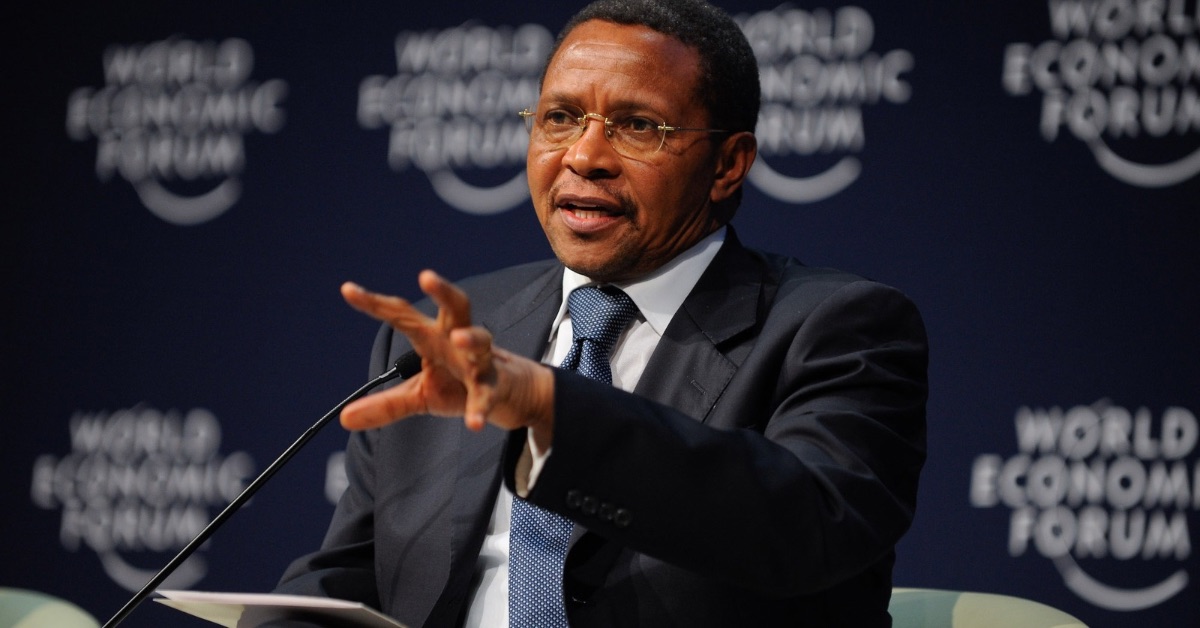
The African Union’s decision to appoint former Tanzanian president Jakaya Kikwete as High Representative for the Horn of Africa and the Red Sea comes at a difficult moment for the region. The AU says his task will be to support preventive diplomacy, political dialogue, confidence-building, and coordination with regional and international bodies working on peace and security.
That sounds straightforward on paper. In reality, he is stepping into one of the most tense and crowded political theaters in Africa.
The Horn of Africa and the Red Sea are no longer separate security spaces. What happens on land now quickly affects the sea, and what happens at sea quickly affects politics on land. A war in Sudan can shake Red Sea port security. Attacks on commercial shipping near Bab el-Mandeb can disrupt trade routes, raise costs, and increase outside military activity. A dispute over port access in one corner of the region can trigger diplomatic pressure, military partnerships, and competing alliances somewhere else. Everything is connected now, and that is what makes the region so difficult to manage.
For Eritrea, this matters in very practical ways. The issue is not only war or peace in the abstract. It is sovereignty. It is whether outside powers and larger neighboring states use regional instability to push political agendas, military presence, or pressure over ports and sea access. It is also about coastal security, trade resilience, and protecting the country from being dragged into conflicts that do not serve Eritrean interests.
The danger today is coming from many directions at once. Sudan remains one of the biggest sources of instability in the western Red Sea corridor. The war there has created armed supply routes, mass displacement, and new opportunities for outside powers seeking influence along the coast. In the east, the aftershocks of Ethiopia’s push for maritime access continue to shape politics between Addis Ababa, Mogadishu, and Somaliland. In the wider Red Sea, attacks on shipping and the growing use of drones and missiles have shown how quickly maritime insecurity can disrupt global trade and attract foreign military responses.
This is the environment Kikwete now has to work in.
He is not arriving as a commander with enforcement power. He is arriving as a political coordinator. That distinction matters. His role is to talk, align, persuade, calm tensions, and reduce diplomatic fragmentation. He can help create channels between governments. He can encourage confidence-building steps. He can help reduce the number of competing mediation tracks that often allow armed actors to play one platform against another. But he cannot impose solutions by force, and that limits what even a skilled envoy can achieve.
Still, Kikwete is not without assets.
He is a former head of state with long experience in government and diplomacy. He served as president of Tanzania from 2005 to 2015 and held senior ministerial roles before that. He has also worked in AU-related diplomacy before, including as AU High Representative for Libya. Those experiences give him credibility, access, and familiarity with the slow, difficult work of mediation. He knows how continental diplomacy functions. He knows how to speak to presidents, ministers, donors, and institutions. That gives him a level of reach that many ordinary envoys do not have.
But experience alone will not make him effective.
His biggest challenge will be the region itself. The Horn is full of overlapping crises, and each one has its own local actors, outside backers, and political sensitivities. Sudan is burning. Somalia remains fragile. Ethiopia’s regional ambitions continue to create anxiety. Djibouti remains a center of foreign military competition. Gulf states, Turkey, the United States, China, the European Union, Russia, Iran, and Israel all have interests tied in one way or another to the Red Sea corridor. In such an environment, peace efforts often do not fail because there is no envoy. They fail because too many actors want different outcomes.
That is why Kikwete’s real test will be whether he can reduce political noise and produce practical risk reduction.
If he is effective, it will probably not be because he delivers one dramatic grand bargain. It will be because he helps lower the temperature. He may be able to encourage quiet diplomacy between states that no longer trust each other. He may help create rules or understandings around incidents at sea, along borders, or near ports. He may help bring more coherence between the AU, IGAD, the UN, and Arab institutions that often work in parallel instead of together. In a region this volatile, even modest diplomatic order can have real value.
From an Eritrean point of view, however, engagement must be cautious and clear-eyed.
Any regional framework that ignores sovereignty, rewards pressure politics, or normalizes aggressive narratives about access to the Red Sea will not bring stability. It will deepen mistrust. Eritrea therefore has a strong interest in engaging Kikwete’s office early, firmly, and on clear principles: respect for sovereignty, rejection of coercive sea-access politics, non-interference, and equal treatment of littoral states. If the AU wants confidence-building, it must begin from those principles, not from the idea that smaller states should absorb the demands of larger ones in the name of regional compromise.
That is also where Kikwete’s neutrality will be tested. In theory, he is expected to serve peace. In practice, every envoy operates inside institutional and political pressure. The AU wants unity. External partners want stability on their terms. Powerful states want their interests protected. Smaller states want guarantees that “dialogue” will not become a polite word for pressure. Kikwete will have to navigate all of that. His success will depend not only on his skill, but on whether he can convince the region that he is there to reduce danger, not to package it more elegantly.
The Horn of Africa does not need more diplomatic ceremony. It needs disciplined, honest engagement rooted in reality. It needs less fragmentation, fewer proxy games, and more respect for the security concerns of states that sit directly on the fault lines of the Red Sea.
Kikwete brings stature and experience to the job. That gives the AU a chance. But in a region shaped by war, rivalry, and outside competition, the real measure of his work will be simple: can he help prevent the next crisis from becoming a larger one?
For Eritrea, that is the question that matters most.