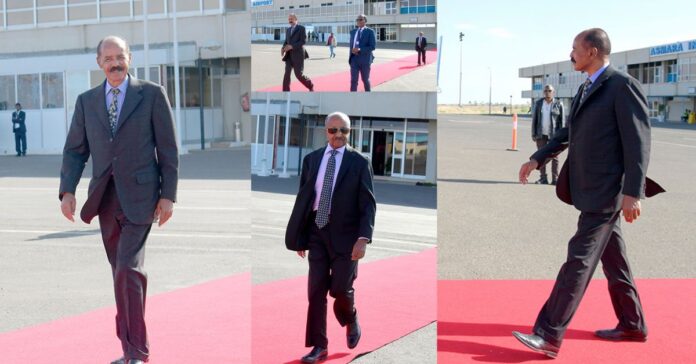
A coalition of self-proclaimed experts on the Horn of Africa is currently lobbying the new Trump administration to formally recognize Somaliland and support regime change in Eritrea. These initiatives are championed and propagated by individuals whose primary objective seems to be fostering instability under the pretext of promoting freedom and self-determination for local populations. However, their deeper motivations are evident: they aim to establish dominance over strategically significant regions and exploit the natural resources within these nations.
Somaliland
The region serves as a crucial corridor for international trade and maritime navigation. Amid ongoing geopolitical tensions between Somalia and Ethiopia, there has been significant discourse surrounding the implications of U.S. recognition of Somaliland, particularly in light of strategic military interests in the area. This includes Israel’s establishment of a military base to monitor Iranian activities and its proxies in Yemen.
Proponents argue that U.S. acknowledgment of Somaliland’s independence could be pivotal in curbing Iranian influence in the Horn of Africa. Additionally, it is claimed that such recognition could yield strategic advantages for Ethiopia. However, advocates of these positions often overlook the potential ramifications on regional stability and security dynamics.
Regime Changes in Eritrea
In recent weeks, individuals such as Michael Rubin and Martin Plaut, alongside other proponents of interventionist policies, have demonstrated a concerted effort to advocate for regime change in Eritrea. This campaign includes facilitating the establishment of a government-in-exile that lacks recognition or legitimacy among the Eritrean populace. Furthermore, it provides support to various political opposition groups, some of which have historically called for the territorial disintegration of Eritrea and have aligned themselves with adversarial factions in neighboring countries intent on undermining Eritrean sovereignty.
Certain oppositional factions are effectively instruments used to destabilize and dismantle Eritrea, serving the interests of external actors aiming to erode national unity and undermine Eritrean identity.
One might question the rationale behind their aggressive advocacy for such inherently destructive and intolerable actions. The answer lies in their disregard for the associated costs and ramifications. Their primary concern is narrowly aligned with their own vested interests.
How Should We Confront Them?
International legal frameworks may pose challenges to the Trump administration’s potential recognition of Somaliland. However, historically, U.S. leadership has often prioritized national interests over adherence to international legal standards.
It is crucial for the people of the region to remain critically aware of the narratives and disinformation propagated by those seeking to sow discord among nations, as these tactics often create a conducive environment for exploitation.
While significant reform and transformation of socio-political landscapes are needed across all countries in the region, these changes must originate from the people themselves. Reform processes should be rooted in local communities and led by the citizenry, ensuring ownership and sustainable outcomes. External influences, often motivated by self-serving interests and indifferent to the long-term welfare of these societies, must not dictate the path to reform. Instead, the power to shape these changes should remain firmly in the hands of local stakeholders.
The President of the Federal Republic of Somalia and the Prime Minister of Ethiopia signed a treaty to resolve their dispute stemming from the Memorandum of Understanding between Ethiopia and the secessionist Somaliland in January 2024.
What Was the Ankara Deal?
The Turkey-brokered deal is not yet final or binding, but it represents an agreement by both countries to begin negotiations regarding Ethiopia’s claim for sea access. According to the treaty, both countries agreed to respect each other’s sovereignty and collaborate to find common ground for enhancing commercial and trade exchanges, which would benefit the countries and the region.
What Did the Leaders Say?
Soon after the treaty was signed, Ethiopia’s Prime Minister stated, “Ethiopia respects the territorial integrity and sovereignty of Somalia, but any agreement or deal they make with Somaliland is out of the business of the Republic of Somalia.” This contradictory statement signals that the Ethiopian government may not intend to fully respect the treaty.
Although both leaders affirmed their willingness to talk and resolve disputes, the conflict is far from over, with no significant breakthroughs achieved. Both sides appear to be buying time to strengthen their respective positions for the unresolved issues.
What Will Happen to the Memorandum of Understanding (MoU)?
In the recent election in Somaliland, a new president, Abdirahman Mohamed Abdullahi Irro, assumed office and nominated a foreign minister known for opposing the Memorandum of Understanding signed by the former administration with Ethiopia. This indicates that the people of Somaliland, an autonomous region, are largely against any deals with Ethiopia. Furthermore, the newly elected president has announced plans to review the agreement, emphasizing its lack of transparency and casting doubt on its validity. The situation remains unclear, but given the region’s history, significant developments could occur.
Regional and Future Perspectives
After the signing of the treaty in Ankara, reports emerged that militias in Jubaland, allegedly supported by Ethiopian soldiers stationed in Somalia since 2006 under the pretext of fighting al-Shabaab, engaged in clashes with the federal army. Unverified reports suggest that several federal government soldiers were killed, with many fleeing to Kenya before returning to Somalia. Concurrently, a delegation from Somalia led by the Foreign Minister arrived in Ethiopia to initiate work on normalizing relations under the Ankara Treaty.
On December 21, 2024, French President Emmanuel Macron visited Ethiopia in what appeared to be a politically motivated move amidst his domestic challenges. The Ethiopian Prime Minister welcomed Macron with an unprecedented ceremony, yet the visit yielded no tangible outcomes. Macron declined to support Ethiopia’s bid for sea access, emphasizing that such matters depend on the consent of sovereign nations, thereby reaffirming international law regarding territorial integrity. This outcome highlighted the Prime Minister’s diplomatic failure.
Subsequently, the Somali President visited Eritrea, following an earlier visit to Mogadishu by Egypt’s Foreign Minister. These visits signal to Ethiopia that Somalia is not diplomatically isolated.
Somali President in Addis Ababa
President Hassan Sheikh Mohamud visited Ethiopia on January 11, 2025, following his attendance at an African agriculture summit in Uganda. His office described the visit as a follow-up to the Ankara Treaty, aiming to resolve disputes and begin technical negotiations by February’s end. However, analysts believe the visit primarily sought to appease Turkish mediators, on whom Somalia heavily relies for security and economic support.
Ethiopia’s Position
Ethiopia appears isolated in its approach, which has been perceived as disingenuous and unacceptable to regional actors. Instead of seeking external and colonial powers’ assistance to destabilize the region, Ethiopia should pursue respectful bilateral agreements to foster mutual growth and stability. The sovereignty of Red Sea nations must remain inviolate.
Conclusion
As 2025 begins, the United States’ regional policy under President Donald Trump remains unclear. The Middle East, particularly Yemen’s ongoing crisis, continues to impact regional geopolitics, with implications for security and stability. Middle-power nations such as Turkey, the UAE, Saudi Arabia, and Iran also play crucial roles, while major powers like the European Union, China, and Russia monitor developments closely to safeguard their strategic interests.
The Ankara Treaty underscores the need for African-led solutions to African problems. Organizations such as the African Union and IGAD should have taken the lead in addressing the dispute. Ethiopia must recognize that regional collaboration is the only sustainable path toward peace and prosperity.
Since its inception in 1963, the organization of the African Unity (OAU) and its successor the African Union (AU) has been hosted by Ethiopia. Emperor Haile Selassie of Ethiopia was its first chairman. Among the major pillars of the African Union’s mission is safeguarding the sovereignty and territorial integrity of member states. Affirming commitments to its objectives, in its Cairo Declaration of Article 2 of resolution 16(1), the OAU pledged the independent African states to respect their inherited colonial borders. Through the Cairo declaration, the OAU asserted that colonial borders be a sacrosanct boundary of African countries. In its effort to promote peace and security throughout the continent, the African Union established the Peace and Security Council in December 2003. The specific goal of the Peace and Security Council (PSC) is “prevention, management, and resolution of conflicts”. In line with the above agreements and objectives of the African Union, we will see if Ethiopia deserves to continue hosting the African Union.
ETHIOPIA IS A THREAT TO REGIONAL PEACE.
Somalia.
Contrary to the objectives of the African Union, Ethiopia has been a source of instability in the Horn of Africa region. Following the 1977–1978 border war with Somalia, Ethiopia worked hard to make Somalia a failed state for three decades. In 2006 when Somalis started to organize themselves under the Union of Islamic Courts and begin to bring normalcy to Somalia Ethiopia invaded Somalia. The invasion of Somalia by Ethiopia created Al-Shabaab. In the pretext of fighting Al-Shabaab Ethiopia is still in Somalia. According to the United Nations monitoring group report, Ethiopia coupled with Yemen are the major source of Arms and logistics to Al-Shabaab. Such evidence indicates Ethiopia wants Somalia to remain a failed state.
Eritrea.
After being colonized by Italy for 50 years (1889-1941) and ten years (1941-1951) under the British Interim Administration, the United Nations forced Eritrea to be federated with Ethiopia in 1952. In 1962, Ethiopia’s emperor Haile Selassie unilaterally dissolved the Federation and annexed Eritrea, triggering a 30-year armed struggle in Eritrea. Eritrea which has a distinct flag, parliament, and national boundaries based on the 1900, 1902, and 1908 colonial agreements between Ethiopia and Italy was turned into an administrative region of Ethiopia. Although the annexation of Eritrea happened two years before the 1964 Cairo declaration, it was a clear indication that Ethiopia had not been committed to peace and security in Africa. After 30 years of war and destruction, the Eritrean People’s Liberation Front (EPLF) completely Liberated Eritrea in 1991. Through the UN and the AU monitored referendum Eritrea became an independent country on May 24, 1993. Again, in violation of the 1964 Cairo declaration, in 1998 Ethiopia claimed the Badme region of Eritrea and conducted a two-year devastating war against Eritrea. In 2002 the Eritrea and Ethiopia boundary commission based on the colonial agreements of 1900, 1902, and 1908 declared Badme was an Eritrean territory. Ethiopia rejected the ruling and occupied Badme and other Eritrean territories for twenty years. As a continuation of the Ethiopian leader’s act of undermining colonial boundaries recently the current Prime Minister of Ethiopia Dr. Abiy Ahmed attempted to replace the 1964 Cairo declaration with Ethnic based boundaries. He argued that because the Afar Ethnic group live in both Eritrea and Ethiopia, the Ethiopian Afars should have a say on the Eritrean Red Sea. He continued to say because Somalis live in both Ethiopia and Somalia the Ethiopian Somalis should have a say on the Indian ocean. In violation of the 1964 OAU declaration, he claimed to have a historical right to own a port and corridor to the sea. These statements clearly indicate that Ethiopia is not serious about the 1964 Cairo declaration and the 1982 UN convention or Law of the Sea.
Sudan.
Ethiopia’s continuous border conflict with Sudan in the Alfashaga region also indicates Ethiopia’s lack of commitment to settle international border problems in line with the 1964 Cairo Declaration. When the Tigray war started Sudan reclaimed what it called land that was occupied by Ethiopia. The border problem between Sudan and Ethiopia is a dormant conflict that could erupt at any time.
ETHIOPIA HAS A LONG HISTORY OF VIOLENT REGIME CHANGES AND PERSISTENT CONFLICTS.
Focusing on the history of modern Ethiopia, Emperor Haile Selassie, the first OAU chairman, was overthrown in a violent military coup by a Marxist–Leninist junta, the Derg. On the morning of 23 November 1974, the Derg executed 54 Haile Selassie’s Ministers, and six were killed in a shootout with the executioners. Haile Selassie was assassinated on 27 August 1975 by the then Ethiopian Military Junta. The catastrophic famine of 1983–1985 was what brought the Derg junta government the most international attention. Mengistu’s government is estimated to be responsible for the deaths of 500,000 to 2,000,000 Ethiopians, mostly during the 1983–1985 famine in Ethiopia and close to 750, 000 people due to the red terror execution of civilians. Consistent with what the Derg military Junta did to Haile Selassie, after waging a war for 17 years, the Tigray Liberation Front (TPLF) toppled the Derg Marxist Leninist Junta in 1991. Although the TPLF is credited with what resembles to an economic change in Ethiopia, the ethnic-based federalism system it established continues to be a time bomb in Ethiopia. Ethnic conflicts in Ethiopia are believed to have killed close to two million and displaced five million Ethiopians. The Oromo and Amhara youth uprising toppled the Tigray liberation front-led government in 1998 and brought the current Prime Minister, Dr. Abiy Ahmed, to power. Although in the beginning, the transition of power seemed peaceful it was followed by a deadly conflict between the Ethiopian Federal Government and the TPLF. The conflict resulted in the death of close to two million people in Tigray, Amhara, and Afar and the widespread destruction of property and infrastructure. Regardless of the ongoing wars in Amhara and Oromo, recently the Prime Minister of Ethiopia Dr. Abiy Ahmed made a dangerous speech to his parliament that could destabilize the whole Horn of Africa region. Ethiopian leaders continue to have a strong appetite for war, and they do not seem to survive without it.
CONCLUSION.
The saddest part of the story is a leader, Prime Minister Abiy Ahmed, whom Ethiopians and people of the neighboring countries hoped would change the trajectory of war and conflicts in Ethiopia and received a noble prize has become the prime instigator of war in Ethiopia. On top of the ongoing wars in Amhara and Oromo and the dormant deadly conflict in Tigray currently, Prime Minister Abiy Ahmed is eying an invasion of neighboring countries, especially Eritrea. Therefore, Ethiopia’s continuous disregard for the 1964 Cairo declaration on colonial boundaries and its persistent internal conflicts do not reflect the values of the African Union. In fact, the Ethiopian utter disregard for the African Union’s declarations and agreements is making the African Union weaker and partial. The recent threat of the Prime Minister on neighboring countries should be a warning bell to the African Union. If Ethiopia continues to undermine the African Union’s declarations and agreements, it may be disqualifying itself from continuing to be the host of the African Union. It is time for the AU and its member states to send a strong warning to Ethiopia.
Successful peace processes depend upon correctly identifying the forces that sustain a conflict. When that diagnosis is incomplete, even the most determined diplomatic efforts are unlikely to produce lasting peace. Sudan illustrates this dilemma with particular clarity. More than three years after the outbreak of its devastating civil war, numerous regional and international initiatives have sought to end the fighting. Conferences have been convened, ceasefires announced, and mediation mechanisms established, yet the conflict continues while the humanitarian catastrophe deepens. Millions have been displaced, tens of thousands have lost their lives, and entire communities have been devastated. The question is no longer whether Sudan needs peace, but why repeated efforts to secure it have failed to produce a meaningful breakthrough.
One recent attempt to answer this question appeared in an article published by the Middle East Forum on 9 July 2026 entitled “Sudan’s War, Iran’s Return, and the Ethiopia Blind Spot in U.S. Policy.” Its author, Blen M. Diriba—an Ethiopian legal and policy analyst, Executive Director of Horn Review, and an Associate Researcher at Ethiopia’s Institute of Foreign Affairs—argues that one of the principal shortcomings of current diplomatic efforts is the failure to recognise Ethiopia’s central role in any future settlement of Sudan’s conflict.[1]
Her article performs an important service by reminding readers that Sudan’s war cannot be understood solely through the actions of the Sudanese Armed Forces (SAF) and the Rapid Support Forces (RSF). It correctly situates the conflict within the wider geopolitical realities of the Horn of Africa and the Red Sea and argues that neighbouring countries inevitably have legitimate interests in Sudan’s stability. On that broader proposition, I find myself in full agreement.
Where I respectfully differ is in identifying what I believe to be the real blind spot.
In my view, the principal weakness of current peace efforts is not the failure to place Ethiopia at the centre of diplomatic initiatives. Rather, it is the persistent failure to confront the external military, financial, and logistical support that has enabled the conflict to continue despite repeated mediation efforts. Equally troubling is the reluctance of many international actors to hold those responsible for sustaining the conflict politically accountable. As a result, diplomacy has concentrated overwhelmingly on persuading the Sudanese belligerents to negotiate while paying comparatively little attention to the wider regional dynamics that continue to fuel the war.
This distinction is far from academic. Every peace process rests upon an understanding of the conflict it seeks to resolve. If that understanding is incomplete, the resulting diplomatic strategy is unlikely to address the real causes of the war. The problem, therefore, is not simply one of mediation; it is first and foremost one of diagnosis. Unless the nature of the conflict is properly understood, even well-intentioned diplomatic initiatives are unlikely to achieve the lasting peace that Sudan so desperately needs.
Misdiagnosing the Conflict
One of the fundamental weaknesses in much of the international debate is the continued tendency to portray Sudan’s war primarily as a confrontation between the SAF and the RSF. While these remain the two principal military protagonists, such a description no longer reflects the full reality of the conflict. Over the past three years, Sudan’s civil war has evolved into a regionalised and increasingly internationalised conflict sustained by actors, interests and networks extending well beyond Sudan’s borders.
This evolution is evident not only in the growing involvement of regional powers but also in the increasingly transnational character of the conflict itself. External military assistance, financial support, logistical networks, political backing and the recruitment of foreign fighters have all become integral to the continuation of hostilities. Reports have documented the recruitment of foreign combatants, including Colombian mercenaries as well as recruits originating from neighbouring countries such as Chad, South Sudan and Ethiopia. The United States has itself imposed sanctions on individuals and companies allegedly involved in recruitment networks for Colombian fighters, underscoring the extent to which the conflict has become embedded within transnational systems rather than remaining a purely domestic struggle.[2]
The internationalisation of the conflict extends well beyond the recruitment of foreign fighters. Credible investigative reporting has documented allegations concerning external military assistance, logistical support and supply networks involving regional actors. These reports, taken together, suggest that the trajectory of the conflict is being influenced not only by decisions taken in Khartoum or on the battlefield, but also by political, financial, and military decisions taken beyond Sudan’s borders.[3]
The Missing Dimension: The Real Blind Spot
Recognising that Sudan’s conflict has become increasingly regionalised inevitably changes the way one thinks about peace. If external actors have become integral to sustaining the conflict, then diplomacy cannot be directed exclusively at the Sudanese belligerents. Negotiations between the SAF and the RSF remain indispensable, but they are no longer sufficient. A peace process that focuses only on those fighting the war while overlooking those enabling it is unlikely to produce a durable settlement.
Perhaps the most troubling aspect of the international response is not the absence of information, but the absence of corresponding action. Over time, credible reporting has increasingly drawn attention to external military assistance, logistical networks, and financial support linked to the conflict. Yet these revelations have rarely been matched by sustained diplomatic efforts aimed at disrupting the regional structures that continue to fuel the war. In many respects, international diplomacy has concentrated on managing the consequences of the conflict rather than addressing one of its principal causes.
This imbalance became particularly evident as the humanitarian situation deteriorated. International concern understandably intensified following the catastrophic developments in and around Al Fasher, where the scale of civilian suffering became impossible to ignore.[4] However, while humanitarian diplomacy became more urgent, comparatively less attention was devoted to the broader regional mechanisms that had contributed to prolonging the conflict. Humanitarian assistance remains indispensable, but it cannot substitute for addressing the political and military dynamics that continue to sustain the war.
The same imbalance is reflected in the design of successive peace initiatives. Considerable effort has been invested in bringing the Sudanese parties to the negotiating table, yet comparatively little attention has been devoted to the external actors whose policies, resources, and networks have significantly influenced the course of the conflict. This is not to suggest that negotiations between the Sudanese parties are unnecessary. On the contrary, no lasting settlement can be achieved without them. The difficulty lies in assuming that negotiations alone can succeed while the wider regional environment remains largely unchanged.
It is precisely here that I believe the current approach falls short. Diplomacy has tended to treat external involvement as a secondary complication rather than as a central feature of the conflict itself. Consequently, much of the international effort has been directed towards persuading the belligerents to compromise, while insufficient emphasis has been placed on reducing the incentives and capabilities that allow the conflict to continue. Peace initiatives have therefore sought to end the fighting without adequately confronting the conditions that make continued fighting possible.
The consequences of this approach are increasingly apparent. As long as external military assistance, financial resources, and logistical support continue to reach the parties to the conflict, diplomacy alone is unlikely to achieve the breakthrough that Sudan so desperately needs. Wars are rarely sustained by military decisions alone. They endure because political, financial, and logistical systems continue to make them possible.
A conflict sustained from beyond a country’s borders cannot be resolved solely within those borders.
Regional Ownership: Why Neighbours Matter
Recognising the regionalisation of Sudan’s conflict does not mean that neighbouring countries should determine Sudan’s political future. Nor does it imply that responsibility for resolving the conflict should shift away from the Sudanese people themselves. On the contrary, any lasting settlement must remain fundamentally Sudanese-owned. However, it would be equally mistaken to overlook the indispensable role that neighbouring states can play in facilitating such a process.
Sudan’s neighbours are not simply interested observers. They are the countries most directly affected by the conflict. They have absorbed successive waves of refugees, confronted the consequences of cross-border insecurity, and lived for decades with the political, economic, and humanitarian effects of instability in Sudan. More importantly, they possess a deeper understanding of Sudan’s political, social, tribal, and cultural dynamics than more distant actors. Their geographical proximity, historical interaction, and extensive cultural and ethnic ties provide knowledge that no international conference can replicate. Any credible peace initiative should therefore involve neighbouring states as genuine partners rather than treating them as peripheral participants.
At the same time, proximity alone does not automatically qualify a state to serve as an effective peace broker. It is important to distinguish between being a regional stakeholder and being an impartial facilitator. Every neighbouring country has legitimate interests in Sudan’s stability. The challenge is to ensure that those interests contribute to peace rather than complicate it.
This distinction has become increasingly important as the conflict has evolved. Not all neighbouring states have adopted the same approach. Some have been perceived as providing political platforms or forms of tacit legitimacy to parallel governing structures, while others have been accused by the Sudanese government of supporting one of the belligerents. Whether those accusations are accepted or disputed is ultimately less important than their effect on the peace process itself. A mediation initiative cannot command the confidence of all parties if one of the principal participants believes that some of those facilitating the process have themselves become part of the conflict.
This helps explain why successive diplomatic initiatives have struggled to gain the confidence of the Sudanese government. On numerous occasions, Khartoum has either declined to participate in particular mediation efforts or publicly questioned their credibility, arguing that states accused of supporting one side of the conflict cannot simultaneously present themselves as neutral brokers.[5] Whether or not every allegation is ultimately substantiated is not the central issue. The more important point is that peace processes depend not only on influence but also on confidence. Without confidence in the impartiality of those facilitating negotiations, diplomacy inevitably loses credibility.
It is against this broader background that proposals to place Ethiopia at the centre of Sudan’s peace process should be assessed. Ethiopia unquestionably has legitimate interests in developments in Sudan. The two countries share a long border, unresolved differences over al-Fashaga, continuing disagreements concerning the Grand Ethiopian Renaissance Dam (GERD), concerns relating to refugees and cross-border security, and a common interest in regional stability. These are legitimate bilateral issues that any future Sudanese government will inevitably have to address through dialogue with Addis Ababa.
However, legitimate strategic interests should not automatically translate into a leading role in shaping another country’s internal political settlement. The issues dividing Sudan and Ethiopia are fundamentally bilateral and are best resolved through negotiations between two sovereign governments. They do not, in themselves, justify placing Ethiopia at the centre of Sudan’s internal peace process. Moreover, Ethiopia’s role cannot be viewed entirely independently of the wider regional context, including its close strategic relationship with the United Arab Emirates and the allegations that have emerged concerning external logistical support linked to the conflict. [3]
Among Sudan’s neighbours, Eritrea occupies a distinctive position. Unlike some neighbouring states, it has no outstanding territorial or strategic disputes with Sudan that could directly influence its approach to the conflict. From the outset of the war, Eritrea has consistently affirmed Sudan’s sovereignty and territorial integrity while advocating a Sudanese-owned political process free from external interference.[6]
Eritrea’s potential contribution extends beyond the consistency of its official position. It also derives from its long historical relationship with Sudan, extensive cross-border communities and deep cultural and ethnic ties that provide a nuanced understanding of Sudan’s internal dynamics. These characteristics do not confer upon Eritrea a privileged role in determining Sudan’s future. Rather, they make it a constructive regional partner capable of supporting international efforts aimed at facilitating a genuinely Sudanese-led political process.
Neighbouring countries should therefore neither be ignored nor treated uniformly. Their respective roles should be assessed according to the contribution they can make to a credible and inclusive peace process. Those genuinely committed to respecting Sudan’s sovereignty and territorial integrity while supporting a Sudanese-owned solution should be encouraged to contribute constructively. Conversely, states whose actions are perceived as sustaining the conflict should be encouraged—through sustained diplomatic engagement—to align their policies with the broader objective of ending the war.
Towards a More Credible Peace Process
International actors should continue their efforts to bring Sudan’s devastating conflict to an end. Negotiations between the Sudanese parties remain indispensable, and no durable settlement can be imposed from outside. However, the international community must also recognise that the conflict is no longer sustained solely by the decisions of the Sudanese belligerents. It has become increasingly dependent upon external military, financial, and logistical support, as well as wider regional rivalries that continue to shape its course.
Consequently, a peace strategy directed exclusively at persuading the warring parties to negotiate is unlikely to succeed unless it is accompanied by an equally determined effort to reduce the external support that continues to fuel the conflict. Equally important is the need to engage Sudan’s neighbours in a more meaningful and balanced manner—not because they should determine Sudan’s future, but because they possess unique knowledge of the country’s dynamics and are themselves directly affected by the outcome of the conflict.
Ultimately, the objective should not be to redesign the negotiating table by elevating one regional actor over another. It should be to create the conditions in which the Sudanese themselves can negotiate a settlement free from external military, financial, and political interference. Only then will diplomacy address not merely the symptoms of the conflict, but its underlying causes.
The real blind spot in Sudan’s peace efforts is not who has been invited to the negotiating table. It is the persistent failure to confront those forces that continue to sustain the conflict while overlooking the constructive role that genuinely impartial neighbouring states can play in helping the Sudanese find their own path to peace.
References
[1] Blen M. Diriba, “Sudan’s War, Iran’s Return, and the Ethiopia Blind Spot in U.S. Policy,” Middle East Forum, 9 July 2026.
[2] U.S. Department of the Treasury, Treasury Sanctions Recruitment Network Enabling War in Sudan, 17 April 2026.
Reuters, US imposes sanctions targeting Colombian recruitment network linked to Sudan conflict, 17 April 2026.
[3] Reuters Investigations, reports concerning external military assistance, logistical support and regional involvement in Sudan’s conflict (2024–2026).
[4] Reuters, reports on the humanitarian crisis and fighting in Al Fasher.
United Nations Office for the Coordination of Humanitarian Affairs (OCHA), situation reports on Sudan, particularly those relating to Al Fasher and Darfur.
[5] Official statements issued by the Ministry of Foreign Affairs of the Republic of the Sudan concerning mediation initiatives, external interference, and the role of regional actors (2024–2026).
[6] Official statements issued by the Government of the State of Eritrea and the Ministry of Information of Eritrea affirming Sudan’s sovereignty and territorial integrity and supporting a Sudanese-owned political process.
This article does not argue that every former University of Asmara student followed the same path or bears the same responsibility. Some returned to Eritrea and served inside national institutions, some carried out their duties quietly under difficult conditions, and some in the diaspora tried in good faith to support justice and public life from abroad. The argument here is narrower and more specific: a significant pattern emerged within part of the educated class, and that pattern deserves critical examination because of its consequences for Eritrea’s nation-building project.
The debate around the University of Asmara should begin with a simple distinction: the restructuring of Eritrea’s higher-education system was not the same thing as the destruction of higher education. The University of Asmara had long been Eritrea’s only accredited university, but by the early 2000s it could admit only about 1,200 new students a year and served roughly 5,000 students in total, far below the needs of a country trying to build institutions across all regions. When the university stopped enrolling new students in 2003 and its last cohort graduated in 2007, its faculties were dispersed into seven regional colleges as part of a deliberate national restructuring. Measured purely in access, the reform expanded annual intake to roughly 4,000 to 5,000 students, raised total enrollment to around 14,000, and produced about 23,000 graduates between 2008 and 2015.
This matters because the core strategic decision was sound. External quality-assurance reviewers noted that dispersing higher education beyond Asmara was intended to widen access, ease pressure on student housing in the capital and place learning closer to the country’s regional needs. The reform also broadened the academic map of the country by expanding fields such as medicine, dentistry, optometry, mining and engineering. From a nation-building perspective, this was a rational shift from a capital-centered elite model toward a more distributed national system.
The real weakness lay elsewhere: not in the idea of decentralization, but in the gap between structural reform and institutional capacity. Tadesse Mehari, who served in senior academic leadership at the University of Asmara and later headed the National Commission for Higher Education, described a system attempting to harmonize standards, revise curricula and align training with national priorities. But the same interview also revealed the scale of the shortage in qualified staff: Eritrea had only about 15 local professors and 25 local associate professors, while roughly 30% of faculty were expatriates. A system can be reorganized on paper much faster than it can produce the lecturers, researchers and administrators needed to make that reorganization fully effective.
That shortfall is central to understanding the University of Asmara legacy. The old campus itself was repurposed rather than abandoned, now housing the Orotta School of Medicine and Dental Medicine, the law school and part of Asmara College of Health Sciences. The state also built partnerships with more than 30 foreign universities and sought help from Eritrean professionals abroad for teaching and research. In other words, the framework for a broader and more regionally rooted higher-education system was created, but its success depended on whether an educated class would treat its training as a public duty or a private asset.
That moral question becomes sharper because higher education in Eritrea was tied directly to state service. Graduates received their qualifications only after completing 18 months of national service, including military training and community work, and most were assigned to ministries and public offices. The design of the system therefore made an explicit claim: education was to serve nation-building, not simply personal mobility. The central problem raised by the University of Asmara experience is that too many beneficiaries of that system did not respond in the same spirit.
The first major rupture appeared in the South Africa scholarship program. Around 1999 to 2001, hundreds of Eritrean students, including University of Asmara students and graduates, were sent to South Africa under a World Bank-supported human-resources scheme intended to train professionals for Eritrea’s development. Around 600 Eritrean students were in South Africa when the September 2001 political crackdown unfolded inside Eritrea. Many then chose not to return, with some seeking asylum in South Africa and later moving onward to Europe and North America.
The political context cannot be ignored. The crackdown was real, and fear of repression was real. But a fair assessment must hold two facts at once: some former University of Asmara students and scholarship recipients did return home and their decision deserves recognition as an act of national commitment under difficult conditions, while the cohort as a whole still represented a profound loss to Eritrea’s institutional development because the country invested scarce resources in training professionals who largely did not come back. For a poor state trying to expand colleges, recruit faculty and build technical capacity, that was not just a migration story; it was a setback in nation-building.
A second rupture emerged in Eritrean refugee camps in Ethiopia during the years when indefinite national service and repression drove large numbers of Eritreans to flee. The critique preserved in Eritrean civic and opposition archives is that some educated refugees, including former students, used their academic background and familiarity with asylum systems to move themselves through resettlement channels faster while the weakest remained behind. That claim should be handled carefully because it does not apply to every individual and is not supported by a full quantitative record. Even so, it identifies a serious ethical issue: whether education in moments of crisis is used to protect the vulnerable or simply to accelerate one’s own escape.
The third and longest rupture unfolded in the diaspora political sphere. Across multiple academic and policy studies, Eritrean opposition politics abroad is described as fragmented, weakly institutionalized and unable to agree on a coherent roadmap for change. Umbrella alliances repeatedly broke down under regional, ethnic, religious and personal rivalries, and no durable all-embracing organization emerged. This matters because many of the actors involved came from the very strata that had benefited from higher education, scholarships and asylum mobility.
The deeper criticism, then, is not merely that the diaspora opposed the government. It is that much of diaspora political life failed to transform education and exile into disciplined institution-building. Eritrea’s higher-education system was actively seeking expertise through foreign partnerships and diaspora engagement, yet the broader political and professional contribution from abroad remained inconsistent and often overshadowed by organizational fragmentation. From an Eritrea-first standpoint, the problem is not dissent itself but the inability to turn education, mobility and relative safety into a serious national project grounded in both justice and sovereignty.
Part of the explanation may lie in the civic culture that higher education reproduced. Accounts linked to Eritrean civic archives describe campus life at the old university as affected by regional and sectarian tendencies, including clustering around regional identity and concern over religiously defined associations in a national institution. Those same lines later appeared in diaspora politics. A university that fails to cultivate a strong national civic ethic may still produce degree holders, but it will struggle to produce citizens capable of transcending narrower loyalties when political strain intensifies.
The most balanced conclusion is therefore a double one. Eritrea was right to move from a single university in Asmara to a broader network of regional colleges, and that decision should be defended as a strategic nation-building reform. At the same time, the University of Asmara experience exposed a weakness in the moral and civic record of part of the educated class: too many treated public investment as a ladder out rather than a burden of service. That judgment should not erase the former students who returned and served inside Eritrea’s institutions, but it should sharpen the standard by which future graduates are judged.
The future of Eritrean higher education will depend less on whether institutions are centralized or dispersed than on what kind of citizen they form. If regional colleges produce graduates with technical skill but weak public responsibility, the cycle will repeat. If they combine professional competence with national discipline, civic seriousness and a willingness to serve under strain, then the decentralization of higher education will be remembered not merely as an administrative reform but as one of the foundations of Eritrea’s long-term state development.
Sources
• University World News, “Strengthening higher education in a time of peace” (2015): https://www.universityworldnews.com/post.php?story=20151212095823223
• EHREA archive, background and commentary on Eritrean migration, the demise of Asmara University, and refugee-related issues: http://www.ehrea.org/unia.php
• Social and secondary reporting referencing Eritrea’s higher-education restructuring into regional institutions, surfaced in prior research results.
• Jeberti.com, “Eritreans abroad demand democracy back home”: http://www.jeberti.com/index.php/english/866-eritreans-abroad-demand-democracy-back-home
• TandF Online, “Assumed to Have a Race: Everyday Encounters of Refugees with Racial Ascription in South Africa”: https://www.tandfonline.com/doi/full/10.1080/15562948.2019.1677975
• SSRN, “The Plight of Eritrean Students in South Africa”: https://papers.ssrn.com/sol3/papers.cfm?abstract_id=1537485
• Human Rights Watch, “They Are Making Us into Slaves, Not Educating Us”: https://www.hrw.org/report/2019/08/09/they-are-making-us-slaves-not-educating-us/how-indefinite-conscription-restricts
• Frontline / documentary-related reporting noting that around 600 Eritrean students were studying in South Africa during the 2001 crackdown, surfaced in prior research results.
• Amnesty International, “Just deserters: Why indefinite National Service in Eritrea has created a generation of refugees”: https://www.amnesty.org/en/documents/afr64/2930/2015/en/
• Bertelsmann Transformation Index 2026, Eritrea country report: https://bti-project.org/en/reports/country-report/ERI
• Martin Plaut, “Eritreans stranded in hostile South Africa”: https://martinplaut.com/2015/07/03/eritreans-stranded-in-hostile-south-africa/
• NOREF / ETH Zurich-hosted PDF, “Eritrean Opposition Parties and Civic Organisations”: https://www.files.ethz.ch/isn/187262/9f9d5d39afa27ee550f5632f9b6d03e4.pdf
• Diva Portal thesis, “The Eritrean Diaspora Opposition Movements”: https://www.diva-portal.org/smash/get/diva2:1676042/FULLTEXT01.pdf
• GIGA / ETH Zurich-hosted PDF, “The Eritrean Diaspora: Savior or Gravedigger of the Regime?”: https://www.files.ethz.ch/isn/171573/wp236_hirt.pdf
Figure 1. GS Hamasien at Asmara Airport after winning the first Ethiopian Championship, 12 May 1955. Amanuel Kiflemariam (center) proudly returns to Asmara holding the championship trophy. Girmay T/Mariam (Gurade), a team member is visible on the far-left corner wearing sunglasses. The image captures a pioneering generation of Eritrean footballers who helped form the backbone of Eastern Africa football history.
A story of a boy from Asmara, a defender from GS Hamasien, and one of the Eritrean pioneers who stood at the beginning of African international football.
AMANUEL KIFLEMARIAM
Born 14 January 1934, Asmara | Defender | GS Hamasien | Ethiopian Champion 1955 to 1962 | Africa Cup of Nations 1957 and 1959 | National Team: Ethiopia
A Boy from Asmara
On 14 January 1934, a boy named Amanuel Kiflemariam was born in Asmara during the final years of Italian colonial rule. Eritrea was still a colony administered from Rome, and within months the territory would become the staging ground for Mussolini’s invasion of Ethiopia.
By the time Amanuel learned to play football in the dusty streets of Asmara, the Italians had departed, the British had arrived, and Eritrea’s political future had become uncertain. Yet amid these changes, football flourished.
Asmara became one of the great football cities of East Africa, producing generations of players whose talents would extend far beyond Eritrea itself. Among them was a quiet, intelligent defender named Amanuel Kiflemariam.
A Family of talent.
The Kiflemariam family produced an extraordinary dynasty of sports talent, embodying the peak of Eritrean athletic and moral excellence.
Amanuel Kiflemariam: Hoisted the 1955 Ethiopian Championship trophy with GS Hamasien. Made history as one of only two club players selected for the consecutive, pioneering 1957 (Khartoum) and 1959 (Cairo) Africa Cup of Nations tournaments.
Yosief Kiflemariam: Brought the family’s sharp football mastery to the pitch for the renowned club Stella.
Zerufael Kiflemariam: Star player for club Seraye before a high-profile transfer to the prestigious Cotton Factory Club of Dire Dawa.
Yohannes Kiflemariam: The eldest brother, who mastered professional cycling—a sport central to Eritrean identity.
Biniam Kiflemariam: Combined dedicated naval service with professional boxing and personal training.
Sisters – Emanet, Abrehet, Hiwot, and Letay – excelled in sewing and arts. It was a household where discipline, excellence, and hard work were simply expected.
Figure 2. The Comboni College Asmara football team celebrating a championship victory alongside their missionary mentor and Amanuel’s lifetime friend Keleta T/Medhin (left to mentor). This era marked the foundational peak of Amanuel Kiflemariam’s (corner left) career, just prior to his high-profile transfer to the prestigious (GS) Hamasien, where he would go on to achieve historic domestic and continental triumphs.
The Rise of a Defender
Eritrea was federated with Ethiopia in 1952 and because of this, Eritrean clubs entered the Ethiopian national league system. Clubs from Asmara competed with teams from Addis Ababa and other Ethiopian cities. Amanuel joined GS Hamasien during the 1953-54 season at the age of 19, one of the youngest members to ever join the team. Breaking into the first team of Eritrea’s strongest club from Comboni football club at nineteen was itself an indication of exceptional ability. He played in defence and was one of the early footballers from Eritrea who played at the highest level during the period when Eritrean clubs competed in the Ethiopian league system. In 1955, GS Hamasien won their first Ethiopian Championship, defeating clubs from Addis Ababa to claim the national title. Amanuel Kiflemariam, then 21 years old, was a member of the championship-winning squad. At a time before statistics, television, or tactical analysis, defenders were judged differently. Their qualities were remembered rather than measured, composure, courage, anticipation, and intelligence. Amanuel quickly earned such a reputation.
The Unbeaten Season
The 1956-57 season remains one of the greatest achievements in East African football; GS Hamasien played eight, won eight, drawn none, lost none, with thirty-two goals scored and only two conceded.
As one of Hamasien’s principal defenders, Amanuel stood at the heart of one of the finest and strongest defensive units in the region. In May 1957, Hamasien defeated St. George 3-1 in Addis Ababa to secure a second Ethiopian championship. At nineteen, Amanuel had again proven himself as one of the country’s and East Africa’s best defenders.
National Champion at Twenty-one
In 1955, GS Hamasien won the first Ethiopian Championship. The victory announced to the rest of Ethiopia what Eritrean football supporters already knew; some of the best football in the federation was being played in Asmara. At only twenty-one years of age, the defender, Amanuel Kiflemariam had become a national champion. The famous airport photograph taken on 12 May 1955 shows the young defender returning to Asmara holding the championship trophy. It is a photograph of confidence, achievement, and a generation that believed Eritrean football could compete with anyone.
The Birth of African Football
In February 1957, Africa’s first continental football championship was held in Khartoum. Only three nations participated after South Africa was excluded because of apartheid.
The Ethiopian national team that travelled to the Sudan contained a remarkable Eritrean presence. Eight players came from Eritrea. Five represented GS Hamasien. Among them was Amanuel Kiflemariam. This fact deserves emphasis. When Africa’s premier football tournament began, Eritrean players formed the backbone of the Ethiopian national team. Although Egypt won the final 4-0 before a large crowd in Khartoum, Amanuel had already secured his place in football history. He had participated in the first Africa Cup of Nations final.
Figure 3. Amanuel Kiflemariam boarding the plane for Sudan in the late 1950s as a member of the Ethiopian national team. He was among a generation of pioneering Eritrean footballers who represented Ethiopia during the earliest years of African international football. Also visible is his close friend Keleta T. Medhin (wearing sunglasses).
Cairo 1959
Two years later, the Africa Cup of Nations returned, this time to Cairo. Before the tournament, an Eritrean representative team that included Amanuel defeated an Ethiopian selection 3-0 at Campo Cicero in Asmara, demonstrating once again the strength of Eritrean football.
Amanuel was selected for the national team for a second time. This achievement was exceptional. Only two GS Hamasien players are known to have represented the national team on more than one occasion. His selection for both for the Africa Cup of Nations, the 1957 and 1959 tournaments respectively, places him among the club’s most distinguished internationals.
Figure 4. Amanuel Kiflemariam during the Ethiopian team’s visit to the pyramids in Cairo during the 1959 Africa Cup of Nations.
The tournament itself proved difficult. Ethiopia lost to the Egypt and Sudan. Yet the results do not diminish the significance of his achievement. He belonged to a tiny group of players who participated in the first two editions of Africa’s most important football competition.
Figure 5. Members of the GS Hamasien team in Addis Ababa, 1960. Amanuel Kiflemariam (centre with a ball in front of him) was among the very few Eritrean players who represented Ethiopia in the first two Africa Cup of Nations tournaments.Figure 6. Players and officials returning from Cairo following the 1959 Africa Cup of Nations. Amanuel wearing grey suit and black tie standing in the middle centre.
A Lifetime of Service to Eritrean Football
Amanuel’s contribution to Eritrean football extended far beyond his professional career. For decades, he remained actively involved in developing the game in Asmara, coaching many industry-sponsored clubs including Baratollo and Enda Zeiti, and independent community teams such as Aquilla. He was equally committed to nurturing young footballers in his local neighbourhood. His leadership helped Aquilla secure promotion from the second division to the first division, exemplifying his enduring dedication to the growth and development of Eritrean football.
The Man Beyond Football
Football careers are brief. Character endures.
Those who knew Amanuel remember not only a stellar athlete but a kind, generous, and devoted family man. He carried himself with quiet dignity, never seeking recognition for his achievements and rarely speaking about his football career. Instead, he devoted his life to his wife, children, and family.
His children perhaps described him best: “He had a heart greater than a stadium.” It is a fitting description. A stadium is where football is played, but a heart greater than a stadium is something larger than sport itself. This protective instinct came naturally to him; the same fierce dedication that made him a legendary defender for his team and country was channeled entirely into becoming the ultimate defender and protector of his family. The man who once guarded the pitch in Asmara, Addis Ababa, Khartoum and Cairo found his greatest fulfillment shielding those he loved most.
Legacy
Amanuel Kiflemariam belonged to a remarkable first generation of Eritrean footballers. He played in one of the finest defensive teams in East African football. He represented Ethiopia in the first and second Africa Cup of Nations. He became one of the very few GS Hamasien players to earn repeated international selection and won two Ethiopian championships.
Yet his legacy extends far beyond football. He represented a generation of Eritreans whose talents reached beyond the borders of their country and whose achievements deserve to be remembered.
The boy born in Asmara in 1934 became one of the pioneers of African football. For his teammates, he was a trusted defender. For his family, he was a loving father and husband. For Eritrean football, he remains one of the men who stood at the very beginning of Africa’s game.
And for those who knew him best, he was simply a man whose heart was greater than a stadium.
Note: This feature is based on family archives, photographs, and historical accounts of Eritrean and Ethiopian football in the 1950s.
Over the years, Mr Getachew Reda has made numerous public remarks about Eritrea. Most have reflected political disagreement, repeated familiar arguments or simply failed to warrant a response. His latest interview with an Ethiopian television station, however, is of a different order. On this occasion, he went beyond criticising Eritrea’s policies or leadership and questioned the long-term viability of the Eritrean state itself. Such a claim deserves a considered response, not because it is convincing, but because it raises a more fundamental question that extends well beyond Eritrea: by what criteria should the viability of a state actually be judged?
When political leaders question the viability of another state, they assume a heavy burden of proof. Such assessments should be grounded in objective analysis rather than political bias, rhetorical narratives or selective observations. They should be measured against the characteristics that determine whether a state is capable of preserving its sovereignty, maintaining its territorial integrity, sustaining institutional continuity and fostering the national cohesion upon which its long-term stability ultimately depends.
This distinction is fundamental. Every state faces governance challenges. Demographic trends, economic pressures, institutional shortcomings and questions of political succession are issues with which governments across the world must contend. However serious they may become, such challenges remain matters of governance rather than existential threats. They are capable of being addressed through institutional reform, sound public policy and political adaptation. Structural crises are of a different order altogether. They threaten the cohesion, continuity and long-term viability of the state itself. Confusing governance challenges with existential threats inevitably leads to flawed conclusions.
It is against this analytical framework that Mr Getachew’s argument should be assessed. The central weakness in his argument lies not in the examples he cites but in the criteria he employs.
The central weakness in his argument lies not in the examples he cites but in the criteria he employs. He points to demographic pressures, the concentration of political authority in the presidency and the absence of a clearly defined succession mechanism as evidence that Eritrea’s future is somehow in doubt. Even if one were to accept these observations at face value, they remain questions of governance rather than indicators of state survival. They are challenges encountered by many countries and, however important they may be, are capable of being addressed through institutional reform and political evolution. They do not, in themselves, constitute existential threats.
History offers a different test of state viability. States rarely cease to exist because they face governance problems. Governments change, institutions evolve, constitutions are amended and leadership transitions occur. These are normal features of political life. States become vulnerable for very different reasons: when they lose effective control over their territory, when their institutions cease to function, when political fragmentation overwhelms national cohesion, or when competing identities erode the shared sense of nationhood upon which the state ultimately depends.
Applying these criteria to Eritrea and Ethiopia produces a markedly different picture from the one presented by Mr Getachew.
Eritrea is one of the world’s youngest sovereign states, having achieved independence only three decades ago after a long and costly war of liberation. For much of those three decades, however, it has lived not in the relative stability that often follows independence but under exceptional external pressure. Successive wars, repeated security threats, prolonged regional instability and years of international sanctions have shaped much of its post-independence experience. Yet despite these extraordinary circumstances, the Eritrean state preserved its sovereignty, maintained its territorial integrity, ensured institutional continuity and sustained a strong sense of national cohesion. That is not the record of a state whose viability is in doubt; it is the record of a state that has repeatedly demonstrated resilience under conditions that would have severely tested many longer-established countries.
Whatever one’s views of Eritrea’s domestic or foreign policies, the historical record is difficult to ignore. The country’s experience since independence illustrates an important principle: the true measure of state viability is not whether a nation faces adversity, but whether it possesses the resilience to withstand prolonged external pressure without losing the essential foundations of statehood. Judged against that standard, Eritrea’s first three decades of independence provide compelling evidence of resilience rather than fragility.
This should not be interpreted as suggesting that Eritrea is free from challenges. Like every nation, it must continue to strengthen its institutions, improve governance, diversify its economy and adapt to changing regional and international realities. Those are legitimate subjects for public debate. They are, however, matters of governance. They do not threaten the existence of the state itself.
The comparison with Ethiopia is instructive because it illustrates the distinction between governance challenges and structural pressures that test the long-term cohesion of a state. The question is not whether Ethiopia can overcome its present difficulties; every state possesses the capacity for reform and adaptation. Rather, the issue is whether the country’s current challenges are correctly understood. Unlike the governance issues identified by Mr Getachew in relation to Eritrea, many of Ethiopia’s present difficulties are structural in nature.
Unlike the governance issues identified by Mr Getachew in relation to Eritrea, many of Ethiopia’s current challenges are structural. They extend beyond the policies of any particular government and reach the very foundations of the modern Ethiopian state. Since its formation in the late nineteenth century, successive governments have grappled with the challenge of reconciling central state authority with the country’s extraordinary ethnic, linguistic and cultural diversity. Different political systems and constitutional arrangements have sought to address this challenge, yet the underlying tension has remained unresolved.
Today those structural pressures appear more pronounced than at any time in recent decades. Armed conflicts continue in different parts of the country. Political violence has become a recurring feature of national life. Relations between the federal government and several regional actors remain deeply strained. Ethnic polarisation has intensified, constitutional disputes persist, economic pressures have mounted and public confidence in national institutions has been repeatedly tested. These are not simply governance problems capable of being resolved through routine policy adjustments. They raise more fundamental questions about political cohesion, institutional resilience and the long-term stability of the Ethiopian state.
This brings us to what is, in my view, the central question in any discussion of long-term state viability: the relationship between diversity and national identity. It is here that the experiences of Eritrea and Ethiopia diverge most clearly.
Both countries are ethnically, linguistically and religiously diverse. Diversity, in itself, is neither a weakness nor a source of instability. The decisive question is whether that diversity is united by a shared national identity capable of transcending communal, ethnic and regional loyalties.
In Eritrea, decades of common struggle and shared sacrifice forged precisely such an identity. Eritreans belong to different ethnic communities, speak different languages and practise different religions, yet they overwhelmingly identify first and foremost as Eritreans. That shared national consciousness has become one of the principal foundations of the country’s resilience. It has enabled Eritrea to withstand repeated external pressures without allowing its internal diversity to undermine the cohesion of the state.
Ethiopia continues to wrestle with a different reality. This is not because Ethiopians lack patriotism or attachment to their country. Rather, the relationship between ethnic identity and national identity has remained contested for generations. Competing visions of the Ethiopian state continue to shape political life, while political competition has increasingly been organised around ethnic identities. As a result, disputes over the nature of the state itself continue to influence constitutional debates, relations between the centre and the regions, and the country’s broader political trajectory.
History suggests that states rarely collapse because they face demographic pressures, leadership transitions or institutional imperfections. Those are matters of governance that can be addressed through reform and political evolution. States become vulnerable when the bonds that unite their citizens begin to weaken, when competing identities overshadow a shared national purpose, and when political institutions lose the confidence necessary to hold the state together. Measured against these criteria, it is difficult to conclude that Eritrea faces the more fundamental existential challenge. If anything, the available evidence points in the opposite direction.
Before concluding, however, it is important to place Mr Getachew’s remarks in their broader political context. Doing so is not intended to question his right to express his views, nor does political context by itself determine whether an argument is valid. It does, however, help explain why certain narratives emerge and why they deserve careful scrutiny.
Neither the divisions within the TPLF leadership nor the tensions surrounding Eritrea originated with the Pretoria Agreement. Both predated it. The secret contacts and negotiations that preceded Pretoria merely brought those differences into sharper focus, revealing fundamentally different approaches not only towards the federal government but also towards Eritrea itself. Pretoria brought an end to active hostilities, but it did not resolve the political disagreements that had already become apparent during those negotiations.
Mr Getachew has himself acknowledged that, during the secret talks held in Djibouti and the Seychelles, representatives of the Ethiopian federal government proposed that he and his colleagues resolve their dispute with Addis Ababa and subsequently join forces in waging war against Eritrea. Whether or not that proposal was ultimately accepted is not, in my view, the essential point. What matters is that such an offer was reportedly made while the war was still ongoing and before the Pretoria Agreement had been concluded. That alone demonstrates that Eritrea already occupied a central place in the strategic calculations surrounding the negotiations.
The obvious question that follows is what could have persuaded two sides that had just fought one of the bloodiest wars in Ethiopia’s modern history to contemplate political cooperation so soon afterwards. There were undoubtedly several political considerations. Nevertheless, I find it difficult to identify any issue more significant than their converging positions towards Eritrea. In my view, that convergence became the principal strategic factor that made the subsequent political realignment possible. This interpretation is consistent not only with the chronology of events but also with the political positions adopted by those who subsequently aligned themselves with the federal government.
Seen in that light, Mr Getachew’s repeated remarks about Eritrea assume a broader political significance. They no longer appear simply as isolated observations but as part of a wider political narrative that has become increasingly visible since the pre-Pretoria negotiations. It is against that political background that, in my view, his recent comments are best understood.
The political context discussed above helps explain why Mr Getachew’s recent remarks should be viewed with caution. It is not, however, the foundation upon which this article’s conclusion rests. Even if one were to set that political context aside entirely, the analytical conclusion would remain unchanged because it derives from objective criteria rather than political narratives or personal disagreements. The viability of a state cannot be judged by rhetoric or selective observations. It must be assessed against its capacity to preserve sovereignty, territorial integrity, institutional continuity and national cohesion under sustained pressure.
Nor is the purpose of this article to argue that Eritrea is stronger than Ethiopia or that Ethiopia is incapable of overcoming its present difficulties. States evolve, adapt and reform, and history rarely follows a linear course. The purpose has simply been to distinguish between governance challenges, which every state encounters and which can be addressed through political and institutional reform, and structural crises that call into question the cohesion and long-term resilience of the state itself. It is that distinction, rather than political preference or competing historical narratives, that should guide any serious assessment of state viability.
Mr Getachew’s remarks provided the occasion for this discussion, but they are not its principal subject. The real issue is how the viability of states should be assessed. If the criteria are applied consistently, the distinction becomes clear. Governance challenges, however serious, are not synonymous with existential threats. They are part of the normal evolution of states and can be addressed through reform, institutional development and political adaptation. Structural crises are different. They test the very foundations upon which states endure.
Ultimately, the viability of a state is measured not by the absence of challenges but by its capacity to preserve its sovereignty, territorial integrity, institutional continuity and national cohesion in the face of sustained pressure. Judged by that standard, Eritrea’s first three decades of independence demonstrate remarkable resilience despite war, repeated security threats, regional instability and prolonged international sanctions. Ethiopia’s future, by contrast, will depend not simply on economic growth or military strength, but on its ability to build a shared national identity capable of transcending the political and ethnic divisions that continue to shape the modern Ethiopian state. That, rather than Eritrea’s viability, is the more fundamental question confronting the Horn of Africa today.
The wars that have ravaged the Middle East in recent years are producing consequences that extend far beyond the battlefield. Gaza, Lebanon, the Gulf — and now the mounting confrontation between Israel and Iran. Together, they are reshaping a regional balance that had seemed fixed for decades. Against this backdrop, a development is taking shape that until recently would have appeared deeply unlikely: the strategic rapprochement between Saudi Arabia, Turkey, Pakistan, and Egypt.
These are four countries with vastly different histories, frequently diverging interests, and, in some cases, relationships marked by deep-seated rivalry. Yet history rarely moves in straight lines. When the international context shifts, even the most entrenched antagonisms can be set aside. The divisions that once fragmented the Sunni world now appear less consequential than the pressures bearing down from outside.
For a long time, the major regional tensions played out within the Islamic world itself — competition for religious and political leadership, ideological fault lines, and national rivalries all stood in the way of any unified front. Today, however, the center of gravity is shifting. A growing number of governments in the region have come to believe that the defining challenges are no longer primarily about relations between Islamic actors, but about how they position themselves within a rapidly changing international system.
Alongside economic and strategic interests, a symbolic and religious dimension is emerging that cannot be dismissed. For many Sunni-majority countries, the events of recent years have deepened the sense of an external pressure that cuts across traditional intra-Islamic divisions. In this sense, the possible convergence among Saudi Arabia, Turkey, Pakistan, and Egypt is not simply a matter of foreign-policy calculus. It also reflects something deeper: a renewed awareness of belonging to a shared civilizational space.
Israel no longer looks like the strategic partner that some Arab governments had envisioned during the Abraham Accords era. Meanwhile, the United States no longer appears willing or able to serve as the unconditional guarantor of regional order. This transformation is not merely the product of one administration’s choices. It is the outcome of a longer trend, one that began taking shape under Obama and continued, in different forms, through successive presidencies. The gradual reorientation of American strategic attention toward the Indo-Pacific has left a political vacuum in the Middle East that other actors are now moving to fill.
The End of the Abraham Accords Illusion
The Abraham Accords were presented as the foundation of a new regional architecture. The goal was to build a network of economic and infrastructural cooperation linking India, the Arabian Peninsula, Israel, and Europe — a project that promised prosperity, investment, and commercial integration.
Reality, however, has proven more complicated than the blueprints allowed. The conflicts of recent years have called into question many of the premises on which that vision was built. The devastation in Gaza, the deterioration of regional security, and the widening confrontation with Iran have laid bare just how fragile the idea of a Middle East stabilized through Israel’s integration into Arab economic networks always was.
For Riyadh, the problem has become particularly acute. Saudi Arabia is not merely an energy power. It is the custodian of Mecca and Medina, and it occupies a symbolically central position for over one and a half billion Muslims. Any excessive alignment with Israel — especially in the wake of recent developments — risks undermining its legitimacy across the Islamic world.
Other factors have also reshaped Saudi strategic calculations. The grand regional projects conceived in recent years tended to sideline actors who cannot realistically be excluded from any lasting Middle Eastern settlement. Iran, despite its fraught relations with Arab neighbors, remains a regional power with significant military capabilities and an extensive network of alliances. At the same time, China has consolidated its economic and diplomatic presence in the area, cultivating privileged relationships with both Tehran and Islamabad.
The upheaval of recent years has thus produced a conclusion now spreading across many regional capitals: any future order will have to be built by accounting for the interests of all major players, and it cannot rest on arrangements perceived as structures of subordination. It is in this context that the idea of closer cooperation among Saudi Arabia, Turkey, Pakistan, and Egypt is beginning to take shape — a kind of “Mohammed Accord” that, at least in the minds of its proponents, is meant to replace the logic of the Abraham Accords.
The Strategic Weight of the New Quadrilateral
Viewed on a map, this possible convergence is immediately striking. Saudi Arabia, Turkey, Pakistan, and Egypt occupy a singular position at the crossroads of Asia, Africa, and Europe.
Together, they represent roughly half a billion people — a combined population larger than that of the European Union. They bring together economic, energy, and military capabilities that none of the four possesses fully on its own. Saudi Arabia commands vast financial resources and a central role in global energy markets. Pakistan is the group’s sole nuclear power and holds a pivotal position in South Asia. Turkey has a sophisticated industrial base, one of NATO’s largest armies, and a strategic reach extending from the Mediterranean to the Caucasus and Central Asia. Egypt, for its part, remains the Arab world’s principal demographic anchor and controls one of the world’s most critical trade arteries: the Suez Canal.
The group’s geopolitical relevance comes into further relief when one considers the major maritime routes. Through their direct or indirect influence, these four countries sit astride the passages connecting the Mediterranean, the Red Sea, the Persian Gulf, and the Indian Ocean. The Bosphorus, Suez, Bab el-Mandeb, and the Strait of Hormuz are the chokepoints through which a significant share of global trade and worldwide energy supplies must pass.
The diplomatic picture is equally noteworthy. Egypt is already a BRICS member. Saudi Arabia has begun moving closer to the group. Turkey maintains simultaneous relationships with NATO, Russia, and a broad range of Asian actors. Pakistan is deeply embedded in Chinese infrastructure projects while retaining historic ties with the Gulf monarchies.
This breadth of relationships offers a crucial advantage. Unlike the rigid alliances of the past, the new quadrilateral could function as a flexible platform capable of engaging simultaneously with Washington, Brussels, Moscow, Beijing, and New Delhi. In an increasingly multipolar international system, that kind of flexibility is a strategic asset of enormous value.
Multipolarity, Identity, and the New Diplomacy
It would, of course, be naive to assume that this emerging coalition is destined for automatic success. The divergences among the four countries remain substantial. Ideological differences, historical rivalries, and competing national interests could resurface at any moment. Turkish-Egyptian rapprochement is relatively recent. Relations between Turkey and Saudi Arabia have passed through periods of acute tension. Pakistan faces complex internal and regional balancing acts of its own.
The fundamental question, therefore, is not whether contradictions exist — they plainly do — but how much weight they carry relative to external pressures. This is where the logic of multipolarity becomes decisive. In a world where power is distributed across multiple centers, middle-ranking states discover that cooperation can amplify their influence in ways that acting alone cannot. Separately, Saudi Arabia, Turkey, Pakistan, and Egypt are significant actors. Together, they could become a regional pole capable of shaping global balances.
Paradoxically, the very strategies pursued by Israel, the United States, and, to some extent, Europe seem to have accelerated this process. The widespread perception of shortsighted crisis management has pushed regional actors toward new forms of coordination. Many Middle Eastern governments have concluded that the region’s security can no longer be contracted out to external powers, and that autonomous mechanisms of cooperation must be developed.
In this landscape, China appears particularly well-positioned. Beijing lacks the United States’ web of military alliances, but it offers investment, infrastructure, and economic partnerships without demanding full political alignment in return. If the Sunni quadrilateral were to consolidate, it is plausible that China would seek to integrate it into its global commercial and financial networks.
Yet perhaps the most important observation bears on a different question altogether. As the world witnesses a new arms buildup, it is becoming increasingly clear that military power alone is insufficient to build a stable order. The war in Ukraine, like the confrontation between the United States and Iran, reveals the limits of coercion in a complex international system. Arms remain necessary, but they deliver ever more uncertain returns.
For this reason, the truly decisive terrain may prove to be diplomacy — and it is precisely here that the West appears to be going through a period of unusual weakness. If the new Sunni quadrilateral succeeds in converting its strategic convergence into a coherent political project, the Middle East may be entering an entirely new phase. Not the emergence of a monolithic bloc. Not the reconstitution of an impossible Islamic unity. Something more nuanced: a new regional center of gravity, grounded equally in strategic interests and a shared sense of civilizational identity — one capable of negotiating with all the major powers without being wholly dependent on any of them. In a century marked by the return of geopolitics and great civilizational allegiances, this could prove to be one of the most significant transformations still unfolding.
President of Interim Regional Administration of Tigray Getachew Reda attends the launch of the AU-LED report on Tigray peace process during the 38th African Union (AU) Summit, at the AU Headquarters in Addis Ababa on February 16, 2025. (Photo by Amanuel Sileshi / AFP) (Photo by AMANUEL SILESHI/AFP via Getty Images)
A Selective Plea for Peace
The article by Getachew Reda, Ethiopia’s Minister Advisor for East African Affairs, and Redwan Hussein, Director General of Ethiopia’s National Intelligence and Security Service, published by Al Jazeera under the title “Ethiopia Must Not Be Dragged Back Into War”, should not be read merely as a warning against renewed conflict in northern Ethiopia.No responsible actor in the Horn of Africa wishes to see another devastating war. The real question is why the authors explain the danger through a selective political narrative that overlooks the main drivers of conflict and says little about wars already unfolding inside Ethiopia.
The article presents itself as a plea for peace, yet it avoids the issues that must be addressed if peace is to have substance: the failure to turn Pretoria into a genuine political settlement; accountability and transitional justice; the plight of internally displaced persons; and the contested territories that remain among the most sensitive post-Pretoria questions. Most importantly, it says almost nothing about Ethiopia’s increasingly explicit maritime ambitions, the threat they pose to Eritrea’s sovereignty, and the implications for Eritrea, Somalia, Sudan and the Red Sea region.
For these reasons, the article is more revealing in its omissions than in its arguments. It is less an honest diagnosis than an attempt to shift responsibility away from Addis Ababa’s own policies and place Eritrea once again at the centre of Ethiopia’s internal crisis.
Former Adversaries, New Political Alignment
Before examining the substance of that narrative, it is worth reflecting on the authors’ political transformation. During the Tigray conflict, Getachew Reda and Redwan Hussein stood on opposite sides of one of the deadliest wars in modern Ethiopian history. Getachew was one of the principal voices of the TPLF, while Redwan was among the federal government’s strongest critics of it.
The two later met across the negotiating table during the Pretoria talks. Today they write as political allies, advancing a common explanation of the region’s tensions. Former adversaries do not become co-authors by accident. When they do, the political basis of their convergence deserves scrutiny, especially when their shared narrative places responsibility for Ethiopia’s instability outside Ethiopia itself.
Pretoria’s Unfulfilled Promise
The authors portray renewed conflict as the work of spoilers determined to undermine Pretoria. Yet the agreement signed in Pretoria was not designed merely to silence the guns. It was a cessation of hostilities agreement intended to open the way for political dialogue, constitutional restoration, accountability, reconciliation, and measures addressing the underlying causes of the conflict. That wider process has largely failed to materialise.
Instead of pursuing a comprehensive settlement, the federal government appears to have focused on reshaping Tigrayan politics by cultivating preferred partners and deepening divisions within the TPLF and the wider regional establishment. The unresolved issues of IDPs and contested territories further illustrate this failure. The return of civilians, restoration of property rights, rehabilitation of displaced communities, and future status of contested areas are central to any credible peace settlement.
The same is true of transitional justice. Although frameworks have been discussed and policies announced, many victims continue to question whether meaningful accountability has been achieved. Few senior political or military figures have been publicly held accountable, while many victims still await truth, justice and effective remedies.
Tigray, Labels, and Political Fragmentation
The article also blurs important distinctions within Tigrayan politics. When Getachew and Redwan refer to “TPLF hardliners”, they appear to mean the current leadership in Tigray that has refused to align with Addis Ababa’s post-Pretoria agenda. This label is politically loaded and analytically misleading: it reduces a complex dispute to a simplistic division between supposed advocates of peace and alleged advocates of war.
A clearer distinction is needed. On one side are the forces now dominant in Tigray, which appear to have retained broad support among Tigrayans within and outside the TPLF. Their ability to bring down Getachew’s interim administration and reassert political authority suggests they cannot be dismissed as an isolated faction. Their position appears shaped not by a desire for renewed war, but by opposition to turning Tigray into a launching ground for campaigns against Amhara armed groups or Eritrea.
On the other side are federal-aligned former TPLF figures and Tigrayan military actors who broke with Mekelle and later aligned with their former enemy, the federal government. This group included Getachew and former army chief General Tsadkan Gebretensae, who served as a senior figure in the interim administration and is widely viewed by Eritreans as hostile towards Eritrea. The issue is therefore not simply “moderates” versus “hardliners”. It is a struggle over Tigray’s political direction after Pretoria.
Secret Talks and the Eritrea Question
A further point omitted from the article concerns secret discussions reportedly held between TPLF representatives and the federal government in Seychelles and Djibouti. In a recent interview, Getachew stated that such talks took place and that the federal delegation proposed a settlement under which the two sides would put aside their conflict and redirect their efforts against Eritrea. According to his account, an understanding reached by him and General Tsadkan with a delegation reportedly led by Redwan Hussein and Field Marshal Berhanu Jula was later rejected by senior TPLF leaders.
This is not a minor detail. It suggests that the attempt to build an alliance with selected Tigrayan political and military figures was connected not only to post-Pretoria Tigray, but also to a broader agenda concerning Eritrea. It also helps explain the widening rift inside the TPLF, the collapse of Getachew’s interim administration, and the eventual departure of Getachew and Tsadkan from Tigray.
Former Allies Recast as Threats
The article’s reference to Fano also requires context. Fano forces were not always treated by the federal government as enemies. During the Tigray war, they fought alongside federal forces against the TPLF. They were later treated as a threat, and the federal confrontation with Fano turned Amhara into another major theatre of war.
This reveals a broader post-Pretoria pattern. Actors considered useful during the war against the TPLF were later treated as obstacles once federal priorities changed. The same applies to Eritrea. During the war, Eritrea was publicly acknowledged by Prime Minister Abiy Ahmed as having helped prevent an existential threat to the Ethiopian state. After the cessation of hostilities, Eritrea was increasingly portrayed as an obstacle to Ethiopia’s post-war ambitions.
The Maritime Question and the Breakdown with Eritrea
The breakdown in Ethiopia-Eritrea relations after Pretoria cannot be understood without revisiting the basis of the 2018 rapprochement. Addis Ababa’s decision to make peace with Eritrea appeared to be driven less by a settled acceptance of Eritrea’s sovereignty than by fear of the continued power of the TPLF, which had dominated Ethiopia’s politics, economy, security institutions and military for nearly three decades. Because of the long-standing hostility between Eritrea and the TPLF, reconciliation with Eritrea served Addis Ababa’s struggle against its former ruling coalition.
Once the TPLF threat was significantly weakened, Ethiopia’s underlying maritime agenda resurfaced. The same leadership that had praised Eritrea returned to language about sovereign access to the sea, historical injustice and Assab. This suggests that the earlier rapprochement was at least partly tactical, rather than rooted in a durable regional order based on respect for Eritrea’s sovereignty.
Having failed to bring Tigray fully under federal control and facing armed resistance elsewhere, Addis Ababa increasingly turned the maritime question into a national mobilisation issue. References to sovereign access, Assab and historical injustice were not isolated remarks; they became part of a discourse that alarmed Eritrea and other neighbours. Ethiopia’s need for commercial port access is legitimate. The pursuit of sovereign access at the expense of another state’s territory is entirely different.
Tsimdo: A Grassroots Peace Movement Misrepresented
It is within this climate of renewed maritime ambition, deteriorating Ethiopia-Eritrea relations, and fear of another regional war that Tsimdo should be understood. It did not emerge as a project of destabilisation or conspiracy. It grew out of the lived experience of border communities long separated by conflict, with disrupted livelihoods, divided families,and constant uncertainty about the future.
For these communities, Tsimdo represented a grassroots peace initiative: an attempt to rebuild social ties, reduce fear, prevent another war and offer a model of reconciliation. To portray it as evidence of an Eritrean-backed destabilisation campaign is deeply misleading. It shows how easily peace initiatives are recast as threats when they do not fit a narrative designed to justify confrontation.
Ethiopia’s Crisis Is Primarily Internal
Against this backdrop, the attempt to present Eritrea as the principal source of regional instability is unconvincing. The more immediate sources of tension lie in decisions pursued by Addis Ababa itself: threatening language about Assab and sovereign sea access; the MoU with the breakaway Somaliland administration, which provoked a major crisis with Somalia; and Reuters reports alleging Ethiopian-linked activity in Sudan’s war, including a secret camp used to train RSF fighters and Sudanese accusations that drones were launched from Ethiopian territory.
These are not Eritrean initiatives. They point instead to a pattern in which Ethiopia’s internal pressures and regional ambitions are projected outward. Blaming Eritrea may serve a political purpose, but it does not explain why armed conflicts continue inside Ethiopia, why mistrust persists within Tigray, or why instability is spilling across the region.
Ethiopia’s most pressing challenges are domestic: armed conflicts, political fragmentation, competing national visions, economic pressures, unresolved constitutional questions and conflicting historical narratives. An alliance held together mainly by hostility towards Eritrea may serve a temporary purpose, but it cannot answer Ethiopia’s internal questions, heal divisions in Tigray or offer a constructive vision for the Horn of Africa.
Sovereignty, International Law, and the Path to Peace
If Ethiopia is to avoid another devastating conflict, it needs more than new narratives. It needs an honest assessment of why Pretoria remains only partially fulfilled, why accountability has been deferred, why IDPs and contested territories remain unresolved, and why the region again faces the spectre of war.
More fundamentally, lasting peace requires commitment to sovereignty, territorial integrity and the inviolability of internationally recognised borders. Eritrea’s sovereignty is not negotiable, just as the sovereignty of Ethiopia, Sudan, Djibouti, Somalia and every other state in the region is not negotiable.
This does not mean legitimate economic concerns cannot be addressed. Ethiopia’s need for reliable access to international markets is real. International law already provides mechanisms through which landlocked states can secure access to ports, transit routes and maritime trade without challenging the sovereignty of neighbours. Access can and should be secured through lawful, negotiated and mutually beneficial arrangements. The issue is whether such access is pursued through cooperation and respect for sovereignty, or through narratives implying entitlement to the territory of others.
Equally important, Ethiopia’s future stability depends not on external adversaries but on building internal consensus among its diverse peoples. Its competing historical narratives, contested visions of federalism, and unresolved questions of identity and power cannot be solved by redirecting public attention towards Eritrea or any other neighbour.
The Pretoria Agreement ended a war, but it did not resolve the deeper questions confronting Ethiopia and the Horn of Africa. Those questions require genuine political dialogue, accountability, the return and rehabilitation of displaced communities, respect for territorial integrity, reconciliation among Ethiopia’s diverse communities, and a firm commitment to sovereignty and international law.
Lasting peace in the Horn of Africa will not be built on selective narratives, temporary alliances, or the search for external enemies. It will not be built by turning legitimate economic needs into territorial claims, or by using Eritrea as a convenient explanation for Ethiopia’s unresolved internal crises. It can only be built on truth, accountability, internal reconciliation, lawful cooperation, and respect for the sovereignty and territorial integrity of all states. Any other path risks returning the region to the cycle of mistrust, militarisation and war that Pretoria was supposed to end.
Three major developments converged in the first two weeks of June 2026 to reshape the strategic landscape of the Horn of Africa and the Red Sea. Eritrean President Isaias Afwerki’s state visit to Cairo, sharpening war warnings from inside the Ethiopian political establishment, and one from about a month ago being, structural analysis placing Ethiopia among the world’s most fragile states — these are not separate stories. They are parts of one regional reality, and they all touch Eritrea directly.
The Cairo Summit: Building a Strategic Architecture
On June 7, President Isaias Afwerki departed Asmara for a three-day official visit to Cairo. The trip followed a rapid acceleration of Eritrea-Egypt ties rooted in a shared doctrine: Red Sea security belongs to coastal states and must not become an arena for external competition or the ambitions of landlocked neighbors.
The foundation was laid on May 15, when Egyptian Foreign Minister Badr Abdelatty and Transport Minister Kamel Al-Wazir visited Asmara and signed a maritime transport cooperation agreement with Eritrean counterparts. The agreement launched a direct shipping line connecting the ports of both countries, with Egypt committing to transfer expertise in port construction, railways, and maritime administration, and to explore partnerships in mining, transport, pharmaceuticals, and fisheries. Egypt’s foreign minister stated publicly that only coastal states can determine security and governance in the Red Sea — a direct rebuff to Ethiopia’s declared pursuit of sovereign sea access.
The June Cairo summit built on that foundation. Both presidents agreed to operationalize concrete programs in ports, maritime transport, and regional security. A broader framework involving Egypt, Eritrea, and Somalia provides a mechanism for coordinating positions on Horn of Africa security, including support for Somali sovereignty, Sudanese territorial integrity, and shared opposition to external interference.
The strategic gains for Eritrea are real: economic openings, stronger diplomatic standing, and a regional security architecture aligned with Eritrean sovereign interests. But honest national analysis demands scrutiny. Reports confirm Egyptian interest in the Port of Assab linked to a naval monitoring presence near Bab el-Mandeb. Eritrea’s coastline is a sovereign asset. Any agreement that places foreign infrastructure on Eritrean soil must serve Eritrean long-term interests first, and must be subject to full transparency and national deliberation. The test of this partnership lies not in the ceremony of signing but in the terms of implementation.
Ethiopia’s War Warning: Facts, Narratives, and the Official Eritrean Response
Getachew Reda’s alarm:- Former Tigray interim president Getachew Reda has been warning in recent interviews that Ethiopia is heading back toward war. He frames the June 1 elections as less a test of Abiy Ahmed’s popularity and more a measure of deep public discontent, pointing to persistent low-level violence and a closing political space. His warning carries weight because it comes from the inside of Ethiopia’s political machinery, not its margins.
His alarm is grounded in documented fact. On April 19, the TPLF central committee declared the reinstatement of its pre-Pretoria regional parliament — a decision Getachew himself called “deeply alarming” and “a clear repudiation” of the peace framework. The TPLF cited systematic federal non-compliance: delayed demobilization, unresolved disputes over Western Tigray, the electoral board’s cancellation of the TPLF’s party registration in May 2025, and Tigray’s second consecutive exclusion from national elections. The African Union’s election observation mission confirmed that no voting took place in Tigray and that insecurity disrupted over 140 constituencies across Amhara and Oromia.
Addis Ababa’s counter-narrative
On June 11, a senior Ethiopian official who participated in the Pretoria negotiations — together with Redwan Hussein, Director General of Ethiopia’s National Intelligence and Security Services — published an opinion piece in Al Jazeera titled “Ethiopia must not be dragged back into war.” The piece frames the Prosperity Party as Pretoria’s defender and TPLF hardliners as its wreckers. Most significantly for Eritrea, it explicitly accuses “Eritrean backers” of enabling the hardliners and calls on the international community to apply maximum pressure on both the TPLF and Asmara.
Eritrea’s official response: reverting to the facts
Eritrea’s Information Minister, Yemane G. Meskel, issued a detailed public rebuttal on June 12, directly addressing the Al Jazeera article. His response deserves to be taken seriously as the official Eritrean account of recent history.
On the origins of the Tigray war, the minister is unambiguous. The conflict that devastated northern Ethiopia from November 2020 to November 2022 “stemmed from, and has its roots in, Ethiopia’s internal and perennial ethnic cleavages.” Eritrea was “dragged into the imposed conflict at the behest of the Federal Government” and because the war’s agenda explicitly targeted Eritrea. He notes that Getachew Reda, as “one of the principal architects and fervent advocates of the war,” is fully aware of these facts — a claim he says Getachew’s own public posts during the fighting corroborate.
The minister also recalls what happened when the guns fell silent: Prosperity Party leaders from the Prime Minister downward “profusely expressed their profound gratitude to Eritrea.” The current framing of Eritrea as a spoiler, Yemane argues, cannot be squared with that record.
On the Pretoria process itself, the minister challenges what he calls a “fictitious and romanticized” account in the Al Jazeera piece. The two parties, he says, had already held secret meetings in Djibouti and the Seychelles months earlier under US and EU sponsorship, while the war was still ongoing. According to the minister — and, he says, as later divulged by Getachew himself — those meetings reportedly included discussions about a joint offensive against Eritrea, which both camps allegedly agreed was “the ultimate threat” to them. He says a confidential EU report from September 2022 corroborated this as an “imminent trend.” The Pretoria summit, in this reading, was not the start of a peace process but the public face of a settlement already quietly brokered.
On Eritrea’s relationship to the Pretoria Agreement, the minister is clear: it is “essentially a peace pact between warring sides in Ethiopia — an Ethiopian affair, purely and exclusively.” Eritrea was not a party. Asmara’s support for the agreement reflects its “principled desire and commitment to promote regional peace and stability,” not a role as a co-guarantor with authority to intervene. Eritrea has “neither the political appetite nor the interest to scuttle an agreement between Ethiopian political forces if all the parties indeed implement the provisions of the agreement in good faith.”
Most critically, Yemane links the Al Jazeera piece to what he describes as a broader Prosperity Party strategy: repacking “the unprovoked agenda of conflict and hostility that it has unleashed against Eritrea since December 2023” in self-defense language. He points to three documented policies driving regional tensions — the “illicit” memorandum of understanding with Somaliland, reported Ethiopian logistical and military support to Sudan’s Rapid Support Forces “under the bidding of other external forces,” and repeated public statements about acquiring Assab and other Eritrean coastal lands “through negotiations if possible and force if necessary.” In Eritrea’s view, it is these policies — not Eritrean actions — that are “stoking unnecessary and avoidable tensions in the Horn.”
Reading the narrative battle
Taken together, the Al Jazeera op-ed and Eritrea’s rebuttal reveal a propaganda contest as consequential as any military development in the current crisis. Addis Ababa is seeking international legitimacy and external pressure against Asmara at a moment when its own internal credibility is under severe strain. Eritrea is defending its historical record and asserting that its sovereign interests — including its Red Sea coast — are not negotiable.
Both accounts must be read critically. The Al Jazeera article omits federal failures in implementing Pretoria. Eritrea’s rebuttal, while factually grounded on most points, reflects a government defending its position. Independent monitors, including the International Crisis Group, have consistently noted that the breakdown of the Pretoria framework involves failures on multiple sides. That said, the allegation that secret meetings discussed a joint offensive against Eritrea while the war was still raging is among the most serious proofs in Yemane’s statement. and it changes the moral architecture of the Pretoria process entirely.
The Collapse Question: Ethiopia’s Structural Crisis and Eritrea’s Strategic Imperative
Analysts including Professor Jiang Xueqin have placed Ethiopia among states exhibiting the structural preconditions for institutional breakdown. A 2025 academic study concluded that Ethiopia has already been transformed from a stabilizing regional force into a potential source of Horn-wide instability. The World Peace Foundation outlines five plausible scenarios ranging from state contraction to full fragmentation, and elements of the first three — shrinking central authority, semi-autonomous regions, and proliferating armed non-state actors — are already observable across Tigray, Oromia, Amhara, and Afar simultaneously.
For Eritrea, a serious Ethiopian breakdown would bring immediate dangers: mass refugee flows toward Eritrea’s borders, ungoverned armed space on its southern perimeter, and intensified foreign competition over the Red Sea corridor. At the same time, a weakened Ethiopia loses the capacity to pressure Eritrea over border demarcation and sea access. Eritrea’s ports, its institutional coherence, and its Cairo-anchored partnerships would increase in strategic value within any reordered regional architecture.
The Eritrean national interest is not served by Ethiopian collapse — the costs are too proximate and severe. It is served by building the resilience and alliances to navigate whatever form of instability arrives: a clear Red Sea doctrine, transparent agreements, strong national institutions, and a diplomatic narrative that presents Eritrea as a stabilizing coastal state committed to peace — not as an actor to be pressured or managed by others.
Three stories. One through-line. The Horn is in transition, and Eritrea — by geography, by history, and by deliberate strategic choice — is at its center. The task is not to celebrate anyone’s crisis or absorb anyone’s propaganda. It is to defend sovereignty, build honest partnerships, and ensure that whatever regional order emerges respects the rights and dignity of the Eritrean people
President Isaias Afwerki arrived in Cairo on the evening of June 7, 2026, for a three-day official visit at the invitation of Egyptian President Abdel Fattah el-Sisi. The summit opened on June 8 with an expanded bilateral session followed by a one-on-one meeting — a format that signals the depth and seriousness of the relationship rather than a routine diplomatic courtesy. Egypt’s presidency confirmed that discussions covered the full architecture of bilateral ties, with specific focus on economic and trade cooperation, the Horn of Africa, the Sudan conflict, and the security of the Red Sea. Eritrean Foreign Minister Osman Saleh and Egyptian Foreign Minister Badr Abdelatty were both present throughout the talks.
The two presidents agreed to continue close coordination and consultation on regional peace and stability, describing the Horn of Africa as integral to Egypt’s national security and affirming that both nations bear a shared responsibility for the outcome of events across the region. El-Sisi formally reaffirmed Egypt’s support for Eritrea’s sovereignty and territorial integrity, while Afwerki praised Egypt’s engagement with Eritrea’s development priorities and expressed his government’s commitment to deepening bilateral cooperation. The joint framing was deliberate: this is not an ad-hoc partnership but a strategic architecture being built layer by layer, meeting after meeting.
This summit is the latest in a rapid sequence of high-level engagements that have moved the Egypt-Eritrea relationship from political alignment into operational reality. In late October 2025, President Isaias conducted a five-day working visit to Cairo, during which the two leaders held extensive talks on Sudan’s instability, Somalia’s security, and Red Sea governance. That visit also included Eritrea’s participation in the inauguration of Egypt’s Grand Egyptian Museum, reinforcing the cultural and historical dimension of bilateral ties alongside the strategic ones.
In May 2026, a high-powered Egyptian delegation — led jointly by Foreign Minister Badr Abdelatty and Transport Minister Kamel al-Wazir — traveled to Asmara and signed a landmark Marine Transport Cooperation Agreement establishing a direct cargo shipping route between Egyptian and Eritrean Red Sea ports. An Egyptian-Eritrean Business Forum was held alongside the signing, with discussions covering joint investments in mining, transport infrastructure, pharmaceuticals, and fisheries — sectors that align directly with Eritrea’s national development priorities. Both governments issued a coordinated declaration that the security of the Red Sea is the exclusive responsibility of its littoral states, rejecting the involvement of outside actors in governing the waterway.
The June 2026 Cairo summit is the capstone of this accelerating cycle, translating political declarations into operational programs. According to regional analysis following the June 8 meeting, the two sides agreed to launch concrete programs in marine resources development, port modernization, and logistical connectivity — moving the bilateral relationship from framework agreements into implementation.
The Red Sea Doctrine
The clearest and most consequential outcome of this summit is the restatement and institutionalization of a shared Red Sea doctrine. Both leaders agreed that littoral states bear the primary and exclusive responsibility for the governance, security, and freedom of navigation of the Red Sea. El-Sisi said the security of the Red Sea is an inherent responsibility of coastal states and that stability in the waterway is a cornerstone of global trade and regional security. Afwerki voiced full agreement, consistent with his long-standing public position.
This shared doctrine carries significant weight in June 2026. Houthi attacks on commercial shipping have continued to disrupt traffic through the Bab el-Mandeb strait, external military powers maintain competing naval presences along the corridor, and pressure is building from multiple directions over who holds legitimate authority in the region. Eritrea controls approximately 1,200 kilometers of Red Sea coastline, including the port of Assab near Bab el-Mandeb — one of the most strategically consequential geographic positions on the planet. When Cairo and Asmara jointly declare that external actors have no legitimate governance role in the Red Sea, that declaration carries the weight of two sovereign nations who between them anchor much of the waterway’s western shore.
The Sudan Dimension
Sudan’s ongoing civil war formed a significant part of the Cairo discussions. Both presidents reaffirmed their support for Sudan’s unity, sovereignty, and territorial integrity, stressing the urgent need to end the armed conflict and restore stability. El-Sisi reiterated Egypt’s opposition to any fragmentation of Sudan or undermining of its national institutions. Isaias, who has consistently opposed external military intervention in Sudan, emphasized Eritrea’s solidarity with the Sudanese people and the counterproductive nature of foreign interference in resolving the conflict. Sudan shares borders with both Egypt and Eritrea, and its continued instability poses direct security and humanitarian risks to both countries, making coordination essential rather than optional.
Ethiopia’s Shadow Over the Summit
No official communiqué from the June summit named Ethiopia directly, but the country’s trajectory forms the unavoidable subtext of every strategic conversation between Cairo and Asmara. Ethiopia is the world’s largest landlocked nation and has pursued Red Sea access with increasing urgency and public aggression. Ethiopian Prime Minister Abiy Ahmed declared publicly in March 2026 that the country “will not remain landlocked,” while military forces were reported massing near the Eritrea-Ethiopia border, raising fears of renewed conflict. Ethiopian military officials have framed access to the Red Sea — including through Eritrea’s port of Assab — as a matter of strategic necessity and national survival.
Ethiopia’s earlier Memorandum of Understanding with Somaliland — which offered port access and naval basing in exchange for diplomatic recognition — stalled under regional pressure, but Addis Ababa has not abandoned its maritime ambitions. In early 2026, Ethiopia’s foreign minister sent a letter to Eritrea accusing Asmara of stationing troops on Ethiopian territory, a charge Eritrea flatly rejected. The New York Times reported in March 2026 that both nations have moved forces toward their shared border. Against this backdrop, the signing of a direct Egypt-Eritrea shipping route in May, followed by a presidential summit in June affirming joint Red Sea governance principles, carries a clear strategic signal: Eritrea is not isolated, and the rules of the Red Sea are being set by its coastal states, not by landlocked aspirants.
The Egypt-Eritrea-Somalia alignment, formally established in a trilateral summit held in Asmara in October 2024, has deepened steadily since then. That summit produced a joint declaration committing all three nations to respect for sovereignty and territorial integrity, opposition to external interference, and coordinated support for Somalia’s security and stability. Egypt has since deployed approximately 1,100 troops to Somalia as part of the African Union’s stability mission, operationalizing the security cooperation pledged at Asmara. The trilateral framework has emerged as the primary counterweight to Ethiopian expansionism and to external actors — including Israel, whose recognition of Somaliland in December 2024 drew sharp condemnation from all three governments.
Washington and the Sanctions Variable
A significant external variable entered the picture in April 2026, when the Wall Street Journal reported that U.S. Special Envoy Massad Boulos was pursuing normalized relations with Eritrea, including discussions about easing long-standing sanctions. Eritrea’s information ministry welcomed the reports in May, describing existing U.S. sanctions as “illegal and unilateral” measures that should be lifted as a correction of “misguided policies”. Current U.S. sanctions on Eritrea stem from the country’s role in the Tigray War and human rights concerns, and have remained in place even after U.N. sanctions tied to alleged Al-Shabaab support were lifted in 2018.
The Trump administration’s apparent interest in normalizing relations with Asmara reflects a pragmatic recalculation of Red Sea geopolitics rather than an ideological shift. Eritrea’s coastline and Assab’s proximity to Bab el-Mandeb give it irreplaceable strategic value at a moment when Washington is focused on freedom of navigation and Houthi disruption. If sanctions relief materializes, it would expand Eritrea’s diplomatic and economic room to maneuver — not as a concession extracted from Washington, but as recognition of geographic and geopolitical reality. Foreign policy analysts at the American Enterprise Institute have warned against lifting sanctions, arguing it would cede strategic leverage, though such arguments reflect a Washington-centric view that discounts Eritrea’s sovereign agency.
Economic Integration as Strategic Depth
Beyond security, the Egypt-Eritrea relationship is building an economic foundation designed to give the partnership durability. The May 2026 Marine Transport Agreement creates a direct shipping route that reduces Eritrea’s logistical dependence on third-party infrastructure and connects its ports directly to a major regional economy. Egyptian officials signaled readiness to transfer expertise in railways, ports, and maritime logistics to support bilateral economic integration. Business forum discussions in Asmara covered pharmaceuticals, mining, fisheries, and transport infrastructure — all sectors where Egyptian capital and technical capacity can contribute to Eritrea’s national development without compromising Eritrea’s insistence on self-reliance.
Egypt views the Horn of Africa as a direct extension of its national security perimeter, inextricably linked to Nile water security and Suez Canal revenues. For Cairo, investing in Eritrean port development at Massawa and Assab is simultaneously a commercial venture, a security arrangement, and a check against the Ethiopian expansionism that threatens both countries’ strategic interests. For Eritrea, Egyptian investment interest that respects sovereignty and delivers real development outputs is consistent with Asmara’s long-standing framework: international partnerships are acceptable and desirable when they strengthen national capacity rather than subordinating it.
Eritrea-First Assessment:- The June 2026 Cairo summit confirms that Eritrea’s foreign policy is neither isolated nor reactive. Eritrea has methodically constructed a partnership with Cairo that has evolved from diplomatic declarations to signed agreements, from political alignment to operational programs in shipping, port development, security coordination, and economic integration. Each step has been taken on Eritrean terms: no foreign bases on Eritrean soil, no subordination to a patron-client hierarchy, and no abandonment of the principle that coastal states — not continental or external powers — set the rules of the Red Sea.
The tripartite framework with Egypt and Somalia further demonstrates that Eritrea is co-authoring the regional order rather than inheriting one designed elsewhere. Critics who frame the alignment as purely anti-Ethiopian miss the architecture’s deeper logic: it is a sovereignty-first coalition that upholds territorial integrity, opposes fragmentation, and resists the kind of external security entrenchment that has undermined stability across the broader Middle East and Horn of Africa. As potential U.S. sanctions relief opens new diplomatic space, and as concrete economic deliverables from the Egypt partnership begin to materialize, Eritrea is positioned not as a small nation seeking protection, but as a sovereign actor shaping the terms of a new regional compact on one of the world’s most consequential waterways.
Report compiled by Setit Media from official Eritrean and Egyptian government statements, regional news services, and independent analysis. All information reflects publicly available reporting as of June 10, 2026.
President Isaias Afwerki departs Asmara for Cairo on a three-day official visit to Egypt — the latest chapter in one of the region’s most consequential strategic partnerships.
On the agenda: bilateral economic ties, the security of the Red Sea, the Horn of Africa, and the rapidly shifting landscape of the Middle East. Foreign Minister Osman Saleh is part of the presidential delegation.
This visit comes less than a month after Egypt and Eritrea signed a landmark Marine Transport Agreement establishing a direct Red Sea shipping route.
According regional analysts the message is clear: Eritrea is not reacting to regional events — it is shaping them. From the Assab port development to the emerging littoral states framework on Red Sea governance, Asmara and Cairo are building something durable.
The Horn of Africa is being redrawn. Eritrea holds a central pen.
The Horn of Africa is standing at the edge of a catastrophe that no one who has lived through its previous wars should want to revisit. The TPLF’s June 3, 2026 communiqué to diplomatic missions — declaring the Pretoria Cessation of Hostilities Agreement effectively dead and announcing the reconstitution of Tigray’s elected government — is not merely a political statement. It is a final warning before a return to armed confrontation. Meanwhile, the reconstitution of the TPLF-Eritrea alignment, built on a cross-border social peace engagement that has grown into a strategic security framework, has reshuffled the regional chessboard in ways that Addis Ababa has both enabled and dangerously underestimated. Understanding this moment requires looking clearly at what is happening, who is driving it, and what must be done — before the last exit is missed.
Ethiopia’s Pattern of Regional Aggression
The Federal Government of Ethiopia under Prime Minister Abiy Ahmed has pursued a strategy that, examined honestly and without diplomatic softening, constitutes a systematic pattern of aggression against its neighbors and its own citizens. This pattern did not begin in 2026. It has roots in a political culture that has repeatedly treated the sovereignty of neighboring states and the rights of internal communities as obstacles to federal ambition rather than as the foundations of regional order.
The 1998 Invasion and Its Unresolved Legacy
The formal origin of modern Ethiopia-Eritrea hostility lies in the war that began on May 6, 1998, when armed conflict erupted along their shared border following years of simmering tension over territorial demarcation. The war lasted over two years, killed an estimated 70,000–100,000 people, and ended with the Algiers Agreement of 2000, which established the Eritrea-Ethiopia Boundary Commission (EEBC). The Commission issued its final and binding ruling, awarding the contested town of Badme to Eritrea. Ethiopia refused to comply. For nearly two decades, Eritrea was left holding a legal victory that meant nothing on the ground — a condition of “no war, no peace” that became a defining trauma for the Eritrean state and people.
The 2018 peace agreement between Abiy Ahmed and President Isaias Afwerki was celebrated internationally and earned Abiy the Nobel Peace Prize. Eritrea accepted this reconciliation in good faith. When the Tigray war began in November 2020, Eritrean forces fought alongside Ethiopian federal forces at Addis Ababa’s invitation. Eritrea paid a price in blood and political capital for that alliance.
Then came Pretoria. What looked like a peace deal between Ethiopia and Tigray was, from Eritrea’s perspective, a realignment whose next target was Asmara itself. Both the Prosperity Party and the newly formed Interim Tigray Administration shared one strategic obsession: sea access. And the only sea access worth having, in their calculation, was Assab.
What happened behind closed doors confirms this. When TPLF representatives and Prosperity Party officials met in the Republic of Seychelles, the PP delegation made a statement that should have been a headline around the world. They told the TPLF representatives — in plain language — that since the TPLF and the Prosperity Party are essentially the same people, they should all be willing to die together to secure Ethiopia’s access to the sea. Read that slowly. The Federal Government of Ethiopia, in a private diplomatic setting, was already framing a future war against Eritrea as a shared political cause — and recruiting the TPLF into that vision. Getachew Reda hinted at this framing on several occasions, signaling that the Interim Administration’s posture toward Eritrea was not reconciliation but strategic convergence with Addis Ababa’s territorial ambitions. The Pretoria process, rather than creating a buffer between Eritrea and Ethiopian expansionism, was being used as a staging ground to build it.
The Assab Threat: Aggression in Plain Sight
What has followed since 2024 is not ambiguous. Prime Minister Abiy Ahmed has publicly called Ethiopia’s landlocked status a “mistake made thirty years ago” — a direct reference to Eritrean independence — and stated it is only “a matter of time” before Ethiopia “corrects” this by regaining control of Assab. Ethiopian military leaders have echoed this openly. Field Marshal Berhanu Jula told Parliament Ethiopia is “working to secure sea access” and that cooperation with Eritrea “did not work.” Major General Teshome Gemechu stated that “access to the sea is a matter of existence… you can pay any price for it.”
These are not abstract statements. Ethiopia has re-established its navy and opened naval headquarters in Addis Ababa and a training center in Bishoftu, despite being landlocked. In September 2025, Abiy called Ethiopia’s claim to sea access “irreversible” and told Parliament he had already discussed the matter with the African Union, the United States, China, Russia, and the EU. No major international actor publicly condemned this language. Eritrea is left confronting an open territorial threat against which the international community has offered only silence.
The legal position is unambiguous. Assab is Eritrean territory, recognized by colonial-era treaties, confirmed by Eritrea’s UN-recognized independence in 1993, and reaffirmed by every instrument of international law. Sixteen other landlocked African nations access the sea peacefully through agreements — not through territorial conquest. Ethiopia’s own extensive use of Djibouti’s port under commercial arrangement demonstrates that alternatives exist. What is being proposed in Addis Ababa is not a logistics solution. It is a territorial claim that violates the UN Charter Article 2(4), the AU Constitutive Act, and the 2018 Asmara Agreement that Abiy himself signed.
Ethiopia’s Intervention in Sudan
The pattern extends beyond Eritrea. A Reuters investigation published in February 2026 revealed that Ethiopia is operating a clandestine training facility for thousands of combatants affiliated with Sudan’s Rapid Support Forces (RSF) paramilitary group. Satellite imagery captured the site in the Benishangul-Gumuz region. The camp was reportedly funded by the United Arab Emirates, which provided military instructors and logistical assistance. Sudan’s Armed Forces have formally accused Ethiopia of backing the RSF following the fall of Kurmuk. Ethiopia’s involvement in Sudan’s civil war — one of the world’s deadliest conflicts, with over 150,000 dead and 12 million displaced — is not a neutral act. It is an intervention in a neighbor’s sovereign crisis for strategic purposes, dressed in the language of counterterrorism and economic interest.
The Sudan proxy war also draws in Egypt, which has signed port development deals with both Eritrea at Assab and Djibouti, positioning itself strategically against Ethiopian ambitions in the Red Sea basin. What appears to outsiders as a series of bilateral disputes is in reality a converging regional confrontation with multiple armed fronts — and Ethiopia’s own actions have lit each fuse.
Somalia: Sovereignty Violated by Memorandum
Ethiopia’s January 2024 Memorandum of Understanding with Somaliland — a breakaway region that the entire international community recognizes as sovereign Somali territory — was a calculated violation of Somalia’s sovereignty without a single shot fired. The MoU, which offered Ethiopian diplomatic recognition of Somaliland in exchange for naval base access at Berbera, was ultimately paused under intense international pressure. But the intent was clear: Addis Ababa was prepared to redraw the Horn’s political map unilaterally to serve its sea-access agenda. As one analysis put it, Ethiopia’s actions represent “part of a long, calculated rise to regional hegemony.” Somalia has since deepened military and diplomatic ties with Egypt and Turkey in direct response. Rather than building the regional trust it claims to seek, Ethiopia’s aggressive unilateralism has pushed every one of its neighbors into defensive coalitions.
The TPLF Letter and the Pretoria Collapse
The TPLF’s June 3 communiqué is a formal declaration that the Pretoria framework has failed. Clashes erupted in January 2026 in the Tselemti district of western Tigray between Tigrayan fighters and Federal Forces aided by Amhara militias. By February 2026, both Ethiopian federal and Tigrayan forces had massed along the Tigray border, with a Western diplomatic source confirming to AFP that “the ENDF is encircling Tigray” and that large numbers of troops face-to-face represent “not a good sign.” By March 2026, civilians in Tigray had already begun to flee, anticipating renewed war. The TPLF’s second-in-command told AFP: “The highly likely scenario seems that there will be a conflict.”
Against this backdrop, the TPLF reconstituted Tigray’s 2020 elected House of Representatives following consultations that the organization claims involved over one million participants. The restored government has offered one-third of cabinet seats to opposition parties — a gesture of political maturity that contrasts sharply with Addis Ababa’s conduct of elections from which all of Tigray, large areas of Amhara and Oromia, and portions of Benishangul-Gumuz and Gambella remain excluded. Legitimacy, as the letter correctly observes, cannot be built on the exclusion, starvation, or killing of citizens.
Cross-Border Social Peace Engagement and Strategic Alliance
The cross-border social peace engagement along the Eritrea-Tigray border carries the Tigrinya spirit of ጽምዶ — meaning coexistence and cooperation, drawn from the image of two working together in alignment. The movement began as a people-to-people initiative at the Eritrea-Tigray border, initiated by Eritrean activist Awel Seid and Tigrayan peace activist Brother Berhane, sitting on opposite sides of their shared border after nearly three decades of hostility. Since its first manifestation, the engagement has expanded to include Eritrean and Ethiopian Afars, and efforts are underway to extend it to Amharas, Tigrayans, and Somalis in Djibouti. In May 2026, researchers noted the initiative had helped ease tensions and create rare periods of relative peace that border communities had not experienced in over two decades.
At the political and military level, Eritrean and TPLF generals — specifically General Eyob Fissehaye from Eritrea and General Fesseha Kidanu from the TPLF — reportedly met in Mekelle in March 2026, according to sources cited by African Intelligence Report. The meeting confirms that the cross-border alignment has moved beyond grassroots symbolism into concrete security coordination. Stratfor noted as early as December 2025 that “worsening tensions over sea access and Asmara’s ties to groups opposed to the Ethiopian government increase the likelihood of intensifying proxy clashes along the border.” ACLED analysis confirmed in June 2026 that Eritrea’s strategic interest is to maintain Tigray as a buffer zone — which actually reduces the likelihood of direct Eritrea-Ethiopia military confrontation while increasing proxy and indirect confrontation dynamics.
This alignment carries two distinct dimensions that honest analysis must hold simultaneously. At the people-to-people level, it represents something genuinely hopeful — communities choosing coexistence over inherited enmity, building trust across a border that has brought them only war and suffering. This dimension deserves encouragement and protection. At the political-military level, critics argue the alignment may function as diplomatic cover for a realignment whose ultimate trajectory is conflict, and that neither the PFDJ nor the TPLF has historically prioritized their people’s long-term peace over their own political survival. The genuine promise of cross-border social reconciliation and the urgent caution about how political leaders may instrumentalize it must both be named clearly.
How Imminent Conflict Can Be Avoided
Preventing war in the Horn of Africa in 2026 is still possible. It is not easy, and it requires actors who have so far failed to act to finally move with purpose. The conditions are narrowing, but the window has not yet closed.
Immediate Ceasefire Monitoring
The first and most urgent requirement is a credible, independently monitored ceasefire mechanism along the Tigray border. The January 2026 clashes and subsequent military buildup have created conditions where miscalculation can trigger full-scale war without either side formally deciding to start one. The UN Secretary-General has already stated his “deep concern about the potential impact on civilians and the risk of return to wider conflict,” urging all parties to exercise restraint. Words are insufficient. A physical ceasefire monitoring presence — with AU or UN observers positioned along active front lines — is the minimum required to prevent accident from becoming catastrophe.
Implementation of Pretoria, or a Successor Framework
The Pretoria Agreement cannot be resurrected in its current form — the TPLF has declared it dead, and the evidence supports their assessment of its non-implementation. What is needed is not nostalgia for Pretoria but a new and more comprehensive political process that addresses what Pretoria left out: Eritrea’s security interests, the displacement of Tigrayans from western Tigray, accountability for atrocities committed during the war, and a genuine timeline for federal withdrawal and normalization. The African Union has stated its readiness to facilitate dialogue and its High-Level Panel remains available. The challenge is compelling the Federal Government — which currently believes it can win militarily — to return to the table.
Compelling Addis Ababa to Abandon Territorial Threats
The international community must cease its silence on Ethiopia’s territorial threats against Eritrea. Human Rights Concern Eritrea’s September 2025 urgent appeal called explicitly on international actors to publicly reaffirm Eritrea’s sovereignty, place the Assab threat on the AU Peace and Security Council agenda, and condemn military preparations directed at Eritrean territory. These are not political requests — they are obligations under the AU Constitutive Act and the UN Charter. The continued failure of the AU, UN, US, EU, and IGAD to speak clearly on this matter encourages escalation. As the Setit analysis published in September 2025 noted, “silence in the face of these provocations risks encouraging conflict.”
What Each Actor Must Do
1. The African Union
The AU’s institutional credibility is directly at stake. It brokered Pretoria, failed to enforce it, and now watches the parties remobilize. Its March 2025 statement urging CoHA adherence was correct in principle but unaccompanied by any mechanism. The AU must convene an emergency session of its Peace and Security Council, appoint a new high-level envoy with genuine leverage — not one whose mandate is advisory — and place the territorial threats against Eritrea formally on its agenda. The June 2026 signing of a peace agreement between the Amhara National Regional State and FANO-AFPO, welcomed by the AU, shows that Ethiopian actors can be brought to agreements when genuine pressure is applied. The same determination must be directed at Tigray and the Ethiopia-Eritrea dispute.
2. The United Nations
The UN Secretary-General’s statements have been measured but insufficient. The Security Council must receive a formal briefing on Ethiopia’s military buildup, its covert involvement in Sudan, its threats against Eritrean sovereignty, and the humanitarian conditions in Tigray. The P5 — particularly the United States, which has the deepest influence over Addis Ababa — must be willing to use economic leverage. Ethiopia is a major recipient of international development assistance and AU peacekeeping support. This leverage exists. The question is whether the political will exists to use it.
3. The United States and European Union
Washington and Brussels have historically treated Ethiopia as a regional security partner and have been reluctant to apply public pressure on Abiy Ahmed. This posture has consistently rewarded Ethiopian aggression and emboldened further escalation. The decision to exclude Ethiopian troops from Somalia’s AU mission — taken because of the MoU with Somaliland — showed that consequences are possible. The same logic must be applied more broadly. US and EU silence on Assab, on the RSF training camp in Ethiopia, and on the Tigray encirclement is not neutrality. It is complicity in the conditions that are making war more likely. Brookings Institution analysts observed as recently as July 2025 that “conflict prevention measures are urgently needed, yet international attention is absent.”
4. IGAD
IGAD’s credibility has been severely damaged by its failure to enforce regional norms during the 2020-2022 Tigray war and the subsequent Pretoria non-implementation. As a regional body whose mandate covers exactly this type of inter-state and intra-state conflict, IGAD must reassert its role — not as a forum for diplomatic communiqués but as an active mediator with a defined process and timeline. The Horn of Africa Security Dialogue of March 2026 identified the structural challenge clearly: as international aid declines, Africa must develop its own conflict resolution financing and leadership. IGAD must rise to that challenge now, before the next war eliminates whatever institutional credibility the body still retains.
Eritrea’s Role
Eritrea occupies a unique and difficult position. As a nation that has endured Ethiopian aggression since 1998, weathered unjust sanctions, Eritrea has every right to defend its sovereignty and pursue its security interests. The strategic alignment with the Debretsion-led TPLF faction reflects rational self-interest: a stable, friendly Tigray is far preferable to a hostile TPLF on Eritrea’s border or an Ethiopian Federal Government that openly threatens to seize Assab. Eritrea’s security calculus is not the problem. The problem is the international framework’s failure to protect small sovereign states from the territorial ambitions of larger neighbors.
Eritrea’s contribution to conflict prevention lies in championing — loudly and consistently — the rules-based order that protects it. Every violation of sovereignty, every ignored EEBC ruling, every unchallenged territorial threat sets a precedent that weakens the only system standing between Eritrea and its enemies. Asmara should use its growing diplomatic capital — including its new UN appointments — to build coalitions of small and medium states committed to sovereign equality, pushing this agenda through the UN General Assembly and AU forums with the same energy it has historically brought to its own survival.
The People-to-People Factor: The Genuine Promise of Cross-Border Peace
Amid the strategic calculations and military buildups, the grassroots dimension of the cross-border social peace engagement deserves its own clear-eyed recognition. The image of Eritrean activist Awel Seid sitting on his side of the Eritrea-Tigray border while Brother Berhane sat on his — two people from communities that had been at war for most of their lives, simply talking — represents something that no peace agreement negotiated by governments in hotel conference rooms has ever fully achieved. Communities along the border are choosing to rebuild trust. Afar communities on both sides of the Ethiopia-Eritrea border are finding connection. Even tentative conversations between Amhara and Tigrayan communities are being attempted.
This is not naive. War destroys these initiatives instantly. Every mobilization of troops, every fuel embargo, every artillery shell pushes ordinary people back behind walls of trauma and survival that take another generation to dismantle. Protecting this social dimension of cross-border engagement requires first preventing the war that would extinguish it. The international community should understand that in funding and supporting people-to-people peace movements — independent of both the PFDJ and the TPLF — it is investing in the only form of peace that has ever proven durable in this region: the kind built between people, not between governments alone.
The Verdict: What Failure Would Mean
The TPLF letter of June 3, 2026, closes with a sentence that should haunt every actor in this region: “Failure to act cannot be regarded as neutrality. It would amount to acquiescence in the further deterioration of an already intolerable situation.” This is correct. A new full-scale war in Tigray would not remain in Tigray. With Ethiopia already covertly engaged in Sudan’s civil war, openly threatening Eritrean sovereignty, and in diplomatic confrontation with Somalia, any new explosion in Tigray would detonate a regional crisis of extraordinary scope. Egypt, the UAE, Turkey, Israel, and Saudi Arabia — all of which have positioned assets and interests in the Red Sea basin — would be drawn in, directly or by proxy.
For Eritrea specifically, such a scenario offers no version where the nation wins by passivity. If war returns and Eritrea is dragged in without having shaped the diplomatic architecture beforehand, it fights on terms set by others. If Eritrea is threatened with territorial seizure and the international community has already demonstrated it will not act, then Asmara faces that threat alone. The only path that serves Eritrea’s long-term national interest is one where international law is enforced, where Eritrean sovereignty is publicly and unconditionally affirmed, and where the region’s peoples build a social contract for coexistence that makes future wars politically, morally, and humanly unthinkable.
War is still avoidable. But avoidance now requires urgency, honesty, and the kind of principled international engagement that has been conspicuously absent. The clock is running.

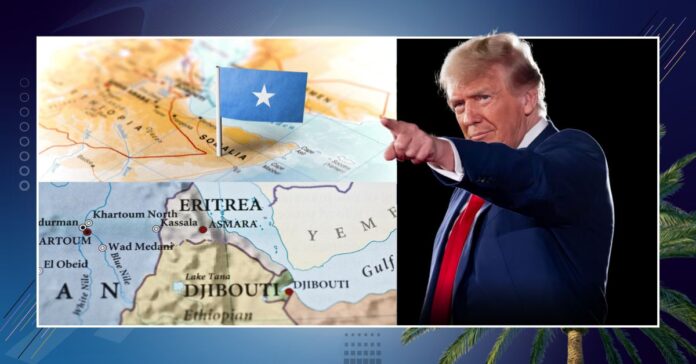
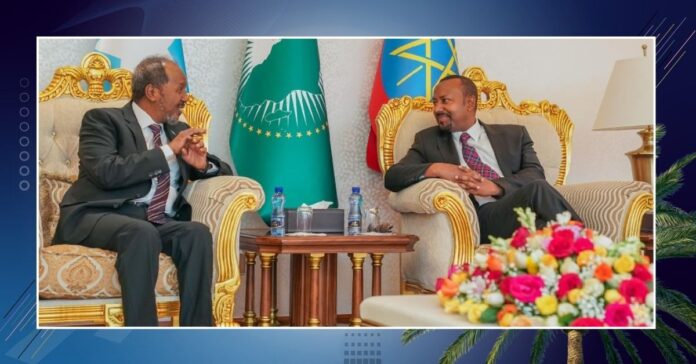


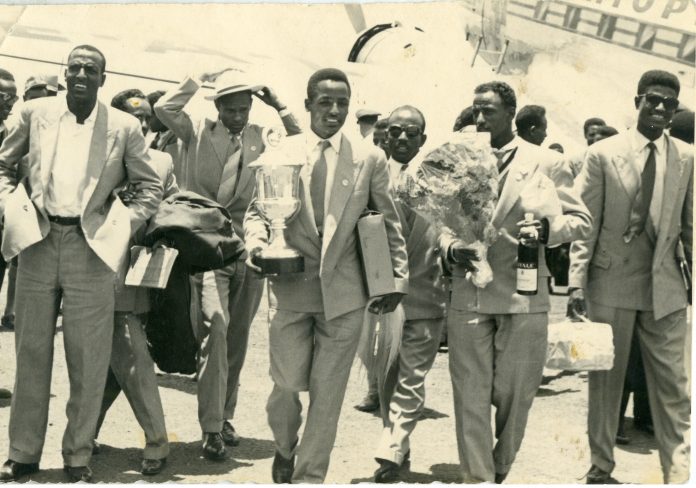

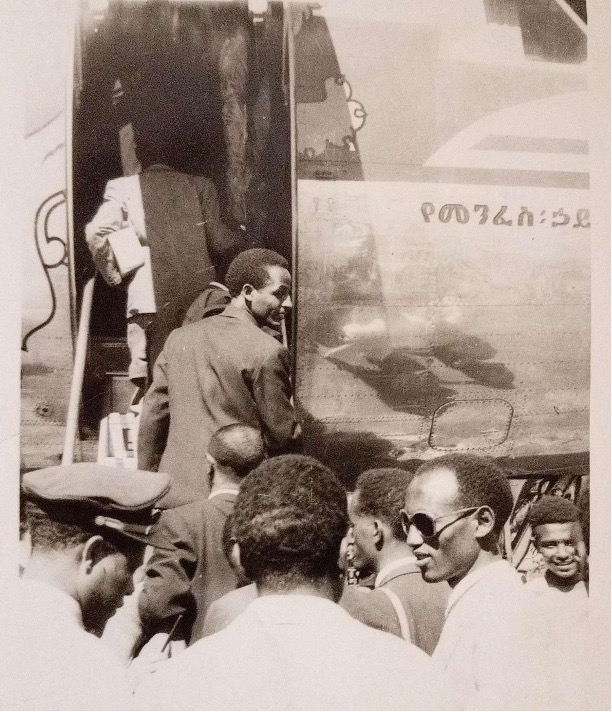
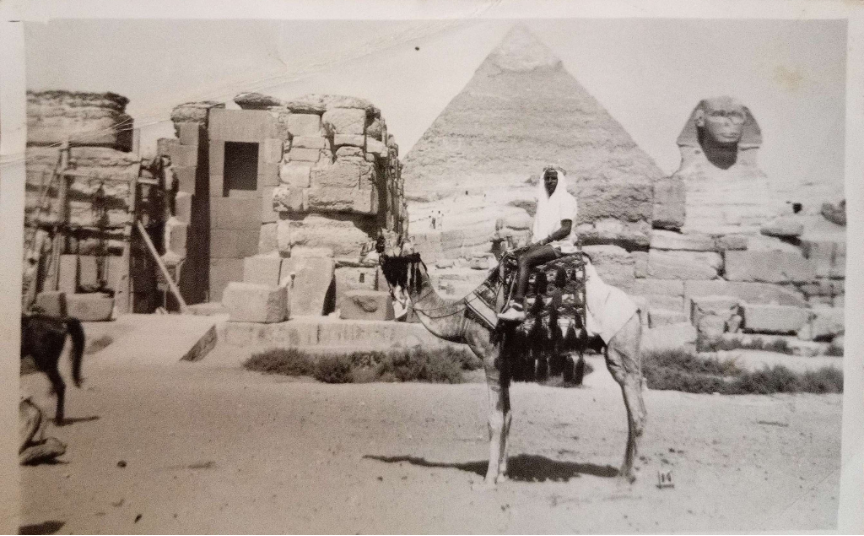
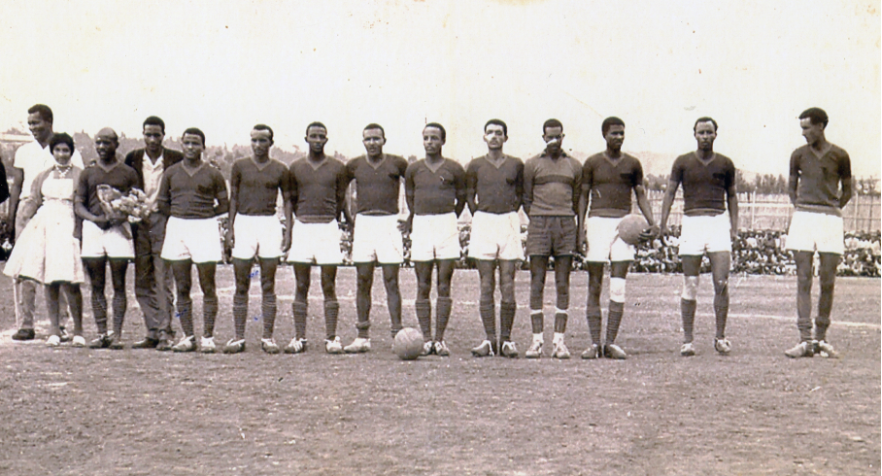
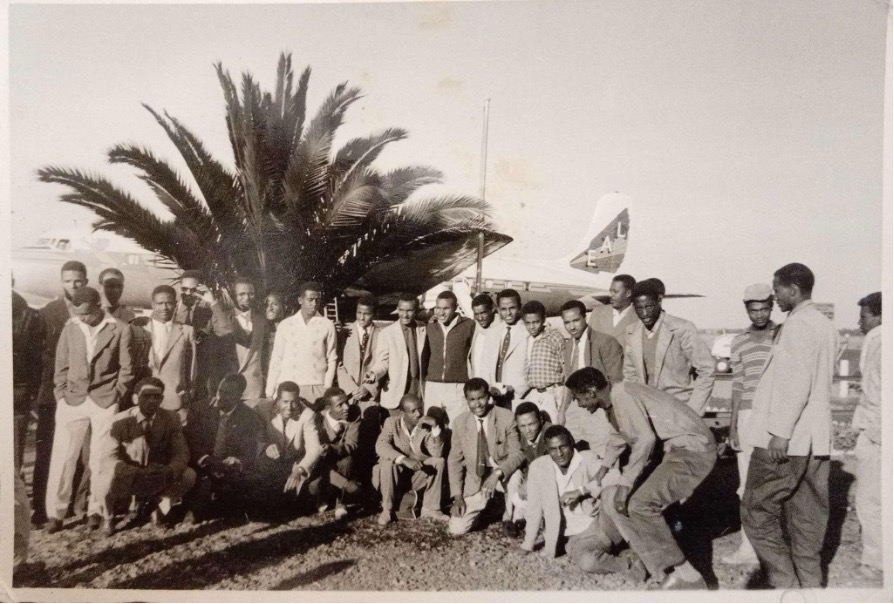
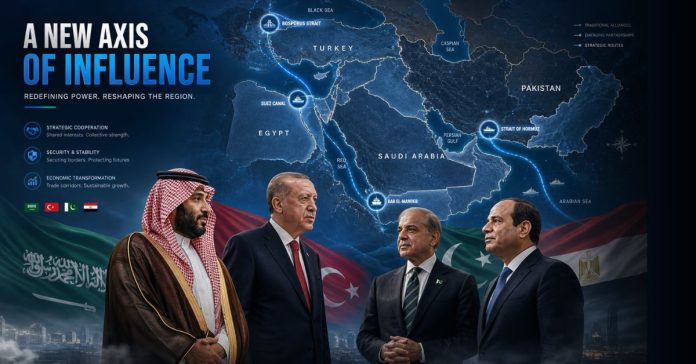
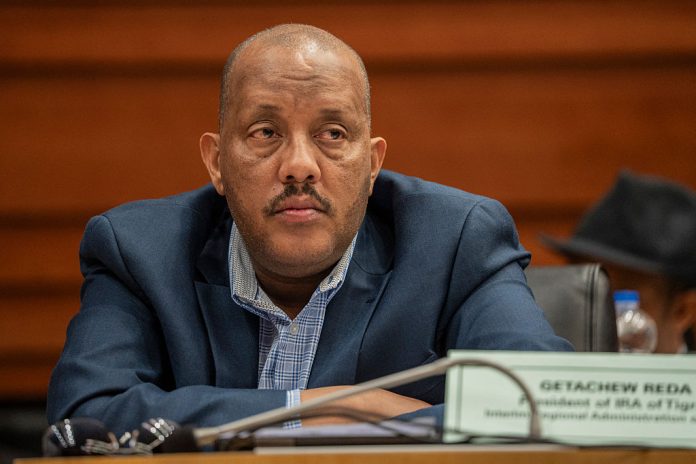

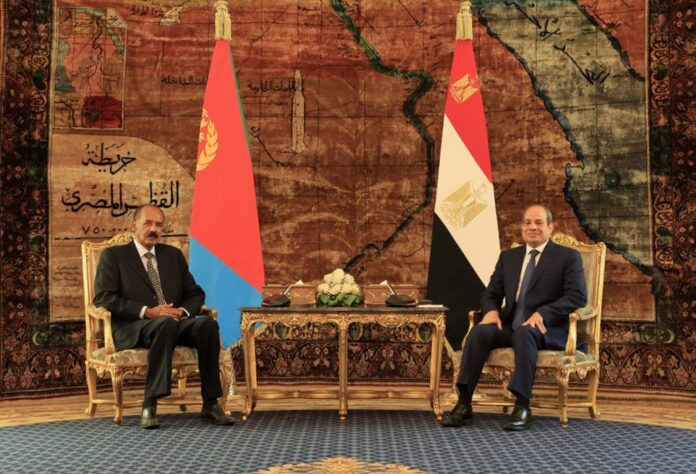
 Egypt views the Horn of Africa as a direct extension of its national security perimeter, inextricably linked to Nile water security and Suez Canal revenues. For Cairo, investing in Eritrean port development at Massawa and Assab is simultaneously a commercial venture, a security arrangement, and a check against the Ethiopian expansionism that threatens both countries’ strategic interests. For Eritrea, Egyptian investment interest that respects sovereignty and delivers real development outputs is consistent with Asmara’s long-standing framework: international partnerships are acceptable and desirable when they strengthen national capacity rather than subordinating it.