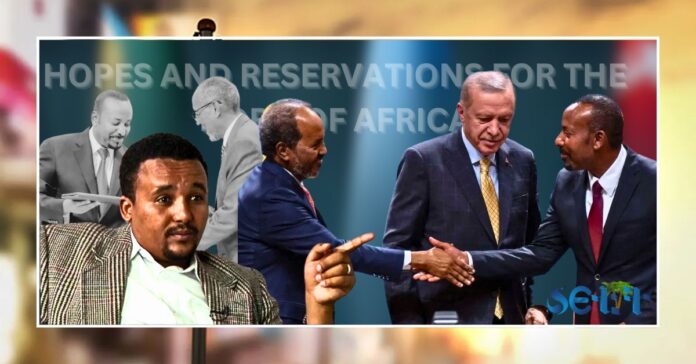
In a parliamentary address, Ethiopian Prime Minister Abiy Ahmed declared Ethiopia’s “unwavering interest” in accessing the Red Sea, a move that has sparked concerns and debates across the Horn of Africa. Although Abiy emphasized a peaceful approach, his remarks and recent diplomatic moves are being interpreted by some regional analysts as veiled threats toward neighboring countries.
Ethiopia’s landlocked status has long been seen as a strategic disadvantage, and Abiy reiterated that Ethiopia’s need for Red Sea access is a legitimate right, aligning with historical and legal precedents. “We do not seek it through war or force,” Abiy insisted, adding that this ambition is not only “true and logical” but a legacy that future Ethiopian generations would continue to pursue if necessary.
The Prime Minister specifically addressed Ethiopia’s controversial Memorandum of Understanding (MoU) with Somaliland, which grants Ethiopia access to Somaliland’s ports in exchange for Ethiopia’s informal recognition of Somaliland as a semi-autonomous region. This MoU has ignited diplomatic tensions with Somalia, which views Somaliland as part of its sovereign territory. Somali officials have condemned the agreement as an infringement on Somalia’s sovereignty, leading to a breakdown in diplomatic relations, including Somalia’s recent expulsion of Ethiopia’s ambassador.
Abiy’s assertion that “Ethiopia deserves access to the Red Sea by any law” has been interpreted by some regional observers as a signal of Ethiopia’s firm stance on this matter, with some analysts cautioning that Ethiopia could exploit Somalia’s internal turmoil to its advantage. The instability in Somalia, which is battling political and militant challenges, has reportedly emboldened Ethiopia to advance its interests with Somaliland, while Somalia remains preoccupied with its own security issues.
Regional security analysts speculate that if Somalia continues to resist Ethiopia’s Red Sea access initiatives, Ethiopia might consider taking a harder stance. “The MoU with Somaliland and Ethiopia’s rhetoric indicate a broader regional agenda, one that could place Somalia in a difficult position,” remarked a Horn of Africa analyst. The sentiment is that Abiy may be leveraging Somalia’s vulnerabilities, especially as tensions escalate.
Adding to the complexity, Somalia has signed a military cooperation agreement with Egypt, resulting in Egyptian military presence and arms transfers to Somalia. This alignment with Egypt, traditionally seen as a rival to Ethiopia over Nile water disputes, has heightened the stakes. The recent summit in Asmara, which brought together Somalia, Egypt, and Eritrea, signaled a new coalition aimed at fortifying Somalia’s territorial integrity. At the summit, the three countries reportedly agreed on measures to strengthen Somalia’s capacity to protect its borders, a clear message to Ethiopia regarding its Red Sea aspirations.
Despite Abiy’s reassurances of peace, Ethiopia’s actions have led Somalia and other regional players to question Ethiopia’s ultimate intentions. The Prime Minister’s statement that Ethiopia will “wait patiently” for Somalia to “rethink and prioritize” its national interests is seen as a diplomatic warning, especially as he implied that Ethiopia’s patience has limits.
Somalia’s decision to exclude Ethiopia from the AU-led forces set to replace the African Union Mission in Somalia (ATMIS) underscores the extent of the diplomatic fallout. The decision highlights Somalia’s view that Ethiopia’s interests now conflict directly with its sovereignty, leaving both countries in a potentially volatile standoff.
As Ethiopia’s Red Sea ambitions collide with Somalia’s sovereignty concerns, regional analysts fear the Horn of Africa may be on the brink of escalating tensions, with the possibility of military entanglements should diplomatic solutions falter.
The emerging strategic partnership between Eritrea, Egypt, and Somalia is reshaping the geopolitical landscape of the Horn of Africa, where regional tensions and competing ambitions are driving a complex security environment. The October 2024 tripartite summit in Asmara, hosted by Eritrean President Isaias Afwerki, brought together Egyptian President Abdel Fattah El-Sisi and Somali President Hassan Sheikh Mahmoud to discuss critical issues affecting the region. The alliance’s formation comes at a time when Ethiopia’s maritime ambitions, growing military deployments, and external interference are causing diplomatic tensions to escalate.
Ethiopia’s Ambitions and Eritrea’s Sovereignty Concerns
A major catalyst for the alliance is Ethiopia’s territorial ambitions in the Red Sea, particularly its ongoing assertions over the Assab and Massawa ports, which are sovereign Eritrean territories. Ethiopian elites have repeatedly claimed a right to these ports, viewing them as key to Ethiopia’s long-standing desire for a sea outlet. These ambitions have sparked tensions between Ethiopia and Eritrea, and for Eritrea, safeguarding its sovereignty is critical. The tripartite alliance provides Eritrea with the diplomatic and military support necessary to counter these incursions and defend its national integrity.
In addition, Ethiopia’s push for influence in the breakaway region of Somaliland has exacerbated tensions. Ethiopia has established deeper ties with Somaliland, including the appointment of an ambassador to Hargeisa, signaling Ethiopia’s intention to strengthen its strategic position along the Red Sea. This move has raised concerns in Somalia and Egypt, both of which view it as a violation of Somali sovereignty and a threat to regional stability.
Historical and Strategic Ties Between Eritrea and Somalia
Eritrea’s involvement in the alliance is also rooted in its historical ties with Somalia. Eritrea sees itself as a natural ally of the Somali people, given their shared cultural and political history. For decades, Eritrea has supported Somalia’s sovereignty, and today, it plays a crucial role in strengthening Somalia’s state institutions. The tripartite alliance has emphasized the importance of helping Somalia defend its land and sea borders from both internal threats, such as terrorism, and external influences, particularly from Ethiopia.
The October 2024 summit in Asmara reaffirmed the commitment of the three nations to supporting the Somali National Federal Army (SNFA) in confronting terrorism and maintaining territorial integrity. This cooperation underscores Eritrea’s deep historical duty to safeguard Somalia’s independence, aligning it with Somalia’s own goals of rebuilding its security apparatus and defending its borders from foreign interventions.
Military Deployments and Escalating Tensions
One of the most contentious issues driving the new alliance is the recent deployment of Egyptian military forces in Somalia. As part of its broader regional strategy, Egypt has stationed up to 10,000 soldiers in Somalia under the framework of peacekeeping and stability efforts. This military presence has raised concerns in both Somaliland and Ethiopia, with Somaliland warning that the introduction of foreign military forces could threaten the fragile peace in the region.
On August 29, 2024, Somaliland’s government issued a press release condemning Egypt’s actions and urging the international community to oppose the deployment. Ethiopia, too, has expressed alarm over these developments, framing Egypt’s military presence in Somalia as a destabilizing force in the Horn of Africa. Ethiopia’s Ministry of Foreign Affairs has accused Egypt of acting in ways that threaten regional stability, while simultaneously enhancing its diplomatic ties with Somaliland by upgrading its consular office in Hargeisa to an embassy-level presence.
The tripartite alliance between Eritrea, Egypt, and Somalia counters these criticisms by emphasizing that the Egyptian military presence is intended to bolster Somalia’s defenses and contribute to regional stability. This partnership has the potential to act as a counterbalance to Ethiopia’s growing influence, particularly its involvement in Somaliland and its broader maritime ambitions in the Red Sea.
Red Sea Security and Regional Stability
The security of the Red Sea emerged as a major focal point of the Asmara summit. Both Egypt and Eritrea have strategic coastlines along this vital global trade route, and they are deeply invested in maintaining stability in the region. Ethiopia’s efforts to secure maritime access through Somaliland and the Red Sea have triggered alarm among neighboring states, particularly Egypt, which sees itself as a guardian of the Suez Canal and Red Sea trade routes.
The alliance seeks to enhance maritime security and protect the Bab al-Mandab Strait, a crucial chokepoint for global commerce. The three nations have agreed to coordinate military and diplomatic efforts to ensure that the Red Sea remains stable and free from external threats. Egypt’s military presence in Somalia, therefore, is framed not as an intervention, but as a vital component of regional security, protecting a critical waterway from destabilizing forces.
Tackling Regional Conflicts and Ethiopia’s Growing Influence
In addition to maritime security, the Asmara summit addressed the ongoing crises in Sudan and Somalia. Both conflicts have had significant regional repercussions, with the Sudan crisis in particular creating instability that threatens the entire Horn of Africa. The tripartite alliance is committed to addressing these challenges through diplomatic and military coordination, with Egypt offering to send peacekeeping forces to help stabilize the region.
Ethiopia’s influence in the Horn of Africa, particularly its actions in Somaliland and Sudan, has been a major concern for the alliance. Ethiopia’s Grand Ethiopian Renaissance Dam (GERD) and its pursuit of external agreements, such as the controversial Memorandum of Understanding (MoU) with Somaliland, have raised fears of further regional destabilization. These moves threaten to upend the African Union’s principles of sovereignty and territorial integrity, principles that the tripartite alliance seeks to uphold.
Navigating Geopolitical Complexities
The Eritrea-Egypt-Somalia alliance is a critical response to the growing geopolitical tensions in the Horn of Africa, particularly as Ethiopia’s maritime ambitions and military strategies threaten to destabilize the region. By strengthening military, diplomatic, and economic cooperation, the tripartite partnership seeks to secure the Red Sea, protect sovereignty, and ensure stability in a region facing increasing external interference.
The future of the Horn of Africa depends on the ability of regional powers to navigate these complexities through coordinated efforts and diplomatic dialogue. As Ethiopia continues its pursuit of Red Sea access and its relations with Somaliland deepen, the Eritrea-Egypt-Somalia alliance stands as a unified front against any unilateral moves that could upset the delicate balance of power in the region. The success of this partnership will ultimately hinge on the willingness of all actors, including Ethiopia, to prioritize regional stability over territorial ambitions and external pressures.
Over the years the Eritrean people have witnessed the duplicity, arrogance, and incompetence of successive Ethiopian government officials and paid YouTubers. They are ungrateful and lack principles. Their politics is Charlatan and has no basis whatsoever. Backstabbing is the norm of the game. For them, the begging and knee-jerking lasts until they believe they are out of the woods or the party they depend on turns the page on them. But are they out of the woods?
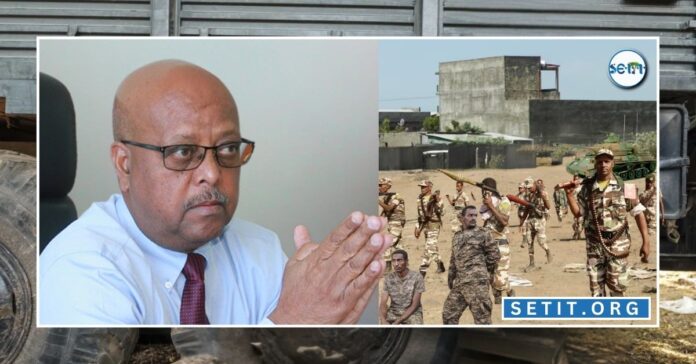
In business, there is a concept called “don’t burn your bridge”. It means when an employee departs from his/her current organization for a better job, he/she needs to leave in a very amicable way because he/she may come back to ask for a good recommendation or God forbid for another job. After the Eritrean Army saved Ethiopia from disintegration and was praised by his boss Prime Minister Abiy Ahmed repeatedly, recently, the former Prisoner of war and now Field Marshal of The Ethiopian Army, Berhanu Jula, tried to blame the Eritrean Army for the human rights abuses of his undisciplined army caused during the 2020-2022 Tigray war. He attributed the fast mobilization of the Tigray youth to the Tigray Defense Forces (TDF) to the so-called injustices caused by the Eritrean Army. In Amharic, there is a saying that goes “If you do not open your mouth a fly would not Get in”. Now that the former prisoner of war, and current affirmative action-driven Field Marshal, has opened his mouth here is the writer of this article’s fact-based response:
The First Round of the War Against the TDF was solely Won by the Eritrean Army.
Berhanu Jula tried to claim that the success of the first round of war with the TDF was an excellent performance of his army that fled to Eritrea. If his army could defeat the Tigray Peoples liberation front militia, why did it surrender its arms and escape to Eritrea? Why was a heavily armed thirty-three thousand Ethiopian army personnel dismantled by a rag-tag TDF militia in a couple of days? Despite repeated attempts, your army could not even breach the Zalambesa front. You are right Adigrat, Adwa, and Axum were under the Eritrean Army. Also, in other places where the Ethiopian Army was located there were Eritrean Army units. Then which areas did your army liberate during the first round of war? The truth is the first round of the war against the TDF was solely won by the Eritrean Army. So, you need to stop your charlatan politics before more information about the war is out to the public.
Second Round of War.
When the TDF was defeated during the first round of war, as confirmed by the Eritrean President, Isaias Afeworki, you started withdrawing your army without informing the Eritrean army. What was previously not mentioned fact though, you withdrew your Army because your government was conducting an election and wanted the Army to guard ballot boxes where the Oromo liberation front was active. When the TDF rag-tag army routed your remaining divisions in Tigray, you were forced to flee Tigray. TDF followed you and reached the gates of Debrebrahn city. Almost all your armored Tanks and Hawsers were captured by the TDF and Thanks to the Turkish Drone Operators, Fano, and the help of Eritrean Mechanized Army units in Kasagita (Mile) and Debrebrhan front you were again saved from demise.
Third Round of War.
Everyone knows how the TDF was decapitated once and for all in the third round of war and forced to sign the Pretoria Surrender Agreement. So, it is unnecessary to spend time discussing the issue here. But it is important to emphasize that in the third round of war, TDF was badly defeated in the Shire front, not in Korem or Alamata. Also, as a reminder, Shire was the front the TPLF with the help of the Eritrean Army defeated the former Ethiopian Dergue regime.
Human Rights Abuses in Tigray.
Field Marshal Berhanu Jula should have been the last person in the world to speak about human rights abuses in Tigray solely caused by his undisciplined Army. He does not have a moral ground to talk about the highly disciplined and professional Eritrean army that saved him from demise by the TDF rag-tag Army. Who doused Tigray Prisoners of war in Adet, Tigray, during the first round of war and lit them on fire alive, Field Marshal? During the first round of war why were many Tigrayan mothers from Zalambasa town fled to Eritrea? Who is in the video below and doing what, Field Marshal Berhanu Jula? Do you see Eritrean Soldiers in the video below?
Mr. Field Marshal, do you have any similar evidence of Human rights abuse by the Eritrean Army in Tigray? Any similar video? Before you falsely blamed the Eritrean Army for looting and human rights abuses in Tigray, the Tigray Peoples Liberation Front (TPLF) tried to use the unfortunate incident that happened to a young girl, named Monalisa Abraha, for propaganda purposes against the Eritrean army. Later, in her own words, Monalisa testified that she was shot during a rape attempt by your soldier and the Eritrean army saved her life. She is the symbol of your army’s human rights abuses in Tigray, Mr. Field Marshal. Similarly, an older gentleman whom the Eritrean army found thrown on the side of the road from Shire to Maitsemri testified on Tigray TV that the Eritrean army picked him up from the roadside, put him in their truck, gave him food, and dropped him in a hospital. Also, many Tigrayans in Wolkaite Testified that the Eritrean Army came to their defense. These are some examples of the good Samaritan deeds of the Eritrean army that escaped Berhanu Jula’s and TPLF’s sinister demonization campaign. As to the looting, everyone knows what the Eritrean Army took from Tigray. Although you may have been ashamed to say it, it was Arms the TDF captured from the Northern command and in turn, the Eritrean Army captured from the TDF. It was not factories.
Conclusion.
Berhanu Jula’s blame of the Eritrean Army for looting and Human right Abuses in Tigray has nothing to do with Truth. It is a charlatan desperate political game to turn Tigrayans against Eritrea. It is born out of hopelessness. The fact is the Eritrean army is full of decent human beings and not an animal as Berhanu Jula and TPLF minions put it. For Eritrea, the Tigray mission is over, and Eritrea has no business with Ethiopian internal politics. It is for Ethiopians to figure out whatever they think the solution to their internal problem. Eritrea does not give any value to the continuous provocation of Ethiopian government official minions and paid YouTubers because Eritreans are working hard to rebuild their country. As the time goes by the truth about the Eritrean army’s humane treatment of the unfortunate in Tigray will be spoken not by charlatan politicians like Berhanu Jula but by the ordinary Tigrayans themselves. Above all the former prisoner of war and current Field Marshal of Ethiopian Army himself is a Testament of the Eritrean Army’s strong record of humanity.
Many people are surprised to see how fast the political structure in Tigray has been crumbling. Officials of the Tigray Provisional Government, established under the auspices of the Pretoria Agreement, and the core leadership of the Tigray People’s Liberation Front (TPLF) are heading towards what seems like a direct collision. Although it has manifested recently, the current power struggle in Tigray has a long history.
During the 17 years of TPLF’s war against the Ethiopian Government.
During the 17-year (1974-1991) war that the TPLF waged against the then Ethiopian government, there were many complaints about the dominance of the Adwa, Aksum, and Shire (Ashea) group within the upper echelons of the TPLF leadership. Rumors circulated that many TPLF combatants who hailed from areas outside the Ashea sub-region of Tigray, and who dared to challenge the Ashea group’s dominance, were executed. Such grievances persisted even after the TPLF, with the help of the Eritrean People’s Liberation Front (EPLF), assumed power in Addis Ababa. Farmers from the Enderta area around Mekelle and from Raya have long complained about the confiscation of their farmland by the Ashea-dominated TPLF leadership with little or no compensation. These grievances were suppressed and waited for the right moment to resurface.
During and after the 1998-2000 Ethio-Eritrea Border War.
The 1998-2000 Ethio-Eritrea Border War was seen as a good opportunity by TPLF officials from the non-Ashea areas (Raya, Enderta, and Tembien) to challenge the historically dominant Ashea group. The slogan was that after the Badme war, their next action would be to overthrow Prime Minister Meles Zenawi, who hailed from Adwa. Members of the revolting group included then Defense Minister Siye Abraha, Tigray regional government president Gebru Asrat, Ethiopian army general Tsadkan Gebretensae, Air Force chief Abebe Teklehaimanot, and others, mainly from Raya, Enderta, and Tembien. However, after the war, Meles outmaneuvered them, imprisoning Siye Abraha and his brother on charges of corruption, and removing others from their positions in the Federal Government and the TPLF. Thus, the first attempt to seize power from the Ashea group failed.
During and after the 2020-2022 Tigray War.
After the TPLF attacked the Northern Command on November 4, 2020, and the Ethiopian army, with the assistance of the Eritrean army, swept through Tigray, some TPLF leaders, such as Getachew Reda and Tsadkan Gebretensae, began to rethink the war. They believed that the war could have been avoided and argued that to prevent it, the TPLF should have joined the newly formed Prosperity Party. Additionally, senior army leaders like Tsadkan were unwilling to be dictated to by the younger TPLF executive leadership. Once again, the non-Ashea group saw the war as an opportunity to wrest power from the Ashea group. They asked TPLF chairman Debretsion Gebremichael to form a new command separate from the TPLF to lead the war, but Debretsion refused. After the TPLF’s defeat in the third round of the war, it had no choice but to sign the Pretoria Surrender Agreement. The agreement, among other things, outlined that Tigray would be ruled by a provisional government. Abiy Ahmed, the Prime Minister of Ethiopia, quickly exploited divisions within the TPLF, refusing to accept Debretsion’s nomination and instead handing over leadership of the provisional government to Getachew Reda and Tsadkan Gebretensae, who were seen as more aligned with the federal government. Tsadkan, who harbors ambitions to join the federal government, is especially in sync with the policies of the Prosperity Party. Using Getachew as a cover, Tsadkan took initiatives to reduce the TPLF from a governing party to just another political party in Tigray. Tsadkan also secretly enlisted the support of smaller political parties in Tigray to undermine the TPLF, heralding his hidden democratization initiative. In essence, the Getachew and Tsadkan group aims to smooth Tigray’s reintegration into the federal system and secure higher positions in the Federal Government. Meanwhile, vital issues like achieving food self-sufficiency in Tigray have been pushed to the back burner.
Head Collision between the TPLF and the Provisional Government led by Tsadkan and Getachew.
Under the pretext of democratization, Tsadkan encouraged Getachew to dismantle the TPLF. As a result, Getachew began firing the old guards of the TPLF’s regional administration and replacing them with individuals loyal to him. The TPLF old guard responded by calling for a convention and expelling Getachew and his followers from the TPLF executive and central committees. Currently, the two groups do not recognize each other and are at loggerheads. While the Getachew group accuses the Debretsion group of receiving encouragement from Eritrea, the Debretsion group accuses the Getachew group of being soft on the federal government and squandering Tigray’s national interests. The dangerous part of this division is that each side is playing the regionalism card. The Debretsion group is using its Ashea roots to challenge the Getachew and Tsadkan group, while the non-Ashea areas are supporting the Getachew and Tsadkan group. The support of ex-TPLF officials like Gebru Asrat, Siye Abraha, and Abebe Teklehaimanot for the Provisional Government further illustrates that the current actions against the TPLF are also addressing old grudges.
Potential Future Scenarios:
The Debretsion group may attempt to remove the Getachew and Tsadkan group from power and replace them with core TPLF officials. Such a scenario is plausible only if the army agrees to support the Debretsion group. Since the federal government cannot afford another conflict with the TPLF, it may accept the TPLF’s actions and continue business as usual.
The Getachew and Tsadkan group may attempt to consolidate power by expelling TPLF loyal mayors and regional administrators. While likely, this would aggravate the TPLF and increase the likelihood of direct conflict, especially in the TPLF stronghold of the Ashea area. If the army decided to intervene, it could turn against the Getachew and Tsadkan group.
The army might step in to fill the power vacuum, removing the provisional government and overseeing the administration of Tigray. If the army promises to conduct a general election within a year, restoring power to the TPLF old guard, this scenario could gain popular support.
The Getachew and Tsadkan group might provoke a conflict with Eritrea to prolong their stay in power. The recent heightened rhetoric about Eritrea occupying Tigrayan territory suggests such intentions. However, the people of Tigray likely have no appetite for war, so while the rhetoric may increase, crossing into open conflict seems unlikely.
Conclusion:
If not properly managed, the current power struggle in the Tigray region could have serious implications for the unity and stability of the area. Civil war instigated by the two groups cannot be ruled out. Ultimately, the TPLF is likely to reclaim power from the provisional government. If it can do so without creating divisions within the army, it may be the only way to save Tigray from descending into chaos. The Getachew and Tsadkan group lacks a strong foundation in Tigrayan society and cannot dislodge the well-entrenched TPLF from power. In this power struggle, the Abiy government remains largely on the sidelines, waiting to negotiate with whichever group emerges victorious.
Israel’s defense establishment has been offering African asylum seekers, many of whom fled war-torn countries, the possibility of permanent residency in exchange for contributing to its war effort in Gaza. The promise of legal status has been criticized by human rights activists as an inhumane exploitation of vulnerable individuals. Despite some asylum seekers volunteering for civilian support roles, none who have contributed to the conflict have been granted official status, raising concerns about the ethical implications of this policy.
In response to questions posed by *Setit*, prominent Eritrean human rights activists weighed in on the situation. One activist acknowledged parallels between Israel’s actions and other countries’ practices, saying, “The Americans have recruited Hispanics and others into their army in return for a green card. Nothing new if other countries do it, especially at times of war.” However, the activist went on to condemn the policy, adding, “That said, the very act itself is very unethical and can be considered as abuse of someone in need of protection and sanctuary.”
The activist also addressed the complexities of Israel’s demographics and geopolitical concerns: “Israel, as a country, is too small and too sensitive about demographics, which means it cannot entertain adopting policies of hosting aliens in the long term. A country in constant war, in addition to the factors mentioned above, means there is very little scope, if any, for implementing international humanitarian law.” The activist suggested that the best course of action might involve cooperation with the UNHCR to resettle asylum seekers in third countries while retaining some to fill local labor market needs.
Another human rights activist condemned Israel’s actions more directly, asserting that Israel has a mandated responsibility to protect the rights of migrants within its borders. The activist questioned the sincerity of the offer, asking, “How will the permanent residency document be used if these migrants die in the war?” This activist also called on Eritrean asylum seekers to be vigilant, warning them to be aware of “the trap that has been set up by Israel.”
Critics argue that using the promise of legal status as a reward for military service overlooks the inherent human rights of asylum seekers, who fled their countries due to violence and persecution. While Israeli defense officials maintain that the recruitment process is conducted legally, the ethical concerns voiced by activists highlight the complexities and potential consequences of involving migrants in military conflicts.
President Isaias Afwerki met with a high-level Egyptian delegation, led by Foreign Minister Dr. Badr Abdelatty, at Denden Guest House in Asmara today. The meeting is part of ongoing periodic Consultative Forums held between the two nations in both Asmara and Cairo, aimed at addressing critical bilateral and regional issues. This session particularly focused on the evolving situations in Sudan, Somalia, and the security dynamics of the Red Sea region, according to government sources.
During the discussions, both sides emphasized that strengthening Eritrean-Egyptian bilateral ties is vital for promoting regional peace and stability. They agreed to enhance cooperation in various sectors, including economics, politics, trade, agriculture, energy, and health. This partnership reflects a shared commitment to addressing regional challenges and fostering stability in the Horn of Africa.
The talks occurred against a backdrop of escalating tensions in the Horn of Africa, including Ethiopia’s controversial Memorandum of Understanding (MoU) with Somaliland and the ongoing situation in Somalia. Ethiopia’s pursuit of a sea outlet through Somaliland has sparked a diplomatic crisis with Somalia, raising concerns about the potential impact on regional stability. Somalia views Ethiopia’s engagement with Somaliland as a violation of its sovereignty, complicating peace efforts in the region.
Officials from both sides reiterated Egypt’s position on regional stability, emphasizing that Egypt does not support any agenda of regional destabilization or interference. This clarification comes amid growing tensions and recent increases in Egypt’s military presence in Somalia, which have sparked concerns about a potential proxy conflict between Egypt and Ethiopia. The Eritrean government stressed that accusations against Egypt’s role in the region are unfounded, claiming they serve only to justify strategic errors made by other actors.
President Isaias Afwerki’s stance on regional cooperation, as articulated following his participation in the 9th China-Africa Cooperation Heads of State Meeting in Beijing, provides further context for these discussions. He underscored that “no African country can develop in isolation,” highlighting the necessity of regional integration and cooperation to address common challenges. Afwerki also criticized the ineffectiveness of regional bodies like the African Union (AU) and the Intergovernmental Authority on Development (IGAD), suggesting that African nations must adopt a more collaborative approach for true progress.
Both Eritrea and Egypt agreed to deepen cooperation across various sectors, reinforcing their strategic partnership. This enhanced collaboration aligns with Afwerki’s earlier emphasis on the need for African countries to address their internal issues before engaging in meaningful external partnerships. The Eritrean-Egyptian partnership aims to contribute to regional peace and reflects a concerted effort to promote dialogue and stability in the Horn of Africa.
The meeting underscores the complexities of the current regional landscape, where efforts to stabilize Somalia are compounded by Ethiopia’s pursuit of its geopolitical interests. The reinforced partnership between Eritrea and Egypt could act as a counterbalance to these developments, advocating for collective stability in the region. Afwerki’s message during the China-Africa summit—that Africa must focus on internal stability and regional cooperation before seeking external partnerships—reinforces Eritrea’s current diplomatic approach.
The upcoming months will be crucial as regional actors navigate these challenges, and the success of these efforts will depend on prioritizing collective stability over individual ambitions. Eritrean government sources indicate that the partnership with Egypt is pivotal in this pursuit, providing a framework for addressing the Horn of Africa’s multifaceted issues.
In a significant series of discussions held from September 4-6, 2024, the Ministry of Justice of Eritrea hosted a Dialogue Session themed “Justice, Development, and the Geopolitics of the Horn.” This event brought together legal experts and scholars to explore reforms aimed at strengthening Eritrea’s legal framework, which is seen as key to the nation’s sustainable development and regional cooperation. As part of this, Minister of Justice Ms. Fawzia Hashim emphasized that justice in Eritrea is deeply tied to national values and is critical to the country’s broader goals for economic and social progress.
These discussions come on the heels of President Isaias Afwerki’s remarks following his participation in the 9th China-Africa Cooperation Heads of State Meeting in Beijing. In an interview with a journalist from Eritrea’s state-run news agency, President Isaias Afwerki echoed similar themes, stressing that Africa must first address its internal issues, particularly economic and structural challenges, in order to fully benefit from external partnerships, including with China.
The president voiced his concerns that partnerships such as the China-Africa Cooperation risk turning into superficial public relations exercises unless African nations “do their homework” by solving internal problems. He pointed to Africa’s over-reliance on raw material exports and external borrowing, issues that perpetuate economic imbalances and debt dependency. In his view, without addressing these core challenges and ensuring stability, Africa’s potential for progress will remain limited.
President Isaias Afwerki’s emphasis on peace and stability aligns closely with the goals outlined during the Ministry of Justice’s Dialogue Session. Legal reforms in Eritrea, launched as part of an Action Plan in October 2023, focus on improving access to justice, enhancing the competence of legal personnel, and promoting public participation as part of
Eritrea’s nation-building efforts. During the event, key speakers such as Professor Makane M. Mbengue highlighted the dangers of “legislative inflation”—reforming laws without addressing actual needs—and urged aligning legal reforms with Eritrean values and the broader African context.
President Isaias Afwerki further underscored that no African country can develop in isolation. He called for regional cooperation and integration, stating that efforts must be made to pool resources and work collaboratively to address regional instability and foster collective progress. This message was reinforced at the Dialogue Session, where experts discussed Eritrea’s evolving geopolitical role in the Horn of Africa, transitioning from a country historically impacted by regional struggles to an influential player in shaping regional security and cooperation.
Both the summit in Beijing and the Dialogue Session in Asmara stressed the importance of regional collaboration. President Isaias Afwerki pointed out that organizations like the African Union (AU) and IGAD have not been effective in resolving Africa’s challenges, a sentiment echoed by the discussions in Asmara. Experts at the session stressed that Eritrea has the potential to play a leading role in promoting peace and development in the Horn of Africa, especially through legal reforms that are sensitive to regional and global geopolitical dynamics.
As both events highlighted, Eritrea is positioning itself to be a key player in regional integration and justice reform. However, as President Isaias cautioned, the success of partnerships, particularly with major powers like China, will depend on the continent’s ability to resolve its internal challenges and foster greater regional collaboration.
On September 12, 2024, U.S. Congressman Brad Sherman took to X (formerly Twitter) to post a statement calling for a democratic government in Eritrea. Sherman emphasized that both Eritrea and its neighboring countries would not experience peace until Eritrea transitions away from what he characterized as an oppressive regime. “The U.S. must support the Eritrean people in their fight for a free Eritrea,” he asserted, adding that the nation’s current government not only oppresses its own citizens but also destabilizes the region.
The #Eritrean people will not have freedom and Eritrea’s neighbors won’t have peace until #Eritrea has a democratic govt instead of one that oppresses its citizens and neighbors.
Sherman’s remarks, which were accompanied by a video in which he claimed to have met with an Eritrean opposition leader, quickly sparked backlash from Eritrean activists. Critics argue that the congressman’s characterization of Eritrea’s political landscape is flawed and misleading. They highlight that the so-called opposition groups he referenced are fragmented and often alleged to be proxy organizations backed by the Tigray People’s Liberation Front (TPLF)—an entity historically opposed to Eritrea.
Eritrean political analysts have voiced strong disapproval of Sherman’s comments, accusing him of siding with the wrong factions. “For Congressman Brad to refer to these groups as credible opposition is a very low point,” said one analyst. “Advocating for the replacement of Eritrea’s government by such groups is not only insulting but also an invitation for chaos and destruction in Eritrea.” The analyst noted that Sherman has long been supportive of the TPLF, an arch-enemy of Eritrea, which further raises suspicions about his intentions.
In response to Sherman’s comments, Eritrean Information Minister Yemane Ghebremeskel posted a scathing rebuttal on X on September 13, 2024. Ghebremeskel referred to Sherman’s remarks as “yet another grotesquely familiar howl,” criticizing the congressman for his lack of understanding about the history and current realities of the region. “Clueless as he is about the history and current reality in the region, Sherman has the audacity to speak/feign concern about ‘the freedom of the Eritrean people,’” Ghebremeskel wrote. He went on to remind Sherman that the U.S. government had once compromised Eritrea’s freedom for its own strategic interests, referencing the acquisition of the Kagnew Military Base through what he called “illicit and despicable machinations at the UN.” Minister Yemane Ghebremeskel added that Sherman’s recent support for the TPLF’s insurrection had more to do with a lobbyist’s fee than with justice, ethics, or the welfare of the region’s people.
Yet another grotesquely familiar howl from US Congressman Brad Sherman against Eritrea.
Clueless as he is about the history and current reality in the region, Sherman has the audacity to speak/feign concern about “the freedom of the Eritrean people”.
In Eritrea, where social cohesion is often highlighted as a point of national pride, many argue that the country’s internal stability could be compromised by efforts to install foreign-backed opposition groups. One activist, speaking on condition of anonymity, emphasized that while Eritrea might be economically strained due to regional tensions and international sanctions, it remains a peaceful and stable nation with unparalleled social cohesion. “Imposing a regime forged by enemies of Eritrea would not only threaten this cohesion but also plunge the country into ethnic and religious conflict,” the activist warned.
Critics of Congressman Sherman’s stance accuse him of undermining Eritrea’s sovereignty and stability, either through ignorance or with deliberate intent. By advocating for regime change, they argue, Sherman risks exacerbating tensions in a country that, despite external pressures, has maintained peace and unity among its people.
As the debate continues, many Eritreans believe that external attempts to influence their country’s political future could have disastrous consequences. For them, any support for groups associated with historical adversaries like the TPLF is seen as a direct threat to Eritrea’s stability and security.
On September 7, 2024, Eritrea lost one of its greatest cultural icons, Osman Abdelrehim. A towering figure in the world of Eritrean music, Osman’s influence stretched far beyond the stage, intertwining with the very fabric of Eritrean history and its long fight for independence. Today, on September 13, 2024, as his loved ones and admirers prepare to lay him to rest, we reflect on the extraordinary life he led and the legacy he leaves behind.
Born in 1948 in the historic port city of Massawa, Osman’s life unfolded against the backdrop of Eritrea’s turbulent political landscape. Raised in Asmara, he grew up in a time when Eritrean culture was being forged in resistance. Osman, from an early age, channeled the spirit of his people into music that not only entertained but uplifted and united. His first significant performance in Addis Ababa in 1964 was a sign of things to come, as he used his music to capture the struggles, dreams, and hopes of Eritreans.
Osman’s art was inseparable from his activism. By the early 1970s, he had already become a key figure in Eritrean music, co-founding the Asmara Theatre Association and the Rocket Band, blending traditional Eritrean sounds with modern musical influences. He stood shoulder to shoulder with other prominent artists, using his music to subtly critique the Derg regime and inspire nationalist sentiments.
In January 1975, Osman took a bold step and joined the Eritrean Liberation Front (ELF), where he transformed his songs into anthems of resistance. His music rallied Eritreans in their fight for freedom, with his lyrics expressing the pain of division and the need for unity. At a time when the Eritrean civil war between the ELF and the EPLF threatened to fracture the liberation movement, Osman’s voice stood out as a call for reconciliation and collective strength.
Despite spending many of his later years in exile, Osman’s connection to Eritrea never wavered. His music continued to resonate with Eritreans both at home and in the diaspora, reminding them of the enduring values of unity and perseverance. His son, Adem Osman, carries forward his father’s musical tradition, ensuring that Osman’s legacy lives on through the next generation.
As we prepare to say our final goodbyes to Osman Abdelrehim today, we are reminded that his influence will never fade. He was not just a musician; he was a cultural leader, a freedom fighter, and a unifying force in the history of Eritrea. His passing is a monumental loss, but his music will continue to inspire and comfort Eritreans for generations to come.
May his soul rest in peace, and may his legacy endure.
September is a time when people around the world reflect on issues of national security and terrorism, especially following the September 11th attacks, which profoundly changed how many nations approach their sovereignty and safety. Just seven days after the attacks, on the other side of the world, in a country called Eritrea, prominent government ministers, army generals, and politburo members of the EPLF/PFDJ were arrested after months of voicing their frustration with the handling of the 1998-2000 border war and the failure to achieve the objectives set out in the 1994 PFDJ National Charter. These objectives included establishing a constitutional government, institutionalizing all sectors and branches of government, and creating an economic policy that balanced egalitarianism with business competition in the private sector.
While many people take to social media to remember the heroes who were tragically taken from their homes at the dawn of September 18th, 2001, some Eritreans echo the government’s accusations that the G-15 committed “high treason,” “conspired with the enemy,” or were involved in a “Washington plot to overthrow the government.” However, I am surprised that no one (except for those grounded in discernment and pragmatism) has stopped to question why these claims have never been proven. If treason was indeed committed (and pardon my French), where the hell is the evidence? Were there phone calls, letters, emails, or secretly recorded meetings? And if so, have they been proven in a court of law, or at least shown to the public so it would be an open-and-shut case?
I have come to realize that the main issue with Eritrean political discourse, particularly when it comes to the political prisoners, is that many Eritreans tend to approach the topic emotionally rather than rationally. This is somewhat understandable, as the 1998-2000 border war was an incredibly sensitive time for Eritreans. During such a period, it’s natural for people to rally behind their government and set politics aside when their land and sovereignty are at stake. The war resulted in significant casualties, with many soldiers, reservists, and ordinary civilians losing their lives. Additionally, billions of dollars’ worth of property was destroyed. In the aftermath, both government officials and ordinary Eritreans, at home and abroad, were outraged and wanted answers.
When the Algiers Agreement was signed, bringing an end to the border war, questions arose within government cadres about whether the situation could have been handled better. Pressure mounted on the president to hold a congress or legislative session to review the war’s management and move forward with fulfilling the goals outlined in the PFDJ’s National Charter. As a result, during the National Assembly meeting of October 2nd, 2000, members of parliament called for the formation of a committee to review the government’s performance over the past decade. They also stressed the need for electoral laws, party formation regulations, and national elections, which were to be held by December 2001.
However, there was one critical issue: the President of Eritrea was also the President of the Assembly, meaning he alone had the authority to call the parliament into session. From October 2nd, 2000, until February 2nd, 2002, no legislative meetings were held. During this period, however, inter-PFDJ discourse between the president and the group we know as the G-15 intensified behind closed doors, with ongoing calls by the group to convene a session to follow up on the October 2nd agenda. February 2nd, 2002, would mark a turning point, which I will elaborate on later.
The frustration of the G-15 was then revealed to the public through the then-private press and interviews conducted by journalists with the G-15. The cat was out of the bag, and the public finally knew that there were problems brewing within the government. Every time the G-15 sent a letter asking the President to convene a meeting (ንኣኼባ ባይቶ ኣክቡና።), the President would respond by saying, “You are making a mistake.” This prompted the G-15 to publish an open letter to all PFDJ cadres (which can be found online), outlining how the agendas of October 2nd and the National Charter were being stalled. Their intent was to gain the support of other cadres to put pressure on the president to convene a meeting.
A few months after publishing the open letter, two planes struck the World Trade Center twin towers, as well as the Pentagon. While the world focused on the terrorist attack in the United States (which dominated the headlines for weeks), the President initiated a crackdown on dissenting members of the government, as well as journalists who wanted to share the G-15’s side of the story. They were snatched from their homes at the crack of dawn, shoved into cars, and driven away to an undisclosed location. Later, the government would accuse the G-15 of crimes that would give rise to what is now known as the “Pappagallo Effect.”
“The G-15 committed treason, crimes against the nation, disclosed information to enemies, and relayed intelligence to Weyane”—these are just a few of the many unsubstantiated accusations the government made against the G-15 and journalists. Remember how I mentioned the hunger among Eritreans for accountability over the border war? The government essentially used the G-15 as political scapegoats, with the president exploiting the situation to crack down on dissent and centralize power within the executive branch. Sadly, with many Eritreans being emotional in their politics, they fell for this narrative and truly believed the G-15 committed treason, rather than pressing for evidence to support such charges.
For those who truly believe they committed treason, I would like to share an excerpt by Saleh Younis from Eritrea Digest:
“…How did Aster Fessehazion do this exactly? And when did Germano Naty meet with peace facilitators? How did then-Foreign Minister Haile Derue communicate with the peace facilitators if Yemane Gebreab accompanied him everywhere ALL THE TIME? Or: what could compel people who spent most of their youth fighting for Eritrea’s independence, some in wars more severe than the Weyane offensives, to capitulate now?
It’s worth mentioning an incident during the Algiers Agreement negotiations, where Haile Drue Woldetensae and his entourage walked past Seyoum Mesfin and his group. Haile reportedly told Seyoum, “ኣንታ ዓጋመ! ከነርእየኩም ኢና,” which translates to, “You Agames, we will show you!” With that kind of remark, do you really believe Haile would covertly collaborate with Ethiopia or Washington against the very government he served, just for personal gain?
And what about General Ogbe Abraha, a man fully committed to the border war who lost many siblings to the Eritrean revolution? Is it reasonable to think he would suddenly turn against his country and betray everything he fought for? My fellow Eritreans, for the love of God, use common sense before accusing these individuals of sedition or treason.”
As for Fateful February, the February 2002 National Assembly met to condemn their own comrades, label them as traitors who raised “untimely questions,” throw away the October 2nd agenda and the goals outlined in the PFDJ charter, postpone elections and other political developments, and finally dissolve themselves in the process. This is why February 2nd was a fateful day for Eritrea. Twenty-two years later, many members of the Eritrean National Assembly and Central Committee have either died, gone into exile, or are in prison (with even the prisoners’ whereabouts unknown to their immediate family members).
This month, I want to not only honor the G-15 for their courageous stance—fully aware they would be targeted by their own comrades using Gedli-era tactics—but also to dispel the baseless accusations against them. We’ve all heard the saying, “When you repeat a lie over and over, it becomes the truth.” The last thing I want is for the founding fathers of Eritrea to be remembered as traitors. I hope this article will not only correct the false narratives surrounding the G-15, but also urge Eritreans to listen to both sides of the story, set aside emotions in political matters, and apply critical thinking when dealing with such issues.