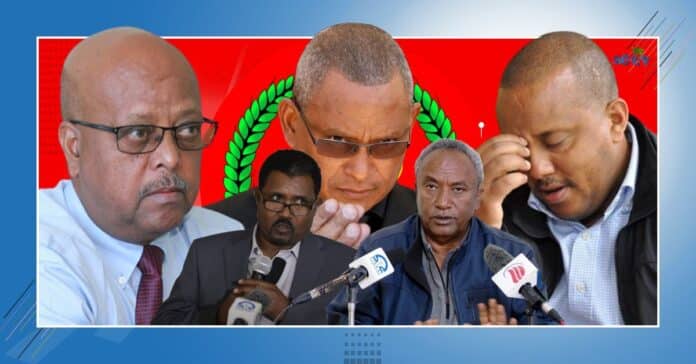
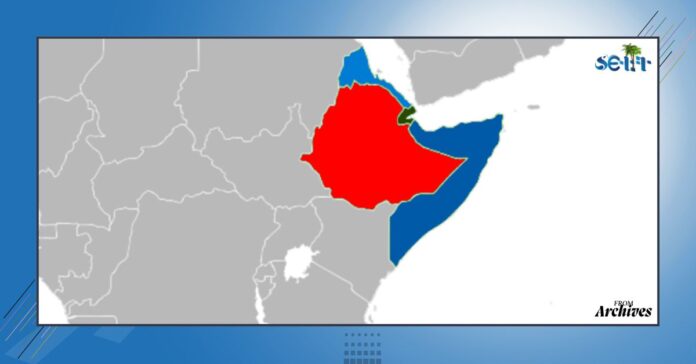
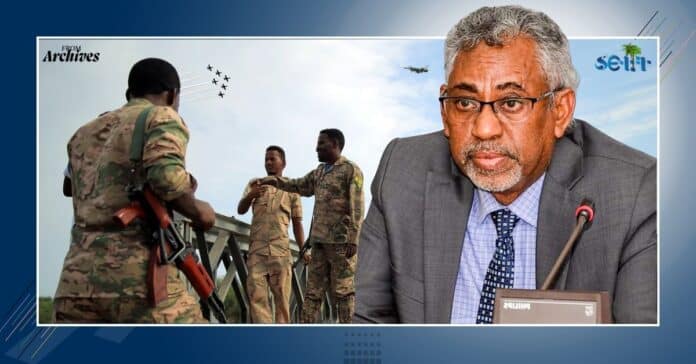
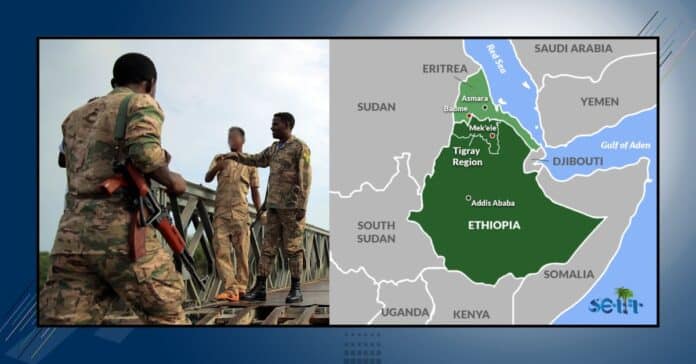
Speaking at a virtual news conference on Zoom, On Monday March 24,2025; Eritrean scholars dismissed with vigor Ethiopia’s claims that its landlocked status is an obstacle to development and that the Afar people live along the Red Sea coastline, which makes Ethiopian access justifiable. The roundtable, hosted by the Red Sea Task Force, provided a platform to present an executive summary in English, Tigrigna (the language of Eritrea), Amharic, and Arabic, documenting the deficiencies in Ethiopia’s assertions from historical, legal, and economic perspectives.
The scholars argued that Ethiopia’s economic problems arise from internal governance failings, not from its lack of a coastline. Even though Ethiopia has been landlocked since Eritrea broke away in 1993, it enjoyed two decades of development, relying on ports in Djibouti, Somalia, and Sudan. The argument that access to the sea is paramount for economic prosperity overlooks Ethiopia’s mistakes, internal strife, and volatile politics as the real hindrance to sustainable development.
Also, the scholars rejected the ethnic argument that the Afar people, who live in both Eritrea and Ethiopia, provide Ethiopia with a legitimate right to claim Eritrean land. They stressed that ethnic groups across Africa span borders, but that does not warrant territorial claims. From the UN-backed borders and the referendum that established Eritrea’s sovereignty, Eritrea remains inviolable.
The event drew many Eritrean and non-Eritrean vloggers and media outlets who asked questions after the presentation. In a direct challenge to the panel, a Setit Media representative asked:
“What policies should Eritrea adopt to protect its national security and sovereignty while pursuing diplomatic negotiations with Ethiopia regarding access to the Red Sea to promote regional stability?”
The question highlights increasing anxiety over Ethiopia’s rhetoric and the need for Eritrea to walk a fine line between diplomacy and national security. Scholars reiterated Eritrea’s openness to peaceful and legal discussions for economic cooperation but emphasized that it would not tolerate territorial claims or coercion.
Indeed, while Ethiopia continues to push its agenda, Eritrea stands firm in defending its sovereignty, urging regional diplomacy based on international law rather than historical revisionism or ethnic politics.
It is essential to acknowledge that the security interests of one nation should not compromise the stability of others. The Horn of Africa represents a complex geopolitical landscape characterized by persistent instability and historically entrenched conflicts. These issues are frequently exacerbated by external interventions and the influence of foreign powers, which complicate resolution efforts and regional dynamics.
In a recent article for Al Jazeera, the former president of Ethiopia articulated a strong demand for regime change in Eritrea. He contended that the Eritrean government’s engagement in the various crises impacting the Horn of Africa is heavily influenced by the decisions of the current president. He urged global leaders to intervene and facilitate the removal of this regime, arguing that such action is essential for fostering regional stability and promoting the greater good.
When the Ethiopian government undertook military action against the Tigray People’s Liberation Front (TPLF) and sought support from Eritrea, the ex-president did not provide evidence to support claims against Eritrean leadership regarding their involvement in the Tigray conflict. Notably, during and in the immediate aftermath of the hostilities, high-ranking Ethiopian military officials, including the prime minister himself, acknowledged the vital contributions of Eritrean forces to the stabilization of Ethiopia. This raises a critical inquiry: how can a figure associated with a previous regime, which the current administration ousted, level accusations against Eritrea for involvement in a conflict that fundamentally pertains to Ethiopia’s internal affairs?
The Eritrean government has been implicated in Somali affairs, a claim that has not been explicitly refuted. However, the president’s assertion oversimplifies the situation. Eritrea positions itself as a facilitator for Somali autonomy in resolving its internal conflicts, firmly opposing any form of external military intervention in Somalia’s sovereignty. It’s important to note that the president is cognizant of Ethiopia’s 2006 military incursion into Somalia, which precipitated a protracted conflict and exacerbated instability, ironically culminating in the empowerment of the very terrorist factions that Ethiopia purportedly aimed to combat. Ethiopia’s engagement with Somalia has historically not been characterized by a pursuit of peace, unity, or prosperity for the Somali state; instead, it has been framed as a strategic concern, with Somalia primarily perceived as a security threat.
The president has notably failed to address the significant violation of international law reflected in the memorandum of understanding signed between his prime minister and the self-declared Republic of Somaliland. This action raises serious concerns about its implications for regional stability. Historically, Ethiopia has consistently engaged in strategies that undermine Somalia’s unity by providing military support to various factions and warlords. This support has perpetuated the division and fragility of the Somali state, allowing Ethiopia to exploit the resultant instability for its strategic advantage.
It is essential to highlight that the former president overlooks the pivotal ruling by the International Court of Arbitration regarding the border dispute between Eritrea and Ethiopia. During his tenure, he notably refused to implement this final and binding decision, continuing the illegal occupation of Eritrean territories. This raises serious questions about the legitimacy of his claims to champion peace and security while maintaining an unlawful presence in disputed areas.
Furthermore, the accusations directed toward Eritrea seem to reflect deeper issues within Ethiopia’s political landscape. Leaders in such positions must foster unity domestically rather than deflect blame onto neighboring countries for their shortcomings. Given the severity of the internal crisis facing Ethiopia, a more productive approach would entail focusing on strategies for resolving internal conflicts rather than engaging in inflammatory rhetoric aimed at external parties.
The instability of a single state can have a cascading effect on regional dynamics, with both interstate and intrastate conflicts prompting neighboring nations to either engage in direct military confrontations or escalate their involvement in proxy conflicts. A reductive narrative that assigns blame to a single nation while adhering to an antiquated dichotomy of good versus evil fails to address the underlying complexities of the situation. This approach may exacerbate tensions, fostering discord and mistrust that obstruct meaningful dialogue and cooperative efforts toward stability and conflict resolution.
This article builds on my previous analyses of Ethiopia’s renewed push for a seaport. In Part I, I examined the historical and geopolitical context, highlighting Ethiopia’s expansionist ambitions. In Part II, I explored the domestic factors driving this quest.
In this third part, I turn to the role of regional powers—particularly the United Arab Emirates (UAE)—in escalating tensions. The UAE’s deepening footprint in the Horn of Africa, from Somalia to Sudan, is not just about strategic partnerships; it reflects a broader effort to flex financial muscle, secure access to natural resources, and strengthen its influence over the region’s vital sea routes. These maneuvers have intensified uncertainty and shaped the crisis over Ethiopia’s maritime ambitions.
Ethiopia’s Maritime Aspirations: Diplomacy or Threats?
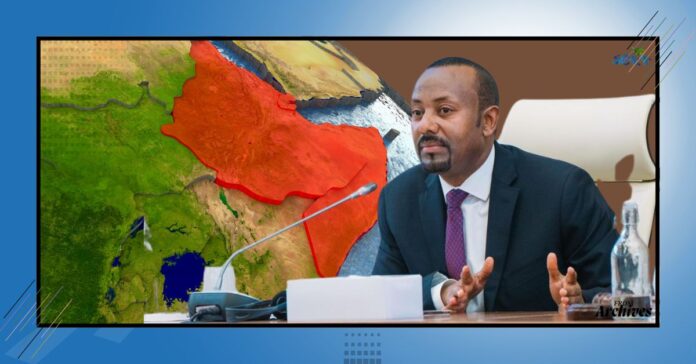
For over a year, Ethiopian Prime Minister Abiy Ahmed has made increasingly bold and provocative statements about securing a seaport. In an October 2023 parliamentary speech, he asserted that Ethiopia has a historical right to a coastline and declared that owning a port is an existential necessity for the country. He even hinted at military action if negotiations failed.
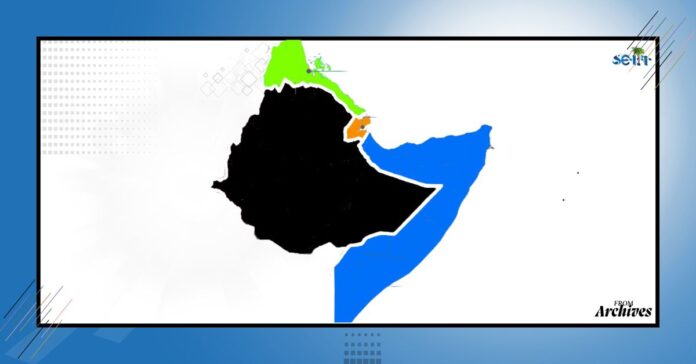
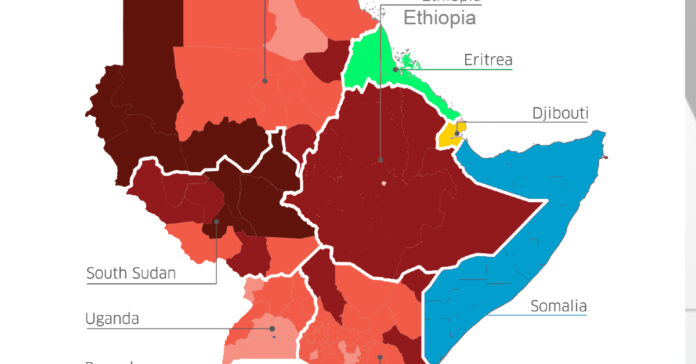
This alarming rhetoric triggered strong reactions from Ethiopia’s coastal neighbors—Eritrea, Djibouti, and Somalia—who swiftly rejected the notion that Ethiopia is entitled to their territory. However, they also indicated a willingness to negotiate a commercial deal, provided that their sovereignty remains respected.
Tensions escalated further when Ethiopia struck a controversial deal with Somaliland, a breakaway region of Somalia. Mogadishu denounced the agreement as a violation of its sovereignty, adding fuel to an already volatile situation. Instead of unilateral moves and veiled threats, Ethiopia could have pursued a commercial port agreement through legal, diplomatic channels—an approach that would have reassured its neighbors and ensured regional stability.
In a recent speech to parliament, PM Abiy attempted to downplay fears of an invasion, stating that Ethiopia had no intention of militarily seizing Eritrean territory. While this was a positive step, his subsequent remarks still hinted at potential conflict if diplomacy fails. This raises an important question:
If Ethiopia is only seeking a commercial port deal, why resort to aggressive rhetoric?
Wouldn’t a commercial agreement serve Ethiopia’s interests without alarming its neighbors?
The UAE’s Role in Fueling Tensions
The UAE has become a key player in the Horn of Africa, using its financial power and strategic investments to expand its influence. While it presents itself as an economic partner, its real objectives appear broader—securing control over maritime trade routes, natural resources, and strategic coastal territories.
1. UAE’s Influence in Ethiopia
The UAE has provided Ethiopia with billions in loans and funded key infrastructure projects, deepening its economic ties with Addis Ababa.
DP World, a UAE-owned port operator, has aggressively pursued port deals in Somaliland and elsewhere in the region, cementing Abu Dhabi’s strategic foothold.
The UAE’s Red Sea strategy appears to align with Ethiopia’s maritime ambitions, raising concerns over tacit support for Addis Ababa’s territorial aspirations.
2. UAE’s Role in Sudan’s Civil War
Beyond Ethiopia, the UAE has played a decisive role in Sudan’s civil war, allegedly financing and arming warring factions. This prolonged conflict has left Sudan too weak to resist external pressures—including potential Ethiopian territorial claims.
A destabilized Sudan benefits both Ethiopia and the UAE:
Ethiopia faces less resistance to any future territorial ambitions and negotiations over the Grand Ethiopian Renaissance Dam (GERD).
The UAE expands its economic and military presence in the region without serious pushback.
3. Is the UAE Encouraging Ethiopia’s Red Sea Push?
While the UAE has not openly backed Ethiopia’s territorial ambitions, its actions suggest it profits from the instability Ethiopia is creating. By keeping the region divided, Abu Dhabi strengthens its grip over strategic maritime routes.
The question is: would Ethiopia make such aggressive territorial claims without external encouragement?
The evidence suggests that Ethiopia’s maritime ambitions are not solely a nationalistic endeavor or driven by domestic concerns—they are also influenced by external players with their own strategic goals.
Conclusion: Regional Unity Over External Manipulation
Ethiopia’s maritime ambitions are no longer just a regional issue—they are part of a larger geopolitical contest. External actors, particularly the UAE, are exploiting regional divisions to advance their own economic and security interests, heightening the risk of conflict.
If these trends continue, the Horn of Africa could face escalating disputes over sovereignty, borders, and resources. Ethiopia’s confrontational approach—combined with foreign interference—threatens to push the region into long-term instability.
What Is the Way Forward?
To prevent further crises, the Horn of Africa must prioritize:
Diplomatic solutions over threats – Ethiopia should negotiate commercial port access rather than demanding ownership or issuing veiled threats.
Regional cooperation over foreign interference – Neighboring states must strengthen collective security and regional cooperation to counteract external manipulation.
Resisting foreign agendas – The region must assert its independence and prevent external actors from dictating its future.
The international community also has a role to play. As the collective guardian of international laws and norms, it has a responsibility to intervene when sovereignty is threatened. It should actively encourage regional states to engage in diplomacy rather than allowing disputes to escalate into conflict.
Will the Horn of Africa shape its own destiny, or will it continue to be a battleground for foreign powers?
The region’s stability, security, and prosperity depend on trust, cooperation, and self-determination. The time to act is now.
I never intended to write a sequel to my previous article. However, the inflammatory rhetoric circulating in Ethiopian media—especially from government-affiliated outlets—has compelled me to speak out. When high-ranking officials beat the war drums as a daily habit, the dangerous implications of their statements cannot be ignored. In a region already scarred by conflict, prioritizing peace over further discord is imperative.
Questioning the Rhetoric
I recently came across a video in which the Ethiopian Chief of Staff boldly declared that Ethiopia would, sooner or later, become a Red Sea country. In his address, he made several unsubstantiated claims that defy basic geographic and legal realities. Similarly, the Minister of Agriculture reportedly asserted that Assab has always been part of Ethiopia and was never part of Eritrea. Such statements raise a critical question: Do these officials truly believe their own words, or are they merely echoing rhetoric without a sound understanding of history and international law?
Historical and Legal Context
Why does the Prime Minister persist with such weak arguments—citing Ethiopia’s population of 120 million or a so-called historic right to a sea corridor—as justification for claims that have no legal basis? International law recognizes Ethiopia as a landlocked nation, making its only viable option the securing of seaport services through commercial agreements. In reality, Ethiopia already benefits from such arrangements with neighboring countries like Djibouti, and Eritrea has never denied it access to maritime trade.
Ethiopia’s modern borders were largely defined in the late 19th century. Emperor Menelik II’s territorial expansion, following the Berlin Conference of 1884–1885, was pivotal in shaping the country’s current boundaries. At the same time, Eritrea’s borders were delineated when it was established as an Italian colony in 1890. These historical events cemented Ethiopia’s enduring status as a landlocked nation—a fact further underscored by Prime Minister Abiy’s pragmatic visit to Eritrea. His journey, which culminated in a peace deal and the unconditional acceptance of the 2002 EEBC verdict, reaffirms that, despite current calls for a seaport or a historic right to a Red Sea corridor, Ethiopia has always been landlocked.
Domestic Implications
Ethiopia faces profound internal challenges. The nation is plagued by deep-rooted ethnic conflicts, severe political and economic crises, and a security situation in which the central government struggles to extend its control beyond the capital and a few major cities. Many Ethiopians—even those who might share the ambition of acquiring a seaport—question the wisdom of waging war against a neighbor when such pressing domestic issues remain unresolved. Is this merely an outdated tactic—a way to manufacture an external enemy to distract from internal failures? Only time will reveal the consequences, though many fear that this approach could hasten the collapse of the Ethiopian state—or what remains of it.
Conclusion
The inflammatory rhetoric and expansionist ambitions not only undermine the prospects for lasting regional peace but also divert critical resources away from addressing Ethiopia’s internal challenges. The Horn of Africa has long been a victim of both foreign intervention and local expansionist agendas—forces that continue to prioritize external ambitions over the urgent need for cooperation and stability. Unless regional leaders break free from these destructive influences and commit to a genuinely collaborative framework, the cycle of conflict and instability will persist to the detriment of all nations in the region.
In my article titled, “Root Causes of the Current Power Struggle in Tigray, Ethiopia,” published September 23rd, 2024, on Setit.org, I outlined four scenarios focused on how the power struggle between the Tsadkan group and The Tigray People’s Liberation Front (TPLF) in Tigray was likely to be resolved. Scenario one was described as follows:
“The Debretsion group may attempt to remove the Getachew and Tsadkan group from power and replace them with core TPLF officials. Such a scenario is plausible only if the army agrees to support the Debretsion group. Since the federal government cannot afford another conflict with the TPLF, it may accept the TPLF’s actions and continue business as usual.”
Six months have passed and unlike previous fatal mistakes, this time, the TPLF played its cards smartly. Given the multiple wings and networks of the Tsadkan power grab group, any hasty decision by the TPLF to topple the group might have resulted in some limited conflict. When he mounted the power grab strategy in Tigray, Tsadkan had the backing of the Federal Government, diplomats from some big Western countries, the Prosperity Party-affiliated Global Society of Tigray Scholars and Professionals (GSTS), and of course, the grudge holders like Gebru Asrat, Siye Abraha, and Abebe Teklehaimanot. The major weakness of the Tsadkan group was its rejection by the military. Its move to gain support by exploiting old regional fault lines in Tigray — especially Gebru Asrat calling the Tigray Military Leaders “Protectors of the Adwa Dynasty” — was the hallmark of the group’s use of regionalism as a playing card. Painting the TPLF as an Eritrean Government messenger seriously backfired. When Debretsion explained that it was Getachew Reda who was meeting with the Eritrean Government, Getachew’s credibility hit rock bottom.
The strength of any political leadership is measured by its ability to analyze the regional and international political landscape and relate it to its domestic strengths and weaknesses. Using its domestic strengths, it exploits opportunities and fends off threats and weaknesses. The TPLF’s strong base in Tigrayan society and its relationship with the Tigray Defense Forces (TDF) are its strengths. The TPLF’s grave mistake was its failure to analyze the consequences of the wrong decisions it had been making in the last twenty-seven years. Especially not accepting the Ethio-Eritrea boundary decision and swiftly moving onto its implementation was the most fatal mistake of all. Abiy Ahmed smartly exploited this TPLF mistake and used it to weaken the TPLF and assert power in Ethiopia. Now it seems the TPLF has learned from its mistakes, and it is closing similar loopholes that could expose it to other risks. Also, the TPLF exploited Abiy Ahmed’s unwarranted threat to its neighbors and his attack on his former allies in the Amhara region. These two missteps significantly weakened Abiy Ahmed’s government, and the TPLF used them wisely.
Another big lesson for the TPLF is the danger of “Grudge Holders.” The brazen move by the Tsadkan group and its readiness to throw Tigray into sub-regional conflict is very scary, to say the least. The late Ethiopian Prime Minister Meles Zenawi’s decision to expel the grudge holders, including Tsadkan, from the Army and the TPLF was right, and the TPLF should have seen the dangers of bringing Tsadkan to power. Not surprisingly, using the once-in-a-lifetime opportunity, Tsadkan was ready for revenge and erasing the TPLF from Tigray’s political landscape at any cost.
The victim in the power struggle was the figurehead Getachew Reda. Tsadkan used the regionalism card and exploited his greed for power and lavish lifestyle to trap Getachew in his power-grab camp. Then, using the cover of Getachew, Tsadkan started calling the shots. Eventually, those shots led to the demise of the whole group, but Getachew lost more than Tsadkan. He was loved and respected by the Army and the TPLF echelons of power. Eritrea was very receptive to Getachew’s move to improve relations. Eventually, Tsadkan, through his networks, blocked Getachew’s move to reconcile relations with Eritrea. Hopefully, Getachew will reconcile with his old TPLF colleagues and will get a chance to lead a peaceful civilian life in Tigray. His political career in Tigray is over for good, but his presence in Tigray will facilitate reconciliation. It seems the TPLF’s decision not to move forward with arresting Getachew considered such an opportunity.
The coming of Tadesse Worede as president of the Tigray Interim Administration has been long overdue. He is trusted by the TPLF and hails from the Enderta region. The Enderta region has grievances about being marginalized from power. Remember, the grudge holders’ group used that card to discredit the TPLF, mainly in the Southern Region of Tigray. Now that such grievance is alleviated — at least for now — and the TPLF controls the administrative structure in Tigray, what are its possible future objectives?
TPLF’s Priority: The TPLF’s priority is to get its party reinstated. Abiy Ahmed’s government used the TPLF’s old strategy to dismantle the TPLF from within. By bringing the Tsadkan group into power and placing Getachew Reda as the figurehead, it worked hard to split and eventually weaken the TPLF. Although Abiy’s strategy has weakened the TPLF significantly, eventually it failed miserably and the TPLF is in control now. As described in Scenario One, the Abiy government has been weakening politically and economically. It does not have the means or willingness to initiate any conflict with Tigray. Accordingly, the Abiy government has no choice other than reinstating the TPLF as a party and returning its blocked money in a bank and investments in Ethiopia. The TPLF’s reinstatement as a political party will help it participate in the upcoming Ethiopian election and can facilitate its integration into the Ethiopian Federal System.
Return of Displaced People: The return of displaced people has been a thorny issue between the TPLF and the Abiy government. The TPLF wants the displaced people to return with the administration that existed before the start of the war. The TPLF’s request is another way of saying “handover Wolkait and Tselemti to us.” The Federal government wants the displaced people to return accompanied by militia who were residents of the two regions before the war. Unless they find a middle ground, this issue will continue to drag on and eventually become an obstacle to any full reconciliation between the Abiy Ahmed government and the TPLF.
Conclusion
Tadesse Worede being at the helm of power in Tigray guarantees the TPLF’s dominance in the Tigray regional administration structure. Unlike the Tsadkan group, the TPLF does not have any problem with putting all its administrative structure under Tadesse Worede. The TPLF will help Tadesse Worede lead Tigray’s Interim government to conduct its activities effectively and eventually transfer power to the TPLF, possibly during the upcoming election. Due to its missteps, the Abiy government will continue to get weakened. Before it is incapacitated like Getachew Reda, the TPLF can extract more benefits from the Abiy government. In the end, Ethiopia’s future lies in the TPLF, Fano, and OLA combined transitional government. Till then, the TPLF’s neutral position in regional politics is the way to go. Any missteps by the TPLF will put them in a very dangerous position. Let regional politics play itself out.
The Horn of Africa is widely recognized as one of the most conflict-prone regions in the world, characterized by persistent disputes both within and between states. The root causes of these conflicts are multifaceted and complex, generally stemming from two main factors: local expansionist agendas and foreign intervention. The current Ethiopian Prime Minister’s insistence that Ethiopia must become a coastal state has not only intensified regional security concerns but also fueled a campaign that can only be described as warmongering. This stance serves neither Ethiopia nor the broader region, as it risks further destabilization, strains relations with neighboring countries, and undermines efforts toward regional cooperation and lasting peace.
Foreign Intervention and Its Impact
Foreign involvement in the Horn of Africa dates back to ancient times, when major powers vied for control over the Red Sea—a crucial trade route to Asia. For the purposes of this discussion, however, the focus is on the post-World War II dynamics that have shaped the region’s geopolitical landscape, particularly regarding Eritrea.
Eritrea, which had the potential to become the first independent African nation, was denied this opportunity and was instead federated with Ethiopia—a decision driven largely by Cold War-era geopolitical calculations by the United States. Viewing Ethiopia as a strategic ally, the U.S. played a decisive role in incorporating Eritrea into Ethiopia. Although the UN resolution used to justify this action is well documented, its ultimate consequence was a 30-year war for Eritrean independence, culminating in victory in May 1991. This outcome was legally confirmed through a UN-supervised referendum in April 1993, in which 99.8% of Eritreans voted for independence. Nonetheless, the war inflicted tremendous human and economic losses, significantly hindered the development of both nations for decades.
Ethiopia’s Expansionist Agenda
Ethiopia has long claimed a historical right to coastal access, basing its argument on narratives that distort historical realities. While several pre-colonial kingdoms and civilizations in the Horn of Africa enjoyed maritime access, these entities belong to a different era and do not correspond to modern Ethiopia. At best, they represent a shared heritage that could foster regional integration. A key flaw in Ethiopia’s argument—repeated by its politicians and intellectuals—is the assertion that Ethiopia, as a nation-state, has existed for thousands of years in its current territorial configuration.
In reality, modern Ethiopia, like other African states, was significantly shaped by European colonialism, particularly following the Berlin Conference (1884–1885). The present-day borders of Ethiopia are largely the result of territorial expansions under Emperor Menelik II in the late 19th century, formalized through colonial treaties with Italy (which established the Eritrean border), Britain (which defined the Sudanese and Kenyan borders), and France (which delineated the boundary with Djibouti). These agreements cemented Ethiopia’s landlocked status and remain the foundation of its modern territorial framework. Any attempt to challenge these established borders risks undermining the stability of the entire Horn of Africa.
The Risks of Historical Revisionism
The Ethiopian Prime Minister’s efforts to invoke pre-colonial history to justify claims to a seaport ignore the fact that Ethiopia’s territorial boundaries—like those of all African nations—are rooted in the colonial era. Should Ethiopia challenge these colonial-era borders in pursuit of maritime access, it would not only reignite disputes with Eritrea but could also spark broader territorial conflicts with Sudan, Somalia, Kenya, and Djibouti. Such revisionism sets a dangerous precedent, encouraging other nations to revisit historical grievances and potentially escalating conflicts.
Moreover, these claims run counter to international law and the cardinal principles of the African Union Charter, which considers colonial borders sacrosanct. More importantly, they prolong the suffering of the peoples of the Horn of Africa. The Ethiopian leadership repeatedly asserts that it seeks to achieve maritime access through peaceful means, yet the notion of acquiring a seaport without coercion is inherently contradictory. If Ethiopia is so confident in its legal entitlement, why not pursue the matter in an international court instead of resorting to inflammatory rhetoric? This was, in fact, attempted after the 1998–2000 war between Ethiopia and Eritrea, when arbitration reaffirmed Eritrea’s sovereignty over its ports based on colonial treaties. This persistent insistence on maritime access without clear legal justification only deepens distrust and tension, potentially paving the way for another devastating conflict.
The Path Forward: Diplomacy and Economic Cooperation
Rather than seeking to revise established borders, Ethiopia’s most viable path to maritime access lies in diplomacy and economic cooperation with its coastal neighbors. Pragmatic strategies—such as comprehensive trade agreements and robust regional partnerships—offer far more sustainable solutions than territorial revisionism.
Ethiopia has already demonstrated its potential for economic cooperation through access to Djibouti’s ports and recent agreements with Somalia and potentially with Eritrea. Expanding and formalizing these arrangements through long-term contracts, significant infrastructure investments, and comprehensive regional trade pacts would ensure secure and uninterrupted access to the sea. Furthermore, investing in regional integration mechanisms, such as the Intergovernmental Authority on Development (IGAD), would allow Ethiopia to deepen its economic and political ties with its neighbors while bolstering regional security and stability.
By prioritizing economic integration and diplomatic engagement, Ethiopia can secure its maritime trade interests while contributing to overall regional stability, fostering a cooperative environment in the Horn of Africa rather than exacerbating existing tensions. The long-term prosperity of the region depends not on historical revisionism or expansionist rhetoric but on mutual respect, economic cooperation, and collective security. The Horn of Africa has long been a victim of both foreign intervention and local expansionist ambitions, which continue to prioritize external agendas over the urgent need for regional peace and cooperation. Unless regional leaders break free from these influences and commit to a truly collaborative framework, the cycle of conflict and instability will persist to the detriment of all nations in the region.
Eritrean Information Minister Yemane G. Meskel has issued a strong warning against what he describes as a “war-mongering psychosis” taking hold in certain Ethiopian political circles and online platforms. In a tweet posted on X (formerly Twitter), the minister condemned the rising trend of historical distortion, disregard for international law, and inflammatory rhetoric that he argues are being used to justify illegal actions that could destabilize the region.
“Almost on a daily basis, we see an upsurge of blatant distortion and revisions of ancient, medieval, and modern history of the region; brazen rejection of relevant provisions of international law; and irresponsible recycling of inflammatory propaganda,” Yemane wrote. He warned that these narratives serve only to rationalize actions that threaten peace and security.
The war-mongering psychosis that has apparently gripped certain political circles/Trolls in Ethiopia these days is astounding indeed. Almost on a daily basis, we see an upsurge of blatant distortion and revisions of ancient, medieval and modern history of the region; brazen…
His comments come amid growing speculation about the possibility of renewed conflict between Ethiopia and Eritrea. Some Ethiopian political and military figures, including General Abebe Teklehaymanot, a former commander of the Ethiopian Defense Force, have publicly predicted war between the two nations. In a recent interview, Jobe—as he is known from his TPLF guerrilla days—stated that “the two countries are likely heading to war,” citing military mobilizations and rising tensions.
Jobe’s remarks reflect the very concerns raised by the Eritrean minister. He suggested that Ethiopia might seek war for territorial ambitions, such as seizing the Eritrean port of Assab, or as part of an effort to remove the ruling PFDJ government in Asmara. These justifications mirror the type of revisionist claims and rejection of international agreements that Yemane warned against.
The minister’s statement underscores Eritrea’s growing concerns over what it sees as deliberate efforts to fuel hostility in the region. While Ethiopian officials have yet to respond, his warning has sparked debate online, with some supporting his call for stability while others continue to push narratives that could further escalate tensions.
“He told me that he had taken a big intake of breath when he heard that Joe Biden had fallen off his bicycle. ‘I wish he acted his age,’ he said. Abiy grimaced when I asked about Donald Trump and said, ‘He did a lot of damage to America’s image. Let’s not even talk about him in the same way as the others. America’s politics have been ruined by entertainment culture and media, which is why its politicians are always trying to behave as if they are in a drama.”
— Jon Lee Anderson, The New Yorker, September 26, 2022.
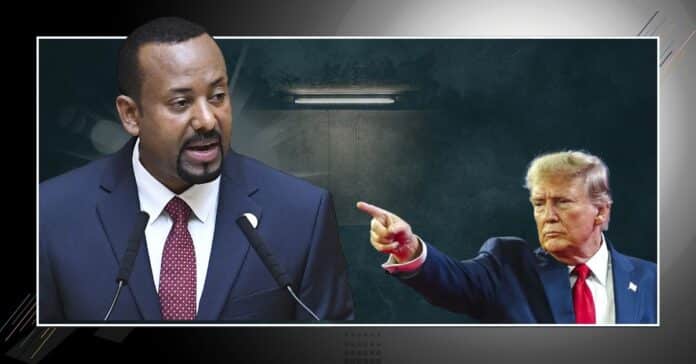
According to Abiy Ahmed, Donald Trump is inferior to other American presidents. Little Abiy sees the mighty Donald Trump as an entertainer and media personality who often behaves as if he is in a drama. Abiy Ahmed was sure that Donald Trump was gone for good, with no return to the White House. Yet, Donald Trump won an election by a landslide and returned to the White House for a second term. What would the warmonger and human rights abuser Abiy Ahmed say now? Does he still believe Donald Trump is inferior to other American presidents?
To build peace in the Horn of Africa during his first term, Donald Trump worked hard to resolve the long-running Nile River dispute between Egypt, Ethiopia, and Sudan. He was the first U.S. president to host the foreign ministers of the three countries in the White House. Also, during his first term, Ethiopia and Eritrea signed a peace agreement that resolved a 20-year border dispute and restored diplomatic relations. Donald Trump deserves praise, not disdain from the ungrateful Abiy.
Abiy Ahmed is an egomaniac who believes in superstition. He often talks about how, when he was young, growing up in a dusty, faraway village in Ethiopia, his mother told him he was going to be the king of Ethiopia. He believes his rise to the position of prime minister was determined at birth. People like Abiy, who believe power is given to them by God, will do anything to keep it. That is exactly what we are witnessing in Ethiopia today.
Abiy Ahmed has a long record of crimes. Six years after becoming prime minister, he ignited a war in the Tigray region of Ethiopia that killed over a million and a half people. Although a peace deal was signed on November 2, 2022, in Pretoria, South Africa, the Tigray war is likely to restart. Currently, he is overseeing two other wars in the Amhara and Oromo regions of Ethiopia. Abiy, who is delivering arms to Sudanese warring parties, signed an illegal memorandum of understanding with the breakaway region of Somaliland, and is considering invading neighboring Eritrea, has no moral ground to criticize Donald Trump, the current president of the United States.
Abiy Ahmed is a warmonger and serial human rights abuser. In three regions of Ethiopia, Abiy’s war machine has killed more than two million people and arrested several million Ethiopians. Most of those who have been arrested have disappeared without a trace. He uses sophisticated drones to attack poor farmers, their families, crops, and animals with impunity. The Ethiopian currency, the birr, which exchanged at fifty to one U.S. dollar a few months ago, is now one hundred fifty to one U.S. dollar. Poverty in Ethiopia is rampant, and most Ethiopian people cannot afford to buy even a loaf of bread. Yet, Abiy spends billions of dollars on arms to kill his own people.
His government departments are funded by money from humanitarian organizations, including USAID, and financial institutions such as the IMF and the World Bank. During the Tigray war, humanitarian organizations accused Abiy Ahmed of stealing food aid. He used the stolen food aid to feed his soldiers, while the rest was exported to neighboring countries for hard currency, probably to buy more arms.
Abiy often claims to work toward stabilizing Somalia. However, the reality is the opposite. He is taking advantage of a neighboring country that is going through multiple challenges. Recently, Somalia has shown progress, especially in its security sector. Neighboring countries like Eritrea have trained Somalia’s future navy, air force, and mechanized units. Such efforts to rebuild Somalia did not sit well with Abiy. That is why he rushed to derail the effort to bring Somalia back from the abyss.
Disregarding the sovereignty and territorial integrity of Somalia, Abiy Ahmed signed a Memorandum of Understanding (MoU) with breakaway Somaliland to establish a navy on the Red Sea. His move threw the Horn of Africa into crisis and was widely criticized by the international community. The MoU does not involve the Government of the Federal Republic of Somalia. Signing an agreement with Somaliland, which the world recognizes as part of Somalia, is in direct violation of the African Union’s commitment to respecting the territorial integrity and sovereignty of its member nations, including Somalia.
Conclusion
Abiy Ahmed, a raving egomaniac, is a threat to Ethiopia and the wider Horn of Africa. His actions are childish and show no regard for human life whatsoever. Like a child, he collects arms from several countries, parades them in the streets of the capital, Addis Ababa, and uses them against his own people while threatening his neighbors. He overestimates himself and looks down on others. Abiy needs to be stopped before he causes more damage. Until that time comes, the carnage, poverty, and instability in Ethiopia will continue.
Usually, the articles that we see on Setit and other news websites are more about the politics concerning Eritrea, as well as the Horn. Articles are written about the boiling point of diaspora Eritreans fueled by a lack of dialogue, as well as why change needs to happen in Eritrea. It sometimes feels like insanity to talk about the things we know over and over again. An article that has already been written about our plight has brought no substance. Perhaps I could offer a change, and that is envisioning Eritrea as the future hub for technology (of course, when change does occur). I hope this article can also inspire others to share their dreams of what Eritrea can be when there’s better leadership in the future.
While Eritrea is blessed to not be landlocked and to have a port, we are also blessed to have a skilled workforce that resides in the diaspora. Many Eritreans that I have personally interacted with are working in technology, employed by Fortune 500 companies such as Capital One, Amazon, Microsoft, and so on. These people range from software developers and DevOps engineers to system administrators, among other roles. The aforementioned roles are critical to ensuring the well-being and stability of systems. Without software developers, there would be no new software or security and software patches. Without system administrators, servers would not be properly maintained and would go down, bringing the whole system offline. Without DevOps engineers, there would be poor collaboration between teams to create the most reliable system for the company. Thus, without them, we would be in the dark—especially considering how everything we do has moved to the cloud. From banking to going to the library to making purchases, everything is done digitally in the 21st century. Relying on paper and pen is incredibly outdated in the age of technology.
There are many Eritreans in the diaspora who work in technology, and it has always made me wonder if Eritrea could become the hub for technology in Africa in a future where there is finally a structured government and perhaps a more economically liberalized system in place. One idea that I have in mind is that Eritrea could very well be a place where data centers are hosted, as well as a provider of internet connectivity to neighboring African countries—on the condition that Eritrea has stable electricity and is interlinked with underwater fiber optic cables. By hosting data centers that offer virtual private servers (VPS) for companies engaged in e-commerce or other digital services, Eritrea could experience economic growth and job creation. The establishment of just a single data center in Eritrea could encourage the development of a local IT industry and create high-skilled jobs in IT, networking, and maintenance. If the government were properly reformed and rectified any negative policies that deter foreign direct investment, it could encourage the once-discouraged Eritreans to return and invest in the country.
Before Eritrea considers building a data center for commercial use, it must obviously have reliable internet. Fortunately, we are blessed with ports in both Massawa and Assab, where a fiber landing port could be installed to interlink the country via underwater fiber optic cables. This would not only reduce the network congestion that the country currently faces but also increase bandwidth and internet speed. Another consideration is that Eritrea could help Africa by hosting CDN services, which may alleviate some of the network congestion issues on the continent.
For those who aren’t technologically savvy, you may wonder, “What is a CDN?” In short, a CDN (Content Delivery Network) is a system of distributed servers designed to deliver content to end users (which is us) efficiently while reducing load times. Instead of retrieving data directly from the main server, a CDN caches and serves content from the server geographically closest to the user’s location. For example, if you were to stream a movie from Netflix, the content is delivered from a nearby CDN server rather than Netflix’s main servers, thus improving speed and reducing buffering time. Implementing CDNs in Eritrea—and hopefully across Africa when other nations stabilize and eventually follow suit—could not only offer economic benefits but also address one of the continent’s major challenges: slow and unreliable internet access.
Conclusion
Needless to say, before a venture like this can be feasible in Eritrea, the country must have a sound macroeconomic policy, as well as proper institutions in place to give foreign and local investors confidence in doing business there. Additionally, robust infrastructure such as water and electricity is a necessity. These foundational elements must take precedence over any ideas for Eritrea’s growth and development; otherwise, such ideas would quickly crumble due to being unimplementable, unfeasible, or too risky given the current situation. However, this article serves as a symbol that technology is the backbone of any modern economy. Without a robust ICT infrastructure, Eritrea cannot have an economy that is competitive in the global market. Hopefully, within our lifetime, we will witness the rapid industrialization of Eritrea that will propel it into the modern world.
During the last four years (2020-2024), the Tigray People’s Liberation Front’s (TPLF) propaganda machine and its surrogate social media activists, scattered all over the world, have been busy blackmailing the Eritrean Army. The accusations included unlawful killing of civilians, rape, and food aid theft. Such accusations continued in full force even after the TPLF and the Ethiopian government signed the Pretoria peace agreement (November 2, 2022) in South Africa. The difference was that before the signing of the peace agreement, the TPLF’s propaganda machine was lashing out at the Ethiopian government, the Amhara Allied Forces, and the Eritrean Army. However, after the signing of the peace agreement, the focus was the Eritrean Army, confirming the blackmail was political.
On November 4, 2020, TPLF’s militia and special forces brutally attacked the Northern Command of the Ethiopian Army, and some of the soldiers who survived the spontaneous attack fled to Eritrea. Being angry at Eritrea for accepting the fleeing Ethiopian soldiers, the TPLF hurled more than a dozen missiles at UNESCO’s world heritage site and the capital city of Eritrea, Asmara. To stop the missiles, the Eritrean Army had to support the Ethiopian Army, and both crossed into Tigray.
From the onset, it was clear that the remnants of the 32,000 Ethiopian Army that was backstabbed by a 200,000-strong TPLF militia and special forces were eager to hunt down those who had the blood of Ethiopian soldiers on their hands. In addition to the TPLF’s militia and special forces, Tigrayan priests who convinced the Northern Command soldiers to lay down their arms during the confrontation were also targets of the returning Ethiopian soldiers. Fortunately, the presence of the Eritrean soldiers with the returning Ethiopian soldiers minimized the expected revenge killings. Now, testimonials by Tigrayan civilians that confirm the good Samaritan acts of the Eritrean Army have started to emerge. Tigrayans themselves are talking about how the Eritrean Army provided life-saving help to the unfortunate, fed those who were hungry, and provided much-needed security.
Relentless wicked propaganda may obscure the truth, but sooner or later, it is the truth that wins. The testimonies provided by Tigrayan civilians to their fellow Tigrayan YouTubers are evidence of the good Samaritan deeds of the Eritrean Army in Tigray. A link to the original videos of the testimonies is also provided. These testimonials are only the tip of the iceberg. In the years to come, when the dust settles, many more Tigrayans will come out to tell the truth.
Teshome Beyene, From Sheraro, Tigray
“My name is Teshome Beyene. I used to live in a village bordering the Tekeze River in Tigray. During the start of the 2018-2022 war, I traveled from Tekeze to Adi Goshu to work in agriculture. A group of militias from a neighboring region caught me and put me on a truck with 160 other people. Later, they unloaded us from the truck, brutally beat us, and finally shot us to death. I stayed there lying as if dead for 12 days. Later, Eritrean soldiers came to the area. When they found out that I did not die, they picked me up, dressed me in their military ranger uniform, and transported me to the nearby Tigrayan village called Sheraro. They asked the residents of Sheraro Village if they knew me. The elders of Sheraro village identified me as their own and transferred me to the hospital. I cheated death because of the help I received from the Eritrean soldiers, and I survived to tell the story.” Desta Show from Tigray: YouTube link
Monaliza Abraha, From Tembien, Tigray
“My name is Monaliza Abraha. When the Tigray war (2020-2022) started, I was in Tembien, Tigray, with my grandfather. An Ethiopian soldier came and asked to search our house. After he finished searching, he wanted to rape me. My grandfather said no and fought with him. The Ethiopian soldier shot my grandfather in the leg, attacked him with the back of his gun, and my grandfather fainted. The Ethiopian soldier came to me and asked me to take my clothes off. I told him no. I fought him for quite some time, and later he shot me in my hand and leg. After he left our home, Eritrean soldiers came to our house, probably hearing the gunshot. They asked us to open the door, and my grandfather told them what happened to me. They picked me up from the floor and put me on the bed. They called other soldiers who were a little farther away and asked them to send a car to take me to a hospital in the regional capital city of Mekelle. They warned them I was very young and could die at any time. The car came, and I ended up in the hospital in Mekelle. Although my right hand and right leg were amputated, I am alive to tell the story.” Nahomxtv: YouTube link
Public Meeting in Gulo Mekeda, Tigray
This is a transcription of communication between the residents of Gulo Mekeda and the administrator of the area during a recent public meeting.
“Mr. Solomon, administrator, we told you people were dying. You often tell us it is bad for our politics and ask us not to speak about it. The truth is, until now, the Tigray people who reside in villages bordering Eritrea were supported by the Eritrean government. The Eritrean government has been distributing sorghum to the needy people of Tigray. We survived because of their help. Now that they have left the border areas, the people are dying. We need help from the Tigray provisional government. People are dying of hunger.” Solomedia (9:31-13:08): YouTube link
Lessons Learned
The TPLF’s propaganda machine and surrogate social media army worked hard to obscure the truthfulness, honesty, and good deeds of Eritreans and their army. Even though the Eritrean Army was supporting those civilians who were left wounded, feeding the hungry, and advising Tigrayan civilians on how to remain safe during the war, the TPLF and the Tigray provisional government propaganda machines have been directing their sinister blackmail against the Eritrean Army.
During its mission to Tigray, the Eritrean Army had only one objective, which was to stop the missiles that were fired on the Eritrean capital city and world heritage site, Asmara. The people of Tigray and Eritrea are neighbors, and there has never been any hatred between them. As a result, there was no reason whatsoever for the Eritrean Army to hurt Tigrayan civilians. The testimonials presented above confirm this truth.
As for those who blackmailed the Eritrean Army to secure sanctions on Eritrea under the pretext of human rights violations in Tigray, it is logical for them to fail miserably. No matter what, the truth always wins.
Victory to the Masses and Eternal Glory to Our Martyrs.