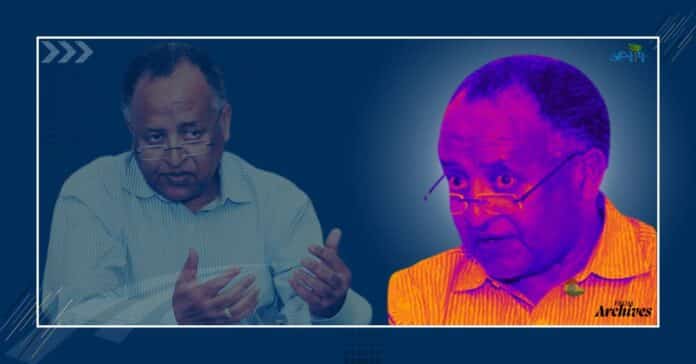
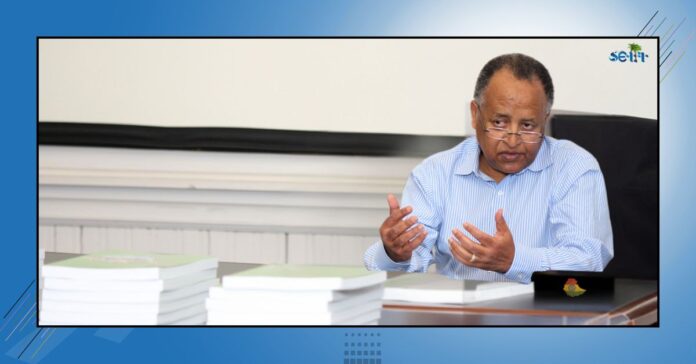
Four years have passed since we lost Professor Aaron Berhane, co-founder of Setit Newspaper and the unwavering voice behind our struggle for justice, truth, and a democratic Eritrea. His departure on May 1st, 2021, still feels like a fresh wound. But today, as we remember him, we do so not in mourning, but in gratitude—for a life lived with conviction, for a legacy etched in resistance, and for a torch that continues to burn in all of us.
Aaron’s journey began early. Born in Asmara on October 6, 1969, he joined the armed struggle for Eritrea’s liberation at just nine years old. By the age of 14, he was already teaching in the liberated areas, contributing to the historic campaign against illiteracy. His sense of purpose was not manufactured by politics or circumstance—it was embedded in his soul.
In 1997, together with courageous colleagues, Aaron co-founded Setit, Eritrea’s first independent newspaper. Setit quickly became a pillar of open dialogue, critical thought, and civic responsibility in a nation hungry for democratic expression. That spirit was violently silenced in the 2001 government crackdown, when Eritrea’s independent press was dismantled, and many of Aaron’s comrades were imprisoned without due process—some of them still behind bars to this day, two decades later.
Aaron escaped, but he never left the struggle behind.
In exile in Canada, while raising a family and pursuing education, he founded Meftih magazine, a new platform for truth-telling and civic engagement. His work earned him national recognition, including an award from the National Ethnic Press and Media Council of Canada, presented by Prime Minister Stephen Harper. But accolades never changed him. He remained Aaron—compassionate, grounded, visionary. A teacher, a brother, a father, and a mentor.
In 2020, in the final chapter of his remarkable life, he helped relaunch Setit Media in the diaspora. With the same unwavering principles that guided him since 1997, he became our board president and advisor. His hand, his heart, his voice—were part of every step we took. His dream was not just to speak truth to power, but to build a culture where justice, dialogue, and dignity define Eritrea’s future.
Today, we pledge to carry his fight forward.
We reaffirm our commitment to Aaron’s lifelong cause: to demand justice and due process for the journalists, leaders, and ordinary citizens imprisoned since 2001; to hold power accountable without fear or favor; and to give voice to the voiceless, wherever they may be.
We pledge to continue building Setit Media—not only as a platform for news and ideas, but as a movement for truth, unity, and democratic transformation. Our mission is clear: we will not forget those who paid the price for speaking out. We will not normalize the silencing of free thought. And we will not accept a future for Eritrea that is anything less than free, just, and inclusive.
Setit was never just a newspaper—it was a spark. And Aaron was never just a journalist—he was a flame that lit the path forward. That flame did not die with him. It lives on in every word we write, in every voice we amplify, in every Eritrean who dares to dream of a better tomorrow.
Professor Aaron Berhane, we honor you. We miss you. And we promise this: we will not stop.
Eritrea’s Minister of Information, Yemane G. Meskel, has issued a strong response to recent claims made by the National Movement of Amhara (NAMA), a political opposition party in Ethiopia, regarding Eritrea’s alleged role in the ongoing unrest in Ethiopia’s Amhara and Oromia regions.
In a post shared on platform X (formerly Twitter) on Tuesday morning, Minister Yemane criticized what he described as “a perilous obsession” by certain political actors in Ethiopia, accusing them of repackaging territorial ambitions under various rhetorical forms—including historical and legal arguments, as well as provocative statements.
“This is a political blasphemy of the highest order,” Minister Yemane wrote. “It is a red line that should not be contemplated or crossed.”
The statement follows a communique released by NAMA after its 3rd General Assembly, in which the party accused Eritrea of acting in coordination with groups aiming to destabilize Ethiopia. NAMA further questioned the legitimacy of Eritrea’s independence in 1993, describing the process as flawed and claiming that the loss of Ethiopia’s access to the sea constituted a major historical and strategic error.
NAMA’s remarks align with recent statements by Ethiopia’s federal leadership, including Prime Minister Abiy Ahmed, who has emphasized Ethiopia’s need to secure access to the Red Sea, characterizing it as a matter of national survival. The party called for the issue of sea access to be elevated to a core national priority.
While NAMA reiterated that it does not support armed solutions to political challenges, its assertion that Eritrea’s actions are contributing to instability drew criticism from Asmara. Eritrean authorities maintain that the country has refrained from interference in Ethiopia’s internal affairs and assert that Eritrea’s sovereignty is non-negotiable.
Observers note that the language used by NAMA—especially the revisiting of Eritrea’s independence and port access—has raised tensions and introduced new concerns about the direction of Ethiopia’s political discourse regarding its neighbors.
The Eritrean government has repeatedly warned against what it sees as revisionist rhetoric aimed at undermining established international borders. Tuesday’s statement by Minister Yemane reaffirms Eritrea’s position that any attempts to question its territorial integrity will be treated as unacceptable.
Setit Media will continue to monitor developments on this issue and its regional implications.
A recent New York Times report has shed light on a draft executive order circulating within the Trump administration that proposes sweeping changes to the U.S. State Department. The proposed reforms would not only restructure how the United States engages the world, but signal a fundamental shift in its relationship with Africa.
According to the report, the draft order outlines plans to eliminate the Bureau of African Affairs, downsize U.S. diplomatic missions across the continent, and fold key offices related to democracy, human rights, refugees, and climate issues into new streamlined structures. The plan, if implemented, would close all “nonessential” embassies and consulates in sub-Saharan Africa by October 1st.
This news comes after earlier reports—also covered by The New York Times and other outlets—suggested a planned reduction or closure of multiple U.S. embassies, including in Eritrea. While the U.S. Embassy in Asmara has already operated under limited capacity in recent years, these new developments indicate a deeper recalibration of U.S. presence and policy across the region.
What This Signals for Africa
Rather than signaling disengagement, the draft order seems to prioritize a more centralized and security-focused engagement model. Under the new structure, Africa affairs would be managed by a smaller envoy office reporting to the White House’s National Security Council, with its primary focus on coordinated counterterrorism operations.
This pivot raises important questions for African policymakers, analysts, and citizens. What becomes of broader cooperation in areas like trade, development, climate, health, and youth empowerment? How can Africa position itself in this evolving global framework?
A Call for Regional Coordination
For countries like Eritrea and others in the Horn of Africa, this shift is not entirely new. U.S. engagement in the region has historically been shaped by security concerns, but has also included collaboration on humanitarian programs, educational exchanges, and public diplomacy.
With the possible reduction of U.S. diplomatic footprints, African nations may need to invest more deeply in regional cooperation and unified diplomatic efforts. This is an opportunity for the African Union, subregional blocs like IGAD, and national governments to take greater initiative in framing Africa’s priorities and strengthening internal mechanisms for negotiation, development, and partnership.
Human Capital and Representation
The draft order also proposes ending the Rangel and Pickering fellowships, two programs designed to diversify U.S. diplomatic representation and support candidates from underrepresented backgrounds. These programs have long served as a bridge for African-American and minority students into foreign service careers, many of whom have gone on to serve in African missions and shape U.S.-Africa policy.
Their termination would mark a narrowing of pathways for diverse voices in diplomacy, and may impact the human connections that have long defined U.S.-Africa relations beyond official policy.
Africa’s Role in a New Global Order
As the global diplomatic landscape evolves, Africa must remain proactive—not reactive. Whether the Trump administration proceeds with these changes or not, the trend is clear: global powers are reassessing their strategies, budgets, and engagement styles. For African countries, the message is not to wait and watch, but to engage and lead.
Investing in homegrown diplomatic institutions, building stronger regional ties, and expanding multilateral cooperation will be essential. At the same time, maintaining open channels with the United States and other partners remains a vital part of ensuring that Africa’s voice continues to be heard on the world stage.
Conclusion
The proposed changes outlined in the draft order may yet be revised or delayed. But the conversation it sparks is timely. Africa’s relationship with the world is entering a new phase—one that demands clarity, vision, and unity. While global powers adjust their positions, Africa must stand firm in its purpose and confident in its place.
In my previous article titled “Who is Dr. Ghelawdewos Araia?” published on setit.org, I reviewed Dr. Araia’s education, academic work history, his focus on myths, and the accusations that he has so far faced for misinterpreting history. In this article, I will focus on his recent presentation to a YouTube channel called CyberpowerTigrayMedia1. In his presentation, as usual, he toiled to make an argument supporting Ethiopia’s frivolous claim to own a port and its corridor in a sovereign Eritrean territory called Assab. Dr. Araia classified his arguments as legal and historical.
Legal Argument
In my previous article, I criticized Dr. Araia for his disinterest in international law and treaties. Although for the wrong reasons, I am glad that this time he tried to correct that weakness. To build his legal argument, he mentioned the 1982 Law of the Sea and its branch, the 1958 Geneva Convention about the seabed. In the meantime, I invite everyone who can understand English to go and listen to his presentation. It is clear evidence of how Dr. Araia manipulates information to make his argument. Remember, the Law of the Sea is about landlocked countries’ right to use ports owned by neighboring countries. It is not about a landlocked country requesting to own a port and its corridor on land that belongs to a neighboring country. So again, Dr. Araia misinterpreted the law. The Law of the Sea 1982 states:
Right of access to and from the sea and freedom of transit (Article 125)
Land-locked States shall have the right of access to and from the sea for the purpose of exercising the rights provided for in this Convention including those relating to the freedom of the high seas and the common heritage of mankind. To this end, land-locked States shall enjoy freedom of transit through the territory of transit States by all means of transport.
The terms and modalities for exercising freedom of transit shall be agreed between the land-locked States and transit States concerned through bilateral, subregional or regional agreements.
Transit States, in the exercise of their full sovereignty over their territory, shall have the right to take all measures necessary to ensure that the rights and facilities provided for in this Part for land-locked States shall in no way infringe their legitimate interests.²
The other law Dr. Araia victimized was the 1958 Geneva Convention on the Seabed. In his presentation, Dr. Araia said the convention stated the seabed belongs to all countries. Dr. Araia purposely did not make a distinction between territorial and international seabed. If he did, it would go against his argument. His objective is not to explain; it is to convince or confuse. The convention clearly states:
“The 1958 Geneva Convention on the Continental Shelf grants coastal states exclusive rights over the seabed and subsoil of their continental shelf, which extends beyond their territorial waters. This area is defined as the natural prolongation of the land territory into the sea, including the seabed and subsoil up to a distance of 200 nautical miles from the coast or the outer edge of the continental margin, whichever is greater.”³
The above information, taken from the pages of the 1982 Law of the Sea Convention and the 1958 Geneva Convention on the Seabed, indicates how far Dr. Araia goes to manipulate information.
Historical Context Argument
Although his training is in education (pedagogy or the science of teaching), Dr. Araia likes to talk about history so that he can manipulate 500-800-year-old events with no consequences. As usual, he tried to argue that before the Italian colonization, Tigrean (Ethiopian) warlords used to conquer the current land called Eritrea. I do not understand how his argument is related to his current claim of owning a port and its corridor to the sea on an internationally recognized territory of a neighboring country, Eritrea. If we follow his argument, the Ottomans who administered Massawa in the 16th century and later transferred it to Egyptian rule in 1872 should claim the port of Massawa, which is a sovereign territory of modern Eritrea. The British, who used to say “the sun never sets on the British Empire,” should reclaim all the territories they colonized. So, his arguments are gibberish and do not follow logic. Because at some point in time, hundreds of years ago, Tigrayan warlords conquered the highlands of Eritrea, that does not give the current Ethiopian government the right to claim a port and its corridor. The whole circus by the Ethiopian government and its operatives like Dr. Araia shows how volatile the region Eritrea is in, and it always needs to be ready for eventualities.
Was He an Ethiopian Nationalist in 1989?
In his presentation, Dr. Araia mentioned that he supported Eritrean independence but also wanted the Eritrean People’s Liberation Front (EPLF) to cede the Assab port of Eritrea to Ethiopia. Also, he mentioned that he met with the current President of Eritrea—then the General Secretary of EPLF—in the rural areas of Eritrea, where the EPLF was operating, a couple of times. Here you can see a clear contradiction in his narrative. If he supported Eritrean independence, he would not have been an Ethiopian nationalist. The truth is different. When the EPLF agreed to mediation with the then-Ethiopian military government, the Tigray People’s Liberation Front was furious that it was not included. Had the EPLF reached an agreement with the then-Ethiopian military regime, the fate of the TPLF could have been sealed. The TPLF released a scratchy criticism of the meeting and accused the EPLF of conspiring against the will of the Eritrean people, which is independence. Here is where Dr. Araia’s role comes from. He was invited to the meeting as a Tigrayan nationalist who supports the TPLF. Accordingly, Dr. Araia brought up the issue of the port of Assab in his encounter with the EPLF delegation to discredit the delegation in front of its supporters for agreeing to talk to the Ethiopian regime without the TPLF. Now, Dr. Araia is changing his story to get the attention of the current Ethiopian government. He is telling the current Ethiopian government that he was a lifelong nationalist who advocated for Ethiopian ownership of the Eritrean Assab port. This is what politicians call flexibility. Dr. Araia is full of surprises.
Before I end my article, I would like to remind Dr. Araia that when it comes to Eritrea, these are the facts:
Ottoman and Egyptian Colonial Powers (12th century CE – 19th century):
• Ottoman and Egyptian Influence:
The Red Sea coast became a contested area, with the Ottoman Turks establishing a garrison in Massawa and the Egyptians occupying the lowlands.
Colonial Era (19th century – 1991):
• Italian Colonization (1890–1941):
Italy declared Eritrea a colony and later annexed it into Italian East Africa.
The Eritrea-Ethiopia border was established through a series of colonial-era treaties between Ethiopian kings and Italy, primarily the 1900 Treaty (Mareb-Belesa-Muna line), the 1902 Treaty (western sector), and the 1908 Treaty, with the Algiers Agreement of 2000 establishing a Boundary Commission to delimit and demarcate the border based on these treaties.
• British Administration (1941–1952):
British forces occupied Eritrea during World War II and administered it as a United Nations trust territory.
• Union with Ethiopia (1952–1962):
Although similar colonies like Libya and Somalia were given independence, against the will of the Eritrean people, the United Nations voted to make Eritrea a federal component of Ethiopia, but the arrangement was later dissolved by the Ethiopian Emperor Haile Selassie.
War of Independence and Independence (1961–1993):
• Eritrean People’s Liberation Front (EPLF):
The Eritrean People’s Liberation Front was formed and waged a long and bloody war for independence against the Ethiopian government. It defeated the Ethiopian forces and took full control of Eritrea in May 1991.
• Independence Referendum (1993):
Eritreans overwhelmingly voted for independence, leading to the establishment of the internationally recognized independent state of Eritrea.
Post-Independence (1993–present):
• Eritrean-Ethiopian War and The Algiers Agreement (1998–2002):
A conflict with Ethiopia over the border (Badme Triangle) led to a devastating war, leaving a lasting impact on the region.
Ethiopia and Eritrea signed the Algiers Agreement (in Algeria) to resolve the conflict through an international court based in The Hague, the Netherlands. On April 12, 2002, the Ethio-Eritrea Boundary Commission, established by the Algiers Agreement, gave its final and binding verdict and ended its job by virtually demarcating the border.
Conclusion
It seems Dr. Araia has left his academic roots and chosen to engage in propaganda. To be honest, his arguments do not deserve any response at all. Yet I am forced to respond to educate those youngsters who may unknowingly be victimized by his false propaganda. I just want to show that, despite his academic degree, Dr. Araia’s arguments are hollow and deserve to be aired on Ethiopian TV stations to local viewers, not to people who understand how international law works. Currently, Ethiopia is facing wars in almost all regions of the country. It is plagued by hunger, death, and poverty. The government is buying sophisticated drones to kill its people on a daily basis. It is bringing the agenda of port ownership to overshadow the raging internal conflicts and associated crimes that it is committing on its people. Unfortunately, for unknown reasons, Dr. Araia chose to be part of it. The good thing is, like other past propagandists, sooner or later, Dr. Araia will finish his shelf life and will be thrown to the side. On the positive side, Eritreans in Eritrea and all over the world will celebrate Eritrean Independence Day on May 24, 2025, which is about a month away. Happy Birthday, Eritrea.
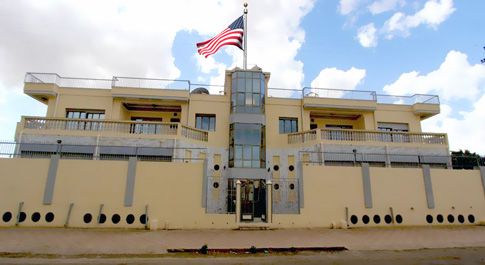
In a major shift in U.S. foreign policy presence, the Trump administration is reportedly planning to shutter dozens of American embassies and consulates worldwide, including ten in Africa, Europe, and the Indian Ocean region. Among those targeted for permanent closure is the U.S. Embassy in Asmara, Eritrea.
A document obtained by Politico’s NatSec Daily reveals that the State Department’s undersecretary for management has recommended closing embassies in Eritrea, Grenada, Lesotho, the Central African Republic, Luxembourg, the Republic of Congo, Gambia, South Sudan, Malta, and the Maldives. Under the plan, diplomatic affairs for these countries would be handled by nearby embassies—Eritrea, for instance, would fall under the jurisdiction of the U.S. Embassy in Nairobi, Kenya.
The proposed downsizing forms part of a broader effort by the Trump administration to slash the State Department’s budget by nearly 50 percent. It also signals a significant reorientation of U.S. global engagement, with a focus on cost-cutting and strategic prioritization over traditional diplomatic outreach.
Critically, the document also outlines plans to drastically reduce the U.S. diplomatic footprint in two countries long central to U.S. counterterrorism operations: Somalia and Iraq. The administration is considering “working with the interagency to reduce or eliminate State’s footprint in Mogadishu,” and is proposing to shut down the costly Baghdad Diplomatic Support Center while significantly curtailing operations in both Baghdad and Erbil.
The State Department has not commented on the proposal, which is expected to draw both domestic and international scrutiny. The potential embassy closures—especially in geopolitically sensitive areas such as the Horn of Africa—raise questions about the future of U.S. diplomatic influence in regions where rivals like China, Russia, and the Gulf states have been expanding their reach.
In Eritrea’s case, the closure could further weaken already limited U.S.-Eritrea engagement and signals a broader disengagement from the Red Sea region—at a time when its strategic importance is rising.
Critics say the move reflects a retreat from global diplomacy in favor of a narrower, transactional approach to foreign policy, while supporters argue it is a necessary step to streamline government spending and focus on core strategic interests.
Dr. Araia is a bombastic individual who often stirs controversy in Ethiopian history, specifically in the relationship between Ethiopia and Eritrea. It is easier to call him a propagandist than a historian or an expert in international relations. He claims to be a Tigrean who, at some point in time, lived in Eritrea. He often advocates for creating a new Tigray-Tigrini country in the Horn of Africa that includes the Tigray region of Ethiopia and the highlands of Eritrea. He recruits disgruntled individuals and works hard towards that end. He seems to have difficulty reconciling himself with the fact that even if he lived in Eritrea, he is a Tigrayan or Ethiopian. Eritrea and Ethiopia are two internationally recognized countries in the Horn of Africa.
Education
Dr. Araia’s formal training is in education. His official biography indicates that he received a bachelor’s degree in philosophy, a master’s degree in education, and then a doctorate in international studies with a specialization in comparative and international education[^1]. Then how did he end up being a historian? All his presentations and video interviews are about Ethiopian history with a specific emphasis on his birthplace, the Northern Ethiopian region, Tigray. His comments are about international boundaries, kings, and warlords who existed in the 16th and 17th centuries. It is true that with some additional training, scholars can gravitate to a different field. For instance, because Dr. Araia’s training is in education, he can team up with someone who specializes in history to study the history of education. But Dr. Araia, through training, cannot be a historian. I believe the confusion that Dr. Araia is creating in the Horn of Africa comes from this weakness. It would be better for him and his audience to stay within his field of training, which is education.
Academic Work History
Dr. Araia is an adjunct. To understand what this means, we need to dig a little deeper. The U.S. higher education academic faculty ranks range from highest to lowest: full professor, associate professor, assistant professor, senior lecturer, lecturer, and then adjunct. Adjuncts are hired to teach one or more courses for a quarter (3 months) or a semester (6 months), and they are paid on a per-course basis and often at a lower rate than the full-time faculty. Adjuncts are temporary jobs and are ineligible for tenure or other job-related benefits. Regarding Dr. Araia’s salary, we find the following information from Lehman College, where he claims to work:
“Lehman College records show Ghelawdewos Araia held one job between 2015 and 2023. One of the most recent records in 2023 lists a job of Adjunct Associate Professor and a pay of $21,321. This is 62.3 percent lower than the average pay for co-workers and 70.3 percent lower than the national average for government employees.”[^2]
Besides Lehman College, Dr. Araia also taught courses in other colleges, all as an adjunct. So, from the above information, we can verify that Dr. Araia’s academic work history has been part-time, and he rarely had a full-time academic position. He is at the bottom of the academic hierarchy. If Dr. Araia were as smart as he claims to be, he could have at least held a lecturer, senior lecturer, or assistant professor position, which are all full-time entry-level positions. In fact, given his tenure in the academic field, he could have reached full professor. He has achieved none of that.
He is a Mythologist
“A mythologist is a scholar who studies myths, folklore, legends, and religious stories from various cultures, analyzing their cultural significance, historical context, symbolism, and impact on societies.”[^3]
Dr. Araia’s interviews and presentations are often based on mythology or hearsay. Although he graduated in international studies, he does not respect international law and the internationally recognized sovereignty and territorial integrity of countries. Dr. Araia hails from the Northern Ethiopian region called Tigray. Because of his origin, he falsely advocates for the annexation of an internationally recognized neighboring country, Eritrea, by Ethiopia. Although the international boundaries of Eritrea were clearly defined by agreements between Ethiopia and Italy, he never mentions this fact in his arguments.
“The Eritrea-Ethiopia border was established through a series of colonial-era treaties, primarily the 1900 Treaty (Mareb-Belesa-Muna line), the 1902 Treaty (western sector), and the 1908 Treaty, with the Algiers Agreement of 2000 establishing a Boundary Commission to delimit and demarcate the border based on these treaties.”[^4]
Dr. Araia often skips the above fact and covers his propaganda using the mythology of what previous emperors and kings from the Tigray region of Ethiopia are rumored to have said. For instance, Dr. Araia’s evidence to claim the Red Sea is a mythology that a Tigrean king called Sebagades asked his people to bury him with his head pointing toward the Red Sea. He also mentions another Tigrean warlord called Alula Abanega, whose horse is said to have drunk salty water from the Red Sea. Before the Italian colonization, the Red Sea coastal region of Eritrea, including Massawa, was under Ottoman control (16th century), which was later replaced by Egyptian rule in 1872. Thus, there is no evidence that Sibagades or Alula were even close to the Red Sea. But for Dr. Araia, it is enough evidence to put a claim on the Red Sea, which is internationally recognized Eritrean territory. The question is: how can a person who claims to be a modern academician put a claim on an internationally recognized land of a neighboring country based on mythology?
Complaint Against Dr. Araia’s Misinterpretations of History
Dr. Araia is not new to accusations of misinterpretation. In a complaint petition titled “Complaint Against Dr. Ghelawdewos Araia’s Interview on 24 March 2016 with the Voice of America Tigrigna Program”[^5] signed by 662 people, he was accused of falsely citing a book originally written in the Portuguese language by Manoel Barradas and translated to English by Elizabel Filleul. In the interview, he falsely said that the Tigray province of Ethiopia, where he hails from, in the 17th century was large enough to include the Wolkite Tsegede area. Dr. Araia was accused of favoring his ethnic group.
Conclusion
Dr. Araia is teaching somebody’s children in an American college. He needs to be careful about what he teaches in a classroom and says in public YouTube interviews. Academia is about facts and logic. You cannot put yourself in an academic position and work hard to develop facts out of mythology. Above all, Dr. Araia needs to base his arguments on international treaties and applicable laws. Specifically, his propaganda-like presentations about the historical relationship between Ethiopia and Eritrea are too false to merit academic ethics and integrity investigations.
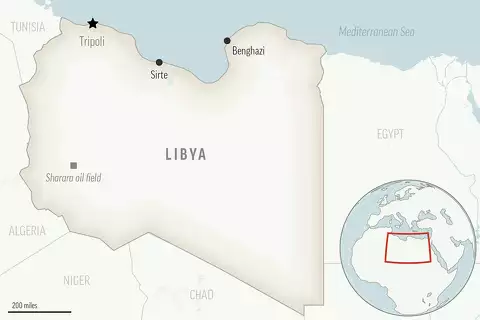
Libyan authorities ordered the termination of the operations of 10 international humanitarian organizations, accusing them of contravening national laws by assisting migrants from Africa. The Internal Security Agency has said that these organizations were being resettlement agents for migrants in Libya, which the agency considers a real threat to the demographic stability of the country.
This includes Doctors Without Borders, Norwegian Refugee Council, and CARE. These organizations have given medical and food assistance, clothing, and shelter, among other things, and many have also been active in the relief effort after the floods that devastated Libya in 2023.
The situation after the uprising in 2011 stands precarious in Libya, and the country remains a major transit route for migrants who aim to reach Europe. Currently, an estimated 787,000 migrants are residing in the country.
Authorities also alleged the organizations of money laundering and non-fulfillment of obligations regarding the distribution of financial and material aid. Legal actions were threatened against the groups involved.
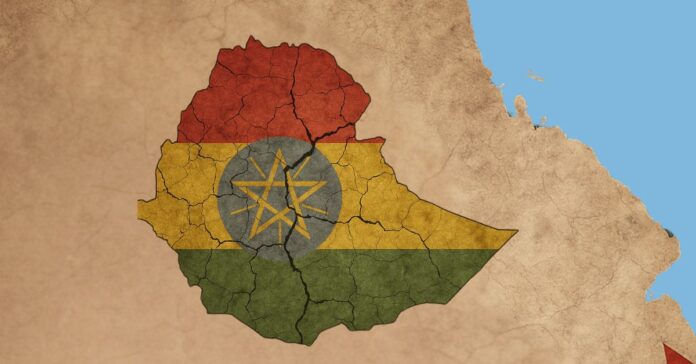
The Oromo and Amhara youth movement that toppled the Tigray People’s Liberation Front (TPLF)-led Ethiopian government and propelled the Prosperity Party to power did not envision the current Ethiopia. Today, Ethiopia is engulfed in deadly wars in Amhara and Oromia. Both regions account for close to seventy percent of the Ethiopian population.
Previously unheard of in Ethiopia, it is now common to hear of a busload of civilians being kidnapped just a few miles away from the capital city of Addis Ababa for hefty ransom. The economy is in shambles. The price of imported items has doubled—accordingly, the purchasing power of Ethiopians with fixed incomes has plummeted by half. After the deadly 2020–2022 civil war, the Tigray region, which boasts a couple of hundred thousand-strong army, is out of the control of the federal government. All trends in Ethiopia indicate that the country is a failed state and is highly vulnerable to fragmentation.
The pressing question is: does the Prime Minister of Ethiopia believe the current Ethiopia needs to threaten its neighbors to get a seaport? The outright answer is no. But it seems the Prime Minister is thinking beyond the current Ethiopia. He may have reconciled with the likelihood of Ethiopian fragmentation, and he must be thinking about the future Oromia Republic. How did Ethiopia end up in the current precarious situation?
ETHNIC FEDERALISM
Unlike in other countries, Ethiopian federalism is based on ethnicity. When a governance system is based on ethnicity, it is often susceptible to extremism and conflict. Currently, there is fierce competition for power between the Amhara, Oromos, and Tigrayans. The Tigray and Oromo ethnic groups harbor secessionist tendencies. Accordingly, when they come to power, they tend to take measures that help their ethnic group pave the way to creating their future independent state. By instituting ethnic federalism, the TPLF-led government eroded the foundations of Ethiopian unity, and now the Oromo elite-led Prosperity Party is carrying the torch to the end.
If the current economic and security problems persist, Ethiopia will likely be fragmented. That means Oromia, with its capital Addis Ababa, will capture the federal security, financial, communication, and energy institutions currently in the hands of the weak federal government. With his aggressive pursuit of seaport ownership, it seems Abiy Ahmed is working hard to use federal resources to give the future Oromo Republic a seaport.
ABIY AHMED’S MISTEPS
To consolidate power, Abiy’s government’s missteps have aggravated the likelihood of the disintegration of Ethiopia. The constant attack and expulsion of Amharas who resided in the Oromia region and Addis Ababa, the blockage of Amharas from entering Addis Ababa, and the deliberate plan of the Abiy government to dismantle the Ethiopian Orthodox Church have all aggravated the tension. Historically, the Amhara were the advocates of Ethiopian unity. Abiy Ahmed’s war on the Amhara and the Ethiopian Orthodox Church is a clear indicator that he is going in a different direction.
Especially, PM Abiy’s intention to turn the federal capital, Addis Ababa, into an Oromo Regional Government seat and potentially merge it into the Oromia state, in preparation for a future Oromo country, has intensified the conflict between the two ethnic groups.
MEMORANDUM OF UNDERSTANDING WITH SOMALILAND
When Abiy Ahmed spoke to his parliament about seaport ownership, his presentation intentionally focused on Eritrea. However, a few weeks later it became clear that he had already negotiated a deal with the breakaway Somaliland. Such an event was very significant because it reinforces the author’s claim that Abiy Ahmed’s objective has been to find a seaport that is more convenient for the future Oromia Republic than for the current Ethiopia.
The Prime Minister understands that snatching a port from Eritrea is nearly impossible, and his actions may even endanger the creation of his future Oromia Republic. Accordingly, while congesting the Ethiopian media airwaves with rhetoric about getting a port from Eritrea, the Prime Minister is likely to continue his hidden negotiations with Somaliland and possibly with Somalia.
CONCLUSION
Given the current situation in Ethiopia, it is highly likely that PM Abiy is looking beyond the current Ethiopia. He may be working hard to create a foundation for the upcoming Oromo Republic. His focus on the capital city of Addis Ababa and the signing of the now-frozen Memorandum of Understanding (MOU) with Somaliland are clear indicators that he is seeking seaport access for the future Oromia Republic.
This is not new in Ethiopia. The TPLF has done it, and now it is the Oromo governing elites, who have captured the Ethiopian state, taking their turn to use the opportunity. When reality catches up, like what the TPLF did, the current Oromo elites who are misgoverning Ethiopia will change their suits and call themselves the leaders of the Oromo Republic. In doing so, will they be able to avoid civil war? That is the million-dollar question.
Victory to the Masses and Eternal Glory to Our Martyrs.
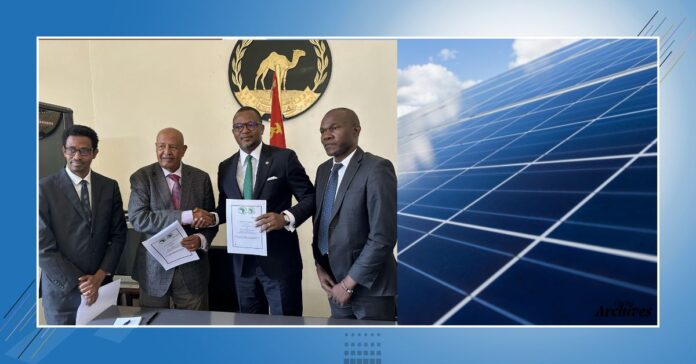
Eritrea Enhances Energy Access via AfDB Financed Minigrid InitiativeThe African Development Bank (AfDB) has approved $19.5million in funding to improve energy access in Eritrea through a new 12 MW capacity minigrid project that will serve approximately 250,000 people as part of the Desert to Power Eritrea Minigrid Project.
The systems will be established in Teseney (6 MW), Kerekebet (3 MW), and Barentu (3 MW) to improve access to electricity in homes, farms and critical services such as schools and health facilities.Minigrids are renewable technologies that provide an affordable option to improve electricity access to off-grid communities.
Eritrea is targeting to increase its electrification rate and renewable energy share to 20% by 2030. The project will include capacity building for 25 local companies to foster localized skills and sustainability of the solutions.
This partnership is a clear show of Africa’s resolve to lead development and energy autonomy from the continent, and it anticipates to position Eritrea clearly as a renewable energy transition leader in Africa.
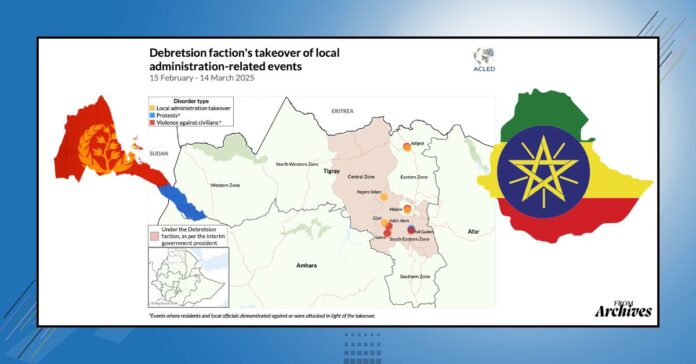
A direct war between Ethiopia and Eritrea is unlikely despite rising tensions and military posturing between the eastern African neighbors, according to a new report by the Armed Conflict Location & Event Data Project (ACLED). While reports indicate Eritrean troop movements and Ethiopia’s military preparations, ACLED’s experts caution that developments do not suggest an imminent full-scale conflict.
One key reason for skepticism is the ongoing political disarray in Ethiopia’s Tigray region. The Tigray People’s Liberation Front (TPLF) remains fragmented, with different factions vying for influence. Ethiopian Prime Minister Abiy Ahmed recently called on Tigrayans to nominate a new interim president, indicating that Getachew Reda is no longer leading the Tigray Interim Administration. Meanwhile, another faction aligned with Debretsion Gebremichael has been accused of collaborating with Eritrea and the Amhara nationalist Fano militia, but ACLED’s analysis suggests these alliances remain uncertain and speculative.
The Ethiopian National Defense Force (ENDF) has also avoided direct confrontation, recently redeploying from key positions in Tigray. Eritrea, under international sanctions and diplomatic pressure, appears unwilling to engage in an open conflict with Ethiopia.
While tensions remain high, ACLED’s report states that the military and political realities on the ground do not favor a full-scale war. Both Ethiopia and Eritrea seem to recognize the risks of direct confrontation and are instead maneuvering to strengthen their positions without triggering widespread hostilities.
For now, despite ongoing speculation, ACLED’s assessment suggests that the probability of another full-scale Ethiopia-Eritrea war remains low.


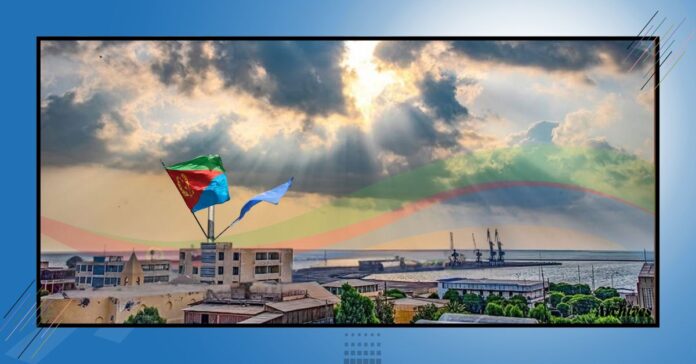
 Eritrea’s Minister of Information, Yemane G. Meskel, has issued a strong response to recent claims made by the National Movement of Amhara (NAMA), a political opposition party in Ethiopia, regarding Eritrea’s alleged role in the ongoing unrest in Ethiopia’s Amhara and Oromia regions.