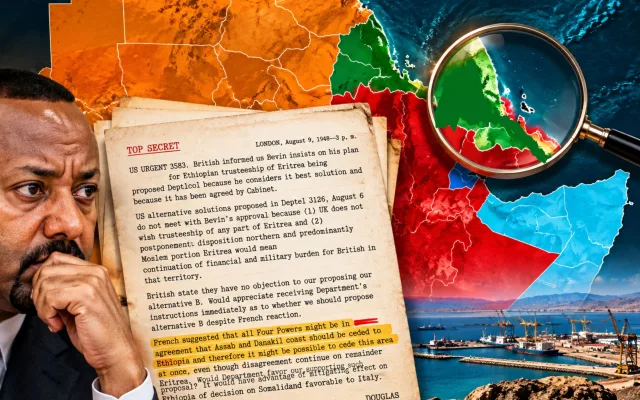
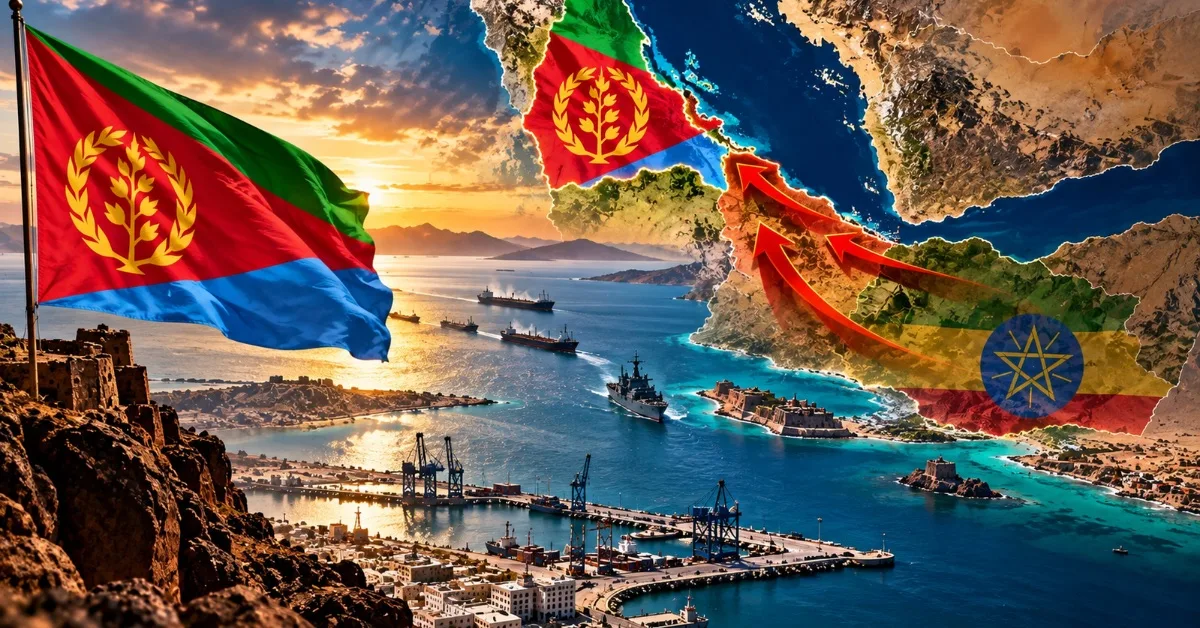
Ethiopia’s campaign for sovereign access to the Red Sea has evolved from an economic argument into a broader dispute over territory, sovereignty and Eritrea’s political future. For three years, Prime Minister Abiy Ahmed and senior officials have invoked Ethiopia’s landlocked status, historical claims and national interests to press the issue. Now, allegations from within Ethiopia’s political establishment suggest that the ambitions behind this campaign may extend beyond port access.
Opposition politician Lidetu Ayalew has alleged that people familiar with discussions inside Abiy Ahmed’s inner circle say the prime minister has spoken of capturing Asmara, installing a government loyal to Addis Ababa and taking control of Assab. These claims require independent corroboration, but they merit scrutiny alongside Ethiopia’s sustained maritime rhetoric and deteriorating relations with Eritrea. They raise a central question: is Addis Ababa seeking commercial access to the sea, or leverage over Eritrea’s government and territory?
That distinction is fundamental. Port access can be negotiated between sovereign states; political control imposed by force cannot.
Ethiopia is not a Red Sea coastal state
The controversy intensified after remarks attributed to Ethiopia’s intelligence chief, Redwan Huseen, at the Tana Forum on October 23. He challenged the idea that Red Sea security should remain primarily the responsibility of coastal states, reflecting Addis Ababa’s effort to link Ethiopia’s dependence on maritime trade to a special role in regional security.
Ethiopia’s need for reliable trade routes is legitimate. But it has no coastline on the Red Sea or Gulf of Aden, and economic dependence does not create sovereign maritime rights or automatic membership in institutions reserved for littoral states. Landlocked countries generally secure access through transit agreements, port services and diplomacy—not by claiming authority over a neighbour’s coastline.
Ethiopia can participate in broader maritime-security discussions where appropriate. It cannot reasonably demand that coastal-state institutions abandon geographical criteria, nor can its commercial needs justify control over Eritrean territory. The issue is whether an economic requirement is being recast as a claim of entitlement.
From Assab to Eritrea’s political independence
The allegations attributed to Lidetu Ayalew make the dispute more serious. His account describes a possible strategy in which Ethiopia would first overcome internal opposition, then capture Asmara, install a compliant government and take control of Assab. No independent evidence has established this as an approved government or military plan. Yet the allegation warrants attention because it links maritime objectives to political intervention.
Such a strategy would threaten Eritrea’s independence directly. Eritrea’s statehood was established through a long struggle, confirmed by the 1993 referendum and recognised internationally, including by Ethiopia. Assab and Massawa are not territories awaiting settlement; they are Eritrean ports under Eritrean sovereignty.
Any attempt to seize them, impose a government in Asmara or dictate Eritrea’s political direction through force would violate the principles of sovereignty and political independence protected by the United Nations Charter.
The danger of normalising territorial claims
The concern is heightened by the persistence of Ethiopia’s public messaging. Since October 2023, official speeches and political debate have repeatedly framed sovereign sea access as a matter of national destiny. When access to another country’s coastline is presented as essential to national survival, negotiated commercial arrangements can begin to appear insufficient. Historical narratives may likewise recast recognised borders as temporary obstacles.
This is how an economic grievance can become a political justification for coercion.
No single Ethiopian statement proves that an invasion has been decided. But the combination of sustained maritime rhetoric, strained relations, allegations of political intervention and instability inside Ethiopia warrants international scrutiny. Renewed conflict in Tigray and insecurity elsewhere already threaten regional stability; a confrontation with Eritrea would deepen those crises rather than resolve them.
Cooperation is possible, coercion is not
The legal framework is clear. Eritrea’s internationally recognised independence and territorial integrity are not subject to renegotiation because Ethiopia seeks a sovereign maritime outlet. The 2000 Algiers Agreement and the final and binding decision of the Eritrea–Ethiopia Boundary Commission established the basis for resolving the border dispute. Ethiopia’s current economic interests do not nullify that settlement.
This does not preclude cooperation. Ethiopia could negotiate access to Eritrean ports through mutually acceptable commercial arrangements. The essential distinction is between using a port and owning it, between cooperation and political domination, and between negotiated access and acquisition through force.
The international community should act before escalation
Eritrea and its international partners should document Ethiopia’s official statements on sea access, historical claims and Red Sea governance, while clearly distinguishing verified evidence from political allegations. Claims concerning plans to install a compliant government in Asmara should be investigated rather than repeated as established fact.
The African Union, United Nations and regional governments should affirm that maritime dependence cannot justify territorial acquisition or externally imposed political change. Eritrea should continue engaging neighbouring coastal states and international partners, making clear that it welcomes cooperation based on consent but will not negotiate away its sovereignty.
A warning the region cannot ignore
The evidence presented here does not establish that Ethiopia has adopted a final plan to invade Eritrea. It does show a sustained campaign for sovereign sea access, increasingly assertive claims about Ethiopia’s role in Red Sea affairs and allegations that senior officials have contemplated regime change and control of Assab. Taken together, these developments create a credible risk that an economic demand could be transformed into a political and territorial project.
The international community should therefore test the allegations, challenge entitlement-based rhetoric and insist on negotiated access within the existing legal order. Ethiopia can pursue trade and maritime cooperation without threatening its neighbour’s independence. If it instead treats Eritrea’s ports and political institutions as instruments of Ethiopian national strategy, the result would not be regional development but another war in the Horn of Africa.