Home Blog Page 3

Balancing Vision and Reality: Why Eritrea’s Domestic Priorities Must Match Its Global Awareness

0

This article examines the imbalance in President Isaias Afwerki’s recent media interview, where extensive attention was given to global and regional geopolitics while domestic Eritrean issues received comparatively limited focus. Acknowledging the importance of strategic global awareness, the piece argues that Eritrea has reached a stage where internal priorities development timelines, institutional reform, human capital, and citizen experience must receive equal analytical weight. The article offers a pragmatic, Eritrea-first critique aimed not at undermining leadership, but at strengthening national alignment and ensuring that sovereignty is matched by tangible progress in everyday life

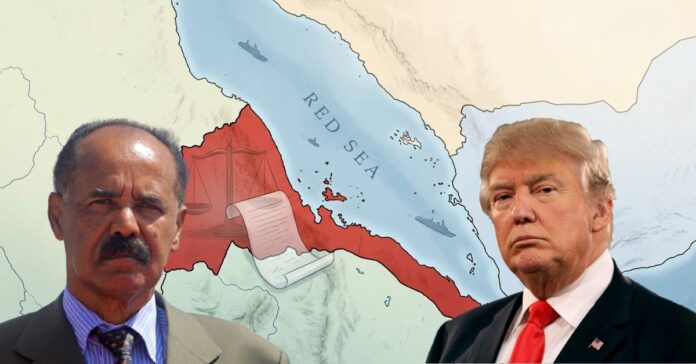
Earlier this week, President Isaias Afwerki delivered a wide-ranging interview to local media that was unmistakably global in scope and strategic in tone. He spoke at length about the end of the unipolar world order that emerged after 1991, the relative decline of U.S. dominance, the logic and limits of Donald Trump’s doctrine, NATO’s internal contradictions, Africa’s structural marginalization, and the enduring geostrategic importance of the Red Sea and the Horn of Africa.

This kind of analysis matters. Eritrea has never had the luxury of strategic innocence. From the armed struggle to the post-independence years of sanctions, isolation, and regional confrontation, Eritrea’s survival has depended on reading global power shifts accurately and responding to them without illusion. On this front, the president sounded confident, experienced, and consistent with a worldview shaped by history rather than fashion.

Yet there is an imbalance in the interview that deserves careful attention not as an attack, but as a necessary national conversation. Domestic Eritrean issues received far less analytical depth and urgency than regional and international ones. In Eritrea’s current phase, that imbalance matters.

Global clarity versus domestic distance

The president’s global analysis was coherent and internally consistent. He traced the trajectory from the Cold War to unipolarity, and from unipolar dominance to fragmentation and contestation. He warned against exaggerating Trump’s actions while still situating them within a broader effort to reassert American leverage through tariffs, sanctions, selective alliances, and resource pressure. He also underscored a long-standing Eritrean observation: that Africa, despite possessing the majority of the world’s natural resources, remains structurally marginalized within the global system.

Analytically, this framing is difficult to dispute. But analysis does not exist in a vacuum. The tension emerges when this global clarity is contrasted with the treatment of domestic realities. Most Eritreans are not navigating tariff wars, NATO’s crisis, or U.S.–China rivalry in their daily lives. They are navigating water access, electricity shortages, job uncertainty, family separation, constrained mobility, education bottlenecks, and delayed life transitions.

When domestic realities appear later in the conversation and in broader strokes the perception that forms is not necessarily the one intended. The risk is that urgency appears external rather than internal, and that domestic challenges are implicitly framed as stable enough to wait. For a society that has absorbed decades of sacrifice in the name of sovereignty and survival, perception carries real weight.

Development vision without temporal anchors

To be clear, the interview did outline a comprehensive domestic development agenda. Roads, dams, energy generation, mining, agriculture, fisheries, housing, and education were all cited as priorities. The scale of ambition is evident, and in many respects admirable. Eritrea has never lacked long-term vision.

The pragmatic critique is not about ambition, but about communication. Vision alone no longer carries the same mobilizing power it once did. Eritreans today are not primarily asking what will be built; they are asking when, how, and in what sequence. Timelines, even broad ones, serve a critical function: they translate national goals into personal expectations.

The absence of phased benchmarks or short-term deliverables weakens confidence, not because people doubt intent, but because lived experience increasingly demands clarity. In a mature national phase, credibility is reinforced by specificity. Three-year horizons, pilot regions, or sector-by-sector sequencing can turn abstract commitment into measurable trust.

Stability and the question of reform

Stability was repeatedly emphasized as the foundation of development, and rightly so. Eritrea’s history demonstrates that without security and cohesion, development collapses into dependency or chaos. However, stability cannot be treated as an end state. At this stage, it must function as a platform for institutional evolution.

The interview spoke little about administrative efficiency, legal predictability, civil governance modernization, or institutional renewal. These are not imported demands or ideological concessions. They are internal performance tools. A resilient state is not only one that resists external pressure, but one that adapts its internal systems so citizens can function productively, predictably, and with dignity.

The absence of this discussion leaves a noticeable gap, particularly for professionals, entrepreneurs, and skilled workers who want to contribute but encounter friction from outdated procedures and opaque processes. Over time, such friction erodes energy and initiative, even among the most committed citizens.

Human capital beyond schooling

Education was correctly identified as the highest priority, and this emphasis reflects long-standing Eritrean values. But education cannot be examined in isolation from social and economic pathways. Young Eritreans today face long delays before entering civilian economic life, limited career pathways outside a narrow set of sectors, and skills that do not always align with labor market demand.

Human capital development is not only about classrooms and curricula. It is about transition how people move from learning to living, from training to contribution. This transition phase is where frustration accumulates and morale is tested. The interview largely bypassed this dimension, even though it sits at the heart of national productivity and social cohesion.

Addressing these pressures directly would not weaken the state. On the contrary, it would strengthen it by aligning policy vision with lived reality.

Diaspora: resource or partner?

The diaspora’s historic and ongoing contributions were rightly acknowledged. Investment, technology transfer, skills, and expertise were presented as pillars of future engagement. Yet engagement framed primarily in financial or technical terms risks missing a deeper opportunity.

Many Eritreans abroad are not only sources of capital; they are repositories of experience, institutional knowledge, and comparative insight. They seek structured dialogue, policy feedback mechanisms, and meaningful participation not simply investment channels. A diaspora treated only as capital risks fatigue and disengagement. A diaspora treated as a partner becomes a strategic multiplier.

Realizing this requires institutional frameworks, data systems, and channels of communication that go beyond ad hoc appeals. It requires trust built through inclusion, not only through obligation.

Security discourse and domestic acceleration

The president’s dismissal of hostile rhetoric from Ethiopia’s ruling party and his reaffirmation of Eritrea’s readiness to defend itself while avoiding war were consistent with long-held positions. Few Eritreans underestimate the volatility of the region or the reality of external threats.

Still, there is a strategic cost when security discourse dominates national messaging. National resilience is built not only through deterrence, but through reliable services, livelihoods, and institutional trust. Deterrence without domestic acceleration becomes expensive economically, socially, and psychologically.

Security and development are not competing agendas, but they must advance in tandem. Overemphasis on one risks stagnation in the other.

Eritrea’s current inflection point

Eritrea’s preservation of sovereignty under extraordinary pressure is a genuine achievement. Few nations of comparable size and exposure have endured similar constraints without fragmentation or collapse. That history deserves recognition.

But the next phase of Eritrea’s journey is different. The defining challenges ahead are less about resisting external imposition and more about internal calibration: how fast systems adapt, how clearly priorities are communicated, and how citizens experience progress in their daily lives.

The interview leaned heavily toward geopolitical diagnosis. Eritrea’s decisive work in the coming years will be administrative, economic, and social. These are quieter battles, but no less consequential.

Criticism as a form of responsibility

This critique is not an argument against leadership, nor is it a dismissal of the president’s global analysis. It is an argument for balance. Eritrea does not need less global awareness; it needs equal domestic intensity.

When domestic issues receive the same analytical rigor as geopolitics, public trust deepens. When development plans are paired with timelines, confidence grows. When reform is framed as an expression of strength rather than concession, sovereignty matures.

This is not a call for noise or spectacle. It is a call for alignment between where Eritrea looks and where Eritreans live. That conversation is not only healthy; it is necessary for the next chapter of Eritrea’s national project.

Eritrea’s Balance Sheet: What Has Been Preserved, What Has Been Deferred

0

Let me start by mentioning the obvious, Eritrea is rarely examined with patience. It is more often assessed through borrowed lenses that flatten history, ignore security realities, and confuse restraint with stagnation. When Eritrea refuses prescribed paths, it is labeled immobile. When it withstands pressures that fracture other states, that endurance is treated as accidental. This habit misses the more honest accounting: what Eritrea has consciously preserved, what it has deliberately deferred, and what now demands adjustment rather than denial.

Recent analysis contributed by In On Africa (IOA) offers a useful reference point precisely because it avoids caricature. It acknowledges that Eritrea has extracted tangible benefit from shifting regional and global conditions while remaining constrained by its own political and economic architecture. That duality is not a flaw in logic. It is the operating environment Eritrea has chosen—shaped by lived experience, not abstract theory.inonafricaEritrea

The easing of hostilities with Ethiopia altered Eritrea’s external posture in measurable ways, though never as definitively as some narratives suggest. For decades, Eritrea functioned under conditions shaped by war preparedness, border closure, and sanctions. Partial normalization reduced pressure. Limited trade routes reopened. Transport links resumed. The sense of permanent encirclement softened. These changes did not transform the economy, but they reduced friction. For a small state, reduced friction is not cosmetic. It is structural relief.

Yet that relief has proven fragile. Ethiopia has in recent months escalated its rhetoric on Red Sea access and maritime “rights,” presenting strategic entitlement as economic necessity. For Eritrea, this language is not theoretical. It echoes a long history in which sovereignty was challenged not only through arms, but through normalization of coercive claims dressed up as regional logic. When a much larger neighbor speaks loosely about access rather than negotiation, Eritrea’s caution ceases to look ideological and begins to look empirical.

This external context matters when assessing Eritrea’s internal restraint. Economic openness cannot be evaluated in isolation from security environment. Infrastructure integration, regulatory liberalization, and cross-border dependence are weighed against credible risks, not imagined threats. Eritrea’s policy posture reflects this arithmetic. One may argue it has been over-applied, but it cannot be dismissed as irrational.

At the same time, global commodity dynamics have intermittently worked in Eritrea’s favor. Higher prices for gold, copper, zinc, and potash have strengthened export earnings and supplied foreign exchange otherwise difficult to secure. The mineral sector, long spoken of as future promise, has become a present stabilizer. It cushions the balance of payments and supports macroeconomic control.

Stabilization, however, is not expansion. GDP growth remains modest according the report, and here precision matters. Mining cannot carry a national economy, particularly one with a young population and limited private-sector depth. Eritrea’s economic base remains narrow, and its structure centralized. Resource income has been used largely to maintain balance rather than to drive diversification. That choice has insulated the economy from volatility, but it has also limited spillover into employment, entrepreneurship, and innovation.

Agriculture reveals the limits of this approach most clearly. Eritrea’s rural sector should be the backbone of resilience and food security. Instead, it remains exposed to drought, erratic rainfall, and recurring pest outbreaks—now predictable features of climate stress across the Horn. Without sustained investment in irrigation, storage, inputs, and adaptation, agriculture cannot stabilize livelihoods or absorb labor productively. Stability without productivity risks freezing vulnerability in place.

These outcomes are not technical accidents. They reflect priorities shaped by history. Eritrea’s state-centered economic model has delivered discipline, relative price stability, and minimal external debt. In a continent where debt distress has become a recurring crisis, this restraint is not trivial. Eritrea has refused to mortgage future generations for short-term growth or surrender policy autonomy in exchange for liquidity.

But restraint extracts its own price. Eritrea lacks a formal, transparent, and predictable investment framework. Decisions often appear negotiated rather than codified. For a narrow set of state-aligned projects, this can function. For broader domestic initiative and diaspora capital, it does not. Capital does not demand indulgence; it demands rules. The absence of clear frameworks concentrates activity around the state, where incentives are weak and timelines slow.

Governance dynamics reinforce this rigidity. Eritrea’s model prioritizes cohesion, security, and control—priorities forged in liberation and hardened by isolation. They preserved the state. They also produced side effects that can no longer be treated as temporary. Indefinite national service, restrictions on movement, arbitrary detention, and the absence of institutional legal recourse have eroded trust between citizen and state.

Trust does not register neatly in national accounts, yet it governs behavior. Human capital is not only education and skills; it is confidence and continuity. When young Eritreans cannot see a credible transition from sacrifice to stability, they do not plan investments. They plan exits. Migration, stripped of slogans on both sides, is an economic signal of deferred opportunity.

None of this negates Eritrea’s achievements. Social order has largely held in a volatile region. Debt exposure remains low. Urban centers function rather than implode. These outcomes are the product of deliberate choices informed by hard memory. Many states are now renegotiating sovereignty under the weight of debt. Eritrea is not among them.

Urbanization trends reflect controlled stability. Eritrea has avoided explosive sprawl. Asmara has not collapsed into informal chaos. Secondary towns retain coherence. Rural areas, though strained, have not emptied entirely. But control cannot anchor this balance indefinitely. Opportunity must eventually replace restriction as the foundation of stability.

Opportunities exist, but they require calibration, not rupture. Regional trade can expand on Eritrea’s terms—through reciprocity, not coercion. Eritrea’s ports are assets, not concessions. Integration must strengthen sovereignty, particularly in a climate where Ethiopian rhetoric increasingly blurs the line between cooperation and entitlement.

Mineral wealth can anchor development if paired with value addition and skills transfer. Tourism can grow if predictability replaces discretionary obstruction. National service can be modernized through timelines and civilian pathways without weakening preparedness.

Eritrea does not face a theatrical crossroads. It faces an accumulation problem. Policies designed for survival under pressure have produced side effects that can no longer be deferred indefinitely. The task is not abandonment of restraint, but refinement of it.

Eritrea has proven it can withstand pressure—sanctions, isolation, and renewed rhetoric alike. The harder test is whether it can now convert endurance into opportunity, stability into confidence, and control into consent without exposing itself to the vulnerabilities it spent decades resisting.

The balance sheet is clear. Much has been preserved. What has been deferred must now be allowed to mature, even as vigilance remains non-negotiable.

One last note, I will watch President Isayas Interview, and try to give my opinion regarding the economic recovery, if he talks about it.

Awet Nhafash

Disclaimer

The views and opinions titled "Eritrea’s Balance Sheet: What Has Been Preserved, What Has Been Deferred", are those of Hannibal Negash and do not necessarily reflect the official policy or position of Setit Media. ኣብዚ "Eritrea’s Balance Sheet: What Has Been Preserved, What Has Been Deferred", ዘርእስቱ ጽሑፍ ተገሊጹ ዘሎ ርእይቶን ሓሳብን ናይ Hannibal Negash እምበር መትከላትን መርገጽን ሰቲት ሚዲያ ዘንጸባርቕ ኣይኮነን።

Eritrea’s withdrawal from IGAD: Diplomatic failure or strategic shift? 

0

At the end of last year, the Eritrean Foreign Ministry announced the country’s permanent withdrawal from the regional organization IGAD via the Eritrean state television network. The ministry explained that this decision was driven by the organization’s complete failure to meet its core objectives and purpose.  

“Eritrea finds itself compelled to withdraw its membership from an organisation that has forfeited its legal mandate and authority, offering no discernible strategic benefit to all its constituencies,” stated the Ministry of Foreign Affairs on Friday, 12 of December 2025.

IGAD’s response

Since rejoining IGAD in June 2023 after a two-decade suspension, the regional organisation notes with regret that Eritrea has not participated in IGAD meetings, programmes, or activities. Throughout this period, the Secretariat has exercised patience and goodwill, while remaining open and available for constructive engagement.

“IGAD further regrets that the decision to withdraw was taken without the submission of tangible proposals or engagement on specific institutional or policy reforms. The Organisation has consistently remained open to dialogue through its established consultative mechanisms.”

WHY NOW?

Numerous political analysts and scholars specializing in the region have expressed concern about the regional organization’s inability to achieve peace and stability. While various factors contribute to this ineffectiveness, a primary issue appears to be the organization’s structure. Decision-making authority is predominantly vested in the general assembly of heads of state. Consequently, if the leaders fail to establish rapport or maintain positive interpersonal relationships, the organization may become paralyzed in its efforts to address critical issues.

What pushed the government of Eritrea to withdraw could be due to dissatisfaction and frustration, or a strategic shift from the Horn to the Red Sea region.

 Eritrea suspended its membership in the Intergovernmental Authority on Development (IGAD) two decades ago in response to IGAD’s request for the African Union (AU) and the United Nations Security Council (UNSC) to impose sanctions against Eritrea, a request influenced by the Ethiopian government. It is concerning to observe a regional organization aligning with one member state to penalize and isolate others. Furthermore, IGAD has not effectively addressed Ethiopia’s territorial claims against Eritrea. For instance, since 2023, Ethiopian Prime Minister Abiy Ahmed has expressed the necessity for access to the Red Sea through Eritrea. In making this demand, Abiy and other high-ranking Ethiopian officials have openly questioned Eritrea’s independence, provoking a strong response from the Eritrean government in Asmara. Notably, IGAD has not condemned the rhetoric and threats articulated by the Ethiopian government. Consequently, the Government of Eritrea cannot remain a member of a regional organization that fails to condemn and address the actions of a member state that violates fundamental international treaties and the principles of the UN Charter regarding the sovereignty and territorial integrity of nations within the international community.

The Eritrean government has expressed frustration with the actions of member states such as Kenya and Uganda regarding the need for reform within the Intergovernmental Authority on Development (IGAD). This dissatisfaction may have led Eritrea to consider withdrawing from the regional organization and instead focus on strengthening its relationships with nations in the Red Sea Basin. Additionally, the ongoing threats posed by the Ethiopian regime to invade and annex Eritrea’s sovereign coastline have heightened concerns within Eritrea, prompting the nation to seek closer alignment with Egypt and the Kingdom of Saudi Arabia.

In summary, the withdrawal from a largely irrelevant organization should not be perceived as an act of isolation or a diplomatic setback; rather, it is a strategic and timely decision driven by geostrategic considerations. A significant number of Eritreans endorse the government’s choice, advocating for enhancing the nation’s relations with countries in the Red Sea Basin and beyond. This initiative is aimed not only at strengthening security and political ties but also at significantly boosting trade and investment opportunities.

Disclaimer

The views and opinions titled "Eritrea’s withdrawal from IGAD: Diplomatic failure or strategic shift? ", are those of Afewerki Ghebremichael and do not necessarily reflect the official policy or position of Setit Media. ኣብዚ "Eritrea’s withdrawal from IGAD: Diplomatic failure or strategic shift? ", ዘርእስቱ ጽሑፍ ተገሊጹ ዘሎ ርእይቶን ሓሳብን ናይ Afewerki Ghebremichael እምበር መትከላትን መርገጽን ሰቲት ሚዲያ ዘንጸባርቕ ኣይኮነን።

Eritrea to return to AFCON qualifiers after 19-year absence

0

Eritrea will compete in the qualifiers for the 2027 Africa Cup of Nations, ending a 19-year absence from the continent’s premier football competition, officials confirmed this week.

The Eritrean Football Federation has completed registration requirements and submitted guarantees to the Confederation of African Football, clearing the way for the national team to participate in the upcoming qualifying campaign.

Federation president Paulos Weldehaimanot Andemariam confirmed the development in comments published by CECAFA, the regional football body for East and Central Africa, while attending the current AFCON tournament in Morocco. No formal statement has yet been released in Eritrea.

Eritrea last took part in AFCON qualifiers during the 2008 cycle. Its most recent qualifying match was played in September 2007, when the team finished second in its group behind Angola and recorded wins over Kenya both at home and away.

In recent months, CAF has revised its regulations, increasing fines and suspensions for federations that fail to honor official fixtures. Eritrean football officials have acknowledged that these changes played a role in renewed coordination with government authorities to secure approval for participation.

Eritrea’s national team has had limited international activity over the past several years. The side exited the 2022 World Cup qualifiers in the first round against Namibia in 2019. Since then, it has played a small number of friendly matches, including one against Sudan in 2020 and two games against Niger A’ during independence anniversary events in May 2025.

Weldehaimanot indicated that the federation is considering calling up Eritrean players based outside Africa to strengthen the squad. However, no details have been released regarding player selection, training schedules or the appointment of a head coach.

The national team has largely relied on locally based players in recent appearances, with the domestic league operating intermittently. Officials have not announced when preparations for the AFCON qualifiers will begin.

CAF has not yet published the official draw or schedule for the 2027 qualifying matches.

A Discussion Between David Yeh and Me

0

Dear readers,

a few weeks ago – technically last year, even though the change of calendar matters more than the actual time elapsed – I wrote a short piece to share some reflections on the year that had just ended. It was simply a personal stocktaking, a brief assessment of the past year rather than a fully developed argument.

At the beginning of the new year, I came across an article published on Red Sea Beacon, written by David Yeh, focused on Eritreas political economy, the idea of self-reliance, and the rejection of debt. The article circulated widely on social media and was also shared by institutional profiles, including that of Eritreas Minister of Information.

I know little about the author beyond the fact that he writes regularly on issues related to the Horn of Africa and Eritrea. Regardless of this, I decided to comment publicly on his article. He replied to my comment, and from there a brief but meaningful exchange developed.

For the sake of completeness, in the paragraphs that follow I will reproduce the exchange exactly as it took place, without omitting anything, quoting the relevant passages verbatim. This is meant to give readers a clear sense of the discussion itself, including those who may not have read the article from which it originated. I will conclude with a short personal reflection.

My comment

There is a fundamental misunderstanding running through this narrative: the confusion of self-reliance with autarky. In a modern economy, development cannot be achieved by doing everything alone.To believe otherwise runs against any serious body of economic science, which shows that specialization, exchange, and interdependence are structural conditions of growth, not ideological deviations.

Likewise, the assumption that a long liberation struggle can automatically translate into an equally long period of endurance without tangible results is far from self-evident. Wartime discipline is not, in itself, a model of governance, and survival cannot be elevated into a permanent horizon. At this point, the crucial question is political before it is economic: was the population ever truly asked to bear the cost of these choices? Were they given the opportunity to decide whether this model of developmentor rather, of deliberate non-developmentwas acceptable or not?

Response by David Yeh

Your critique presumes that interdependence is a neutral condition rather than a historically structured hierarchy. For societies emerging from domination, the issue is not whether exchange and specialization exist, but on what terms they occur and who captures the surplus they generate. What is dismissed as autarkyis often a transitional strategy aimed at rebuilding decision-making capacity under conditions where integration has repeatedly meant subordination.

     Similarly, the claim that endurance lacks political legitimacy overlooks the fact that the original social contract of liberation movements was forged precisely around sacrifice in exchange for sovereignty. While wartime discipline cannot substitute indefinitely for governance, neither can immediate material returns be the sole measure of political consent in a context where external constraints remain decisive. The relevant question, therefore, is not whether costs were borne, but whether viable alternatives existed that did not reproduce dependency under a differen name.

My reply

David Yeh Thank you for your response, which I find thoughtful and stimulating. I largely agree with your starting premise: there is no neutrality in international political and economic power relations, and interdependence is often shaped by historically asymmetric structures. This is precisely what dependency theory, since the 1960s, has convincingly argued, and it remains a relevant analytical framework.

However, that same theoretical tradition also presupposes a minimum degree of internal dynamism within the societies it examines, a space, however constrained, in which policies can be adopted to foster development and growth. This is where, in my view, the Eritrean case reveals its core problem. Thirty-five years after independence, Eritrea exhibits virtually no internal economic dynamics. Domestic production is minimal, foreign trade is almost nonexistent, and only very recently has the country begun exporting raw materials, largely in cooperation with foreign companies, particularly Chinese ones.

If one wishes to give some credit to the governments intentions, it is fair to acknowledge the efforts made in building basic infrastructure, such as dams, and in providing elementary education and healthcare. Yet these efforts were not accompanied by policies capable of stimulating even the most basic forms of economic activity. As a result, the most dynamic segment of the population has been forced to emigrate, where it often succeeds in creating small businesses and productive initiatives. Had even a fraction of this energy been allowed to operate within the country, some tangible signs of development would likely have emerged.

In fact, such a process had begun in the early years following independence, roughly between 1991 and 1997, before being abruptly interrupted by the border war and never resumed. Since then, Eritrea has existed in a continuous, undeclared state of emergency that has effectively suspended any prospect of institutional normalization.

For this reason, my central argument is that the primary issue is not theoretical debates about autonomy or dependency as such, but the absence of institutional normality. Without functioning institutions, predictable rules, and minimal space for economic and social initiative, even the most carefully justified strategy of self-reliance risks becoming detached from material reality.

His response

Your argument is analytically strong but assumes conditions of institutional normality that Eritrea has never enjoyed. Since the 19982000 border war, Eritrea has existed in a prolonged no war, no peace environment, compounded by illegal UN sanctions from 2009 to 2011. These externally imposed constraints severely limited trade, finance, and policy space, and their later removal without policy change confirms their political nature.

     The interruption of early post independence economic momentum was therefore not primarily institutional failure, but enforced militarization and resource diversion toward national survival. Under permanent security threat, economic liberalization and private-sector expansion were structurally constrained rather than simply neglected.

     Despite this, Eritrea achieved measurable gains in basic infrastructure, water security, primary, secondary and graduate education, healthcare, and debt avoidance outcomes that indicate constrained institutional functionality rather than absence. Emigration, often cited as evidence of internal stagnation, reflects suppressed domestic potential under sanctions and insecurity, not a lack of human capacity.

     The central issue, then, is not theoretical debates over autonomy versus dependency, but the systematic denial of institutional normality itself. Eritreas experience ultimately reinforces dependency theorys core insight: yes development cannot be separated from coercive global power relations.

My reply

I understand your argument, but when you ask what viable alternatives existed, you are already moving onto a hypothetical plane. Dialectically, that is precisely the point: those alternatives were never even attempted. Without experimentation, without course correction, without a minimal plurality of options, it is difficult to argue that what we are dealing with was an unavoidable necessity rather than an ideologically frozen choice.

Moreover, the alternative has never beenneither in theory nor in practicebetween total self-sufficiency on the one hand and external dependency on the other. Any normalized index or comparative analysis of development shows a wide spectrum of intermediate paths. Africa itself offers concrete examples of meaningful economic and social transformation over the past thirty years. Countries such as Rwanda or Morocco cannot plausibly be dismissed as merely externally directed, nor can it be denied that they have achieved significant internal development while retaining a degree of sovereign decision-making.

Thirty-five years is not a short time frame. It is more than sufficient to conduct a serious assessment of a model and, above all, to adjust economic and political choices over time in light of outcomes. When such adjustment does not occur, the problem cannot be attributed solely to external constraints; it points to an internal failure of institutional learning.

Finally, the use of the expression economic democracyis highly problematic. In political science there is a well-established category such as democratic centralism, but speaking of economic democracy presupposes the existence of a basic prerequisite: some form of real economic dynamism over which disagreement, deliberation, and political choice can meaningfully take place. In the Eritrean case, this foundation is absent. There is no genuine field of alternatives within which to agree or disagree, but rather an abstract model that remains just thatabstract.

From a comparative perspective, the closest analogy is the early phase of Maoist China: a rigid, ideologically driven system closed to empirical verification, which was later radically revised precisely because it had produced largely failure. After several decades, it is difficult to argue that posing the same critical question is illegitimate.

His response

your argument conflates the absence of ideal outcomes with the absence of constraint. Alternatives may exist in abstraction, but their feasibility is historically and materially conditioned. Eritreas choices emerged from a post liberation context defined by extreme security pressures, regional hostility, and sustained external interference, which sharply narrowed the space for experimentation you invoke. Comparison with cases like Rwanda or Morocco overlooks these structural differences and risks mistaking contingent success stories for universally available paths.

     Moreover, the demand for continual course correctionpresumes institutional stability and policy autonomy that Eritrea has rarely possessed. Institutional rigidity can be read not only as ideological freeze but as a defensive adaptation under prolonged siege. Finally, dismissing economic democracyfor lack of dynamism reverses causality: the concept was precisely an attempt to build developmental capacity under constraint, not a claim that such capacity already existed. Historical analogies to Maoist China, while rhetorically powerful, flatten distinct geopolitical and temporal contexts and therefore illuminate less than they suggest.

My final reply

I understand the emphasis you place on historical and material constraints, and to some extent I share it. It is obvious that Eritrea emerged in a context very different from that of many other countries, and that security pressures, regional hostility, and sustained external interference significantly narrowed the range of available choices. That said, the critical weakness in your argument is that the appeal to constraints risks turning into a form of exceptionalism, as if the Eritrean case were so unique that it could no longer be subjected to comparison or, ultimately, to any meaningful criteria of evaluation.

That contexts differ is self-evident. But if every negative outcome is explained solely by invoking exceptional conditions, the question ceases to be political and becomes almost metaphysical. At that point, no strategy can ever be assessed, because any failure can always be attributed to external factors. Analytically, this is a dead end.

We can also conduct a simple thought experiment. Suppose the strategic trajectory pursued by the Eritrean governmentself-reliance, political autonomy, rejection of external dependencewere to continue for another twenty years in the same way: without consent, without engagement with civil society, without mechanisms of course correction. Fifty years after independence, would an outcome marked by persistent impoverishment, mass emigration of a young and capable population, disastrous economic indicators, and the absence of reliable statistical data still be justifiable by appealing to the original constraints?

Any coherent strategy must be assessed in the short, medium, and long term. At the level of abstract models, one might even agree in part with the rationale of strategic and political autonomy. But if, over time, this approach produces a near-collapse in quality of life, no real growth, and no accumulation of productive capacity, then the problem is not only the context, but the strategy itselfand above all the way it has been imposed.

Finally, interpreting institutional rigidity solely as a defensive adaptation overlooks a decisive element: the total absence of consent and exchange with society. Without feedback, transparency, or data, it becomes impossible to distinguish between resilience under constraint and simple political failure. At that point, invoking economic democracynot as a project to be realized but as a permanent justification for outcomes that never materialize risks inverting the relationship between means and ends.

P.S.

Thank you in any case for the exchange. I am simply a thirty-year-old who loves his country and wants to see it grow and develop. I also wish that debates like the one we are having could take place inside our countrywithin institutions, in parliament, in journals, and in internal political forums. As you know, they cannot. And that fact alone already says a great deal about the difficulties we are going through in this historical phase.

His final response

Taking your age into consideration, I like the seriousness of your critique, and I agree that constraints cannot become a blanket exemption from evaluation. Any argument that renders a political trajectory immune to judgment risks analytical dead ends.

     Where I differ is in how constraints are interpreted. My point is not that Eritrea is beyond comparison, but that evaluation must be context sensitive rather than based on implicit benchmarks drawn from radically different historical and geopolitical conditions. The problem is not comparison itself, but false equivalence.

     The charge of exceptionalism would apply only if Eritrea were treated as analytically incomparable. That is not my position. Comparisons remain necessary but they must be made against cases shaped by similar conditions of insecurity, external pressure, and delayed institutional consolidation. Otherwise, judgment risks becoming normative rather than explanatory.

     Your thought experiment is valuable, but it assumes a static environment. Eritreas strategy of autonomy emerged under conditions of perceived existential threat, not as a purely ideological choice. One may argue legitimately that this perception has outlived its usefulness, but it cannot be dismissed as mere justification.

I agree most strongly with your critique regarding consent, feedback, and institutional learning. Even under constraint, the prolonged absence of internal debate, transparency, and data production is politically costly. At some point, defensive rigidity hardens into opacity, and autonomy risks collapsing into isolation.

     If there is a point of convergence between our positions, it is this: constraints matter, but they cannot indefinitely suspend accountability. The alleged debates like this cannot occur openly inside Eritrea is itself a central part of the misunderstanding that we can discuss on.

Conclusion

This exchange is not the first time I have found myself discussing these issues with people from very different backgrounds. Some are acquaintances or friends, others interlocutors who tend to embrace the Eritrean governments narrative built around the myth of self-reliance and political independence. This perspective often fits within what has been described, by authors such as Samir Amin, as a form of campism: a tendency to view governments and policies that position themselves against multinational corporations, international financial institutions, neoliberal ideology, and the United States as inherently progressive or emancipatory. From this angle, phenomena such as globalization and interdependence are read as mere continuations of colonial domination, and countries like Eritrea, Venezuela, or others are treated as unique models that cannot be assessed through indicators such as GDP, trade flows, or conventional measures of economic performance, but only through their supposed historical singularity.

My doubt, and my counterargument, starts precisely here. This presumed strategic autonomy comes at an immense cost, and that cost is borne by societies that have already endured decades of resistance, sacrifice, and bloodshed. It is not unreasonable to expect that, after so much suffering, people should see tangible improvements in their quality of life, economic growth, and shared well-being. The issue is not about being heroic, or about being celebrated as a model that refuses to bend to globalization, but about finding a realistic and humane balance in a world where no country can truly live in isolation.

From my perspective, a policy of neutrality, a genuinely multilateral approach, and economic cooperation with as many partners as possible would be far more appropriate for a country of Eritreas strategic importance. Combined with serious economic and fiscal reforms and with functioning institutions, such an approach could deliver development and prosperity to the population without compromising national sovereignty.

Bibliography:

Yeh. D. https://redseabeacon.com/eritreas-economic-democracy-and-the-ethics-of-self-reliance/

Disclaimer

The views and opinions titled "A Discussion Between David Yeh and Me", are those of Filmon Yemane and do not necessarily reflect the official policy or position of Setit Media. ኣብዚ "A Discussion Between David Yeh and Me", ዘርእስቱ ጽሑፍ ተገሊጹ ዘሎ ርእይቶን ሓሳብን ናይ Filmon Yemane እምበር መትከላትን መርገጽን ሰቲት ሚዲያ ዘንጸባርቕ ኣይኮነን።

Tigray: When History Repeats Itself

0

Witnessing the recent high-level defection of the Getachew and Tsadkan group to the Prosperity Party, General Yohannes Gebremeskel being picked by Abiy Ahmed to lead the 2020-2022 offensive in Tigray, and General Samora (Mohammed) Yonus serving as Abiy Ahmed’s source of military intelligence, the formation of the Hara Meriet (free land) splinter Army may seem a new phenomenon in Tigrayan politics. Yet, for those familiar with TPLF politics, these events echo longstanding patterns—surrenders, capitulations, defections, and betrayals. To highlight that these are recurring features rather than exceptions, this short article will review similar defections and betrayals that occurred during the last 10 years (1980–1990) of TPLF’s 17-year armed struggle against the rule of Colonel Mengistu Hailemarim’s Military Junta.

The Defection of a TPLF official using a captured MI-24 helicopter from Samere, Tigray.

During the early 1980s, an Ethiopian MI-24 military helicopter mistakenly landed in a TPLF stronghold area called Samre, a small village 57 kilometers south of Mekelle. TPLF captured the MI-24 helicopter and its crew, covering it with tree branches to protect it from aerial attack. Transitioning from this incident to a notable example of defection, a few months later, a TPLF official who decided to defect to the Ethiopian Military Junta asked the captured helicopter crew to fly him in the vicinity of Samere village. He also invited two others, junior TPLF Cadres who oversaw the area. Once airborne, the TPLF official ordered the crew to head to Mekelle and land at the airport, now Alula Aba Nega International Airport. With radio communication disabled, there was no contact between the helicopter and the airport. When the long-lost helicopter circled to land, Ethiopian military officers hesitated before eventually allowing it down. Upon investigation, they discovered the TPLF official was a defector, and the two juniors had been misled. Accordingly, the two TPLF cadres were sent to prison and eventually may have been executed.


The Parallel of “Zendo” Army and Current Hara Meriet Splinter Group.

During the 1980s, the “Zendo” or Python army operated near Mekelle. This group, made up of TPLF defectors, was retrained by Lieutenant Wolde-Aregay Yohannes, who had a mixed Eritrean and Tigrean background. After graduating from the Ethiopian Harar Military Academy, Lieutenant Wolde-aregay joined the Eritrean Liberation Front (ELF). When the ELF was forced out of Eritrea by the Eritrean People’s Liberation Front (EPLF), he surrendered to the Ethiopian Military Junta and became the trainer for the Zendo defector Army. The Zendo army troubled TPLF by cutting supply lines, infiltrating areas around Mekelle, and targeting civil appointees. Their use of TPLF-style uniforms increased confusion among the population. The formation and actions of the current Hara Meriet splinter army echo the earlier Zendo army, showing how splinter groups of defectors continue to play similar disruptive roles in TPLF’s history.

The capitulation of Abraham Yayeh and Gebremedhin Araia.

The two former TPLF mid-level officials defected to Col. Mengistu Hailemariam’s Military Junta during the late 1980s. While Gebremedhin Araya served in the Finance and Logistics department of the TPLF, Abraham Yayeh described himself as a TPLF Diplomat based in Sudan. The two individuals were not only defectors but also comedians. They were very skilled in exploiting Colonel Mengistu’s feeling of loneliness and were his chief entertainers. They were the staples of Ethiopian TV and often appeared in the then-Military Junta’s Parliament. Colonel Mengistu was often seen laughing at the comedian-like speeches of the two individuals. The two individuals had deep hatred for TPLF and EPLF and expressed it without reservations. The surrender of Getachew and Tsadkan and the services of Mohammod Yonus and Yohannes Gebremeskel to the Prosperity Party are simply a continuation of such a long history of TPLF defections.

The History of Red Terror in Tigray and Its Parallel to Dr. Abraham’s Belay’s role in the 2020-2022 Tigray Civil War.

Ethiopian rulers have repeatedly used Tigreans against each other by offering power and money. In the 1970s, Tigrean leaders were central to carrying out the Red Terror in Tigray, rounding up and executing students, civil servants, and farmers suspected of TPLF or other clandestine connections. These acts were designed to instill fear and force obedience, commonly left victims’ bodies in the streets of Mekelle, and forbade families from reclaiming them. Leading Tigreans like Lieutenant Desta, Bahre, Tsegaluel, and an executioner named Kahsu were directly involved. Similarly, during the 2020-2022 Tigray Civil War, Dr. Abraham Belay held a key role in targeting Tigrayans. The main distinction is that Abraham Belay relied on modern technology, such as drones, while the Red Terror group used conventional firearms, showing how similar patterns recur with updated methods.

How did Ethiopian Leaders use the Tigrean Defectors?

It is difficult to say whether Tigrean Defectors had any significant effect on the TPLF’s Struggle against the Ethiopian rulers in Addis Ababa. However, they were important in waging a propaganda war against the TPLF and creating confusion and division among the Tigray people. For instance, Abraham Yayeh and Gebremedhin Araia may have given Colonel Mengistu’s Military Junta a false hope. But they never saved it from being defeated by the TPLF. In fact, when TPLF was getting closer to Addis Ababa, they themselves had to flee to Kenya and Uganda. Similarly, the Zendo defector Army may have obstructed TPLF operations around Mekelle, but it did not protect Colonel Mengistu’s Military Junta from being toppled. Accordingly, if someone believes Getachew, Tsadkan, Mohammod Yonus, and Yohannes Gebremeskel will save Abiy Ahmed, they do not know history. They are not more than seasonal headaches.

Conclusion,

The TPLF has often been susceptible to defections, capitulations, and betrayals. The current defections of Getachew Reda and Tsadkan, and Mohammod Yonus’s and Yohannes Gebremeskel’s choice to turn against the TPLF are not new. TPLF will likely reorganize itself and neutralize the Defector’s effort to sow conflict and division in the Tigray population. It may take time, but history leads us to believe that it is also a game TPLF played before.

Eternal Glory to Our Martyrs and Victory to the Masses.

Disclaimer

The views and opinions titled "Tigray: When History Repeats Itself", are those of Abel Kebedom and do not necessarily reflect the official policy or position of Setit Media. ኣብዚ "Tigray: When History Repeats Itself", ዘርእስቱ ጽሑፍ ተገሊጹ ዘሎ ርእይቶን ሓሳብን ናይ Abel Kebedom እምበር መትከላትን መርገጽን ሰቲት ሚዲያ ዘንጸባርቕ ኣይኮነን።

What Should We Wish for Eritrea? Enforcing the Constitution

0

End-of-Year Reflections and the Question of the Future

Which wish should mark the end of this year, what should we truly wish for 2026, especially for a country that has spent decades suspended between endurance and postponement? These are questions that return with a certain regularity, almost ritual in nature, especially when one tries to look beyond the immediacy of the present and measure the distance between what has been and what might still come. In the case of Eritrea, any assessment can only be complex and layered, resisting both easy self-exoneration and sweeping condemnation. On the one hand, it would be dishonest to ignore a degree of diplomatic vitality, a renewed visibility expressed through a series of high-level visits and meetings, from the Middle East and the Gulf to Egypt and Saudi Arabia, signals of an international posture that seeks autonomy and relevance. On the other hand, the most recent rupture, Eritrea’s withdrawal from the regional organisation IGAD, appears overall less a strategic leap forward than a step back. Not so much because of an abstract judgment on the organisation itself, but because the decision undermines a principle repeatedly affirmed by Eritrean leaders, namely trust, at least in principle, in multilateral cooperation as a tool of regional engagement.

Disengagement, Regional Politics, and the Elephant in the Room

What makes this choice even more problematic is the concrete context of recent years. After the reactivation of relations in 2023, following a long suspension that began in 2007, Eritrea did not participate meaningfully in the organisation’s meetings. To denounce IGAD today as ineffective or as a body bent to the interests of some of its members, while not entirely unfounded, leaves an unresolved question. What, in the meantime, was done to reform it from within? Absence, in regional politics, rarely translates into leverage. A strategy of disengagement, especially at the regional level, risks leaving the field open precisely to those dynamics it claims to oppose. Here, the elephant in the room remains evident, the Ethiopian leadership, which for years has used regional and international forums as instruments of pressure, first through the sanctions narrative, more recently through an overtly militarised rhetoric on access to the sea, in open contradiction with the principles of international law. Walking away from the table does not make the problem disappear, it often magnifies it, depriving those who leave of even an imperfect space for contestation and dialogue.

Domestic Signals Between Ambiguity and Pressure

Against this backdrop, the release of a number of prisoners who had been detained for more than eighteen years on political and religious grounds is undoubtedly a significant development, perhaps the most meaningful domestic signal in recent times. The fact that it occurred without any official communication from the government or state media highlights its ambiguity, a concrete act devoid of any articulated political framework. It is difficult not to interpret this decision also as the result of long-standing pressures, fuelled by repeated reports and findings from international organizations documenting arbitrary detention and the systematic absence of due process. In this sense, the release appears as a minimal yet necessary gesture, intended to suggest that something is moving, at least symbolically. At the same time, it exposes the limits of a governance model based on isolated acts, episodic concessions, pardons or amnesties dependent on the discretion of a few rather than on shared and binding rules.

The Necessary Wish: Enforcing the Constitution

This brings us to the real issue, the one that should guide any serious wish for the future. The question is not whether to release a few prisoners today or to stage another symbolic move tomorrow. The only authentic and structural objective is the enforcement of the Constitution. To bring the Constitution into force means to affirm a simple yet radical principle: no one may be detained without formal charges and a fair trial, and in their absence must be released within clearly defined limits. Were this principle applied, political prisoners would not have to wait for acts of clemency or sudden presidential amnesia to see the light of day. More than twenty-eight years after its adoption on 23 May 1997, Eritrea needs to return to that constitutional text, to establish a commission for constitutional review, and to reaffirm it as the highest source of legitimacy and law. Declaring once and for all that no one stands above the law is not merely a legal act, it is the foundation of a credible social contract. From there, economic and social reforms would follow as consequences rather than rhetorical promises. For future generations, this would mean a more cohesive country, confident in itself, capable of recognising and nurturing talent and competence under conditions of genuine equality. If the current leadership wishes to leave a lasting legacy, history will remember not gestures, but a single choice: whether the Constitution was finally enforced.

Disclaimer

The views and opinions titled "What Should We Wish for Eritrea? Enforcing the Constitution", are those of Filmon Yemane and do not necessarily reflect the official policy or position of Setit Media. ኣብዚ "What Should We Wish for Eritrea? Enforcing the Constitution", ዘርእስቱ ጽሑፍ ተገሊጹ ዘሎ ርእይቶን ሓሳብን ናይ Filmon Yemane እምበር መትከላትን መርገጽን ሰቲት ሚዲያ ዘንጸባርቕ ኣይኮነን።

Withdrawing from IGAD: The Cost of Coherence and the Solitude of Choice

0

An Accession That Was a Political Project

In the statement released on 12 December by the Ministry of Foreign Affairs, through which Eritrea formally notified the IGAD Secretariat of its decision to withdraw from the organization, a long political trajectory is deliberately recalled. Eritrea points to the pivotal role it played in the revitalization of IGAD in 1993, at a moment when the organization was envisioned as more than a diplomatic forum: it was meant to become a political space capable of anchoring peace, security, and regional economic integration in the Horn of Africa. Eritrea’s accession at the time was not merely a formal act, but a substantive political investment in a regional vision that sought to overcome both internal fragmentation and excessive external mediation. It is precisely this historical premise that gives today’s decision its weight. To withdraw from an institution one helped to build is not simply to sever an administrative tie; it is to acknowledge the exhaustion of a political wager that once pointed toward a different regional future.

When an Institution Loses Its Center

The communiqué uses unusually blunt language in stating that IGAD has “forfeited its legal mandate and authority.” This charge is not directed at a single episode, but at a long-term institutional drift that, in Eritrea’s view, has transformed IGAD from a vehicle of regional cooperation into a selective political instrument, shaped by shifting power balances and deployed against specific member states. Eritrea recalls that this perception already led to the suspension of its membership in 2007, following what it described as unwarranted and damaging actions. The critique itself is not without merit, yet it raises a more uncomfortable question. If IGAD has indeed lost its normative core and functional purpose, how did it become impossible, over the course of three decades, to mobilize collective pressure from within to correct its trajectory? Withdrawal may be coherent as an act of protest, but it also signals a deeper resignation: the abandonment of the idea that regional institutions, however distorted, can still be contested, reformed, and reclaimed through sustained political engagement.

The Rhetoric of Cooperation and the Vacuum It Leaves Behind

There is a visible tension between this decision and the broader narrative that has long accompanied Eritrea’s foreign policy. Senior officials consistently emphasize the value of regional and international organizations as instruments of dialogue, peace, and shared development. Yet the 12 December statement concludes that IGAD offers no discernible strategic benefit and fails to contribute meaningfully to regional stability. Even if one accepts this assessment, its implications are difficult to ignore. Eritrea’s bilateral relations with countries such as Sudan, South Sudan, and Somalia may indeed be constructive, but bilateral diplomacy cannot replace a structured regional framework. Without a common institutional platform, cooperation remains exposed to political volatility, sudden crises, and leadership changes. Walking away from a regional organization—even a deeply flawed one—means accepting a fragmented regional order in which coordination gives way to ad hoc arrangements and fragile understandings.

Isolation as an Outcome, Not a Strategy

Ultimately, Eritrea’s withdrawal from IGAD appears coherent in its diagnosis but fragile in its forward-looking vision. The Ministry’s statement offers a compelling account of past grievances, yet remains largely silent on what replaces the abandoned institutional space. Exiting a regional organization is almost always a historical defeat, even when framed as an assertion of political dignity. Isolation is rarely a strategy; more often, it is the cumulative result of unresolved conflicts and exhausted channels. If IGAD is ineffective, politicized, or structurally distorted, the more ambitious response would have been to remain and force its contradictions into the open, turning institutional conflict into a catalyst for reform. Leaving instead cedes the field to precisely the dynamics being criticized and reinforces the notion that regional multilateralism is inherently irredeemable. This is perhaps the deepest cost of the decision: not the withdrawal itself, but the renunciation of a political struggle that, however arduous, remained the only credible alternative to the solitude of choice.

Disclaimer

The views and opinions titled "Withdrawing from IGAD: The Cost of Coherence and the Solitude of Choice", are those of Filmon Yemane and do not necessarily reflect the official policy or position of Setit Media. ኣብዚ "Withdrawing from IGAD: The Cost of Coherence and the Solitude of Choice", ዘርእስቱ ጽሑፍ ተገሊጹ ዘሎ ርእይቶን ሓሳብን ናይ Filmon Yemane እምበር መትከላትን መርገጽን ሰቲት ሚዲያ ዘንጸባርቕ ኣይኮነን።

Eritrea Withdraws from IGAD, Citing Loss of Legal Mandate and Failure to Serve Regional Stability

0

Eritrea has formally withdrawn its membership from the Intergovernmental Authority on Development (IGAD), concluding that the regional bloc has forfeited its legal mandate, credibility, and strategic relevance. The decision was officially communicated to the IGAD Secretary General, according to a press release issued by the Ministry of Foreign Affairs in Asmara.

In a measured but firm statement, Eritrea traced its withdrawal to a long record of institutional failure, politicization, and selective targeting that, in its view, has hollowed out IGAD’s original purpose. Eritrea’s move marks not a sudden rupture, but the end of a prolonged effort to reform an organization it once helped to build.

Eritrea was among the pivotal actors in the revitalization of IGAD in 1993, advocating for a regional body capable of enhancing peace, stability, and economic integration in the Horn of Africa. At the time, IGAD was envisioned as a practical mechanism rooted in mutual respect among sovereign states, not a platform for political maneuvering.

However, Eritrea argues that this vision steadily eroded. By 2005, the organization had begun, in Eritrea’s assessment, to drift away from its statutory obligations, increasingly serving as a tool against certain member states rather than a neutral forum for regional cooperation. These developments led Eritrea to suspend its membership in April 2007.

After more than a decade outside the bloc, Eritrea reactivated its IGAD membership in June 2023. That decision, the Ministry noted, was driven by cautious optimism that the organization might correct course, undertake genuine reform, and address its past conduct. Eritrea publicly called for institutional renewal and a recommitment to legality, impartiality, and regional balance.

Those expectations, Eritrea now says, were not met.

“IGAD has and continues to renege on its statutory obligations,” the statement reads, concluding that the organization has undermined its own relevance and authority. As a result, Eritrea finds no justification for remaining within a structure that offers “no discernible strategic benefit” to its constituencies and fails to contribute meaningfully to regional stability.

The withdrawal reflects a broader Eritrean position on regional engagement: cooperation must be anchored in sovereignty, equality, and clear legal mandates, not rhetoric or pressure politics. From Asmara’s perspective, regional institutions that deviate from these principles risk becoming liabilities rather than instruments of peace.

Eritrea’s exit also raises uncomfortable questions for IGAD itself. Once promoted as the central platform for addressing security and development challenges in the Horn of Africa, the organization now faces renewed scrutiny over its effectiveness, neutrality, and internal coherence. Eritrea’s decision underscores a growing skepticism toward multilateral frameworks that exist in form but struggle to deliver substance.

Asmara emphasized that withdrawal from IGAD does not signal isolationism or hostility toward regional cooperation. Rather, it reflects a refusal to legitimize institutions that, in Eritrea’s assessment, have lost their way. Eritrea maintains that durable regional stability can only be built on respect for sovereignty, adherence to law, and partnerships that are genuinely reciprocal.

As the Horn of Africa navigates a period of shifting alliances and unresolved conflicts, Eritrea’s move stands as a clear statement of principle: regional integration cannot be sustained by empty institutions, and legitimacy cannot be claimed without accountability.

The Red Sea Has Guardians: Ethiopia Is Not One of Them

1

Ethiopia’s new diplomatic confidence has produced a chorus of claims, and the latest piece published in Ahmaric  through the Ethiopian Broadcasting Corporation’s Facebook page tries to stretch that chorus into an anthem. It argues that the Red Sea is incomplete without Ethiopia, that regional security bends in its absence, and that foreign military visits signal an emerging consensus that Ethiopia must “return” to the coast.

A coastline, however, is not awarded through narration. A sea does not extend itself because someone has polished a flattering story around it. There is a riddle known among sailors that defines the Ethiopian self flattery: who protects the waters  the one who wakes beside them every day, or the traveler who arrives only when the heat inland becomes unbearable? The answer has not changed, no matter how many press statements try to disguise it.

The Red Sea Has Its Own Memory

The EBC article claims that instability followed Ethiopia’s “exit” from the Red Sea, as if the Red sea has been longing for Addis Ababa ever since. But the only “presence” Ethiopia ever had on the coast came from Eritrea’s annexation  a chapter closed by Eritreans, not by diplomatic paperwork.

That history is not contested. It is archived. And archives do not bend to political convenience. One old saying travels from market to market: the road built by force will crumble when you try to walk it with borrowed dignity.

The Ethiopian narrative posted on November 29 tries to revive a memory that never belonged to it.

Foreign Endorsements Do Not Create Coastlines

The EBC piece recites the names of American commanders, French officers, Gulf defense ministers  all presented as if they were maritime priests blessing Ethiopia’s ambitions.

Routine military cooperation becomes a “signal.” Diplomatic courtesy becomes “recognition.” Training programs become “endorsement.”

Yet none of these actors have claimed Ethiopia deserves another nation’s coast. Not in any transcript. Not in any communique. Borders do not move because a foreign general shook someone’s hand. Seas do not shift allegiance because diplomats exchange smiles. As they say, admiration does not fill the nets. Similarly, admiration does not confer maritime rights.

Eritrea’s sovereignty does not expand or shrink based on foreign compliments. It rests on law, history, and sacrifice  a foundation Ethiopia has never been able to challenge through facts, only through narratives.

The Red Sea Requires Stability — Not Ambition

The EBC post asserts that Ethiopia’s absence created a “haven for insurgents.” Yet the most persistent insurgencies in the region today erupt within Ethiopia’s own borders. A state that cannot secure its provinces cannot declare itself guardian of one of the world’s busiest maritime corridors.

There is a quiet warning embedded in an old line from elders who worry about storms:
the house that leaks cannot protect its neighbor from the rain. Ethiopia’s ambition, framed as security responsibility, proves hollow when the country itself remains fragile, internally divided, and consumed by political turbulence.

Security Must Be Demonstrated — Not Claimed

Eritrea’s coastline has been secure not because of grand speeches, but because its conduct has been consistent: stable borders, firm anti-piracy posture, and no reliance on foreign armies to police its waters.

If the Red Sea chose guardians by merit, it would choose those who have lived with it, defended it, and respected the sovereignty around it  not those who claim stewardship because of size, nostalgia, or political marketing. A camel may be large, but it does not know how to move with the tide.

Ethiopia’s proposed navy  built through foreign training, based on foreign financing, and anchored on foreign shores  does not represent maritime capacity. It represents maritime longing. A spear without a warrior is still just a stick.

Sovereignty Is Not a Negotiable Currency

The heart of the EBC narrative is the belief that Ethiopia’s scale and diplomatic charm should bend the region into accommodating its desires. But sovereignty cannot be softened by political pressure or decorated by external praise.

Eritrea’s borders were decided in international law and defended through the blood of its people. That reality cannot be renegotiated because an article wants to turn diplomatic visits into historical revisionism.

If Ethiopia seeks lawful cooperation, Eritrea has never closed the door. But if it seeks entitlement dressed as “security responsibility,” the door remains firmly shut. There is a quiet truth repeated by those who understand land and lineage: the tree planted on another man’s soil will not recognize you when you come to claim its fruit. So the Red Sea is not Ethiopia’s fruit to claim.

Conclusion

The article posted on EBC’s platform in Amharic tries to manufacture an image of Ethiopia as the indispensable pillar of Red Sea security, becasue foreign military officers and generals visited Ethiopia. But foreign praise is not sovereignty. Military visits are not maritime rights. And ambition is not a substitute for conduct. The Red Sea does not reward those who insist loudly. It rewards those who act with discipline, respect, and stability. And since its independence, Eritrea has done exactly that.

Disclaimer

The views and opinions titled "The Red Sea Has Guardians: Ethiopia Is Not One of Them", are those of Hannibal Negash and do not necessarily reflect the official policy or position of Setit Media. ኣብዚ "The Red Sea Has Guardians: Ethiopia Is Not One of Them", ዘርእስቱ ጽሑፍ ተገሊጹ ዘሎ ርእይቶን ሓሳብን ናይ Hannibal Negash እምበር መትከላትን መርገጽን ሰቲት ሚዲያ ዘንጸባርቕ ኣይኮነን።