Eritrea, a nation forged in the fires of a 30-year liberation struggle, stands at a pivotal juncture. Its independence, hard-won against overwhelming odds, is now etched in the hearts of the next generation who continue to make sacrifices to preserve that spirit. Yet, time, the relentless tide, carries with it whispers of a new chapter. The generation of heroes who liberated the country from Ethiopian rule and forged its independent identity is aging and passing. As their twilight approaches, a crucial question hangs heavy in the air: how can Eritrea ensure a smooth and peaceful transition to a new era of leadership, one that honors the legacy of the past while embracing the possibilities of the future?
5A Legacy Engraved in Stone
Eritrea’s story is one of resilience and unwavering determination. For decades, Eritrean freedom fighters battled Ethiopian occupation, culminating in a hard-fought victory in 1991. The liberation generation, led by heroic figures, built a strong sense of national identity, laying the groundwork for the future to the best of their ability. The scars of that struggle are now etched into the nation’s very fabric, their exemplary legacy assured in the annals of history.
Yet, beneath the surface of this remarkable achievement, Eritrea’s governance, shrouded in a cloak of secrecy, lacks a clear and legal path for succession, leaving the future of the nation uncertain and potentially vulnerable to instability.
4Challenges Whispering in the Wind
The political system, while still embodying the spirit that binds the Eritrean people together, continues to face criticism for its rigidity and lack of space for dissent. The institutional framework, appears to lack the flexibility to adapt to the changing tides of a digitized and globalized world. Economic growth has stalled, and the lack of institutional development and democratic space stifles the entrepreneurial spirit and yearning for greater participation, leaving many young Eritreans yearning for opportunities beyond the borders of their beloved nation.
The aging leadership, while respected for their sacrifices and historic achievements, raises concerns about continuity and stability. The specter of an unprepared transition, one that fails to address the aspirations of the youth and the need for political reform, looms large, threatening to plunge the nation into uncertainty.
3Succession: A Necessity, Not a Taboo
Procrastinating on this crucial issue is no longer an option. To ensure a smooth and peaceful transition, Eritrea must confront the inevitable and proactively plan for a future beyond its founding fathers and mothers. This is not a betrayal of the liberation generation’s legacy; it is an act of honoring their sacrifices by ensuring the nation they help build continues to thrive. A well-defined plan can avoid potentially destabilizing power vacuums, providing a platform for the younger generation to contribute their fresh perspectives and innovative ideas.
Such a plan would not only foster stability and confidence within the nation, but also attract investment and development partners, crucial for Eritrea’s economic revival. It would be a testament to the enduring spirit of the Eritrean people, demonstrating their ability to adapt and evolve while remaining true to their core values.
Yes, Eritrea is a resilient country and it’s resiliency is about to be tested once again.
2Honoring the Past, Embracing the Future
Honoring the legacy of the liberation generation is not just about erecting monuments or plastering pictures of heroes all over social media. Preserving their legacy is not about clinging to the past, but about learning from it and drawing inspiration for the future. Their sacrifices must serve as a beacon, guiding the nation towards a future where political participation and accountability flourish.
But to truly honor their legacy, Eritrea must move forward. This requires open and inclusive dialogue about the nation’s future, a dialogue that embraces diverse perspectives and fosters a culture of political participation and accountability. It necessitates, equipping the next generation with the skills and political space to lead Eritrea into a new era of prosperity and progress.
1A Call to Action: Embracing a Brighter Dawn
This is a moment that demands all of us to open our eyes with optimism, not burying our head in the sand. The onus lies not only on the current leadership to show courage and initiate discussions on succession, but also on civil society and the Eritrean people at large. Active engagement, constructive criticism, and a willingness to participate in shaping the nation’s future are essential. A successful transition will not happen organically; it requires proactive steps, a willingness to embrace change, and a shared vision for a brighter tomorrow.
The choices made today will resonate for generations to come. Will the nation cling to the past, its heroes cast in bronze while the present and the future are uncertain? Or will it embrace the future, honoring its legacy while paving the way for a new era of prosperity, freedom, and hope? The answer lies not in nostalgia of the heroic deeds of the Ghedli generation, but in the courage to chart a new course, a course that preserves the embers of the past while igniting the flames of a brighter future.
Eritrea’s story is far from over. The chapters yet to be written hold the potential for a nation that thrives not just on the sacrifices of the past, but on the collective wisdom and aspirations of its present and future generations. Let this be a turning point, a moment where Eritrea chooses unity over division, progress over stagnation, and a future where the legacy of its heroes continues to inspire, not constrain.
Remember, the journey towards a brighter future begins with a single step. Let every Eritrean take that step, boldly and together.
As we remember those who have passed, may their legacy of courage and sacrifice continue to comfort their loved ones and fortify the fabric of our nation.
After several months of rumors about the Ethiopian PM Dr Abiy Ahmed may or may not have said about his country’s renewed claims of having its own seaport on the Red Sea, the PM has over the past month made several public statements which turned out to be a big blow to the fragile peace among the countries of the Horn of Africa and in particular between Eritrea and Ethiopia. While the right to access a port or ports of its choice has never been an issue, what is worrying is the PM’s unfounded claim to own a seaport by any means which is a veiled threat of using force if necessary. Worse again is the PM’s argument(s) used to substantiate his claims. These arguments are more likely to have made the situation even worse simply because they are either based on distorted history or on a deliberately misinterpreted international law. This is because the Ethiopian PM must have been fully aware that the international law has already sealed the matter leaving Ethiopia with the sole option of seeking access in accordance with international law that obliged Ethiopia to fully respect the sovereignty and territorial integrity of the country in legal possession of the sea outlet it may seek to access. Unfortunately, the Ethiopian PM’s remarks are far from enabling his country achieve its goals but rather may have only managed to dash the high hopes that following the signing of the peace agreement with Eritrea in mid-2018.
Of course, no one assumes that the PM is not aware of these basic facts, facts on which relations among sovereign countries are based but the question remains: why did he choose confrontation? This is of course if we the leave issue of betrayal aside. For a PM who only recently told his parliament and his countrymen how grateful and indebted he is to Eritrea for its support at the time his country had badly needed support, a support that played a critical role in preventing his country’s disintegration, there could have been no worse betrayal than this.
But before trying to answer the question, it would be useful to remind the PM some basic facts that would make his claims about possessing a seaport unreasonable, unfounded and illegal at best and intentionally provocative at worst:
The boundaries between Eritrea and as between any other two African countries are colonial boundaries dating back to the colonial era;
Colonial boundaries are the only legally binding boundaries and are the basis of international law to which any UN member state has the obligation to abide;
Ethiopia is a founding member of the African Union (AU) and hosts its headquarters. The Ethiopian PM is fully aware of the fact that the AU Charter is based on the sanctity of colonial boundaries which is not respected, not only Eritrea and Ethiopia but the entire continent would descend into chaos;
Ethiopia is signatory of the Algiers Agreement which led to the establishment of the Eritrean Ethiopian Boundary Commission (EEBC), the verdict of which had reconfirmed the existing boundaries between the two countries;
In 2018, the Ethiopian PM signed the Asmara and Jeddah peace agreements with Eritrea, an agreement which the state of war between the two countries to an end paved the way to the resumption of diplomatic ties and as part of these agreements, the two countries turned into allies working together on several fields. The agreement signed in Jeddah was witnessed by Saudi Arabia, the United Arab Emirates, the UN Secretary General and the head of the African Union. A corner stone of this agreement was the Ethiopian unconditional acceptance of the EEBC verdict;
Now let us go back to the question: why did the Ethiopian PM who was awarded a Nobel Peace Prize on grounds of his achieving peace with Eritrea went this far to make such public statements amounting to a declaration of war and bringing the two countries back to square one?
While only the Ethiopian PM would have the answer this questions, nothing would prevent us from looking at some possible reasons behind his sudden change, even they are mainly based on circumstantial evidence and connecting some dots.
One possible reason is the increasingly deteriorating situation in several parts of the country and in particular the ongoing fighting in the Amhara region. The conflict in the Amhara region started almost immediately after the signing of the Pretoria Agreement between the Ethiopian Federal government and the Tigray People’s Liberation Front (TPLF), an agreement that brought the two yearlong bloody war in Tigray which had nearly brought the TPLF back to power and/or led to the country’s disintegration. Many observers who closely followed the two-year-old civil war that followed the TPLF’s attack against soldiers of the Northern Command of Ethiopian Federal Army, failed to understand why the DDR that was agreed to in Pretoria was not implemented. This was by the way the main condition of the Ethiopian government for the cessation of hostiles. Not only this was not done within the agreed 30 days but one year later, the TPLF appears to have been allowed to keep it 200, 000 strong armed wing. It is believed that the current fighting in the Amhara Region is among other, linked to the fact that the TPLF was allowed to keep its army. Today, the Amhara combatants appear to be constituting the biggest political and security challenge to the Ethiopian PM.
Another likely reason is the US factor. We know that over the years since the Asmara and Jeddah peace agreements, and especially during the fighting in Tigray, the US government led President Biden never left any stone unturned to create tension between the two countries. While it is not difficult for those of us who are familiar with the US policy towards Eritrea to understand this, it was hoped that the countries of the region may be able to stand together rather than against each other. Unfortunately, the last two or three years have proved that the Ethiopian PM’s public statements about the need to Pusey independent policies were empty words.
Finally, there is the nearly one century old expansionist agenda driven by a deliberate distortion of history and facts by successive Ethiopian political elites who suffer from the Sea Syndrome which has enormously costed both the Eritrea and Ethiopian peoples and has been the root cause of never ending conflicts, instability and wards, making Ethiopia the number one country in serving foreign agenda. Unfortunately, the recent 45 minute of the Ethiopian PM has shown that not much has changed and that we have a long way to go before our impoverished region would finally start living in peace and fight poverty and backwardness which is the common enemy.
In conclusion, some elements may be tempted to repeat historical mistakes but history itself is unlikely to be repeated. The over 80-year-old continued struggle of the Eritreans and others across the Horn of Africa has repeatedly defeated this dual agenda of expansion and hegemony which has changed the local dynamics. Today, neither the foreign hegemonic powers have the same influence, nor do local expansionists who have often served as agents of those foreign powers are as powerful as the used to be. In fact, Eritrea today a country that is more than capable not only of defending its sovereignty and territorial integrity but can also play a major in preventing the region from descending into a prolonged chaos. Hence, those who trying to pop up with the same old rhetoric of the 1940s would be better off if they wake up and come to their senses before it is too late. In the modern world we living in, boundaries are based on international law and international treaties and not in history. Even more so, if some fairy tales are taken for history.
On the other hand, and this more important, it time to realize that the Horn of Africa has had enough conflicts and wars. But avoiding conflicts requires addressing potential causes of conflicts and here comes Ethiopia’s need for adequate access to sea which in itself is not controversial. However, Ethiopia too has to realize that its needs can and should be accommodated by ways that are mutually beneficial. In short, Ethiopia needs to make its intentions clear and avoid sending ambiguous signals. Is it aiming to have a better and more cost effective access to aa seaport or possess a port ports of its own? The first is highly possible while the later makes conflicts to come more inevitable.
After realizing that his initial claim of Ethiopia’s port ownership on the Red Sea based on historical, geographic, and economic reasons has failed miserably, Prime Minister Abiy has come up with new revised justifications. The problem is that his newly revised justifications are illogical, detached from reality, and make no sense at all. Below we will list and discuss each of his new revised justifications and show the reader that they do not have any merit.
China and the United States will fight in Djibouti.
After abandoning the Eritrean-free Port of Assab in 1998, currently Ethiopia is using the port of Djibouti for its imports and exports. Among other a dozen countries China and the United States have military bases in Djibouti. Somehow Prime Minister Abiy of Ethiopia has convinced himself that sooner or later China and the United States will fight in Djibouti and his country needs to own another alternative port in the Red Sea. Let’s assume for a minute that Prime Minister Abiy is not delusional and his hypothesis that China and the United States will fight in Djibouti is a correct prediction. Here it will be important for the reader to understand that the three other ports PM Abiy is eying on (Assab, Zeila, and Berbera) are in proximity, about 100 miles, to Djibouti’s port. If a war starts in Djibouti, the Babel Mandeb will be closed and all ports in the Red Sea will be dysfunctional. Therefore, it would be logical for PM Abiy to search for a port far away from the Red Sea possibly in Kenya. PM Abiy is a highly educated man holding a Ph.D. Although education does not make him a good politician it would help him to connect the dots and make valid arguments. Unfortunately, it is sad to see him making arguments that could be easily debunked by a layman with little common sense. The problem is PM Abiy is not building a case that will be adjudicated at the court of law. He is trying to drum up support for war, and in his current situation that is even harder to do.
The Link between Immigration and Port Ownership.
Prime Minister Abiy also tried to link a potential increase of refugees from Ethiopia to a lack of Port ownership. The major refugee-contributing countries in the world are Syria, Iraq, Somalia, and now Ukraine. These countries own ports. The common denominator these countries have is a lack of peace and economic opportunity. African countries like Uganda and Rwanda do not own ports and they are relatively stable countries. PM Abiy’s effort to get support for port ownership on the Red Sea using illogical arguments shows how desperate he is to build false narratives. According to him if he threatened, Europe, Saudi Arabia, South Africa, and Tanzania with more refugees from Ethiopia they would support his invasion of neighboring countries. PM Abiy should stop embracing himself and his fellow Ethiopians. The countries that he is trying to lobby for support know that the Tigray and Amhara refugees in Sudan, The Tigrayan internal displaced persons in Hitsas and Shimelba refugee camps in Tigray, the thousands of Tigrayan youth Trekking to Saudi Arabia on foot, the millions of Amharas displaced from Oromia and other Ethiopian refugees in Kenya and Uganda are not there because of Ethiopia’s lack of port ownership. They became refugees and internally displaced people because of continuous ethnic conflict and wars in Tigray, Amhara, and Oromia. If he wants to stop immigration, he needs to stop igniting wars and ethnic conflicts all over Ethiopia.
The Link between Economic Hardships and Lack of Port Ownership.
PM Abiy has found a new boogie man responsible for all Ethiopia’s problems. That is a lack of Port Ownership. He seems to forget that before he came to power in 2018 Ethiopia remained landlocked for twenty-seven years and showed what seems a better economic growth in its history. Now after he depleted the country’s foreign reserve to shop for sophisticated armaments and displaced more than half of the population of the country, he is toiling to convince Ethiopians and the world at large that the turmoil in Ethiopia is because of lack of port ownership. Fortunately, Ethiopians are way ahead of him, and they understand what is ravaging their country to the core and creating the problems that PM Abiy is trying to implicate to the lack of Port Ownership.
4.Comparing the Abay River with the Red Sea.
In his effort to make an argument for Port Ownership PM Abiy compares the Abay River with the Red Sea. Either he does not recognize the Sovereignty and Territorial Integrity of his neighboring countries, or he is purposely trying to confuse people. Abay River is within Ethiopian Territory and the Red Sea is not. Instead of making this outlandish and embarrassing argument, if PM Abiy wants to diversify his country’s port access the first step to the long journey and negotiation process is for him to come to terms with the reality that Ethiopia has been a landlocked country since its inception. In 1962 Ethiopia received access to Eritrean ports by unilaterally scrapping the United Nations Mandated Forceful Eritrean Federation with Ethiopia. His current unabated and useless rant in his parliament and coordinated Television and other mass media propaganda can lead only to one thing and that is endless war. The People of Ethiopia and Eritrea do not deserve that, but PM Abiy does not seem to comprehend it at all. Drinking a power cool aid coupled with his inflated ambition to make history, he is driving the horn of Africa to unending turmoil.
5. Military Might as a Leverage.
In all his speeches PM Abiy, without shame, tends to use his supposed military might to threaten neighboring countries. Did he think we forgot that a year ago his military was routed by a rag-tag Tigrian Army, and his government seat in Addis Ababa was in imminent danger? Without the decisive support of the Eritrean Army, in all three rounds of wars, Ethiopia could have ended up being former Yugoslavia. His mouth that thanked the Eritrean people and Government for their decisive contribution to Ethiopian unity is now busy backstabbing Eritrea. Unfortunately backstabbing and betraying your friends has become a norm in Ethiopian politics. The Tigray Peoples Liberation Front backstabbed the Ethiopian Army that was stationed in Tigray supposedly to protect it from Eritrean attack. When the Ethiopian and Eritrean Army was paying a high price on the battlefield, PM Abiy was busy conspiring with the Tigray Peoples Liberation Front and the Western Countries to backstab the Eritrean people and its government. His current ill-fated confidence comes from his false belief that he did his homework and could use the Tigray Peoples Liberation Front’s defeated force to threaten Eritrea with war. He stopped the disarmament of the defeated TPLF Army, and he has become their source of logistical support. Such a volume of betrayal has never been seen before and will fail miserably. Let’s not forget that what goes around comes around.
CONCLUSION
After the Liberation of Eritrea in 1991 and subsequent Independence in 1993, Ethiopia used Eritrean ports for a nominal port fee that was paid in birr. That was made not because Eritra did not need revenue from port use but because of the Eritrean Government’s firm policy that the issue of Eritrean ports used by Ethiopia should not be a source of conflict between Eritrea and Ethiopia. Unfortunately, in 1998 in preparation for a full-fledged war against Eritrea, Ethiopia abandoned Eritrean ports and moved to Djibouti. Now that Ethiopia and Eritrea are relatively on better terms people of the region were hoping that it would lead to better cooperation and economic integration. Unfortunately, PM Abiy has come up with a port ownership agenda that shattered the hope and would likely immerse the Horn of Africa into continuous war, death, displacement, and destruction. It is time for the people of the region and beyond to say enough is enough and stop PM Abiy from his ill-fated adventure.
Ethiopia’s prime minister, Abiy Ahmed, has issued a dire threat to violate the independence, sovereignty and territorial integrity of Ethiopia’s proximate Red Sea maritime states, singling Eritrea as the main target. The claim to acquire ownership of a port, a corridor and a naval base on the Red Sea by forcible means is tantamount to a declaration of war on Eritrea, Djibouti and Somalia. His puerile declaration and spurious rationale contravene the UN Charter, the AU Constitutive Act, the 1982 UN Convention on the Law of the Sea, and the 2018 Joint Declaration of Peace and Friendship between Eritrea and Ethiopia. His threat to resort to the ‘law of the jungle’ in defiance of international law – the foundation of civilized relations among nations – would further destabilize an already volatile and war-torn region.
Premier Abiy’s Prosperity Party (1) has orchestrated a series of leaks of his cheeky statements in meetings with businessmen, senior military officers and party cadres intimating his territorial designs on Eritrea. He has now formally crossed the red line and claimed, in an address to the Ethiopian parliament (2), that Ethiopia has a “natural right” to possess direct access to the Red Sea; that the Red Sea forms the “natural border” of Ethiopia; and that direct access to the Red Sea is an existential necessity for Ethiopia based on historical, geographical, ethnic and economic grounds. Are these claims new? Are they fact or falsehood?
New wine in old wineskins
In peddling the territorial claims of generations of contemporary Ethiopian rulers and ruling elites against Eritrea, Abiy is simply pouring new wine in old wineskins. The Biblical parable admonishes people not to “pour new wine into old wineskins. If they do, the skins will burst; the wine will run out; and the wineskins will be ruined” (3).
Once again, the expansionist ambition of Ethiopia’s ruling elites over Eritrea has reared its ugly head in the perilous gambit of ‘Greater Ethiopia with access to the Red Sea’. It is an open secret that Abiy and his inner circle have been propagating the surreptitious scheme not only to acquire a port, a corridor and a naval base on the Red Sea but also to bring Eritrea back under Ethiopian domination. Such a scheme has been tried before and failed miserably.
The scheme’s public declaration has set Abiy on a collision course to provoke war and play a zero-sum game with dire consequences for the peoples, economies and future of the peoples of Eritrea, Ethiopia, Djibouti and Somalia. The genie is out of the bottle. His belated attempt to backtrack on his assertion while his parading troops saluting him during his display of military bravado shouted “the sea is ours, the port is ours, the ships are ours” can hardly repair the damage done or bridge the credibility gap created by his stream of pathological mendacity.
Certainly, war is a multi-edged sword that will visit death and destruction on all sides. It would wreak havoc on the entire region of the Horn of Africa and cause immense suffering. It would also jeopardies maritime security in the vital sea-lanes of the southern Red Sea. Furthermore, war would pose a clear and present danger to international peace and security.
The scourge of delusion
Abiy has been intimating that the ultimate home of the Ethiopian navy based in Lake Tana will be Eritrea’s Red Sea coast. Isaias’s gift of a map of the Red Sea, compulsive reiteration that Abiy is to lead Eritrea and Ethiopia from then on, and deceitful declaration that whoever thinks that Eritrea and Ethiopia are two countries does not know the reality, might have given false hopes and abetted Abiy’s ambitions. Venting apparent frustration with his failure to whet his appetite peacefully, he has resorted to asserting Ethiopia’s purported “natural right” to forcibly possess an outlet on the Red Sea as an existential necessity.
Be that as it may, Abiy seems too naïve, too ignorant or too delusional to realize that his bargaining offers of (1) territorial swap, (2) equity shares in Ethiopian Airlines or the Grand Ethiopian Renaissance Dam, or (3) federation or confederation with Eritrea are non-starters. Federation (which led to annexation) and confederation suggest a hidden agenda. Neither the land swap nor the equity shares are equivalent to the intrinsic resource value of a seacoast, with its associated territorial waters and exclusive economic zone.
It would of course be nice for any land-locked country to own a transit corridor and an outlet to the sea. However, no transit country would willingly compromise its sovereignty and territorial integrity, rendering the possibility a case of “if wishes were horses, beggars would ride them”. Obviously, Eritrea, Djibouti and Somalia have repudiated Abiy’s assertion.
It is also crucial to stress that port ownership on Eritrea’s Red Sea coast is neither an existential necessity nor an impediment to the development of Ethiopia, as Abiy falsely claims. Ethiopia has other options and has used them during the last twenty-five years. Trying to externalize or divert attention from the internal causes of Ethiopia’s underdevelopment is wrong, myopic and counter-productive. Any attempt to gain such ownership by the threat or use of force constitutes a dangerous gamble. No transit state would allow the willful violation of its independence, sovereignty and territorial integrity in flagrant breach of international law. Such aggression is bound to be a double-edged sword that could destroy and dismantle Ethiopia.
Viewed from the perspective of the prevailing national and regional dynamics, Abiy’s agenda is delusional, dangerous and unattainable. The thinly veiled invocation of ‘it is our turn to rule Ethiopia and dominate the region’ in the context of Ethiopia’s perniciously ethnicised politics portends disaster for Ethiopia and its proximate neighbors. Whether or not Abiy will be able to impose the narrative of his ethnic group’s ‘turn to rule and dominate’ and be allowed to commit aggression on the neighbors depends on the people of Ethiopia. His repeated references to Ethiopia’s large and growing population size, however, bear the implicit threat of invading hordes menacing small Eritrea, Djibouti and Somalia.
It is déjà vue. Hitler tried it in Germany and in Europe with catastrophic consequences for Germany, Europe and the world. Abiy’s predecessors – Emperor Haile Selassie, Colonel Mengistu and Prime Minister Meles – tried it against Eritrea and failed. History teaches that his fragile, beleaguered and increasingly ethnicised regime can only meet the same fate. He thus needs to learn from the disastrous failures of the past, rethink his futile but dangerous agenda and reverse course. He needs to sober up and put a bridle on his illusory territorial and maritime ambitions over Eritrea and the other Red Sea littoral states of Djibouti and Somalia.
The arrogance of ignorance
Abiy’s false and reckless claim of the Red Sea as the natural border of Ethiopia by invoking Axum, Ras Alula and Haile Selassie signifies his crass ignorance of the history of Axum and Eritrea. His assertion that the Red Sea forms the natural border of Ethiopia and implication that Eritrea formed a natural part of Ethiopia are patently false. Were it not for the dangerous consequences of his belligerent assertion, his deceptive claims could have been dismissed as infantile figments of a covetous imagination. Since they are being officially disseminated and repeated ad infinitum by the state media and pro-regime social media outlets, however, let me offer him and his ilk a quick recap of Eritrean History 101.
The Kingdom of Axum and Eritrea
The land of modern Eritrea and the ancient port of Adulis, located about 40 kms south of Massawa, formed the cradle and the geographic center of the Kingdom of Axum. At the zenith of its power during the 4th and 5th centuries A.D. (4), Axum extended across present-day Ethiopia, northern Sudan, southern Egypt, southern Saudi Arabia, Yemen, Djibouti and north- western Somalia (5). During the 7th century, however, its power and influence “declined as a direct consequence of the Arab invasion of Egypt” forcing the Beja tribes of eastern Egypt and northern Sudan to move southwards and push their kinsmen already settled in the Northern Highlands and Barka lowlands on to the Central Highlands (6).
The Beja invasion, the subsequent spread of Islam into the coastal areas and the destruction of Adulis in 710 A.D. cut off Axum from access to the Red Sea. These events disrupted Axum’s maritime trade and precipitated its decline. The loss of Adulis and the Red Sea littoral to nascent Islam forced the Christian Axumites to withdraw southwards to the isolation of their highland bastions, never to return to the Red Sea. Once it declined, Axum never revived. From the downfall of Axum until the late 13th century (1270), “the whole of Eritrea was still under the Beja Confederacy” (7).
Following a century of fragmentation, Eritrea’s Central Plateau formed the core of the Medre Bahri, or the Land of the Sea, between the 15th and 18th centuries (8), enjoying sovereignty under the rule of the Bahri Negasi, or the King of the Sea (9). Despite recurrent reciprocal invasions across the Mereb-Belesa-Muna Rivers (10) during Abyssinia’s “era of the princes”, the Central Plateau, the Northern Highlands, the Western Lowlands and the Coastal Plains that constitute the territory of contemporary Eritrea remained separate from Abyssinia (11). James Bruce, a Scottish explorer who set out from Massawa to trace the source of the Blue Nile River in Lake Tana in 1770 reported that the “Medre-Bahri and Abyssinia were distinctly separate political entities constantly at war with each other” (12).
During the immediate precolonial era, however, the land of Medre Bahri faced another period of fragmentation due to internal dynamics and external encroachment. In the east, Ottoman Turkey, which had taken control of Massawa and Hirgigo in 1557 (13), remained in occupation of the port city and the coastal plains until their transfer to Khedivate Egypt in 1872 (14). In addition, Khedivate Egypt invaded the Gash-Setit Basin, occupied the Bogos region and established a garrison in Keren in the mid-1880s and invaded the Central Plateau (15).
No Abyssinian ruler or invader, including Ras Alula, ever dominated the entire Medre Bahri or reached the shores of the Red Sea during the period from the fall of Axum in the 8th century to the federation of Eritrea with Ethiopia in 1952.
From the south, the Abyssinians invaded the Central Plateau and battled the Egyptians (16) whence Ras Alula, having tricked Ras Welde Michael into submission, set quarters in Asmera (17). Italy established a foothold in the Bay of Asseb in the extreme southeast in 1869 (18) from which it proceeded, at the behest of the British eager to forestall possible French expansion into Eritrea from Djibouti, to occupy the whole of Eritrea by 1890.
The historical evidence posits the longstanding existence of Medre Bahri as a self-governing political entity autonomous of and in constant conflict with Abyssinia. Several rival kingdoms arose and fell in Abyssinia during the span of eleven centuries between the fall of the Kingdom of Axum and the advent of European colonial rule in the Horn of Africa. However, neither any of the rival Abyssinian kingdoms of that era nor any contemporary state today can justifiably claim to be the direct heir of the Kingdom of Axum. Nor can any of them rightly claim dominion over the Eritrean Red Sea coast. No Abyssinian ruler or invader, including Ras Alula, ever dominated the entire Medre Bahri or reached the shores of the Red Sea during the period from the fall of Axum in the 8th century to the federation of Eritrea with Ethiopia in 1952.
The Making of Eritrea and Ethiopia
In a nutshell, the territory of modern Eritrea remained fragmented between the mid-16th and late 19th centuries. Medre Bahri suffered occupation of parts of its territory by Ottoman Turkey (1557-1872), Khedivate Egypt (1872-1885), Italy (1869-1889) and Abyssinia (1876-1887). Italian occupation in 1890 brought about the territorial integration of Eritrea. Subsequently, Eritrea endured Italian colonial rule (1890-1941); British military occupation (1941-52); federation with Ethiopia (1952-1962); and Ethiopian annexation (1962-1991).
Meanwhile, during the onset of the European scramble for Africa, Abyssinia found itself in the paradoxical position of both a victim and a culprit of colonial invasion. It foiled Italian invasion at the Battle of Adwa in 1896, a great feat hailed as “the first major African victory over a European country since Hannibal’s time two thousand years earlier” (19).
Having foiled Italian colonization, Abyssinia expanded through a series of wars carried out in collusion with the European colonial powers or in adroit exploitation of their rivalries, to conquer non-Abyssinian territories. The acquisition of “vast quantities of modern firearms”, initially from Italy, which “made possible the inception of Menelik’s empire”, and later from France, which “made possible its completion”, enabled Menelik, the King of Shoa, to seize “central power in Abyssinia” as emperor in 1889, conquer “colonies” and transform the “Shoan kingdom” into the “Ethiopian empire” The conquered “colonies” included lands inhabited by the Afar, Anuak, Beni Shangul, Borana, Gambela, Gurage, Oromo, Konso, Sidama, Somali, Welamo, and Welayta peoples in the west, south and southeast of the country (20). With the completion of Menelik’s conquests by 1910, Abyssinia (Ethiopia) assumed its present geopolitical formation while Eritrea was already an established colonial state by 1890.
It is evident therefore that there existed neither an Ethiopia nor an Eritrea recognizable in their present geopolitical formations and existing boundaries prior to the advent of the colonial era. Eritrea and Ethiopia, just like the prototype modern African state, owe their present geopolitical formations to the partition of Africa by the European powers. The colonial partition of the Horn of Africa shaped the present geopolitical formation, not just of Eritrea and Ethiopia, but the whole Horn region, while colonial treaties delimited their international boundaries.
The making of the Eritrea-Ethiopia boundary
Eritrea and Ethiopia share about 1,000 kms long common border delimited by three colonial treaties. The 1900 treaty agreed between Ethiopia and Italy delineates the Central Sector of the boundary (21). The 1902 treaty agreed between Italy, Ethiopia, and Great Britain is an annex to the 1900 Treaty between Italy and Ethiopia amending the Western Sector of the Treaty Line while keeping the Central Sector intact (22). The 1908 treaty agreed between Italy and Ethiopia delimited the Eastern Sector of the boundary (23).
So delimited, the colonial treaty border retained its de facto and de jure international status which Eritrea inherited and sanctified at the time of its declaration of independence. International recognition of the sovereign State of Eritrea and Eritrea’s joining the community of free nations upholds the sanctity of the colonial treaty border consistent with treaty law. It also aligns with the international customary law and AU principle of uti possidetis juris, the inviolability of colonial borders existing at independence.
Eritrean identity and statehood
Italy brought together a hitherto fragmented territory and diverse population under a single central administration. It established a unified colonial entity, built a network of modern urban, industrial, transport and telecommunications infrastructure designed to service a settler colony. The introduction of new factors and relations of production unleashed new social forces. Resistance to Italian colonial oppression and its systemic racism cultivated a shared national identity and fanned Eritrean nationalism. The experience of common oppression under alien rule forged the development of a shared psychological makeup and a distinctive Eritrean national identity (24). An autonomous Eritrean history and a feasible Eritrean culture have forged a distinctive Eritrean national identity.
Continuation of Italian policy of oppression and racial discrimination under British military administration intensified Eritrean yearnings for freedom. The dialectics of colonial oppression and popular resistance generated an awareness of a common condition and an overarching Eritrean national identity that transcended ethnic, linguistic, religious, and regional affiliation. Over a century of common political and armed resistance reinforced a distinct Eritrean identity, consolidated Eritrean nationalism and defeated imperial Ethiopian hegemony. The tenacity, potency and resilience of Eritrean nationalism successfully challenged Ethiopian annexation and international complicity to achieve self-determination. Eritrea’s independence settled the territorial and boundary question once and for all.
The path to lasting peace
The legitimacy of Eritrean self-determination, sovereign statehood and territorial integrity is rooted in history and founded in international law. Lasting peace between Eritrea and Ethiopia requires Ethiopia, including the Tigrayan elite, to respect (1) the independence, sovereignty and territorial integrity of Eritrea and (2) the sanctity of the colonial treaty border between Eritrea and Ethiopia. Durable peace is a necessary foundation for cooperative relations between the two countries and the coprosperity of the Eritrean and Ethiopian peoples.
The Eritrean people made immense sacrifices to win independence. Sovereign Eritrea is the collective acquis of the toil, sweat and blood of generations of Eritreans; and it is here to stay. Despite enduring domestic adversity, the Eritrean people have demonstrated the determination and capacity to defend the independence, sovereignty and territorial integrity of their country. They should not be forced to do so once again. Beyond independence, the Eritrean people seek justice and aspire to live in peace, freedom and prosperity under the rule of law.
Today’s Eritrea and Ethiopia had no role in the making of their common border. Both countries inherited the colonial treaty border. It is thus incumbent upon Ethiopia to unequivocally embrace the principle of uti possidetis juris and affirm its unconditional recognition of Eritrea’s boundary as delimited by the colonial treaties. Abiy’s regime and Prosperity Party minions should recall and bear in mind the disastrous consequences of the first unilateral attempt by their predecessor government to redraw the boundary whose negative impact continues to reverberate to date. When will they ever learn?
The expeditious implementation of the Algiers Agreements and the physical demarcation of the boundary in line with the Demarcation Directions of the Eritrea-Ethiopia Boundary Commission, with the technical support of the UN Cartographic Unit, is imperative to avert war and build peace. Demarcation would, among other things, signify the abandonment of Ethiopia’s perennial territorial ambitions over Eritrea or parts thereof.
The Eritrean experience with Ethiopia under Emperor Haile Selassie, Colonel Mengistu, Prime Minister Meles and now Prime Minister Abiy shows that an Ethiopia dominated by the elites of a single ethnic group represents an existential threat to the national security of Eritrea. Lasting peace would therefore require the establishment of inclusive democratic regimes in both countries with space for the supportive role autonomous civil society.
Bold steps are needed to end the vicious cycle of zero-sum games and vengeance to avert war and usher in a new era of reconciliation. This would enable a realignment of progressive forces at the national, bilateral and regional levels committed to the pursuit of a new democratic dispensation conducive to peaceful coexistence and cooperative relations. Once established, a democratic Eritrea and a democratic Ethiopia can fully normalize and institutionalize their relations and cooperate in earnest to capitalize on the complementarity of their economies for the benefit of their respective peoples.
Ownership vs. right of use of access to the sea
Abiy has asserted ownership of access to the sea and vowed to fight for it for generations to come. His reckless assertion is nothing new. It echoes the defunct narrative of certain elements of Ethiopian elites who reject the legitimacy and bemoan the reality of Eritrea’s sovereign independence. It is consistent with the narratives of “Greater Ethiopia” and “Greater Tigray’ to dominate Eritrea and gain access to the Red Sea on grounds of history and ethnic or cultural similarity. The assertion of ownership rather than right of access and freedom of transit is an existential threat to the independence, sovereignty and territorial integrity of Eritrea and menaces the peace, progress and wellbeing of the Eritrean and Ethiopian peoples.
Ethiopia’s pursuit of right to access the sea is legitimate and essential for the conduct of its foreign trade. The terms of access and transit can be agreed through bilateral negotiations with one or all its maritime neighbors in accordance with international law. The UN Convention on the Law of the Sea (Article 125) (25) provides land-locked states with the right of access to the sea and freedom of transit through the territory of transit states; with agreed terms and modalities of freedom of transit between the land-locked states and the transit states; and with the transit states exercising full sovereignty over their territory and the right to take all measures necessary to prevent any infringement on their legitimate interests.
Even maritime states use transit states to complement their own ports for cost efficiency. For instance, Germany, Europe’s largest economy, uses the Dutch port of Rotterdam as the major outlet for the bulk of its international trade. The forty-four land-locked countries in the world, including the sixteen in Africa, have worked out bilateral agreements with the relevant transit states for access to the sea. Ethiopia itself has such an agreement with Djibouti and had negotiated a Protocol Agreement with Eritrea in 1993 which provided it with concessionary access and freedom of transit to Eritrea’s ports of Massawa and Asseb.
It should, however, be recalled that Ethiopia unilaterally forfeited the use of Eritrea’s ports and transit facilities when it declared war on Eritrea in 1998 and resorted to bombing Asseb and Massawa. Ethiopia went further to threaten international shipping against using the Eritrean ports. I am unaware that Eritrea has ever denied Ethiopia the right of use of its ports.
I am, however, aware that after the end of the war, Ethiopia’s then premier, Meles Zenawi, had vowed not to use Eritrea’s ports to deny revenues and inflict financial harm on Eritrea in a lose- lose game. Ethiopia needs to abandon its outrageous assertion of ownership, reverse course and negotiate a win-win bargain for the right to use port access and transit freedom in good faith in the framework of the UN Convention on the Law of the Sea. Although left idle to rot as ghost towns to date, Eritrea’s ports have a great potential to serve as key links in the global trade network and entrepots of international transshipment, à la Dubai. With a modicum of prudence, wisdom and statesmanship, Eritrea’s present ports and additional developable ones on its Red Sea coastline have ample space for all interested.
The enemy within
Isaias has usurped the sovereignty of the people, monopolized state power and pursued policies and actions that have regressed Eritrea, impoverished its people and emptied it of its youth. A constantly shrinking home population and draining manpower pose an existential threat to the security of the people and the sovereignty of the state and put the future at risk.
Maintaining a credible deterrence and defense capability requires the application of national service in line with the terms of its proclamation, a growing population base and sustainable economic development. Maintaining combat effective armed forces requires ability to acquire and use modern science and technology, knowhow and advanced weapons systems.
The African proverb, “If there is no enemy within, the enemy outside can do us no harm” befits Eritrea’s situation. The Eritrean people have endured harsh domestic oppression and denial of basic freedoms and rights. An authoritarian regime has closed the political and economic space, isolated the country, pauperized the people, and pushed the youth into mass exodus – draining Eritrea’s manpower and compromising its future. It has failed to capitalize on Eritrea’s ample resource base and significant geostrategic, geo-economics and geopolitical advantages to develop the country and improve the livelihood of the people.
There is lack of accountability and transparency in the management of public finance, revenues and expenditures, including the revenues from the lucrative mining sector. The ruined coupon economy hardly delivers the meagre rations for daily sustenance, forcing the people to wallow in misery. Our cities and ports languish in a state of decay, with their dilapidated buildings and potholed streets lying in utter disrepair while our ports have become ghost towns.
A stagnant coupon economy has been unable to create employment, produce wealth and generate prosperity. The nearly two-decades ban on the construction sector has aggravated the acute shortage of housing. Essential services like energy, electricity, running water, quality education, public health and medicine, public transport and internet access are often lacking or inadequate. In this connection, I cringed when a recent visitor to Eritrea, who is resident in the region, told me that Eritrea is lagging twenty years behind its neighbors in the state of its physical and social infrastructure. It is Eritrea’s composite political, economic and diplomatic weakness that prompts external threats to its sovereignty and territorial integrity.
There is no freedom of expression, assembly or association. Lack of due process condemns citizens and senior public officials and military officers alike to arbitrary arrests, indefinite detention and forced disappearance. Absence of rule of law, coupled with the dearth of economic, energy, environmental, food, health, personal and political security, denies the people the right to lead a fulfilling life in freedom, peace, and prosperity. Ignorance of normal state protocol, imprudent statements and inability to pursue proactive, prudent and effective diplomacy undermine our national security interests and put disproportionately huge sacrifices on our people, especially the youth, in national defence.
Isaias has refused to implement the Constitution of Eritrea and institute rule of law. He has imposed the capricious rule of man on a law-abiding society proud of its centuries-old codified customary laws. He has obstructed the building of a functional state apparatus, viable state institutions or operational administrative organs. He has been unwilling and unable to establish inclusive constitutional governance, develop the economy or pursue social progress. He has failed to provide basic needs and essential social services, proving his inability to properly govern the country or meet the needs of the people. Those who cheer or flatter Isaias and inflate his destructive ego need to come to their senses and join ranks with the effort to change the policies and practices that have created the dismal situation.
A call to duty
The Eritrean people, just like all peoples, deserve security and wellbeing to lead a fulfilling life in freedom, peace, and prosperity. We have an inalienable right to the rule of law and the enjoyment of fundamental freedoms and rights. Instead of scattering all over the world as refugees, we deserve to live in dignity, security and prosperity in our own country.
It is high time that we who seek a democratic Eritrea advocate the protection of the people’s basic freedoms, rights and human security; homegrown transition to constitutional governance; and national sovereignty and territorial integrity. Those who prioritise the national interest of Eritrea and the wellbeing of the Eritrean people should advocate opening the political and economic space and the prudent management of Eritrea’s natural and human resources to develop its economy and create employment, produce wealth, and generate prosperity. Putting in place a judicious microeconomic policy and legal framework would kickstart development, encourage domestic investment and attract foreign direct investment.
Located in a volatile and turbulent region, Eritrea needs a credible defence capability for deterrence; a professional army with modern equipment and command-and-control structures; and a growing population to ensure a reliable manpower base for development and national security. This demands the implementation of national service in line with the terms of Proclamation 82/1995 (26). It is also essential to pursue proactive diplomacy to advance the national security interests of the people and the state.
Conclusion
The Eritrean people are squeezed between the anvil of domestic oppression and the hammer of threatened aggression. Patriotic Eritreans prioritising the wellbeing of the Eritrean people and the long-term national security interests of Eritrea have the responsibility to resist oppression, oppose aggression and advocate the restitution of the people’s sovereignty. Effective action demands building and bolstering a coalition of activists at home and in the diaspora in an inclusive Eritrean Sovereignty Bloc to strengthen our people’s agency to defend their rights and freedoms; exercise their sovereignty; and strive to foil the threat of aggression.
The alternative to a mutually beneficial agreement is the death and destruction of war. It is thus imperative that Abiy abandons his outrageous assertion of ownership and seek to negotiate in good faith to agree on the terms and modalities of Ethiopia’s access and freedom of transit through Eritrea that respects the full sovereignty, territorial integrity and legitimate interests of Eritrea in accordance with the UN Convention on the Law of the Sea.
Notes and References
1. The Prosperity Party is dominated by the Oromo Democratic Party, formerly the Oromo People’s Democratic Organization (OPDO). The OPDO was constituted mainly of former Oromo soldiers of the Derg’s Ethiopian army taken prisoner and later released by the Eritrean People’s Liberation Front (EPLF). It was formed under the aegis of the then dominant Tigray People’s Liberation Front (TPLF) as a substitute of or a counterweight to the Oromo Liberation Front (OLF) in the Ethiopian Peoples’ Revolutionary Democratic Front (EPRDF) governing coalition.
2. Prime Minister Abiy Ahmed Ali, ከጠብታ ውሃ እስከ ባህር ውሃ (From a Drop of Water to Sea Water), address to the Ethiopian Parliament delivered on 13 October 2023. Available online: https://fb.watch/nFi5YLLmR1/.
3. The Holy Bible, Matthew 9:17
4. Trevaskis, G.K.N. (1960), Eritrea: A Colony in Transition, 1941-1952, Oxford University Press, London: 5
5. Turchin, P. and J. M. Adams and T. D. Hall (2004), East-West Orientation of Historical Empires, University of Connecticut. November. Available online: http://www.eeb.uconn.edu/people/turchin/ PDF/Latitude.pdf
6. Trevaskis, G.K.N. (1960): 5 7. Yohannes, O. (1991), Eritrea: A Pawn in World Politics, University of Florida Press: 30 8. Pateman, R., Eritrea: Even the Stones Are Burning, Red Sea Press, 1990
9. Haile, S. (1988), “Historical Background to the Ethiopia-Eritrea Conflict”, in Lionel Cliffe and Basil Davidson (eds), The Long Struggle of Eritrea for Independence and Constructive Peace, Trenton, NJ, The Red Sea Press: 11-32
10. The Mereb River, along with the Belesa and Muna Rivers, forms the historical divide between Medre Bahri and Abyssinia. The 1900 boundary treaty between Italy and Ethiopia confirms the Mereb- Belesa-Muna line as the international border between Eritrea and Ethiopia in the central sector.
11. Reid, R. (2007), “The Trans-Mereb Experience: Perceptions of the Historical Relationship between Eritrea and Ethiopia”, in «Journal of Eastern African Studies»: 246
12. Yohannes, O. (1991): 31 13. Reid, R. (2007): 32-34 14. Trevaskis, G.K.N (1960): 7 15. Longrigg, S. (1945), A Short History of Eritrea, London Clarendon Press: 113 16. Trevaskis, G.K.N (1960): 7
17. Resistance from Raesi Welde-Mikael of Hamasien, Dejach Bahta of Akele Guzai, Fitewrari Kiflu of Seraye and Kentiba Hamid of Habab and peasant revolt hindered Yohannes’ effective control of the Central Plateau.
18. Longrigg, S. (1945): 112-113
19. Harris, Joseph E. (1987), Africans and their History, Revised Edition, New American Library, New York and Scarborough, Ontario: 176-177.
It must be stated in deference to historical fact, however, that the first great victory of an African army over a European army, after Hannibal’s, occurred about a decade earlier when the Sudanese Mahdist army routed General Gordon’s British colonial army in Khartoum, at the confluence of the Blue and White Niles, in January 1885. Unlike the case for Ethiopia, however, the absence of European rivalry for the colonial domination of the Sudan allowed the British to eventually subdue the Mahdist resistance and establish the Anglo-Egyptian Condominium of the Sudan by September 1898.
20. Adejumboli, S. A. (2007), The History of Ethiopia, Westport, CT and London, Greenwald: 28
21. Hertslet, Sir E. (1909), The Map of Africa by Treaty, Vol. II No 125, 3rd Edition, H.M.H.O., by Harrison and Sons, London Smithsonian Libraries. Available online: https://www.africaemediterraneo.it/it/numeri-rivista/laboratorio-africa/
22. Hertslet, Sir E. (1909), No 100. Available online: https://www.africaemediterraneo.it/it/numeri- rivista/laboratorio-africa/
23. Hertslet Sir E. (1909), No 381. Available online: https://www.africaemediterraneo.it/it/numeri- rivista/laboratorio-africa/
24. Welde Giorgis, A. (2014), Eritrea at a Crossroads: A Narrative of Triumph, Betrayal and Hope, Strategic Book Publishing and Rights Co.: 13-49
25. 1982 UN Convention on the Law of the Sea. Available online:
Since its inception in 1963, the organization of the African Unity (OAU) and its successor the African Union (AU) has been hosted by Ethiopia. Emperor Haile Selassie of Ethiopia was its first chairman. Among the major pillars of the African Union’s mission is safeguarding the sovereignty and territorial integrity of member states. Affirming commitments to its objectives, in its Cairo Declaration of Article 2 of resolution 16(1), the OAU pledged the independent African states to respect their inherited colonial borders. Through the Cairo declaration, the OAU asserted that colonial borders be a sacrosanct boundary of African countries. In its effort to promote peace and security throughout the continent, the African Union established the Peace and Security Council in December 2003. The specific goal of the Peace and Security Council (PSC) is “prevention, management, and resolution of conflicts”. In line with the above agreements and objectives of the African Union, we will see if Ethiopia deserves to continue hosting the African Union.
ETHIOPIA IS A THREAT TO REGIONAL PEACE.
Somalia.
Contrary to the objectives of the African Union, Ethiopia has been a source of instability in the Horn of Africa region. Following the 1977–1978 border war with Somalia, Ethiopia worked hard to make Somalia a failed state for three decades. In 2006 when Somalis started to organize themselves under the Union of Islamic Courts and begin to bring normalcy to Somalia Ethiopia invaded Somalia. The invasion of Somalia by Ethiopia created Al-Shabaab. In the pretext of fighting Al-Shabaab Ethiopia is still in Somalia. According to the United Nations monitoring group report, Ethiopia coupled with Yemen are the major source of Arms and logistics to Al-Shabaab. Such evidence indicates Ethiopia wants Somalia to remain a failed state.
Eritrea.
After being colonized by Italy for 50 years (1889-1941) and ten years (1941-1951) under the British Interim Administration, the United Nations forced Eritrea to be federated with Ethiopia in 1952. In 1962, Ethiopia’s emperor Haile Selassie unilaterally dissolved the Federation and annexed Eritrea, triggering a 30-year armed struggle in Eritrea. Eritrea which has a distinct flag, parliament, and national boundaries based on the 1900, 1902, and 1908 colonial agreements between Ethiopia and Italy was turned into an administrative region of Ethiopia. Although the annexation of Eritrea happened two years before the 1964 Cairo declaration, it was a clear indication that Ethiopia had not been committed to peace and security in Africa. After 30 years of war and destruction, the Eritrean People’s Liberation Front (EPLF) completely Liberated Eritrea in 1991. Through the UN and the AU monitored referendum Eritrea became an independent country on May 24, 1993. Again, in violation of the 1964 Cairo declaration, in 1998 Ethiopia claimed the Badme region of Eritrea and conducted a two-year devastating war against Eritrea. In 2002 the Eritrea and Ethiopia boundary commission based on the colonial agreements of 1900, 1902, and 1908 declared Badme was an Eritrean territory. Ethiopia rejected the ruling and occupied Badme and other Eritrean territories for twenty years. As a continuation of the Ethiopian leader’s act of undermining colonial boundaries recently the current Prime Minister of Ethiopia Dr. Abiy Ahmed attempted to replace the 1964 Cairo declaration with Ethnic based boundaries. He argued that because the Afar Ethnic group live in both Eritrea and Ethiopia, the Ethiopian Afars should have a say on the Eritrean Red Sea. He continued to say because Somalis live in both Ethiopia and Somalia the Ethiopian Somalis should have a say on the Indian ocean. In violation of the 1964 OAU declaration, he claimed to have a historical right to own a port and corridor to the sea. These statements clearly indicate that Ethiopia is not serious about the 1964 Cairo declaration and the 1982 UN convention or Law of the Sea.
Sudan.
Ethiopia’s continuous border conflict with Sudan in the Alfashaga region also indicates Ethiopia’s lack of commitment to settle international border problems in line with the 1964 Cairo Declaration. When the Tigray war started Sudan reclaimed what it called land that was occupied by Ethiopia. The border problem between Sudan and Ethiopia is a dormant conflict that could erupt at any time.
ETHIOPIA HAS A LONG HISTORY OF VIOLENT REGIME CHANGES AND PERSISTENT CONFLICTS.
Focusing on the history of modern Ethiopia, Emperor Haile Selassie, the first OAU chairman, was overthrown in a violent military coup by a Marxist–Leninist junta, the Derg. On the morning of 23 November 1974, the Derg executed 54 Haile Selassie’s Ministers, and six were killed in a shootout with the executioners. Haile Selassie was assassinated on 27 August 1975 by the then Ethiopian Military Junta. The catastrophic famine of 1983–1985 was what brought the Derg junta government the most international attention. Mengistu’s government is estimated to be responsible for the deaths of 500,000 to 2,000,000 Ethiopians, mostly during the 1983–1985 famine in Ethiopia and close to 750, 000 people due to the red terror execution of civilians. Consistent with what the Derg military Junta did to Haile Selassie, after waging a war for 17 years, the Tigray Liberation Front (TPLF) toppled the Derg Marxist Leninist Junta in 1991. Although the TPLF is credited with what resembles to an economic change in Ethiopia, the ethnic-based federalism system it established continues to be a time bomb in Ethiopia. Ethnic conflicts in Ethiopia are believed to have killed close to two million and displaced five million Ethiopians. The Oromo and Amhara youth uprising toppled the Tigray liberation front-led government in 1998 and brought the current Prime Minister, Dr. Abiy Ahmed, to power. Although in the beginning, the transition of power seemed peaceful it was followed by a deadly conflict between the Ethiopian Federal Government and the TPLF. The conflict resulted in the death of close to two million people in Tigray, Amhara, and Afar and the widespread destruction of property and infrastructure. Regardless of the ongoing wars in Amhara and Oromo, recently the Prime Minister of Ethiopia Dr. Abiy Ahmed made a dangerous speech to his parliament that could destabilize the whole Horn of Africa region. Ethiopian leaders continue to have a strong appetite for war, and they do not seem to survive without it.
CONCLUSION.
The saddest part of the story is a leader, Prime Minister Abiy Ahmed, whom Ethiopians and people of the neighboring countries hoped would change the trajectory of war and conflicts in Ethiopia and received a noble prize has become the prime instigator of war in Ethiopia. On top of the ongoing wars in Amhara and Oromo and the dormant deadly conflict in Tigray currently, Prime Minister Abiy Ahmed is eying an invasion of neighboring countries, especially Eritrea. Therefore, Ethiopia’s continuous disregard for the 1964 Cairo declaration on colonial boundaries and its persistent internal conflicts do not reflect the values of the African Union. In fact, the Ethiopian utter disregard for the African Union’s declarations and agreements is making the African Union weaker and partial. The recent threat of the Prime Minister on neighboring countries should be a warning bell to the African Union. If Ethiopia continues to undermine the African Union’s declarations and agreements, it may be disqualifying itself from continuing to be the host of the African Union. It is time for the AU and its member states to send a strong warning to Ethiopia.
Recently Dr. Abiy Ahmed, Prime Minister of Ethiopia, made a speech to his parliament that threatened the sovereignty and territorial integrity of neighboring countries, including Eritrea. More importantly, the Prime Minister’s speech disturbed the fragile peace in the war-prone Horn of Africa. His prior secret meetings with businessmen, journalists, and other Ethiopian interest groups coupled with his persistent effort to establish a navy were clear indicators that PM Abiy was into something. But no one imagined he would make a very dangerous speech that would lead to endless conflict among neighboring countries especially between Ethiopia and Eritrea. The arguments PM Abiy thought would support his claim of ownership of the seaport and corridor to the sea were confused, illogical and unreasonable, to say the least. Here is why.
Historical Context.
With full recognition of Ethiopia, Eritrea became an independent country and member of the United Nations and African Union, 30 years ago, on May 24th, 1993. Any argument based on historical claim has been closed the day Eritrea became an independent country. Also, the Eritrea and Ethiopia boundary commission has delimited the border between Eritrea and Ethiopia and Prime Minister Abiy Ahmed accepted it without preconditions. Therefore, the Prime Minister’s argument which is supposed to be based on historical context is invalid and has no foundation at all. But it can serve for the Prime Minister to instigate war against neighboring countries and more likely against Eritrea. Expansionists do not need a valid reason to invade other countries.
Population Size and Ethnicity.
His other argument was even more illogical and invalid. Because you failed to control your population growth, it does not mean you are going to invade other countries to take their resources. The easiest way to align your population growth with your resources is introducing family planning. China’s one-child policy could be a good example of how to control explosive population growth in Ethiopia. Also, countries often augment their economy through the division of labor, international trade, and acceptable diplomatic norms. Ethiopian problem is lack of peace. As to the ethnicity argument international borders in Africa are drawn by colonizers and the African Union headquartered less than a couple of miles from PM Abiy’s office accepted and ratified it many years ago.
UN Convention on Land Locked Countries and Access to the Sea.
Dr. Abiy also mentioned the UN convention on access of landlocked countries to the sea, which is often called the law of the Sea 1982. It is true that the convention provided land locked countries with the right of access to and from the seas and freedom of transit. That is what PM Abiy is currently getting from Djibouti’s Port. One thing that the PM did not mention in his speech was that the UN Convention is related to access to the sea not ownership of a port or the corridor. Also United Nations Convention on the Law of the Sea 1982 states “Transit states shall have the right to take all measures necessary to ensure that the rights and facilities provided for in this Part for land-locked states shall in no way infringe their legitimate interests”. PM Abiy’s request for complete ownership of a port and its corridor to the sea contradicts with the law of the sea 1982. Accordingly, neighboring countries including Eritrea have the right to reject PM Abiy’s request to talk about port and corridor ownership out rightly.
Abiy’s Other Countries claim the right to the Abay/Nile River Logic.
His argument refers to Egypt’s and Sudan’s claim to the Abay/Nile water. Well PM Abiy was comparing Apples and Oranges. The UN convention on transboundary rivers is different from the UN convention on the law of the sea.
Overall, Dr. Abiy’s request to own a port and a corridor to the Sea is unreasonable, threatening, and illegal. One major and relevant question that was not addressed by PM Abiy was why did Ethiopia not want to get a standard port service from Eritrean ports like it currently does in Djibouti, Port Sudan, and Kenyan ports? The answer to this question exposes PM Abiy’s and his predecessors’ sinister agenda against Eritrea.
Ethiopia Wants to Weaken Eritrea.
When Eritrea was liberated in 1991 and became an independent country in 1993, Ethiopia used Eritrea’s ports in exchange for a very nominal service fee paid in Birr. Currently, Ethiopia pays Djibouti for Port Service in hard currency. When the border war between Eritrea and Ethiopia started in 1998, Ethiopia abandoned Eritrean ports. Despite repeated offers by the Eritrean government for Ethiopia to use Eritrean ports for humanitarian aid to severely drought-affected regions in Ethiopia the then Ethiopian government rejected the offer. When asked about the issue the late PM of Ethiopia Melese Zenawi said he did not want to use the Eritrean Ports because he did not want Eritrea to get any revenue from port use by Ethiopia. In fact, his famous characterization of the situation was “Eritrea could use its ports to drink water for its camels”. Accordingly, PM Abiy not only is promoting the same policy as his predecessors but also threatening to annex Eritrean ports.
PM Abiy’s Speech Creates Mistrust and Complicates Ethiopian possible future use of Eritrean ports.
Dr. Abiy’s speech created an uproar among Eritreans and most Ethiopians. His speech has come a few months after Ethiopia and Eritrean soldiers gave their life to save his government from being toppled by the Tigray Peoples Liberation Front. PM Abiy’s speech increases suspicion and more likely shuts the door for Ethiopia to use standard Eritrean port service in line with the UN convention or law of the Sea. His speech denies Ethiopia an alternative and affordable port service and possibly could lead to deadly conflict with neighboring countries, especially Eritrea.
Conclusion.
Almost all observers agree that PM Abiy’s arguments are meant to prepare a ground for a future war with neighboring countries, especially with Eritrea. We all know how PM Abiy makes wars in Ethiopia. First, he Leaks his intentions to his confidants and the media and makes them speak about it, orders his cadres to propagate it to his supporters and finally moves to implementation. The question is why PM Abiy wanted to make such an outlandish and dangerous speech at this time. Well, the security problems and economic pressures in Ethiopia are increasing and he may be looking for a diversion. Often leaders who are in trouble tend to work hard to externalize their problems. A second possible reason is his ambition to be seen as a great leader. Meles dared the Nile and Abiy dared the Red Sea kind of parallel. Fortunately, not only PM Abiy is looking for greatness at a wrong place, but also his speech was not received well by both Ethiopian and Eritrean audiences. It backfired and failed to create the impact PM Abiy expected it to create. Accordingly, any war instigated by PM Abiy not only will not be successful but also could have severe consequences for Ethiopia and its neighboring countries. As to Eritrea, it knows how to defend itself even under very challenging and difficult situations. If PM Abiy instigates war against Eritrea that is what Eritrea will do, just defend itself.
Victory to the Masses and Eternal Glory to our Martyrs.
TPLF has a long history of attacking refugees and civilians as revenge or for political gains. When the TPLF assumed the helm of power in Addis Ababa, Ethiopia, in 1991, it did not waste time to return favor to then Sudan’s dictator, Umar Al Bashir Government. The favor was attacking close to a million South Sudanese refugees who were hosted by the former Ethiopian Dergue regime in the Gambella region of Ethiopia. TPLF attacked the women and children with light and heavy weapons indiscriminately. While fleeing from the savage TPLF attack, most of the refugees were taken by flood, eaten by crocodiles and others simply vanished in the jungle. For more information about this massacre please read the story of “The Lost Boys of South Sudan”. It is a story of young South Sudanese boys who fled the TPLF brutal attack and while wandering in the jungle alone were able to get help from Nuns and later resettle in the USA. The 1998 expulsion of 80, 000 Eritreans from Ethiopia and confiscation of their hard-earned property by the TPLF Crime family, the 2004-2006 massacre of the Anuak tribe in the Benishangul Gumuz region of Ethiopia, and the 2011 scorched earth attack on Somalians in Ogden are few examples of TPLF’s long crime sheet. In this article we will focus on the revenge massacre of Eritrean Refugees by the TPLF militia in Hitsas Refugee camp carried out in December 2020.
HITSAS MASSACARE AND INHUMANE TREATMENT OF ERITREAN REFUGEES.
Hitsas is a small village located in the central Tigray region of Ethiopia. It is only 30 miles away from the Eritrean border and a close by village called Hidaga Hibret was a TPLF military Training camp. In addition to the Tigray Militia, Hidaga Hibret also trained Eritrean opposition groups. Both factors violate the Guidelines of the United Nations High Commissioner for Refugees (UNHCR) for Setting up Refugee camps. Regardless, Hitsas was chosen by the TPLF to be an Eritrean refugee camp for two major reasons. First, to serve as a source of Trainees to the Edaga Hibret Military Training Camp and second it was convenient to send infiltrators to Eritrea. When Prime Minister Abiy Ahmed came to power in 2018, he tried to move the Hitsas and nearby Shimelba refugee camps to another location, but the TPLF blocked it.
TPLF’s militia harassment of the Eritrean refugees in Hitsas elevated after the November 4th attack of the TPLF militia on the Ethiopian Federal Army Stationed in The Tigray Region of Ethiopia. Overall, the TPLF’s militia in the area were heavily dependent on the refugee camp for food and other supplies. When the war started between the TPLF and the Ethiopian Federal Government the TPLF militia infiltrated the camp almost daily to steal money, food, cellphones and even kidnapping young girls for sex. When the war reached a neighboring refugee camp called Shimelba the TPLF militia used the refugee camp as a bunker and many refugees were killed by crossfire in the war between TPLF and the Ethiopian Federal Army supported by Eritrea. To avoid a similar occurrence in the Hitsas refugee camp the Eritrean Soldiers decided to secure it and they did on November 19th, 2020. The Eritrean army captured the TPLF militias that were harassing the refugees and set them free. The residents of the nearby Hitsas village were evacuated by the Tigray Militia and no casualties were recorded among Tigray civilians. The Eritrean Army told the Eritrean refugees in Hitsas they were going to continue securing the camp until the Ethiopian Federal Government in consultation with UNCHR decided its fate. Because the Eritrean soldiers were too few to cover the vast campground the TPLF militia from surrounding villages and so called Eritrean armed opposition groups infiltrated the camp and killed eleven refugees. Luckily the Eritrean soldiers were able to dislodge the infiltrators and push them away from the camp. A couple of weeks later, for unknown reasons, the Eritrean soldiers left the area. Unconfirmed reports indicate that the Eritrean government did not like the news that portrayed the Eritrean Soldiers in Hitsas refugee camp were to kidnap the refugees and return them to Eritrea by force.
Three days after the Eritrean Army left the camp, the TPLF Militia started firing towards the Refugee Camp. Fearing for their life most refugees fled the area towards Eritrea. The TPLF Militias in Zelazle, Adi Hageray, and other surrounding villages were given orders to block the return of the refugees to Eritrea and they did. They ambushed the unsuspecting refugees and threw several hand grenades at them. The refugees fled the camp in three groups and all of them faced the same fate. In some cases, multiple refugees were put into a hole and a grenade was thrown at them. After killing most of the refugees the TPLF militia collected the few refugees that survived the attack, looted their money, cellphones, and belongings, and ordered them to return to the Hitsas refugee camp. Those who were hit by grenades and light bullets were left behind to die. Any refugee who showed a sign of weakness during the long return walk to the Hitsas refugee camp was automatically executed by the TPLF militia. Even asking for water or food was a reason for the TPLF militia to kill the Eritrean refugees. When the refugees who survived the attack returned to the camp the TPLF milia arrested 15 of them and until this day their whereabouts are unknown. It is widely believed that they were executed by the TPLF militia. When the final refugee count was made the camp ended up 1300 refugees short. Looted their money and supplies by the TPLF militia, for the next four weeks, the refugees survived by eating leaves. Their effort to get food from the nearby bigger town Shire was not successful.
A month later, on January 3rd, 2021, the Eritrean Army returned to the camp and evacuated all the refugees to the nearby city of Sheraro. If it was not for the Eritrean army all refugees could have been perished. At that time Sheraro was under the Ethiopian Federal Army, well-functioning city with active transportation service to Shire and two other refugee camps called Adiharush and Maiaini. When the refugees arrived in Sherrao they were told they could go to the Adiharush and Maiaini refugee comps or return to Eritrea. Those who chose to go to the Adiharush and Maiaini refugee camps headed to the Adi-Harush and Mai aini refugee camps and those who wanted to return to Eritrea were offered transportation to do so. Everything was done voluntarily and there was not any forced return of even a single refugee to Eritrea. In fact, according to some of the surviving refugees interviewed it was difficult to return to Eritrea than going to Adiharush and Maiaini Refugee Camps.
TPLF’s COVERUP AND DISINFORMATION CAMPAIGN.
Recently the author of this article came across a bizarre story. A Tigrean Maid and social media personality who lives in Saudi Arabia was called by TPLF officials to do a disinformation film about TPLF’s massacre of Eritrean Refugees in the Hitsas refugee camp. The lady Nicknamed “Gual Raya” has forged relationships with several diaspora Eritreans mainly because of her Twisted Tigrina language. Eritreans who speak a clear and original Tigrina are often entertained by Gual Raya’s pseudo Tigrina which is a mix of Amharic and Tigrina. To get money from Diaspora Eritreans to finance her disinformation film Gual Raya faked her sickness and asked for money for hospital bills. She posted pictures that showed her in a hospital bed in Saudi Arabia. Eritreans who are known for helping people in unfortunate situations raised money and sent it to her. A few weeks later Gual Raya appeared in the Tigray Region’s capital city Mekelle and announced her project to record a film about Hitsas refugee camp. All those Eritreans who contributed money to her hospital bills were caught by surprise and learned that they were duped. Currently, Gual Raya is using Eritrean money to record a disinformation film that whitewashes the crime of the TPLF militia against peaceful Eritrean refugees.
CONCLUSION
TPLF committed heinous crimes against the South Sudanese, Somalis, and Eritrean refugees. TPLF’s track record indicates that the recent massacre of the Eritrean refugees in Hitsas is the tip of the iceberg. What makes the Hitsas refugee killing different was that it was committed against thousands of Eritrean refugees who were fleeing an attack by the TPLF Militia on the Hitsas refugee camp. TPLF also killed hundreds of Eritrean refugees in Maiaini and Adiharush camps. Some of them were ordered to carry weapons to the war front and never returned to their camps. Others vanished when they were travelling from the Mai-aini and Adiharush refugee camps to the new Alemwach refugee camp in the Amhara Region. More were killed because they were labeled as Eritrean government spies. The massacre of the Eritrean refugees in Tigray refugee camps needs a detailed study and documentation. Thanks to Gual Raya, those who survived the TPLF’s militia attacks and resettled in Europe and North America have already started talking about it. I hope they will continue to do that in memory of those innocents who lost their lives under the criminal TPLF mafia. As to Gual Raya she did what her culture taught her. “It is okay to take advantage of good Samaritans”.
Recently we all have witnessed that Eritrean Ahmad Chalabis like Dr. Assefaw Tekeste jumping onto the Death Wagon of Tigrayan Avengers. Contrary to his Profession Dr. Assefaw Tekeste has advocated for the use of stone, sharp objects and sticks to attack peaceful Eritrean festival goers and declared it was legal and justified. The Ethical standard of a medical doctor includes a vow to avoid harm to others and save human life under any circumstances. However, instead of saving human life and avoid harm Dr. Assefaw has vowed to increase the number of Eritrean women, children and elderly attacked, the number of young refugee Eritreans who lost their eyes, smashed their bodies, wounded by police bullets, and lost their livelihoods. That is why Dr. Assefaw and his likes deserve to be called the Eritrean Ahmad Chalabis.
Chalabi was an exiled Iraqi Politician. He was blinded by his zealous ambition to be the president of Iraq. He provided the US intelligence agencies a false information about Weapons of Mass Destruction (WMD) and worked hard for the invasion of Iraq. After the invasion of Iraq initially Chalabi was flown from the United Kingdom back to Iraq with a force of 700 US-trained militia. After a stint as oil minister, he was expelled from power and died in Iraq. His wild ambition for power and extreme hatred of the Iraqi president did not allow him to see the consequences of his actions to the Iraqi people. He did not have time to analyze the potential scenarios that may emerge after the fall of Saddam Hussein. As an Iraqi, he should have analyzed the fault lines in the Iraqi society and the ambition of its neighbors. For that matter any sane citizen would have understood the dangers of the grievances of the Shia over Sunnis, the grievance of Kurds over Sunnis, the political and territorial ambitions of neighboring countries and the rivalry between Sunnis and Shiites in the wider region. However, Ahmad Chalabi, blinded by personal ambition and extreme hatred, did not have the time to think about those important issues.
The sad part of the story is currently those issues are not scenarios but constant realty to the Iraqi people. As a result of the irresponsible actions of Ahmed Abdel Hadi Chalab and his Iraqi National Congress party, currently any Iraqi citizen would tell you that s/he preferred the Saddam rule by many folds. The carnage of civilians in the streets of Iraq, abuse of innocent civilians, rape, and inhumane treatment of the Iraqi women by self-appointed religious zealots made Iraq literally the hell on earth. As a result of the actions of Ahmed Abdel Hadi Chalab and his Iraqi National Congress, Twenty Two years later, Iraq is still not out of the woods.
The Iraqi case could have been a typical learning opportunity for the Chalabis of Eritrea. However, the Chalabis of Eritrea are not any different from the Chalabi of Iraq. They are blinded by the strong erg for power and extreme hatred towards the Eritrean government. Like the Iraqi Chalabi, the Eritrean Chalabis begged Tigray Liberation Front (TPLF) led Ethiopian government to invade Eritrea. After the TPLF was thrown out from power and started the 2018-2020 war of insurrection they did not waste time to join the “Tigray wins camp”. They provided intelligence that was harmful to the national security of Eritrea to the enemy. They considered the victory of TPLF as their only hope to assume power in Asmara and they did everything, without reservation, to see that happen. When the TPLF was badly beaten and defeated, they went to Pretoria to demand Eritrea be mentioned as an invading country in the TPLF surrender agreement signed in Pretoria, South Africa. Of course, they are clueless and often punch beyond their weight.
Like the Iraqi Chalabi, because they are blinded by the strong erg for power and extreme hatred to the Eritrean government, they did not see the dangers of their actions to Eritrea and its gallant defense forces. They did not see that Eritrea is a multi-ethnic country located at a very sensitive and volatile region surrounded by neighbors that have competing interests. They did not see the consequence of their actions to the virtually but not yet practically demarcated border between Ethiopia and Eritrea. They did not see TPLF’s ambition for the greater Tigrai with its own outlet to the sea as a catalyst to declare a new country in the horn of Africa called The Tigrai Republic. Without a strong leadership they did not foresee the danger of Islamic and Christian religious fanatics could pose to the harmony and unity of the Eritrean society. If it was not for the strong government and people with all the sanctions imposed on Eritrea, they did not see Eritrea could have collapsed and ended up a failed state.
Like the Iraqi Chalabi, the Eritrean Chalabis are blinded and can only see their rise to the helm of power after the fall of the Peoples Front for Democracy and Justice (PFDJ) party that currently governs Eritrea. They see foreign invasion of Eritrea as their only card to assume power in Asmara. After the overthrow of the Mohamad Omar Gaddafi’s Government through western led violence did Libyans assume power in their country? Do they have peace and freedom in their country? Do the Libyans have a say in the administration of their country? Then, what evidence do the Eritrean Chalabis have to their claim that foreign intervention or regime change was the only proven medicine to the current problems in Eritrea? Don’t they know that TPLF had been the major source and cause of the current problems in Eritrea? Do they think TPLF occupied sovereign Eritrean territories for twenty years and declared a no war and no peace policy out of respect to Eritrea and its Citizens? The truth is any party or group that is supported by the TPLF and holds power in Eritrea cannot be a solution to Eritrean problems. Rather it is a threat to the overall existence of Eritreans as a people and Eritrea as an independent nation. Every Eritrean knows that Eritrea under the Chalabis will be nothing better than the ANDEM’s and the OPDO’s of Ethiopia during the TPLF rule. Thus, the Chalabis of Eritrea could not be an alternative force to govern a sovereign and independent Eritrea and they should be rejected automatically.
It is true that, when the conditions allow, we Eritreans need a reform. We also know that to bring change we do not need to destroy what we have but reform it and continue to build on it. When the conditions allow, we need Eritrea to have a constitution and more freedom to its citizens. We need the current government in Eritrea to be transparent and accountable to its people. In return we, all Eritreans, need to understand the unresolved national security problems of the current government is facing and provide unconditional support to its effort to defend the sovereignty and territorial integrity of the country. A chunk of the Eritrean youth is still in the trenches and diaspora’s unwavering support to our gallant defense force is critical. That is the way forward for Eritrea. Bringing change not by destroying what we have been building for the last fifty years but by building on what we have and continue working to improve it. The selfless love for country, strong defense capability and unique Eritrean culture gained from the liberation struggle is not a liability but a very precious asset that needs to be preserved at any cost. Had the Iraqis and Libyans did that, they wouldn’t have been in the current desperate situation they are now. The only factor that makes Eritrea different from Iraq or Libya is simply because Eritrea is poorer. For the rest the fundamentals are the same. Hence it is time for the Chalabis of Eritrea to learn from the Chalabi of Iraq.
CONCLUSION,
The current ongoing attack on diaspora Eritreans by Tigrayan Avengers and Eritrean Chalabis is not about the Eritrean government. It is about Eritrea and its people. Our enemies target our cherished values and unity because they know that if they vertically polarize the Eritrean society by ethnicity and religion, they increase their probability of achieving their objectives. That is why they persistently undermine everything that is Eritrean: our martyrs, national flag, national holidays, patriotic songs etc. Previously Eritrean Chalabis were hiding themselves under the banner of justice seekers and presented themselves as a party concerned about Eritrea. Now that they are associating themselves with Brigade of Tigrean Avengers and encouraging the use of force against innocent Eritrea women, children, and the elderly, they are on to the death wagon and no way they will survive this. History tells us all those who stood against Eritrea went one by one down the drains. Accordingly, it would not be long before the ‘Brigade of Tigrayan avengers’ death wagon goes down the hill. When it does the Chalabis of Eritrea will also get down with it.
Awet N’hafash and Eternal Glory to Our Myrters
The proliferation of extremist ideologies within the Eritrean diaspora community is not only a cause for concern due to the potential escalation of ethnic and religious tensions but also a significant impediment to Eritrea’s journey toward democracy and the establishment of the rule of law.
Extremist Ideologies and Their Impact on Democratic Transition
1. Undermining Pluralism: Extremist ideologies, often characterized by rigid and exclusionary worldviews, undermine the development of a diverse and inclusive political landscape, a cornerstone of successful democratization.
2. Stifling Civil Discourse: The polarizing nature of extremist rhetoric stifles constructive civil discourse and compromise, impeding the ability of different groups to engage meaningfully. Such discourse is essential for democratic processes.
3.Threat to Human Rights: Extremist ideologies often disregard fundamental human rights, including freedom of expression and assembly, eroding the foundations of a democratic society founded on principles of justice and equality.
A Recent Video as a Stark Example
[presto_player id=17518]
In a recent video, two individuals resorted to explicit threats against individuals and groups holding different political views and religious beliefs. The video is a chilling reminder of how extremist ideologies can manifest in calls for violence and hatred. Such content not only endangers individuals but also hampers Eritrea’s path to democracy, rule of law, and unity.
Global Lessons on the Impact of Extremism
1. Bosnia and Herzegovina: Violent ethnic and religious tensions, fueled by extremist rhetoric, obstructed the establishment of a functioning democracy in Bosnia and Herzegovina for an extended period.
2. India and Pakistan: Persistent religious tensions, driven by extremist ideologies, have hindered democratic progress and peaceful coexistence between Hindus and Muslims in the region.
3.Sri Lanka: The Sri Lankan civil war, exacerbated by extremist ideologies, not only inflicted immense suffering but also delayed the nation’s democratic development, perpetuating instability.
4.Myanmar (Burma): Extremist ideologies have facilitated human rights abuses and ethnic conflict in Myanmar, severely obstructing the country’s transition to democracy.
Preserving Eritrea’s Democratic Aspirations
1. Community Education: Eritrean diaspora leaders and organizations must prioritize educating their communities about the perils of extremist ideologies. Promoting democratic values and principles is essential to cultivate a culture of tolerance and political inclusivity.
2. Media Responsibility: Social media platforms should take proactive measures to combat extremist content, preventing the spread of dangerous ideas. Collaborative efforts between tech companies and diaspora communities are pivotal.
3. Unity and Dialogue: Leaders within the Eritrean diaspora should emphasize unity, dialogue, and cooperation among Eritrean communities, irrespective of religious or ethnic backgrounds. Strengthening these bonds will fortify the collective pursuit of democracy.
4. International Support: The international community should extend support to diplomatic endeavors addressing the root causes of extremism in Eritrea. Promoting stability, democracy, and the rule of law is crucial in mitigating the influence of extremist ideologies.
Eritrea’s Diversity as a Strength
Eritrea’s rich ethnic and religious diversity can be a tremendous asset in its path toward democracy. Embracing this diversity and ensuring that all groups have a voice in the political process can foster innovation, cooperation, and inclusivity. Diversity can also serve as a safeguard against extremism by promoting understanding and tolerance among different communities.
In conclusion, the proliferation of extremist ideologies within the Eritrean diaspora poses a multifaceted threat, encompassing potential ethnic and religious tensions, while simultaneously obstructing Eritrea’s path toward democracy and the rule of law. The recent video serves as a stark example of the urgent need to address this issue. By actively countering extremist ideologies and harnessing the strength of its diversity, Eritrea can safeguard its democratic aspirations, ensuring a future marked by inclusivity, justice, and equality for all its citizens.
The last four years (2018-2022) were monumental for Eritrea. Eritrea and Ethiopia reconciled. After terrorizing Eritrea for twenty years, Eritrea’s mortal enemy the Tigray Liberation Front (TPLF) is no more. Eritrea’s land which was illegally occupied by the TPLF clique for twenty years has been returned to its owners. Eritrea, which was under crippling United Nations Sanctions, orchestrated by the West, is removed. Many previously hidden treasonous voices who claimed to be Eritreans came to the surface and real Eritreans were made aware of their enemies. Below I like to discuss some of the treasonous activities that you would not believe an individual or a group that claims to be an Eritrean dare to do.
ENLISTING TIGREANS TO ATTACK PEACEFUL DIASPORA ERITREANS.
Regardless of its validity, Tigreans who support the TPLF have grievances against Eritreans. When the TPLF attacked the Ethiopian Federal Army stationed in Tigray and planned to take power in Addis Ababa and then invade Eritrea, the Eritrean Army took fast action and foiled the ill-fated plan. Tigrean TPLF followers make Eritreans responsible for failing their doomed plan and their generals openly vowed for revenge. What is surprising is that the so-called few Eritrean treasonous individuals enlist Tigrayans to attack peaceful elderly men, women, and children in the diaspora who were minding their own business. About 80% of the so-called terrorist Birgagde Nehamedu members who are terrorizing the Eritrean diaspora community are Tigreans born and raised in Eritrea, stole Eritrean identity and resettled in Europe and North America as Eritreans, and married to Eritreans. After TPLF signed a Pretoria surrender agreement, they are on a desperate revenge mission against anyone who claims to be an Eritrean. They simply transitioned from wearing red and yellow T-shirts, waiving TPLF’s red and yellow flag and Tigray wins campaign to wearing a blue T-shirt, waiving an old Eritrean blue flag and so-called Birgade N’Hamedu brand. They are desperate low IQ individuals who think they have the authority to decide whether diaspora Eritreans should gather, or what political ideology they should have. They do not believe that citizens who reside in the Western world have equal rights. What recently happened in Europe, North America, and Israel was a typical example of such total ignorance. If the local government permits any group to conduct a gathering, it is a lawful gathering. It does not matter what the ideology of the group is. Even Neo- Nazis conduct a peaceful gathering in the United States and if they do it peacefully no one dares to interfere with their political activities. Don’t you think there are millions of Americans and especially Jewish Americans who hate the Neo-Nazis? According to your low IQ reasoning, everyone who does not like the Neo-Nazis should attack them. When you attack the police and a meeting venue it is a criminal activity, and you are punishable by law. As if they were the policymakers, they justify their attack by saying they asked the police to stop it and refused. Who are you to order the police to stop a lawful gathering? Who gave you that right? Aren’t you a refugee and in some cases with no status at all? This is a grandiose ignorance born out of deep hatred and an appetite for revenge. Due to the intentional or unintentional double standard witnessed in some Western countries, you may have gotten your way in some places, but it will not be long before Eritreans reorganize themselves to meet the challenge and the law catches up to make you accountable for your terrorist activities. It has already started in Tel Aviv (Israel), Giessen (Germany), and Calgary (Canada). Having said that the inconceivable betrayal by those treasonous groups will need to be properly addressed when the time is right, and the perpetrators need to be made accountable. The blood of innocent children, women, and elderly Eritreans should not be in vain.
RAISING FUNDS.
Although some betrayed their country in the past, Eritreans are known for their perseverance, love of country, unity, and high level of sacrifice. At no time in Eritrea’s history a group in the diaspora who claims to be Eritrean raised money for Eritrea’s historical enemies at all. Eritreans in the diaspora worked two to three jobs not only to support their family back home but also the Eritrean liberation struggle. Unfortunately, in the last three years, millions of dollars have been raised and forwarded to Eritrea’s mortal enemy the TPLF. This happened when Eritrea was at war for its survival and the Eritrean gallant defense forces were spilling their blood to protect their country. What is even more disheartening is these groups donating the money to the TPLF in the name of Villages deep inside Eritrea that is inhabited by patriotic Eritreans who have an unwavering love for their country and its sovereignty. If there is any grand treason in the world, it cannot be greater than such crimes that have been committed against my beloved country, Eritrea. Imagine, an American raising money for the Taliban or Al Qaeda. What do you think the punishment the US court would pass on that individual? Anyone who claims to be an Eritrean and contributed money to the TPLF should also be held to the same standards.
POLITICAL ADVOCACY AND SPYING.
The same individuals who often organize themselves under multiple treasonous groups have written letters in support of the TPLF, accused Eritrea of Genocide, and rolled over on the streets of big cities in North America and Europe in support of the TPLF. They wished the Eritrean Army was defeated and even advocated for sanctions against Eritrea. Overall, they were in sync with the enemy and their so-called leaders nicknamed them a branch of the short-lived and defeated so-called Tigray Defense Force (TDF). What is even more surprising is for them to openly claim that they spied on the Eritrean army and passed the information to the TPLF. To be specific the owner of J Studio and half Tigrayan, Yosief Gebrehiwet, claimed that he passed information about the movement of the Eritrean Army to the TPLF. He is a lost guy who works for the TPLF during the daytime and sends pictures of his genitals to women during the evening. He is one of the leaders of the terrorist group Birgade Nihamedu. The point is this is something that came to the surface but what about other treasonous activities committed by those groups still hidden from the people of Eritrea?
PROPAGANDA AGAINST ERITREAN IDENTITY AND UNITY.
In a previously unheard propaganda pitch, the treasonous group worked with the TPLF in tandem to erase Eritrean Identity and replace it with Tigrean identity. It claimed the Eritrean struggle for independence was banditry and all the golden history of the liberation struggle that gave us a beautiful independent country should be erased. They openly said Eritreanism was their enemy and should be eliminated. To speed up their divide-and-rule propaganda they declared Islam was their enemy. They do not recognize Eritrea as a country with nine ethnic groups each having the same citizenship rights. They conduct meetings to award prizes to those who write and advocate against Eritrean nationalism and unity. They do everything they can to push anything Eritrean down. Its national flag, slogans, music, and even anyone who says I am Eritrean is their enemy. The hatred is infinite.
DRAFT DOGERS AND ARMY DESERTERS.
One of the complaints of the few Eritrean treasonous individuals is they could not visit their country and see their family. Even if many Eritrean army deserters and draft dodgers betrayed their colleagues and the country at the time Eritrea was fighting for its survival, the government showed leniency and allowed them to return to their country and see their families. Many have used the opportunity but some who were engaged in treasonous activities against the country ended up not benefiting from it. Compared to the experience of other countries that had draft dodgers and army deserters in the past, Eritrea’s policy is generous. When the United States Vietnam War draft dodgers fled to Canada, they were treated as criminals for 10 years until US President Jimmy Carter offered to pardon them in 1977. It was not a blanket pardon. It was case by case after being examined by the court. Fearing they might be accused of treason and end up in prison, even after the pardon, about half of those who had fled to Canada ended up not returning to the United States at all. Those who consider Eritrea’s policy regarding draft dodgers and army deserters as harsh, may not have read the policies and experiences of other countries. Countries have their uniqueness but when you move from one crime to the other you find it difficult to get back on the right track.
CONCLUSION.
Any individual or group who does not qualify to be an Eritrean cannot advocate for Eritrea. To be an Eritrean and oppose the Eritrean government first you need to accept that Eritrea is a diverse country of nine ethnic groups whose unity forms the nation of Eritrea. Next, you are obliged to respect the sovereignty and territorial integrity of the country. Third, you need to be free of any treasonous activity against the country. Accordingly, someone who raises funds for the mortal enemy of Eritrea, advocates, and spies for the enemy, rejects Eritrean identity and openly declares him/herself as a Tigrean, and terrorizes the diaspora Eritrean community does not qualify to be called an Eritrean. You might be born in Eritrea but if you do not have allegiance to the country, your citizenship is void. This is true in any country in the world including the United States. Therefore, the difference between real Eritrean nationalists and the treasonous groups who claim to fight for Eritrea is significant and cannot be reconciled. Whether they transition from the Tigray Wins camp to the terrorist Birgade Nehamedu group or come up with another group it does not whitewash their crimes. In the end, every individual in the group will have to respond to his/her crimes against the Nation of Eritrea.


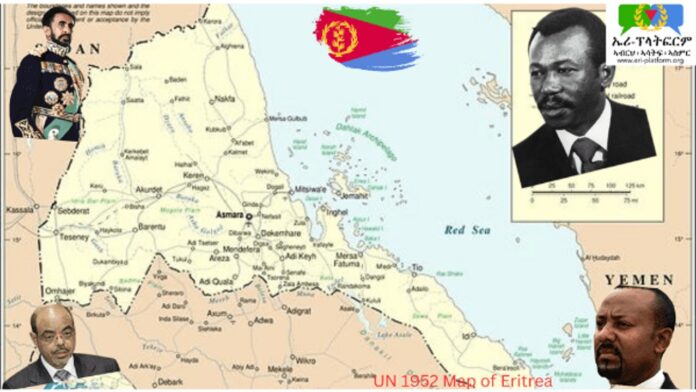


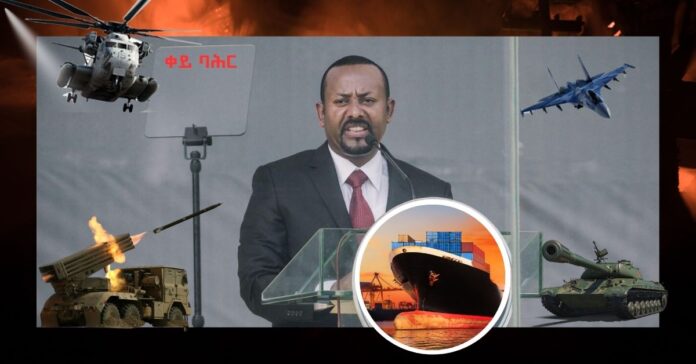
 which is often called the law of the Sea 1982. It is true that the convention provided land locked countries with the right of access to and from the seas and freedom of transit. That is what PM Abiy is currently getting from Djibouti’s Port. One thing that the PM did not mention in his speech was that the UN Convention is related to access to the sea not ownership of a port or the corridor. Also United Nations Convention on the Law of the Sea 1982 states “Transit states shall have the right to take all measures necessary to ensure that the rights and facilities provided for in this Part for land-locked states shall in no way infringe their legitimate interests”. PM Abiy’s request for complete ownership of a port and its corridor to the sea contradicts with the law of the sea 1982. Accordingly, neighboring countries including Eritrea have the right to reject PM Abiy’s request to talk about port and corridor ownership out rightly.


When Heroes Die
Eritrea, a nation forged in the fires of a 30-year liberation struggle, stands at a pivotal juncture. Its independence, hard-won against overwhelming odds, is now etched in the hearts of the next generation who continue to make sacrifices to preserve that spirit. Yet, time, the relentless tide, carries with it whispers of a new chapter. The generation of heroes who liberated the country from Ethiopian rule and forged its independent identity is aging and passing. As their twilight approaches, a crucial question hangs heavy in the air: how can Eritrea ensure a smooth and peaceful transition to a new era of leadership, one that honors the legacy of the past while embracing the possibilities of the future?
5A Legacy Engraved in Stone
Eritrea’s story is one of resilience and unwavering determination. For decades, Eritrean freedom fighters battled Ethiopian occupation, culminating in a hard-fought victory in 1991. The liberation generation, led by heroic figures, built a strong sense of national identity, laying the groundwork for the future to the best of their ability. The scars of that struggle are now etched into the nation’s very fabric, their exemplary legacy assured in the annals of history.
Yet, beneath the surface of this remarkable achievement, Eritrea’s governance, shrouded in a cloak of secrecy, lacks a clear and legal path for succession, leaving the future of the nation uncertain and potentially vulnerable to instability.
4Challenges Whispering in the Wind
The political system, while still embodying the spirit that binds the Eritrean people together, continues to face criticism for its rigidity and lack of space for dissent. The institutional framework, appears to lack the flexibility to adapt to the changing tides of a digitized and globalized world. Economic growth has stalled, and the lack of institutional development and democratic space stifles the entrepreneurial spirit and yearning for greater participation, leaving many young Eritreans yearning for opportunities beyond the borders of their beloved nation.
The aging leadership, while respected for their sacrifices and historic achievements, raises concerns about continuity and stability. The specter of an unprepared transition, one that fails to address the aspirations of the youth and the need for political reform, looms large, threatening to plunge the nation into uncertainty.
3Succession: A Necessity, Not a Taboo
Procrastinating on this crucial issue is no longer an option. To ensure a smooth and peaceful transition, Eritrea must confront the inevitable and proactively plan for a future beyond its founding fathers and mothers. This is not a betrayal of the liberation generation’s legacy; it is an act of honoring their sacrifices by ensuring the nation they help build continues to thrive. A well-defined plan can avoid potentially destabilizing power vacuums, providing a platform for the younger generation to contribute their fresh perspectives and innovative ideas.
Such a plan would not only foster stability and confidence within the nation, but also attract investment and development partners, crucial for Eritrea’s economic revival. It would be a testament to the enduring spirit of the Eritrean people, demonstrating their ability to adapt and evolve while remaining true to their core values.
Yes, Eritrea is a resilient country and it’s resiliency is about to be tested once again.
2Honoring the Past, Embracing the Future
Honoring the legacy of the liberation generation is not just about erecting monuments or plastering pictures of heroes all over social media. Preserving their legacy is not about clinging to the past, but about learning from it and drawing inspiration for the future. Their sacrifices must serve as a beacon, guiding the nation towards a future where political participation and accountability flourish.
But to truly honor their legacy, Eritrea must move forward. This requires open and inclusive dialogue about the nation’s future, a dialogue that embraces diverse perspectives and fosters a culture of political participation and accountability. It necessitates, equipping the next generation with the skills and political space to lead Eritrea into a new era of prosperity and progress.
1A Call to Action: Embracing a Brighter Dawn
This is a moment that demands all of us to open our eyes with optimism, not burying our head in the sand. The onus lies not only on the current leadership to show courage and initiate discussions on succession, but also on civil society and the Eritrean people at large. Active engagement, constructive criticism, and a willingness to participate in shaping the nation’s future are essential. A successful transition will not happen organically; it requires proactive steps, a willingness to embrace change, and a shared vision for a brighter tomorrow.
The choices made today will resonate for generations to come. Will the nation cling to the past, its heroes cast in bronze while the present and the future are uncertain? Or will it embrace the future, honoring its legacy while paving the way for a new era of prosperity, freedom, and hope? The answer lies not in nostalgia of the heroic deeds of the Ghedli generation, but in the courage to chart a new course, a course that preserves the embers of the past while igniting the flames of a brighter future.
Eritrea’s story is far from over. The chapters yet to be written hold the potential for a nation that thrives not just on the sacrifices of the past, but on the collective wisdom and aspirations of its present and future generations. Let this be a turning point, a moment where Eritrea chooses unity over division, progress over stagnation, and a future where the legacy of its heroes continues to inspire, not constrain.
Remember, the journey towards a brighter future begins with a single step. Let every Eritrean take that step, boldly and together.
As we remember those who have passed, may their legacy of courage and sacrifice continue to comfort their loved ones and fortify the fabric of our nation.