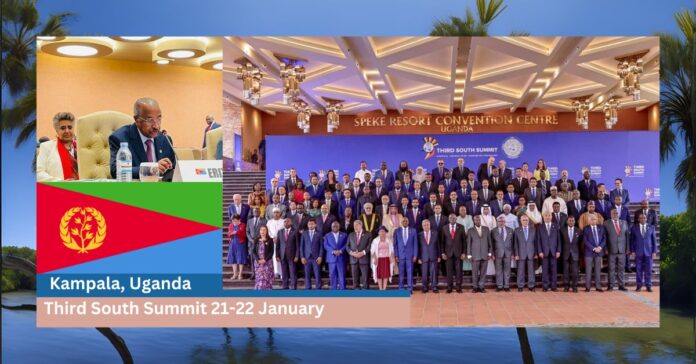
Kampala, Uganda – January 22, 2024: In a statement delivered at the Third South Summit in Kampala, Uganda, Mr. Osman Saleh, the Foreign Minister of the State of Eritrea, congratulated the Republic of Uganda for assuming the Chairmanship of the Group of 77 and China. He commended Cuba for its exemplary leadership as the outgoing Chair and emphasized the need for genuine cooperation and partnership within the Global South.
Highlighting the interconnected challenges faced by member states, Mr. Saleh underscored the threats posed by unprovoked wars, geopolitical tensions, climate calamities, and public health pandemics. He expressed concern that despite halfway through the 2030 Agenda for Sustainable Development, many countries in the Global South, particularly in Africa, continue to face poverty and stagnant socio-economic conditions.
Drawing attention to Eritrea’s own challenges arising from a thirty-year war for independence and subsequent conflicts, Mr. Saleh emphasized the impact of UN Security Council sanctions and unilateral coercive measures on the country’s development. Despite these challenges, he highlighted Eritrea’s resilience in rehabilitating its economy through a development strategy focused on social justice and partnership.
The Foreign Minister called for an end to coercive unilateral measures imposed for political purposes, urging solidarity among member states to terminate such actions. He also advocated for the reform of the international financial architecture to address the needs of developing countries.
Mr. Saleh cautioned against normative pledges that list false hopes, urging realistic and achievable programs of action in future summits. He emphasized the importance of sincere cooperation and solidarity within the Group of 77 and China and the wider UN membership to address global crises and ensure sustainable development.
In his concluding remarks, Mr. Saleh strongly called for an immediate end to the war on the Palestinian civilian population and public institutions. He asserted that the inalienable rights and aspirations of the Palestinian people should be fully respected, emphasizing their right to self-determination and the need for peace in the region.
The statement by Mr. Osman Saleh at the Third South Summit resonates as a call for unity, cooperation, and solidarity to overcome the challenges faced by the Global South and advance towards sustainable development.
Since its inception in 1963, the Organization of African Unity (OAU) and its successor, the African Union (AU), have been hosted by Ethiopia. Emperor Haile Selassie of Ethiopia was its first OAU chairman. Among the major pillars of the African Union’s mission is safeguarding the sovereignty and territorial integrity of member states. Affirming commitments to its objectives, in its Cairo Declaration of Article 2 of resolution 16(1), the OAU pledged the independent African states to respect their inherited colonial borders. Through the Cairo Declaration, the OAU asserted that colonial borders be a sacrosanct boundary of African countries. In its effort to promote peace and security throughout the continent, the African Union established the Peace and Security Council in December 2003. The specific goal of the Peace and Security Council (PSC) is the “prevention, management, and resolution of conflicts.” In line with the above agreements and objectives of the African Union, we will see if Ethiopia deserves to continue hosting the African Union.
ETHIOPIA IS A THREAT TO REGIONAL PEACE.
Somalia:
Contrary to the objectives of the African Union, Ethiopia has been a source of instability in the Horn of Africa region. Following the 1977–1978 border war with Somalia, Ethiopia worked hard to make Somalia a failed state for three decades. In 2006, when Somalis started to organize themselves under the Union of Islamic Courts and began to bring normalcy to Somalia, Ethiopia invaded Somalia. The invasion of Somalia by Ethiopia created Al-Shabaab. In the pretext of fighting Al-Shabaab, Ethiopia is still in Somalia. According to the United Nations monitoring group report, Ethiopia, coupled with Yemen, is a major source of arms and logistics for Al-Shabaab.
As a continuation of its persistent effort to disremember Somalia, recently Ethiopia has signed a Memorandum of Understanding (MOU) with the breakaway unrecognized Somaliland. The MOU states that, in exchange for a share in Ethiopian Airlines and recognition of Somaliland as an independent country, Ethiopia will get a 20 km seacoast for building a naval base and commercial port. Such an agreement has all signs that indicate Ethiopia wants Somalia to remain a failed state.
Here is why:
The MOU does not involve the Government of the Federal Republic of Somalia. Signing an agreement with Somaliland, which the world recognizes as part of Somalia, is in contravention of the African Union’s commitment to respect the territorial integrity and sovereignty of a member nation Somalia. If Ethiopia wanted to get a seacoast from Somalia, it should have negotiated with the Federal Government of the Republic of Somalia.
Ethiopia is taking advantage of a neighboring country that is going through multiple challenges. Recently Somalia has been showing progress especially in its security sector. Neighboring countries like Eritrea have trained future Somalian Navy, Airforce, and Mechanized units. Such an effort to reconstitute Somalia did not bode well with Ethiopia. That is why Ethiopia is rushing to derail the effort to bring Somalia back from the Abyss.
The MOU could antagonize Ethiopia with China, Turkey, Spain, and other countries that have similar secessionist problems. In the case of China, a major lender to Ethiopia, the recognition of Somaliland could pave the way for Taiwan to be recognized by the United States and some countries in Europe. Accordingly, China is expected to oppose the possible recognition of Somaliland by Ethiopia or any other country.
The MOU does not have economic benefits to Ethiopia. The straight-line distance between Addis Ababa to Lughaya, Somaliland is 930 km. To build a road, a commercial port, and a naval base in Lughaya, Ethiopia will need billions of dollars that it does not have. Moreover, Ethiopia must pay an annual lease to Somaliland calculated based on an average of what Djibouti gets from leasing its land to foreign countries that have bases in Djibouti. For instance, the US base in Djibouti is 500 acres or 2.2 square km. and it pays $60 million a year. You can imagine how much Ethiopia needs to pay for the 20-kilometer seacoast. Even if Ethiopia pays half of what the USA pays to Djibouti, it is going to be a significant amount of money. All this money will be expended to show the world that Ethiopia has a navy on a leased base in Somaliland.
The MOU is a danger to Ethiopia itself. Ethiopia is currently fighting with an Oromo separatist group, and the Tigrayans have harbored their long-held interest to separate from Ethiopia. Thus, the recognition of Somaliland by Ethiopia could open a floodgate for other countries including Somalia to recognize and support Ethiopian secessionist groups.
Eritrea:
After being colonized by Italy for 50 years (1889-1941) and ten years (1941-1951) under the British Interim Administration, the United Nations forced Eritrea to be federated with Ethiopia in 1952. In 1962, Ethiopia’s Emperor Haile Selassie unilaterally dissolved the Federation and annexed Eritrea, triggering a 30-year armed struggle in Eritrea. Eritrea, which had a distinct flag, parliament, and national boundaries based on the 1900, 1902, and 1908 colonial agreements between Ethiopia and Italy, was turned into an administrative region of Ethiopia. Although the annexation of Eritrea happened two years before the 1964 Cairo declaration, it was a clear indication that Ethiopia had not been committed to peace and security in Africa. After 30 years of war and destruction, the Eritrean People’s Liberation Front (EPLF) completely liberated Eritrea in 1991. Through the UN and the AU monitored referendum, Eritrea became an independent country on May 24, 1993. Again, in violation of the 1964 Cairo declaration, in 1998 Ethiopia claimed the Badme region of Eritrea and conducted a two-year devastating war against Eritrea. In 2002, the Eritrea and Ethiopia boundary commission based on the colonial agreements of 1900, 1902, and 1908 declared Badme was an Eritrean territory. Ethiopia rejected the ruling and occupied Badme and other Eritrean territories for twenty years. As a continuation of the Ethiopian leader’s act of undermining colonial boundaries recently, the current Prime Minister of Ethiopia Dr. Abiy Ahmed attempted to replace the 1964 Cairo declaration with Ethnic-based boundaries. He argued that because the Afar Ethnic group lives in both Eritrea and Ethiopia, the Ethiopian Afars should have a say on the Eritrean Red Sea. He continued to say because Somalis live in both Ethiopia and Somalia the Ethiopian Somalis should have a say on the Indian Ocean. In violation of the 1964 OAU declaration, he claimed to have a historical right to own a port and corridor to the sea. These statements clearly indicate that Ethiopia is not serious about the 1964 Cairo declaration and the 1982 UN convention or Law of the Sea.
Sudan:
Ethiopia’s continuous border conflict with Sudan in the Alfashaga region also indicates Ethiopia’s lack of commitment to settle international border problems in line with the 1964 Cairo Declaration. When the Tigray war started, Sudan reclaimed what it called land that was occupied by Ethiopia. The border problem between Sudan and Ethiopia is a dormant conflict that could erupt at any time. Also, recently, some news has been circulating that Ethiopia has become the United Arab Emirates’ weapon transshipment destination to Sudan’s reengage general Mohammad Hamdan Dagalo aka “Hemedti”. Again, such interference in the affairs of a sovereign nation is another evidence that Ethiopia is a destabilizing factor in the Horn of Africa.
ETHIOPIA HAS A LONG HISTORY OF VIOLENT REGIME CHANGES AND PERSISTENT CONFLICTS:
Focusing on the history of modern Ethiopia, Emperor Haile Selassie, the first OAU chairman, was overthrown in a violent military coup by a Marxist–Leninist junta, the Derg. On the morning of 23 November 1974, the Derg executed 54 Haile Selassie’s Ministers, and six were killed in a shootout with the executioners. Haile Selassie was assassinated on 27 August 1975 by the then Ethiopian Military Junta. The catastrophic famine of 1983–1985 was what brought the Derg junta government the most international attention. Mengistu’s government is estimated to be responsible for the deaths of 500,000 to 2,000,000 Ethiopians, mostly during the 1983–1985 famine in Ethiopia and close to 750,000 people due to the red terror execution of civilians. Consistent with what the Derg military Junta did to Haile Selassie, after waging a war for 17 years, the Tigray Liberation Front (TPLF) toppled the Derg Marxist Leninist Junta in 1991. Although the TPLF is credited with what resembles an economic change in Ethiopia, the ethnic-based federalism system it established continues to be a time bomb in Ethiopia. Ethnic conflicts in Ethiopia are believed to have killed close to two million and displaced five million Ethiopians. The Oromo and Amhara youth uprising toppled the Tigray liberation front-led government in 2018 and brought the current Prime Minister, Dr. Abiy Ahmed, to power. Although in the beginning, the transition of power seemed peaceful, it was followed by a deadly conflict between the Ethiopian Federal Government and the TPLF. The conflict resulted in the death of close to two million people in Tigray, Amhara, and Afar and the widespread destruction of property and infrastructure. Regardless of the ongoing wars in Amhara and Oromo, recently the Prime Minister of Ethiopia Dr. Abiy Ahmed made a dangerous speech to his parliament that could destabilize the whole Horn of Africa region. Ethiopian leaders continue to have a strong appetite for conflict and they do not seem to survive without it. In the meantime, people in Tigray and Amhara are dying of hunger, and the federal government is warning the state governments not to say anything about it. The Abiy government does not want anything that interferes with his hot propaganda topic that Ethiopia got access to the sea. The news has become a staple of state-controlled activists, Radio and TV, and it will continue for months to come.
CONCLUSION:
The saddest part of the story is a leader, Prime Minister Abiy Ahmed, whom Ethiopians and people of the neighboring countries hoped would change the trajectory of war and conflicts in Ethiopia and received a noble prize, has become the prime instigator of war in Ethiopia. On top of the ongoing wars in Amhara and Oromo and the dormant deadly conflict in Tigray, currently, Prime Minister Abiy Ahmed is eying an invasion of neighboring countries, especially Somalia and Eritrea. Therefore, Ethiopia’s continuous disregard for the 1964 Cairo declaration on colonial boundaries and its persistent internal conflicts do not reflect the values of the African Union. In fact, the Ethiopian utter disregard for the African Union’s declarations and agreements is making the African Union weaker and partial. The recent threat of the Prime Minister on neighboring countries and its MOU with the unrecognized breakaway state of Somalia should be a warning bell to the African Union. If Ethiopia continues to undermine the African Union’s declarations and agreements, it may be disqualifying itself from continuing to be the host of the African Union. It is time for the AU and its member states to send a strong warning to Ethiopia. If not, AU will be irrelevant.
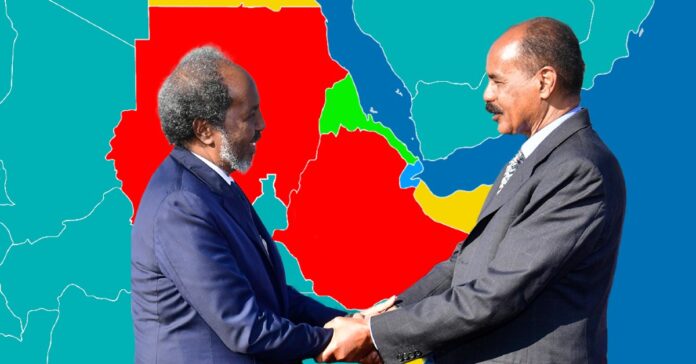
In a calibrated diplomatic response to the evolving political dynamics in the Horn of Africa, President Hassan Sheikh Mohamud embarked on a two-day working visit to Eritrea from January 8 to 10, 2024. This visit unfolds against a backdrop of regional complexities, notably the recently inked Memorandum of Understanding (MOU) between Ethiopia and Somaliland on January 1, 2024, prompting varied diplomatic responses.
Background: Somalia, Somaliland, and Ethiopia
The genesis of the Somaliland issue traces back to the early 1990s, marked by its declaration of independence following the collapse of the Somali state. While Somaliland maintains a degree of autonomy, its sovereignty lacks international recognition. The recent Ethiopia-Somaliland MOU introduces an additional layer of intricacy to the regional landscape, fostering diplomatic tensions.
Analysts’ Perspectives and Regional Ramifications
Analysts contend that Ethiopia’s endorsement of the MOU violates the charters of the African Union (AU) and the United Nations (UN). In response, Somalia nullified the MOU, reinforced by the Somalian president signing a law. Numerous regional countries have reiterated their support for Somalia’s territorial integrity.
GERD and Regional Implications
The GERD, a significant hydropower project on the Blue Nile River initiated by Ethiopia, stands as a source of regional tensions. Egypt and Sudan express apprehensions about potential impacts on water resources. Ongoing diplomatic unrest adds complexity to the GERD issue, heightening concerns about Egypt leveraging the situation to bolster its opposition.
Moreover, the GERD matter carries implications for regional stability, potentially escalating geopolitical tensions. The intricate negotiations and power dynamics surrounding the dam project are interwoven with broader regional geopolitics.
Ethiopian Internal Challenges
Internally, Ethiopia grapples with a myriad of challenges, including the ongoing conflict in the Amhara region and the Oromia conflict. These conflicts, coupled with the impact of drought and ethnic tensions, amplify the overall complexity of the regional dynamics. The Amhara region conflict and the Oromia conflict lead to displacement, human rights concerns, and internal cohesion strains.
Eritrea’s Strategic Calculus
In this intricate scenario, Eritrea’s role assumes added significance. The recent diplomatic engagement between Eritrea and Somalia during President Mohamud’s visit from January 8-10, 2024, can be perceived as an opportunity for Eritrea to strategically position itself, especially in relation to Ethiopia. Relations between Eritrea and Ethiopia have been strained since the cessation of hostilities between the Ethiopian federal government and the TPLF in November 2022.
As the Government of Eritrea announces its intention to issue comprehensive statements in the near future, the international community eagerly anticipates a nuanced understanding of the specific diplomatic agenda discussed during the visit. These unfolding developments present a measured narrative of diplomatic maneuvers in the Horn of Africa, where cooperation and dialogue are explored as potential instruments to navigate regional realignment.
Amidst these geopolitical intricacies, the Eritrea-Somalia diplomatic engagement from January 8-10, 2024, stands as a testament to the strategic considerations at play, offering insight into the delicate balance of regional alliances and the pursuit of stability amidst evolving challenges.
Comparing a Nobel Peace Prize laureate Prime Minister Abiy Ahmed and Benito Mussolini could be inappropriate and would be considered like awarding that Prize to the later. What a horror! Yet, the covetous reasonings presented in October and November speech by PM Abiy to possess neighbor’s port in the Red Sea ‘by peace or by force’ have curious similarities to those presented by Mussolini when preparing to invade Ethiopia in 1935.
Mussolini’s white man’s burden
Mussolini and his Fascists “nuclear” reason to invade Ethiopia was to abolish slavery.(1)
For about a century until the end of the second world war, a persistent and insistent call mainly by the United Kingdom to abolish slavery placed Abyssinia on the spotlight and left an indelible stigma on the country.2 While the scourge was prohibited in many countries in name only, and while worst inhumane arm and leg amputation was taking place by “civilized colonizing Europeans”, the Belgian Leopold II for example, the two independent (non-colonized) African states, Abyssinia and Liberia alone carried the “torch” of Slave-States in Africa. Ironically, the white man’s burden was considered as a saviour from slavery.
Slavery, slave hunting, and slave transit plagued Abyssinia for millennia. It was the most visible aspect of life in the country so much so that starting in the 19th century almost every message from Europe and every European messenger sent to Ethiopia demanded the abolishment of slavery.3 Every treaty Ethiopia made with the big European nations had to contain a promise to abolish slavery. To be allowed to the League of Nations membership, Ras Teferi had to promulgate edicts to abolish it and promises to continue doing. Despite previous reservations, Italy agreed and voted for Ethiopia to be a member of the League in 1923 in the hope of convincing it to be an Italian protectorate. A couple years later, however, Italy under the same Mussolini who agreed for Ethiopia’s membership, started working against, to kick it out of the League accusing it of slavery.1 The witch hunt begun. Mussolini found in slavery an alibi to invade and colonize the country. PM Abiy Ahmed’s 21st Century version of “slavery” by using hunger as an alibi to possess a sea outlet that belong to his neighbors is the ultimate sinisterism that is too eerily sickening but must be contemplated here for all the world to see and comprehend.
Hunger, Abiy Ahmed’s Caricatural Burden
Next to slavery, famine was another Abyssinian plague since millennia. The northeastern Africa starting from Tanzania north to Egypt are breeding grounds for the most gregarious swarm of insect, and since biblical times the people there were periodically devastated by it. Famine and hunger cause by locust invasion, disease pestilence, the pernicious internecine war, and the lack of ingenuity and endeavour to harness the hardy environment left the people to their sort. Their only hope was stretching their hands to the skies. For the people of the region like the Abyssinians, every good, bad or ugly was attributed to God. Not celebrating as it deserves Saint Gabriel or Saint Mary Day that happens to fall on the day or the week prior to the fall of the swarms of locust was the perfect explanation for the devastation that ensued. Calamity was considered as the wrath of God.4
Now, the PM of Ethiopia, Abiy Ahmed, is telling the world that the cause of all problems in his country is the wrath of not having a port. In no uncertain terms, PM Abiy Ahmed warned, if the fast-growing population of his country gets hungry tomorrow, it will be the fault of not having access to the Sea.5,6 A flagrant logical fallacy. Resource-wise, Ethiopia is one of the richest countries in Africa, capable of feeding its people and beyond. Incidentally, PM Abiy never stops boasting of his country’s wealth and capabilities, but when it comes to possessing what is not his, he is capable of declaring hunger and unleash millions of hungry Ethiopians to the neighborhood as he unambiguously declared that 5 million Ethiopians could migrate in search of food to each neighboring country.
Fabricating Story and History
Mussolini’s Fascists went as far as fabricating slavery stories and compiling documents containing unverifiable slave trade stories to nail and over-nail the coffin of accusations.7 In a similar manner, it was curious to see PM Abiy, during his October parliamentary presentation pointing to Democratic Republic of Congo (DRC) on a map of Africa implying it acquired ocean access after decolonization.5 This gave an idea for several Ethiopian scholars to invent history that never happened saying Republic of Congo (RC) gave DRC an outlet to the ocean through the principle of give and take.8,9
For various reasons, the people living in the coastal areas have their own countries and boundaries that were shaped more than a century ago in the same manner Modern Abyssinia (Ethiopia) was enlarged more than twice its size and shaped by the fate of history, war, and colonialism. The scramble for Africa, left no no-man’s land in Africa. It is worth reminding PM Abiy, there is no Antarctica in East Africa to go and grab freely a no-man’s port. Even in Antarctica, there is an international agreement that regulates the possession of a land for research purposes. The reason for the promulgation of the “United Nations Convention on the Law of the Sea” was that there is no coast and port that is available for landlocked countries to be grabbed. So where does this delusion come from?
Delusions of Grandeur
Mussolini’s and his Fascist party were trying hard to mimic the Roman empire. Their characteristic insignia, the Roman Fasces, and their salutation stretching the right arm attest to that without the need for elaboration.10 Like Mussolini’s renamed Italy, Italian Empire, alluding to the roman empire after his invasion of Ethiopia, PM Abiy talked of the glories of Axumite civilization and alluded to Blue Nile and the Red Sea as being Ethiopian by declaring they are the life and death of Ethiopians. The problem of delusional expansionists is the expansion of their discourse going beyond space and time. They present what happened more than a thousand years back as if it happened yesterday and they consider themselves as the sole inheritors of glorious time and blood descendants of the glorious leaders. They try to act in the same manner as those ancient leaders. More interestingly, in so doing, these expansionists instinctively behave in the same manner.
Furthermore, after trying to exploit Axumite civilization, PM Abiy jumped more than a thousand years to 19th century to highlight the callous Ras Alula to claim possession of a Red Sea.5 Alula was pitiless, who murdered Eritreans especially those around Keren and western lowlands. He administered Mereb-Mlash (name for central part of Eritrea) for Emperor Yohannes IV, collecting tributes and looting in the name of chasing outlaws. He was also a military leader who defeated the Italians at Dogali, but with no vision to continue chasing them beyond Massawa despite his earlier boasting saying, “I will not go away until my horse drunk from the Red Sea.” This is what is recorded him saying in his conversation with father Duflot, when he was fighting the Egyptians a decade earlier, where he didn’t go anywhere beyond Gura’e at that time.11 This phrase could have been modified by PM Abiy when he quoted Alula as saying, “the Red Sea is the natural boundary of Ethiopia.” Megalomania elevates a boasting warlord to inspirational level. Why is Alula considered a murderer so hated in Eritrea? Here is an extract from Andrew Haggard, a colonel who accompanied Vice Admiral Hewitt in his mediation between Egyptians and Yohannes IV. Haggard was travelling from around Cheren eastward to Senhit in 1884 when he noted this.12
“Presently we came upon the traces of an Abyssinian raid, for Ras Alula had been recently over the border, and when he made a raid, it was on the system of the old English and Scottish Border raids. He burned, scattered, ravished, and destroyed, drove off the cattle and the women, and left a fertile country a desert behind him. Where we now were he had completely wrecked a caravan and killed a good many people. The debris was still scattered along the road for miles rags, paper, broken bottles, boxes, bones, every imaginable thing, strewn about in every direction.”
Economic Woes and Revenge
Beyond false alibi and megalomania, there were other common reasons for Mussolini’s and Abiy’s fantasy. In fact, analysts say the reason for using such fallacies is to cover the real reasons that for both were interestingly the same. One of these reasons was the economic woes that both faced. In Mussolini’s case, Italy was coming out victorious of the first world war, but with ~600,000 deaths, deception for not getting the lands that was promised to her, economic crisis, devaluation of its money and unemployment that persisted for years.13 Invading Ethiopia was seen bringing economic benefit as well as scoring diplomatic success in front of Italian European counterparts.
Similarly, PM Abiy’s Ethiopia just came out of the Tigray war with so many youngsters’ deaths, destitution and billions of dollars spent on the war and on showy state buildings and parks. The wrong allocation and misplaced priorities sent Ethiopian economy sliding freely down to arrive at payment default very recently. PM Abiy wants to get a Red Sea port to cover his mishandlings and economic woes. It is like the Amharic proverb አይጥ በበላ ዳዋ ተመታ (The weed pays for what the rat devastated). PM Abiy’s daring aggressive talk on its neighbors, particularly Eritrea, was also considered as an invasive diplomatic offence that tried to cover Ethiopia’s frustration of not being included in the Red Sea Forum organization.
The other reason for Mussolini attack on Ethiopia was the need of revenge. In his speech justifying the invasion of Abyssinia in October 1935, he said “we have been patient with Ethiopia for forty years”, clearly referring to the defeat of Italy by Abyssinia in 1896 at Adwa.13 Similarly, Abiy’s insistent reminder in his November speech that Ethiopia has never been defeated was a bold flagrant denial for its defeat by Mussolini in 1935 and by the Eritrean Freedom Fighters in 1991. Could this self-inflicting defense be a cover up for malicious vengeful intentions? Indeed, it looks like, unless it is also another way of denying the independence of Eritrea by wishfully considering it as Ethiopian and claim Red Sea in such overt self-dupery.
More curiously, when Mussolini planned his invasion of Ethiopia, king of Italy Emmanuel III was against it. Over a century later, in an eerily similar sentiment, based on her various public discourse, The Ethiopian president Sahlework Zewde appears to be clearly against the ongoing internal war in Ethiopia and the planning of external war by PM Abiy Ahmed.
Mussolini succeeded invading Ethiopia because of tacit silence of certain European countries and the inability of the League of Nations to defend its principles among others. History has shown us where such transgressions ended. PM Abiy Ahmed recent aggressive stance is not going anywhere either. No amount of false narrative, propaganda, machination is going to help him secure a sea outlet that he owns. More importantly, the methods he is using to obtain that is as destructive as that instigated by Mussolini.
PM Abiy subduing of TPLF left him emboldened to do the same with Fano as he is now trying to do the same with a neighboring country to the north, which has Greek Mythology written all over it. Consider this: When the Titans and Giants were defeated, Zeus was crowned the god of the earth; Hades got his wish of becoming the god of the underworld; Poseidon the god of the sea.14 What PM Abiy is trying to become is the god of the Horn of Africa, the god of the underworld, and the god of the Red Sea, all rolled into one.
Beyond mythology, however, the reality is this: That Ethiopia’s economic difficulties are neither the wrath of God, nor the mythological gods of the Red Sea, nor that of the underworld. It is the self-inflicting wrath molded in the old mindset of the feudal times where invade, defeat and spoils are the leading principles. Where modernity is manifested solely in the showy buildings and boasting economic growth spelled not to reflect the reality, but to cover the forest of poverty. PM Abiy in one of his discourses had, in passing, mentioned (rather questioned) why the countries of east Africa cannot form a union to manage rivers and the Red Sea. It was a great idea, but such monumental change cannot be attempted for the sake of Ethiopia, and not to please or cajole Abiy Ahmed because he is threatening the region to get a sea outlet by hook or by crook. Countries are sovereign, and decisions for sovereignty or forming a union like that of Europe is also a sovereign decision of every sovereign country.
This article was drafted before the January-1st 2024 Ethiopia-Somaliland memorandum of understanding (MoU) for Ethiopia to obtain a leased sea outlet in exchange for Somaliland’s recognition as a country and shares in the Ethiopian Airlines. The article was not modified following the MoU news, because the central theme it treated was PM Ahmed’s aggressive and very offensive approach in a manner that would automatically block any possible conversation with Eritrea in particular. This posture is still persistent despite PM Abiy unapologetic attempt to reword his “outlet by hook or by crook” stance and speech in October/November 2023. It is even more curious that following the MoU agreement with Somaliland, PM Abiy and his dignitaries congratulating each other of obtaining outlet to the Red Sea instead of the Gulf of Aden. The fixation on Red Sea exposes the goal of grandiose ambition more than the economic question. It is also a tell tell sign of wanting a victory by any means possible over the Red Sea for the realization of Abiy’s October overambitious assertion saying Red Sea is the life and death of Ethiopia. Red Sea if the life of all the countries that surround it, including Ethiopia and the world. It never is the death of any people. It could be the end of unreasonable hegemonic overambitious leaders who risk placing the people in pernicious warfare.
Reference
1 – Mussolini over Africa. Ridley F A. Wishart books Ltd. 1935
2 – Colonial Powers and Ethiopian Frontiers 1880–1884: Eds Sven Rubenson, Amsalu Aklilu, Shiferaw Bekele, and Samuel Rubenson. Lund University Press: Lund, 2021.
3 – Slavery in Abyssinia. Noel-Buxton L., 1932. 11(4), pp.512-526.
4 – The history of famine and pestilence in Ethiopia prior to the Founding of Gondar. Pankhurst R. 1979. The journal of Ethiopian Studies 10(2).
5 – https://youtu.be/MPOdp4s4XXE
6 – https://youtu.be/TwwyIQ12q6o?si=wSlRqXGkHHgv4g9p
7 – Memoradium of the Italian Government on Ethiopia: ~1935 differently dated collection of documents by Italia.
8 – https://www.eritreadigest.com/pm-abiy-co-bullying-belaboring-big-lying/ Originally Published at Awate.com in November 2023
9 – https://youtu.be/uFrGILLKzJc?si=zedS0CBxR6Q2wU8I
10 – Mussolini’s Gladius: The Double-Edged Sword of Antiquity in Fascist Italy. Schrader, K.W., 2016.
11 – Ras Alula and the scramble for Africa: a political biography: Ethiopia & Eritrea, 1875-1897.
Haggai E. 1996 Red Sea press.
12 – Under crescent and star. Haggard A., 1895. Blackwood.
13 – https://mrcatelli.weebly.com/uploads/5/6/5/7/56571255/mussolini-ethiopia_speech.pdf
14 – Ancient Greek Beliefs. Westmoreland P.L., 2007. Lee and Vance Publishing Co.
In 2016, the Eritrean government made a draconian decision to combat inflation by introducing new regulations on currency control. The measure targeted large sums of Nakfas circulating outside the formal economy, rendering them virtually worthless. Additionally, the central bank appreciated the currency by implementing a fixed exchange rate against foreign currencies to address inflation resulting from weak exports and expensive import costs. The introduction of new 50 and 100 Nakfa bills and regulations on money transfer and withdrawal mechanisms, allowing people to withdraw only 5000 Nakfas per month unless necessary, had disastrous effects on the domestic market and production capacity. This led to economic stagnation, loss of competitiveness, and the emergence of a coupon economy.
States typically adopt either market-based or command-based economic systems. Market-based economies, also known as free market economies, are self-regulated, responding to consumer demand for goods production and distribution. Conversely, command-based economies are regulated by a government body determining the delivered goods, their quantities, and prices. In the modern world, few economies are purely market-based or command-based. However, the Eritrean government adheres to a command-based economy, controlling production levels, pricing, and the distribution of goods and services. Over the last 23 years, the government aggressively banned almost all private sector businesses, bringing them under complete control of the party and military. Strict governmental control, lack of legal frameworks to protect businesses, and restricted access to foreign currency make private investment in Eritrea challenging, time-consuming, and financially risky, resulting in a significant decline in the country’s economic development and living standards.
It is essential to recognize that currency appreciation can reduce inflation by lowering import prices, benefiting households, especially in countries like Eritrea, heavily reliant on imported consumer goods. However, currency appreciation significantly impacts the country’s global market competitiveness, making exports more expensive. Consequently, Eritrea faces economic challenges due to the adverse effects on competition.
In conclusion, Eritrea possesses the potential for economic development, and the government can take several steps to achieve this goal. Investing in education is crucial to enhancing the workforce’s skills, ultimately benefiting the nation’s economy. The policies of currency appreciation, fixed exchange rates, and a state- and party-controlled economy have not led to the anticipated prosperity and economic development. Therefore, a gradual depreciation of the local currency could enhance the competitiveness of local products in the export market and improve the nation’s trade deficit over time. The government must also undertake significant reforms in the banking sector, promoting legal and unrestricted circulation of money, digitalization, and liberalization of the banking and financial sector. This would create a secure environment for local and diaspora Eritreans to invest, with laws protecting investors, introducing labor policies, strict anti-corruption measures, and facilitating business to attract foreign direct investment. Additionally, promoting the free movement of people and goods can enhance the nation’s competitiveness in the global market and attract more investments. The government must take decisive action in these areas to foster economic growth and improve the people’s living standards.
The Red Sea stands as a crucial focal point in global security policy, acting as a strategic and economic conduit connecting three continents. Investments from Gulf states are reshaping the geopolitical landscape on both shores of the Red Sea, offering opportunities while carrying inherent risks. Delving into the varying diplomatic and military strengths among regional countries proves to be a fascinating study. While some nations, notably the UAE, exhibit shrewd strategies, others like Saudi Arabia have faced challenges in forging effective relationships with their neighbors. The Saudi monarchy historically leaned on immense wealth to build alliances, but recent years have witnessed a shift toward more authentic engagement. Nonetheless, Saudi Arabia grapples with building trust due in part to past support for religious fundamentalist groups.
Understanding the Red Sea’s Significance
The Red Sea, historically underestimated, stands as a vital waterway dividing the Middle East and Africa. Its strategic importance has been evident across centuries, facilitating the movement of goods like silk and spices from the East to European and African markets. People from opposite sides of the basin engaged in significant migrations, shaping intercommunal exchanges. The region’s dynamics saw shifts with the discovery of petroleum and the emergence of new Arab states, driving migration towards the oil-rich Gulf states.
Recognition of the Red Sea’s strategic value by the British and French fueled their colonial ambitions and control over trade routes to the East. Their involvement led to establishing colonies and ports along the Red Sea coast. The Cold War further highlighted the sea’s significance, aiming to counter the USSR’s influence on Arab countries, particularly Egypt’s control of the Suez Canal, a critical gateway to the Red Sea.
In the post-Cold War era, the Red Sea’s importance surged as a conduit for global trade, linking three continents. However, any conflict or instability in the region profoundly impacts the market, as evidenced by past events like the Israel-Arab wars, Suez Canal blockages, and the Yemen conflict. Recent events, such as Houthi attacks in response to Israeli actions in Gaza, further underscore the sea’s influence on international trade.
Gulf States’ Influence in the Red Sea Region
Gulf states, with considerable resources, assert their presence in the Horn of Africa like never before. Their economic and military investments are rapidly altering geopolitical dynamics on both sides of the Red Sea, merging two previously distinct regions. While this presents opportunities for development and integration, it also poses significant risks, particularly for fragile African states on the Red Sea’s western shores.
Interestingly, no regional organization effectively addresses the security challenges in the Horn and the Red Sea. The African Union and Intergovernmental Authority on Development (IGAD) cover parts of the region but lack comprehensive representation, while the Arab League’s influence remains limited. This void has prompted the Gulf Cooperation Council (GCC) to take the lead in interventions, using financial clout rather than multilateral diplomacy to garner African countries’ support.
UAE’s Regional Engagement
The UAE’s policies and engagements in the Red Sea Basin, despite not being a member, have been notably active. Direct investments, financial ventures, and support for proxy conflicts have significantly influenced the region’s geopolitics. Its intensified interest, especially post the Yemen crisis in 2015, led to active military involvement, establishing bases and operations in Yemen’s southern region. However, subsequent withdrawals caused friction with allies like Saudi Arabia, highlighting the need for diplomatic resolutions.
The UAE’s involvement in destabilizing Sudan through support for the Rapid Support Force (RSF) and intervention in Ethiopia’s Northern Tigray region garnered international criticism. Moreover, its strategic moves, including port construction in Somaliland without central government consultation, raised concerns about regional stability.
Critics and analysts suggest the UAE’s assertive port-building policy aims to counter China’s growing interest in Eritrean ports for its Belt and Road initiatives. This competition for trade routes highlights the UAE’s aspirations to influence maritime trade, potentially impacting income through UAE ports.
Saudi Arabia’s Strategic Engagements
Saudi Arabia’s active involvement in the Red Sea region dates to the 1960s, engaging in Yemen’s conflict and supporting anti-communist efforts. Over time, it invested in curbing Israel’s influence in the area, collaborating with regional powers to establish Arab dominance over the Red Sea.
However, its propagation of Wahhabism, ostensibly to combat communism, inadvertently destabilized regions in Somalia, Sudan, Yemen, and parts of Kenya and Ethiopia, contrary to fostering peace.
In recent years, Saudi Arabia shifted focus to build diplomatic ties in the region. Initiatives like the Red Sea Council and efforts to resolve Sudan’s conflict showcase attempts at regional cooperation. The Kingdom’s role in advocating for lifting sanctions against Eritrea and facilitating peace deals reflects its commitment to conflict resolution.
Conclusion
The Red Sea’s elevation as a strategic priority has garnered global attention, emphasizing its historical, economic, and security significance. However, the competition for influence between the UAE and Saudi Arabia intensifies, impacting African countries and potentially destabilizing an already fragile region. Both countries’ divisive policies and support for various groups amplify internal conflicts and challenge state institutions’ stability.
While Gulf investments offer opportunities for infrastructure development and economic growth in African states, effective management and regional diplomacy are crucial. Coordination between Gulf and African nations is pivotal to ensuring mutual benefits and averting exacerbation of existing security challenges in the region.
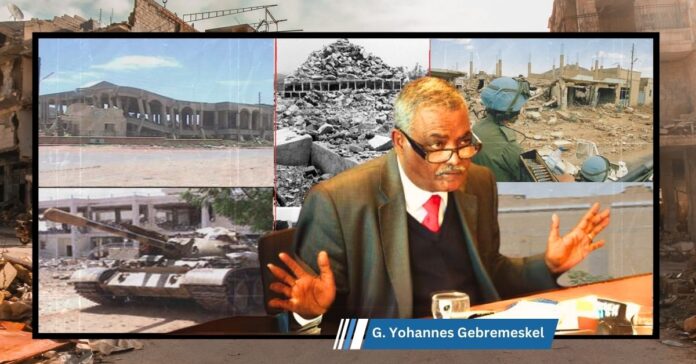
In his recent interview with a YouTube channel called “Axumite Media”, General Yohannes Gebremeskel intentionally tried to misinform the public using dubious claims on several issues. For those who do not know General Yohannes, he is a retired General of the Tigray Peoples Liberation Force (TPLF). During the 2018-2020 Tigray war, he was appointed by the Prosperity Party to serve as the security chief of the Tigray region. Although most of his interviews are filled with false claims, in this article, we will focus only on two of them.
COMPARING THE SIZE OF EPLF’S MECHANIZED UNITS WITH THE SIZE OF TPLF’S INFANTRY ARMY.
To set the record straight Eritrean People’s Liberation Front’s (EPLF) support to the TPLF during the 1989-1991 march to Addis Ababa included High-Ranking war planners like General Ramadan Awiliyay, Commando units, and major Mechanized personnel. To make it clearer except for the commando units that were led by Wedi Berhe, EPLF’s support to TPLF during the 1989-1991 March to Addis Ababa was mechanized. As General Yohannes knows, Mechanized units require less personnel than infantry. For instance, a tank carries a crew of four: commander, gunner, driver, and loader. EPLF’s mechanized units that supported the TPLF had more personnel than General Yohannes described in his interview. But for the sake of convenience let’s assume his estimate of 400 mechanized army personnel was true. If you divide 400 personnel by four, the EPLF personnel that was supporting the TPLF army could operate about 100 tanks, including anti-airplane guns. Imagine how significant the contribution of such highly skilled EPLF’s Mechanized Army to the TPLF’s pure infantry Army. My advice to General Yohannes is he should have listened to the interview by late Zerezghi Dawit who commanded one of the three EPLF mechanized units. His unit was the one that captured the Arat Kilo palace in Addis Ababa. Please listen to his interview below. You will be surprised by his memory and informative description of the events.
HIS FALSE CLAIM ABOUT TPLF’S ARMY’S KILLING, THEFT, RAPE, AND DESTRUCTION DURING THE 1998-2000 BORDER WAR WITH ERITREA.
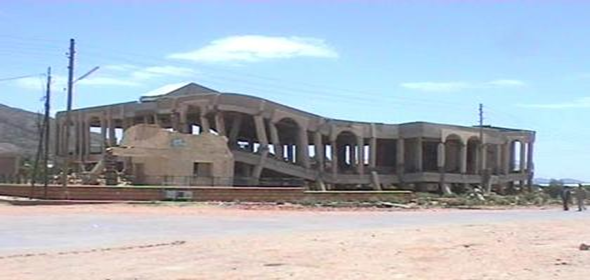
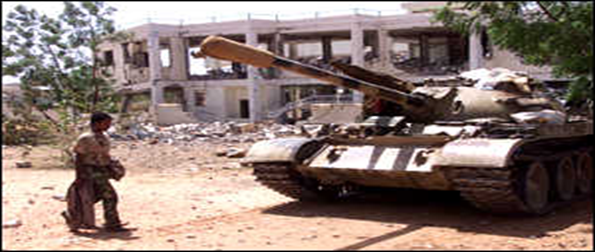
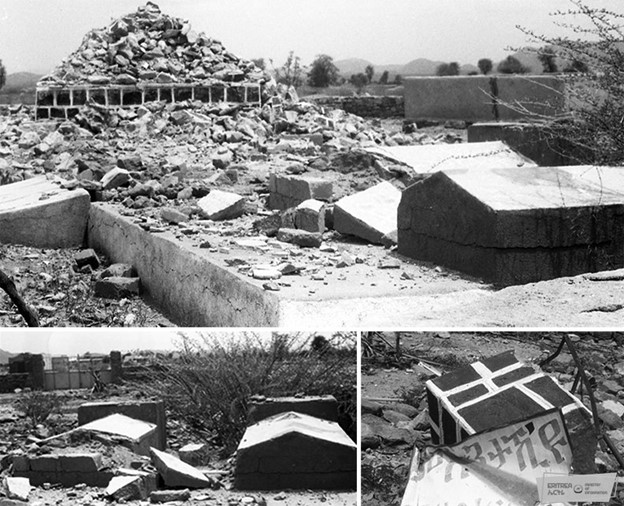
General Yohannes toiled to minimize the TPLF’s Army’s civilian killing, theft of public and private property, rape, and wanton destruction of infrastructure during the 1998-2000 border war. He may have forgotten it, but we would like to remind him that he would never get his bloody hands cleaned through false claims. In addition to the widespread rape, killing, and wanton looting of private property, here is a sample list of Eritrean private and public institutions that were purposely destroyed by the TPLF Army.
Hirgigo power plant.
Senafe Hospital
Senafe telecommunications building.
The Belew Kelew historical monument.
Barentu Hospital.
Berentu Gashsettit hotel.
Alighider Cotton Ginning Plant
Shambuko Maryters cemetery.
Looted close to half a million cattle and sold them in Tigray cattle markets.
Looted large-size irrigation infrastructure and generators.
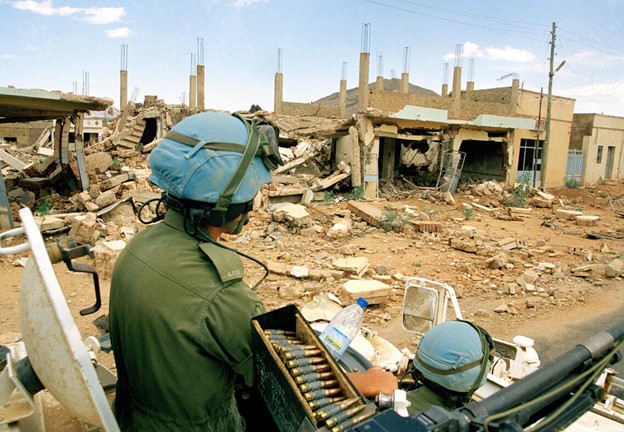
The above-listed sample private and public Eritrean institutions were not destroyed during an exchange of gunfire. They were purposely demolished by powerful dynamite. Below are a few pictures of some of the buildings destroyed by the TPLF army during the 1998-2000 border war.
A lie is TPLF’s modus operandi and General Yohannes may have tried to cover the sun with his lies. Fortunately, the evidence of the destruction, looting, theft, and rape that his army incurred during the 1998-2000 border war is still fresh in our minds. It would have been appropriate for him to apologize but that is not possible from a blood-thirsty war monger. The point is he should know that regardless of the injustices Eritreans suffered under backward Ethiopian successive rulers they will always get up and punch back. What goes around comes around.
Doha, Expo 2023: Eritrea has unveiled its dazzling pavilion at the International Horticultural Expo, transforming the spotlight onto its rich natural landscapes, diverse culture, and burgeoning business prospects. The inauguration ceremony held on Monday highlighted Eritrea’s commitment to sustainability and its pivotal role in the Horn of Africa.
The pavilion stands as a testament to Eritrea’s emerging economic stature, showcasing its environmental initiatives and efforts towards fostering a green economy. Offering a captivating glimpse into the country’s cultural heritage, the exhibit beckons visitors to explore Eritrea’s strategic position in the region and its promising avenues for investment and trade.
The event witnessed the esteemed presence of Eritrean Ambassador to Qatar, Ali Ibrahim Ahmed, along with HE Expo 2023 Doha Commissioner General, Ambassador Bader bin Omar al-Dafa, and Expo 2023 Doha Secretary-General Eng. Mohamed Ali al-Khouri. Diplomatic representatives and the Eritrean community in Qatar added fervor to the ceremony, signifying the collective enthusiasm for fostering global connections.
In his address, Ambassador Ali Ibrahim Ahmed commended Qatar’s exemplary efforts in hosting a spectacular international expo. He underscored Eritrea’s dedication to advancing agricultural and industrial sectors through the adoption of smart technologies, aiming to enhance the quality of life for its citizens.
Highlighting the expo’s significance, Ambassador al-Dafa emphasized the platform’s potential to strengthen partnerships, urging collaborations between Eritrea and various participating nations, financial institutions, and investment funds. The expo, he noted, presents a diverse array of opportunities for mutual growth and development.
Eritrea’s participation underscores the country’s commitment to exploring and seizing opportunities for global cooperation, establishing itself as a beacon of potential in Africa. With its vibrant display at Expo 2023, Eritrea invites the world to discover its untapped potential in economic opportunities, artistic expressions, cultural heritage, and breathtaking natural beauty.
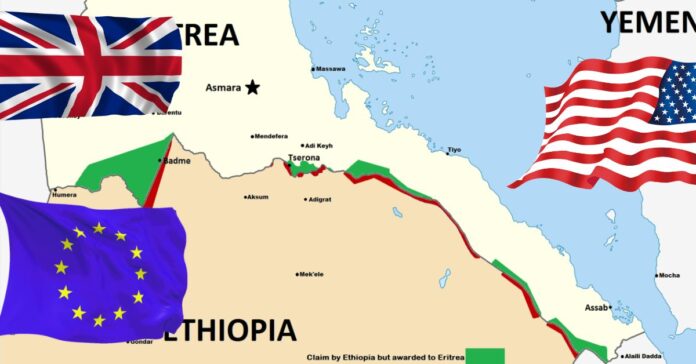
Editors Note:-Entangled within a tumultuous history of conflict and shifting alliances, the narrative between Ethiopia and Eritrea echoes the echoes of a border war that erupted in May 1998, reaching its formal conclusion through the Algiers Agreement of December 2000. However, two decades since that pivotal accord, the promised peace remains elusive, embroiling the region in a persistent state of ‘no-war, no-peace’. This article navigates the convoluted path of broken agreements, geopolitical complexities, and the intricacies of recent events, shedding light on the contradictory stances of key global players, such as the United States, the European Union, and the United Kingdom. It delves into the recent peace treaty, the impact of TPLF (Tigray Peoples Liberation Front), and the arduous journey toward reconciliation, all amid the enduring quest for stability and resolution in the horn of Africa
BACKGROUND
The Algiers agreement was a peace agreement between Eritrea and Ethiopia, signed in December 2000 to formally end the border war that started in May 1998. The signing ceremony was attended by top officials from the United States, the European Union, the United Nations, and the African Union. The agreement created a boundary commission to demarcate the border and a claims commission to assess the damages caused by the war.
After hearing the arguments of the Ethiopian and Eritrean representatives, the boundary commission gave its final and binding verdict on 13 April 2002. Initially, Ethiopia claimed it got what it wanted and warned Eritrea to accept the ruling. However, Ethiopia later backtracked and rejected the binding and final boundary ruling. The late Prime Minister of Ethiopia, Meles Zenawi, called the boundary commission’s decision unjust and an illegal ruling. Despite repeated warnings from the boundary commission, the late Prime Minister continued to resettle Ethiopians on Sovereign Eritrean Territories, and the demarcation of the border was blocked by Ethiopia. Tired of Ethiopia’s continuous obstructions of its work to put pillars on the ground, the boundary commission virtually demarcated the border and ended its mission. Consequently, a no-war, no-peace situation persisted between the two countries for 20 years.
In May 2018, the Tigray Peoples Liberation Front (TPLF), which held power in Ethiopia for 27 years, was pressured by the Amhara and Oromo youth revolt to leave power and return to Tigray. The Ethiopian government, under the leadership of new Prime Minister Abiy Ahmed, announced on 5 June 2018 that it fully accepted the Terms of the Algiers Agreement and the subsequent verdict of the boundary commission. However, the withdrawal of the Ethiopian Army from areas awarded to Eritrea and subsequent demarcation of the border were again blocked by the Tigray Peoples Liberation Front. In the middle of the stalemate, on 3–4 November 2020, forces loyal to the Tigray People’s Liberation Front (TPLF) launched attacks on the Ethiopian National Defense Force (ENDF) Northern Command headquarters in Mekelle and bases in Adigrat, Agula, Dansha, and Sero in the Tigray Region, marking the beginning of the Tigray War. Also, the TPLF launched more than a dozen missile attacks on the world heritage site capital city of Eritrea, Asmara. The actions of the TPLF created a clear threat to the national security and sovereignty of Eritrea, and Eritrea supported the Federal Army in three rounds of its wars with the TPLF Army.
Following the devastating defeat that the TPLF sustained in the third round of the offensive launched by the Ethiopian Federal Army, supported by Eritrea, the TPLF and the Ethiopian Federal government signed a peace agreement in Pretoria, South Africa. In the peace treaty between the government of Ethiopia and the Tigray People’s Liberation Front (TPLF) that was signed on 2nd November 2022, the parties agreed to cease hostilities and resolve their differences peacefully. Accordingly, the Eritrean Army withdrew from Tigray to the boundary line delimited and virtually demarcated by the Ethiopia and Eritrea Boundary Commission.
THE PRESS RELEASES OF THE UNITED STATES, THE EUROPEAN UNION, AND THE UNITED KINGDOM
On the 21st anniversary of the signing of the Algiers agreement, December 12, 2023, the United States not only reiterated its support for the Algiers agreement but also implored both countries to respect the borders as established by the Boundary Commission. The European Union and the United Kingdom also released similar statements.
CONTRADICTIONS
In many prior press releases, especially when representatives of the United States, the European Union, and the United Kingdom return from their repetitive visits to Tigray, it has become almost a fashion that they demand the Eritrean Army withdraw from Tigray (Ethiopia). However, in all their written and verbal communication, they do not mention from where in Tigray the Eritrean army needs to withdraw. Although markings were not made on the ground, due to TPLF’s refusal, the Ethiopia and Eritrea boundary commission virtually demarcated the boundary. Accordingly, it is easy to read the coordinates based on the Global Positioning System (GPS) and identify the Ethiopian villages from Tigray that are allegedly occupied by Eritrea. Instead, the representatives of the US, the European Union, and the United Kingdom have chosen to release contradictory verbal and written statements that emboldened the TPLF to demand the withdrawal of the Eritrean Army from sovereign Eritrean territories. TPLF rejects the Algiers Agreement, the boundary commission’s decisions, and still aspires to re-occupy sovereign Eritrean territories. Thus, knowingly or unknowingly, the representatives of the United States, the European Union, and the United Kingdom are adding fuel to the fire.
CONCLUSION
Although they were the guarantors of the Algiers agreement and committed to punishing the party that violated the agreement, in the past twenty years, the United States, The European Union, and The United Kingdom did not pressure the TPLF-led Ethiopian government to accept the final and binding boundary decision and allow its implementation. Instead, they turned a blind eye to its intransigence and gave immense political, military, and economic support to the then TPLF-led Ethiopian Government and conspired to put stringent unjust, and illegal UN sanctions on Eritrea. There is no doubt that the misguided policies of the United States, The European Union, and The United Kingdom prolonged the suffering of the people of the two countries and destabilized the whole region. Due to its smaller population size, Eritrea was forced to prolong the National Service Program beyond the initially planned 18 months. It is true that no one lives in the past, but it would be a great mistake to forget it.
If there is an honest desire to bring peace between Ethiopia and Eritrea, now is the right time for the United States, The European Union, and The United Kingdom to redeem themselves. First, they should stop making unverified claims about the current positioning of the Eritrean Army, and second, they should demand the immediate demarcation of the border in line with the Algiers agreement and subsequent final and binding boundary decision. There is no other solution to the problem.
Victory to the Masses and Eternal Glory to Our Martyrs.
“The people of Sudan have suffered immensely, and this revolution will not be complete unless we recognize the immense grievances of those who have been systematically targeted by those who were responsible for their protection.” The peace process with the Sudanese armed movements is the “main priority” for the transitional government, according to Abdalla Hamdok’s recent words,
This article will focus on the root causes of the conflict and why the transitional military-civilian government has failed to achieve the highly anticipated transition to civilian government and constitutional amendments that would accommodate the rights of minorities and political tolerance, securing an environment for civic societies to flourish. It will conclude with recommendations to both parties in the conflict and the role regional and international actors must play to bring about peace and stability in the country.
Key Words: Military coups, Sudan, Civil wars, Economy, Religion, regional Security, Refugees, Democracy, civilian government
Introduction
In 2019, public outcry against the regime of Omar al Bashir brought an end to the dictatorial regime and suffering of the Sudanese people by overthrowing the government and the final arrest of the president and his inner entourage/partners in crime. However, to the demise of many, especially the Sudanese people and surrounding nations, the movement failed to achieve its intended result, as many claim the revolution was hijacked by the remnants of the old regime, which are composed of the military elite, para-military groups, security apparatus of the old government as well as Islamic groups who were in hibernation for around four years since the popular manifestation and outcry.
Despite various diplomatic and mediation efforts by regional and international actors, the fighting between the Sudan Army Force (SAF) and Rapid Support Force (RSF) has shown no signs of abating. Multiple ceasefire agreements have repeatedly been violated, and civilians continue to be caught in the middle. As of 5 July 2023, at least 1,136 people have reportedly been killed and 12,000 injured, according to Sudan’s Federal Ministry of Health (Global Centre for the Responsibility to Protect, report, 31 August 2023).
The actual figures are estimated to be much higher because these totals only reflect data collected from hospitals. The current conflict has also triggered an alarming escalation in inter-communal and ethnically motivated violence in various parts of the country, particularly in the Darfur region (Global Centre for the Responsibility to Protect, report, 31 August 2023).
Insight into the history of the creation of Modern Sudan:
With its colossal land and diversified nationals, Sudan is the product of its colonial heritage. Sudan, the land of black people, was named an independent country in January 1956 by the British (Jhon Ryle, Justin Willis, Suliman Baldo, Jok Madut Jok, 2012). The name Sudan started to resonate at the beginning of the 1930s in Omdurman Khartoum when the elites from the northern part of the country started fighting against the hegemony and control of the Egyptians and wanted to free themselves and create an independent country. Most people from the north were scattered along the Nile River, maintained a significant relationship with the Ottoman-Egyptian empire, and subsequently collaborated with the British. Though the British initially wanted to avoid creating a new country with such vast territories, they later changed their strategy to control and contain Egypt and the area around the Red Sea.
Genesis to the cause of the current crisis:
The crisis in Sudan is deep-rooted and goes back to its creation as an independent country. The British policy was merely focused on developing the North and tried to control the southern and western parts of the country as a source of resources. Hence, rather than educating and integrating people in the periphery into the political system of the newly formed state, they alienated them. The creation of native and condominium administrations alienated the people from the periphery and inflamed hatred and enmity between the center and periphery, which has persisted until now. The lack of an inclusive political and socio-economic environment has contributed significantly to civil war, demand for greater autonomy to the peripheries, and, in some, the desire for secession (Jhon Ryle, Justin Willis, Suliman Baldo, Jok Madut Jok, 2012).
Diversified nationalities and religious backgrounds made Sudan a center of tension for contentions, and successive governments used coercive and discriminatory methods to silence the voice of many alienated and categorically marginalized communities, particularly from the south and west, who are dark-skinned.
The root causes of the protracted civil war and intrastate conflict in Sudan are many; however, for the sake of the article, I shall focus on some of the most:
Political ( Center-periphery): The political power in Sudan has been under the Northerners since its independence in 1956. The British created elites in the north to administer the periphery and extract resources from there. These privileges from the colonial rulers persisted, and the Elite in the north never bothered to share them with others and continued the colonial mechanism of administration, which was divided and ruled (Jhon Ryle, Justin Willis, Suliman Baldo, Jok Madut Jok, 2012). Moreover, successive governments in Sudan have never understood the culture and requests of the periphery and never taken severe initiatives to develop and integrate the rest of the country. Furthermore, they have never tried to share the wealth of the edges, which was and is the bread bucket and primary source of national income.
Since its independence, the country has experienced the most military coups in Africa, around 16 times (Jhon Ryle, Justin Willis, Suliman Baldo, Jok Madut Jok, 2012); some were successful, and others failed. It’s clear that the current crisis is far from over, and underlying issues still require attention. Until these root causes are resolved, the problems will continue to persist. Without addressing these root causes, the problems will persist, and the consequences could be dire. The prospect of a widening political divide is unsettling, particularly with localized militias and competing factions vying for their respective interests.
Culture and Religion: The dangerous projects of Arabization and institutional Islamization of the state, which the Sudanese political authorities worked tirelessly for years to implement and systematically diffuse at different times on the people who are naturally non-Arab fed the resistance of the Southern communities, which the central power has harshly repressed. For instance, the declaration by successive governments to make the Sharia law the state law was divisive and discriminative because it completely erased and disregarded the religious rights of those who were not Muslim (Jhon Ryle, Justin Willis, Suliman Baldo, Jok Madut Jok, 2012). In addition to the ethnic and religious cleavages, a socio-economic rift separated the more developed North from the marginalized South and West.
Economical: Sudan has suffered an economic crisis since its emancipation from the British. The financial problem that has plagued Sudan has caused widespread hardship for its citizens. The successive governments have been widely criticized for their poor management of finances and for allowing a specific group to accumulate wealth, which has severely impacted marginalized communities. The areas experiencing conflicts for many years are the south and the west, the richest in natural resources, oil, water, agricultural products, live stocks, gold, and uranium. The investment by the repeated governments of Sudan is barely visible in these regions compared to the other cities in the North (Jhon Ryle, Justin Willis, Suliman Baldo, Jok Madut Jok, 2012). Infrastructure such as roads, hospitals, schools, and other public services are scarce; if there are, they are poorly managed and few. Hence, all the civil wars in Sudan are more or less related and have original traces of an economic nature; as such, the regime of Bashir was brought down from power when bread prices skyrocketed, and people came out to the streets.
External Interference and Geopolitical Interests: One with a deep understanding of geopolitics and international relations could quickly understand what is happening in Sudan and have prints of external interference given the country’s geo-strategic importance. Before the secession of South Sudan, the Republic of Sudan was the largest country in Africa, bordering several countries in the region. The protracted intra-state conflicts were at the peripheries, directly affecting the regional countries and forcing the neighboring countries to interfere in the dispute directly or indirectly. Several countries in the region aggravated the crisis in Sudan by supporting insurgent factions in the country for their national interests. This could be observed in the current war between two generals, where they are obtaining political, economic, and military support from external actors.
The overthrow of the regime
For the first time in many years, Sudanese youth and women, in particular, have shown how they could overthrow a regime created and cemented under a military and security apparatus in power through organized and dedicated civil societies. The government of Omer Bashir had developed a habit of deceiving and compromising to remain in power for many years. Sometimes, religion was a means of unifying force to rule the country, and at times, it used a divided and rule style to crush and destroy any uprising by siding and arming militias (Jhon Ryle, Justin Willis, Suliman Baldo, Jok Madut Jok, 2012). Moreover, the regime had also used brutal tactics such as abducting and killing and acts of terror against opposition parties and civil societies perceived and suspected as dangerous to his leadership. Despite all the effort exerted and invested by the regime and its military as well as intelligence apparatus, the people were able to bring down the regime with their persistent demand and united front.
The creation of transitionalmilitary/civilian government:
The transitional government comprised the military, several factions of political parties, and civil societies, which named themselves Front for Freedom. They were responsible for guiding the country through a transition period and preparing for a democratic election.
The youth and women who came to the streets of Khartoum in 2019 were not asking for a transitional government run by remnants of the old regime; instead, their demand was democracy and civilian rule. However, it was hijacked by the military led by General Burhan and the para-military group RSF led by General Himeti. These two military generals orchestrated the presidential coup and ultimately created the transitional military council denounced and rejected by the people who were core to the revolution.
The Khartoum massacre was strong evidence that the military apparatuses were not ready to give up their power. Substantial external pressure and the credit of the continuous peaceful but determined call organized by civil societies brought the army leaders to the negotiating table to create a military-civilian transitional government. However, it was not what the people had been asked. Many believe that the force for change and freedom betrayed the revolution after agreeing with the military on establishing the transitional government.
Moreover, the agreements with the IMF to cancel the debt, which obliged the government to take draconian reforms and privatization of the economy, resulted in the complete mess of the country’s economic crisis (IMF Country Report No. 21/82, Aprile 2021). Such a request by the IMF aggravated the country’s situation and became an additional burden to the already fragile government of Abdela Hamdock. The support for Hamdock faded, and the military leaders took advantage of the weak government and made a coup by refusing to transfer power to the civilians.
External pressure was feeble because many countries had different interests in the country where civilian movements were left alone in the cold. Observing the situation, the military grape to power increased, the civil society movement diminished, and mistrust grew among them, ultimately profiting the military.
However, the crisis did not end there, as everyone expected, and things started to unfold slowly, resulting in a power struggle between the two Generals.
The coup by General Bruhan and the failure of the civilian parts to establish a united front:
General al Burhan, supported by military commanders and his deputy general Himeti, head of the RSF, attacked the residential palace of the Prime minister and took him hostage. He freed the prime minister after several indirect talks and international and regional pressure. To the surprise of many, the prime minister agreed to create a new government and inked a deal with the military. However, all the nominated ministers refused to collaborate with the military-installed government of Hamdok, which was a slap in the face. Rejected and humiliated by all parties, Mr. Hamdok resigned and left the country, leaving behind him a mess.
Until the outbreak of the conflict between the SAF led by Burhan and the RSF led by his deputy leader of RSF, they tried to lead the country. Looking back to that time, both generals were accumulating forces and looking for allies inside the country and external powers to be the upcoming leader that leads the nation.
Soon after the agreement between civil societies and several political factions, some from the last regime agreed to create a transitional government and mend the RSF, among others. The external actors designed these deals with a rush and lacked inclusiveness and consideration of the threats and uncertainty of warring parties.
The fight between the partners in crime:
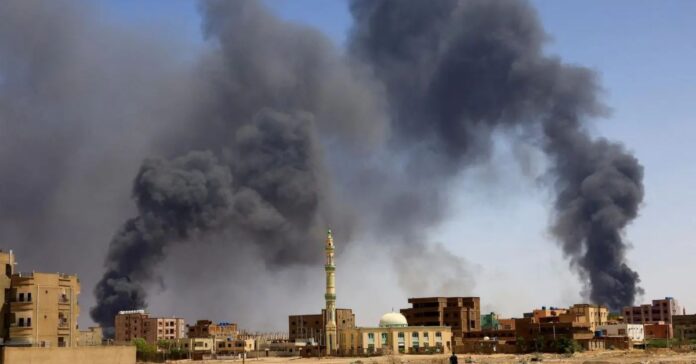
The recent conflict in Sudan has brought to light the issue of power struggles and their impact on the population. Despite months of optimism for a peaceful and stable transition to a civilian government, the sudden turn of events has left many disillusioned and fearful for their safety. The sound of military planes and heavy weaponry in the heart of the nation’s capital is not something anyone would have anticipated waking up to. The Generals involved were competing for influence and control, but the violent nature of their dispute led to devastating consequences for the people of Sudan (De Waal, Alex, April 2023). This, unfortunately, is not an isolated incident, as many military coups in Africa have been driven by the desire to control resources and money.
It is deeply concerning to discover that the army and the RSF have disregarded the appeals to halt their fighting despite the recent agreement brokered by the KSA and the USA in Jeddah (US Department of State Bureau of African Affairs, May 11, 2023). Both parties have never respected several cease-fire agreements and promises. Eyewitnesses reported to Aljazeera English news on 03/06/2023 that both sides were amassing troops and heavy weaponry around the city, and sadly, the war resumed after a religious feast.
To make it worse, the war started in the capital, and the surrounding territories have expanded to the west and southern Kordofan, where different insurgent groups are fighting each other. According to the UN, some horrifying reports are coming from Darfur that a grave of human bodies killed by RSF has been discovered. Based on the interviews with the people who fled from the areas and arrived in Chad, the RSF killed all the male population and raped women. Villages were wiped out and burned to the ground, and gunmen abducted many. The RSF denied the action and blamed the SAF.
According to the facts on the ground, the generals have not exhausted their capacities; therefore, they seem to continue to fight until one of them concedes a defeat or at least tries to have the upper hand on the negotiating table, which is far from the site.
Though both the military leaders proclaim and loudly state that they are fighting to install a democratic government, no one takes them seriously and buys it because of their history. They ousted and made a military coup in 2021, days before handing over the leadership of the sovereign council to the civilian prime minister, and both now state that they are fighting for democracy. The main reasons behind the fighting among the generals are the following:
The first is about losing economic power. Both military generals control a vast amount of the Sudanese economy, from financial institutions to mineral resources (De Waal, Alex, April 2023). Moreover, they have autonomous military cartels, which are state-affiliated through repressive actions that control the state economy in return, obstructing and hindering any force threatening their interest. That is why the military generals took power soon after the regime’s overthrow, held power, and did not let it go.
Second, the civilian wants the power to be exclusively under a civilian democratic government (Abdi Latif Dahir, December 05, 22, New York Times). In addition, the paramilitary group RSF was quickly folded with the regular national Sudanese army, which, in turn, is under civilian leadership. The military generals and remnants of the old regime ultimately rejected and refused to accept this.
Thirdly, both generals played a significant role in the war of Darfur and were part of the Omer al Bashir regime accused of genocide (De Waal, Alex, April 2023). Hence, staying in power for them is about protecting themselves from any consequences appearing in international criminal court should the civilian leadership come to power.
Conclusion and Recommendations
According to the UN (https://news.un.org/en/story/2023/09/1140347), the number of displaced people has been increasing tremendously since the outbreak of the war. Currently, around 3.3 million people have left their homes and fled. About 2.2 million are internally displaced; the remaining escaped to Egypt, Chad, Ethiopia, and South Sudan (UN news https://news.un.org/en/story/2023/09/1140347).
Sudan is an important country in the region due to its large territory, which borders several countries. If the fighting prolongs and develops into protracted war, it could spill over to the neighboring countries currently overwhelmed by the overflow of refugees and displaced communities. The cross-border flow of thousands of refugees to the already poor and unstable neighboring countries might cause insecurity concerns and instability in the region and beyond.
Both parties need to come to a compromise and end the violence, prioritizing the safety and well-being of their citizens. It is of utmost importance that humanitarian aid is allowed to reach those in dire need, and a resolution must be found to terminate this ongoing conflict. The situation calls for immediate action and collaboration from all parties involved to alleviate the people’s suffering and bring about lasting peace. They must protect the people and the country rather than be a source of chaos, killings, rape, looting, and other irresponsible acts of crime against their people. The generals need to listen to what the people are asking: they no longer want to be ruled by the military. They want civilian rule and democratic governments. It is incumbent upon all involved parties to convene and pursue a collaborative approach to bring peace and security rather than engage in conflict.
Negotiations and summits alone won’t suffice to establish lasting peace and security for the people and the country. It is crucial for regional organizations, such as IGAD, the African Union, the Arab League, and the United Nations, and other external actors, such as the USA, to collaborate and bring the conflicting factions to the negotiating table while ensuring strict adherence to the cease-fire. Moreover, countries within the region must avoid taking sides in the crisis as it could further escalate and exacerbate the situation.
Acknowledging the obstacles nations hosting refugees encounter in meeting their fundamental requirements and guaranteeing a secure and respectable living space is important. The international community’s assistance is pivotal in aiding these countries to surmount these challenges and offer the refugees a protected haven. Additionally, these nations must refrain from simply sealing their borders and confining the refugees to camps, opting instead to foster an inclusive atmosphere that accommodates and integrates them into society.
References,
Abdi Latif Dahir signed a Deal on December 05, 22, New York Times, Sudan Military and Pro-democracy Coalition https://www.nytimes.com/2022/12/05/world/africa/sudan-military-democracy-coalition-deal.html.
Crisis Group Podacst, 02, February 2023, A Return to Civilian Rule in Sudan?https://www.crisisgroup.org/africa/horn-africa/sudan/return-civilian-rule-sudan
De Waal, Alex, April 2023, Sudan is tearing itself apart, and Washington lost its capacity to help,
IMF, Country, Report, No.21/82, April 2021, Sudan: First review and press release by the director general,
Jessica Larsen and Finn Stepputat, Gulf state rivalries in the Horn of Africa: TIME FOR A RED SEA POLICY? Danish Institute for International Studies (2019)
John Ryle, Justin Willis, Suliman Baldo, Jok Madut Jok, 2012, The Handbook of Sudan,
Kassahun Berhanu, A Conflicts in the Horn of Africa and Implications for Regional Security: The Horn of Africa Book Subtitle: Intra-State and Inter-State Conflicts and Security, Redie Bereketeab, 2012
Knopf, Kate Almquist. 2016. ‘ending South Sudan’s civil war, council on foreign Relations, council special report No. 77
Peter Woodward, The IGAD and Regional Relations in the Horn of Africa: The Horn of Africa: Intra-State and Inter-State Conflicts and Security, 2012
RUDINCOVÁ Kateřina, 2018, PP. 169-192, AFRICAN SOLUTION TO AFRICAN PROBLEMS: THE PROBLEM OF AFRICA’S DYSFUNCTIONAL STATES, Vol. 56 (2018), at https://www.jstor.org/stable/26661999
Sally Healy, Lost Opportunities in the Horn of Africa Conflicts Connect and Peace Agreements Unravel Horn of Africa: Royal Institute of International Affairs, 2008
Sally Healy, Hostage to Conflict Prospects for Building Regional Economic Cooperation in the Horn of Africa A Chatham House Report November 2011
Sally Healy, seeking peace and security in the Horn of Africa: the contribution of the Inter-Governmental Authority on Development, Chatham House The Royal Institute of International Affairs, 2011
Ulrich Mans, The New War in Darfur: African Affairs, Apr. 2004, Vol. 103, No. 411 (Apr. 2004), pp. 291-294: Oxford University Press on behalf of The Royal African Society Stable URL: https://www.jstor.org/stable/351861
UN NEWS, 4 September 2023, Humanitarian Aid; Urgent call for $1 billion to support millions fleeing Sudan conflict https://news.un.org/en/story/2023/09/1140347, accessed, 05/09/2023