

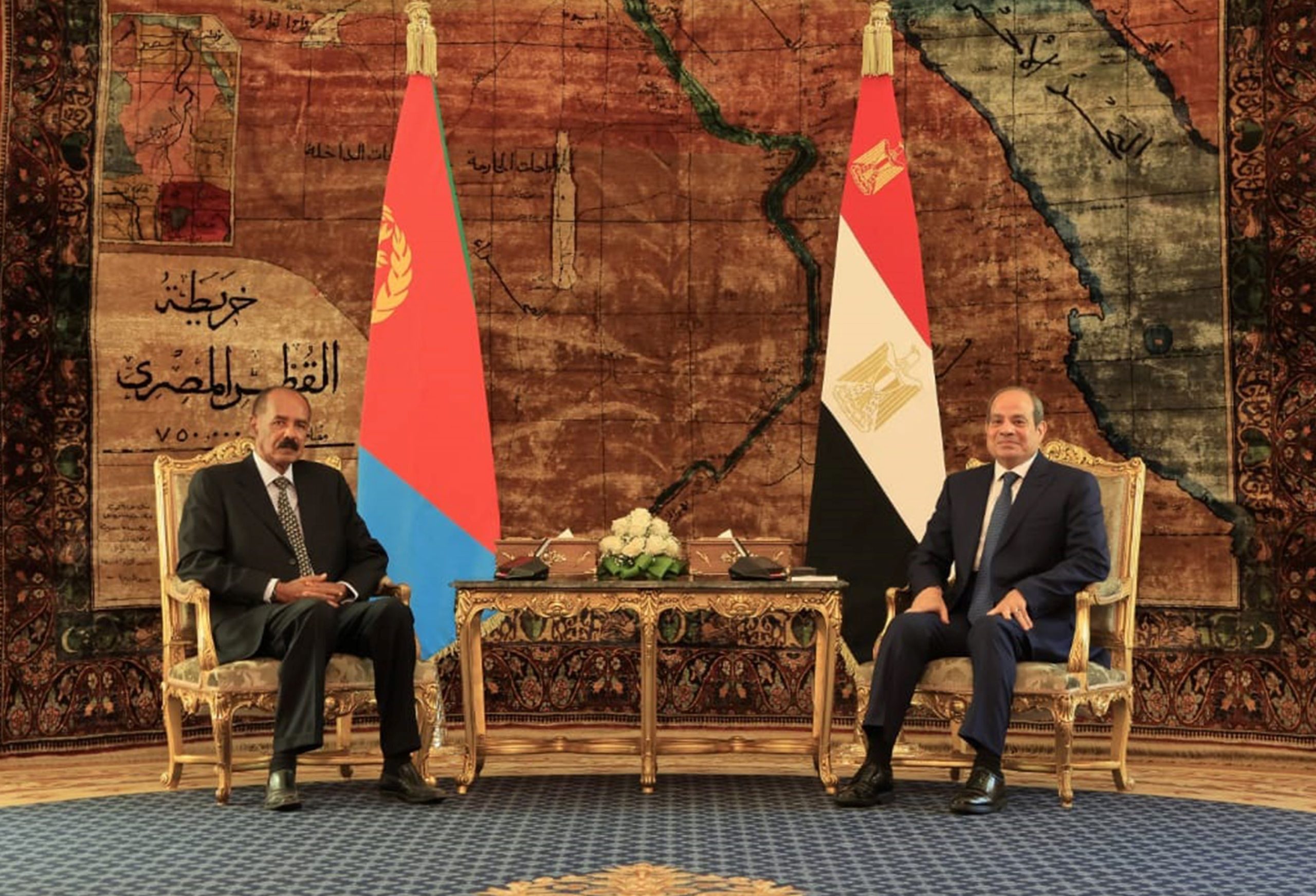
President Isaias Afwerki arrived in Cairo on the evening of June 7, 2026, for a three-day official visit at the invitation of Egyptian President Abdel Fattah el-Sisi. The summit opened on June 8 with an expanded bilateral session followed by a one-on-one meeting — a format that signals the depth and seriousness of the relationship rather than a routine diplomatic courtesy. Egypt’s presidency confirmed that discussions covered the full architecture of bilateral ties, with specific focus on economic and trade cooperation, the Horn of Africa, the Sudan conflict, and the security of the Red Sea. Eritrean Foreign Minister Osman Saleh and Egyptian Foreign Minister Badr Abdelatty were both present throughout the talks.
The two presidents agreed to continue close coordination and consultation on regional peace and stability, describing the Horn of Africa as integral to Egypt’s national security and affirming that both nations bear a shared responsibility for the outcome of events across the region. El-Sisi formally reaffirmed Egypt’s support for Eritrea’s sovereignty and territorial integrity, while Afwerki praised Egypt’s engagement with Eritrea’s development priorities and expressed his government’s commitment to deepening bilateral cooperation. The joint framing was deliberate: this is not an ad-hoc partnership but a strategic architecture being built layer by layer, meeting after meeting.
This summit is the latest in a rapid sequence of high-level engagements that have moved the Egypt-Eritrea relationship from political alignment into operational reality. In late October 2025, President Isaias conducted a five-day working visit to Cairo, during which the two leaders held extensive talks on Sudan’s instability, Somalia’s security, and Red Sea governance. That visit also included Eritrea’s participation in the inauguration of Egypt’s Grand Egyptian Museum, reinforcing the cultural and historical dimension of bilateral ties alongside the strategic ones.
In May 2026, a high-powered Egyptian delegation — led jointly by Foreign Minister Badr Abdelatty and Transport Minister Kamel al-Wazir — traveled to Asmara and signed a landmark Marine Transport Cooperation Agreement establishing a direct cargo shipping route between Egyptian and Eritrean Red Sea ports. An Egyptian-Eritrean Business Forum was held alongside the signing, with discussions covering joint investments in mining, transport infrastructure, pharmaceuticals, and fisheries — sectors that align directly with Eritrea’s national development priorities. Both governments issued a coordinated declaration that the security of the Red Sea is the exclusive responsibility of its littoral states, rejecting the involvement of outside actors in governing the waterway.
The June 2026 Cairo summit is the capstone of this accelerating cycle, translating political declarations into operational programs. According to regional analysis following the June 8 meeting, the two sides agreed to launch concrete programs in marine resources development, port modernization, and logistical connectivity — moving the bilateral relationship from framework agreements into implementation.
The Red Sea Doctrine
The clearest and most consequential outcome of this summit is the restatement and institutionalization of a shared Red Sea doctrine. Both leaders agreed that littoral states bear the primary and exclusive responsibility for the governance, security, and freedom of navigation of the Red Sea. El-Sisi said the security of the Red Sea is an inherent responsibility of coastal states and that stability in the waterway is a cornerstone of global trade and regional security. Afwerki voiced full agreement, consistent with his long-standing public position.
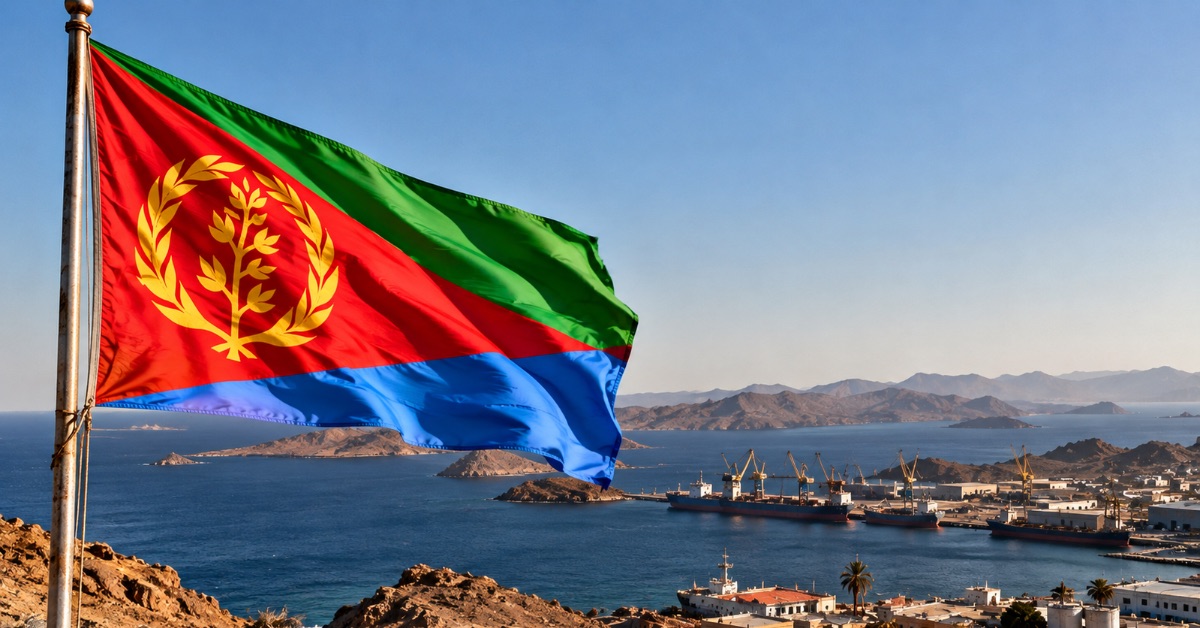
This shared doctrine carries significant weight in June 2026. Houthi attacks on commercial shipping have continued to disrupt traffic through the Bab el-Mandeb strait, external military powers maintain competing naval presences along the corridor, and pressure is building from multiple directions over who holds legitimate authority in the region. Eritrea controls approximately 1,200 kilometers of Red Sea coastline, including the port of Assab near Bab el-Mandeb — one of the most strategically consequential geographic positions on the planet. When Cairo and Asmara jointly declare that external actors have no legitimate governance role in the Red Sea, that declaration carries the weight of two sovereign nations who between them anchor much of the waterway’s western shore.
The Sudan Dimension
Sudan’s ongoing civil war formed a significant part of the Cairo discussions. Both presidents reaffirmed their support for Sudan’s unity, sovereignty, and territorial integrity, stressing the urgent need to end the armed conflict and restore stability. El-Sisi reiterated Egypt’s opposition to any fragmentation of Sudan or undermining of its national institutions. Isaias, who has consistently opposed external military intervention in Sudan, emphasized Eritrea’s solidarity with the Sudanese people and the counterproductive nature of foreign interference in resolving the conflict. Sudan shares borders with both Egypt and Eritrea, and its continued instability poses direct security and humanitarian risks to both countries, making coordination essential rather than optional.
Ethiopia’s Shadow Over the Summit
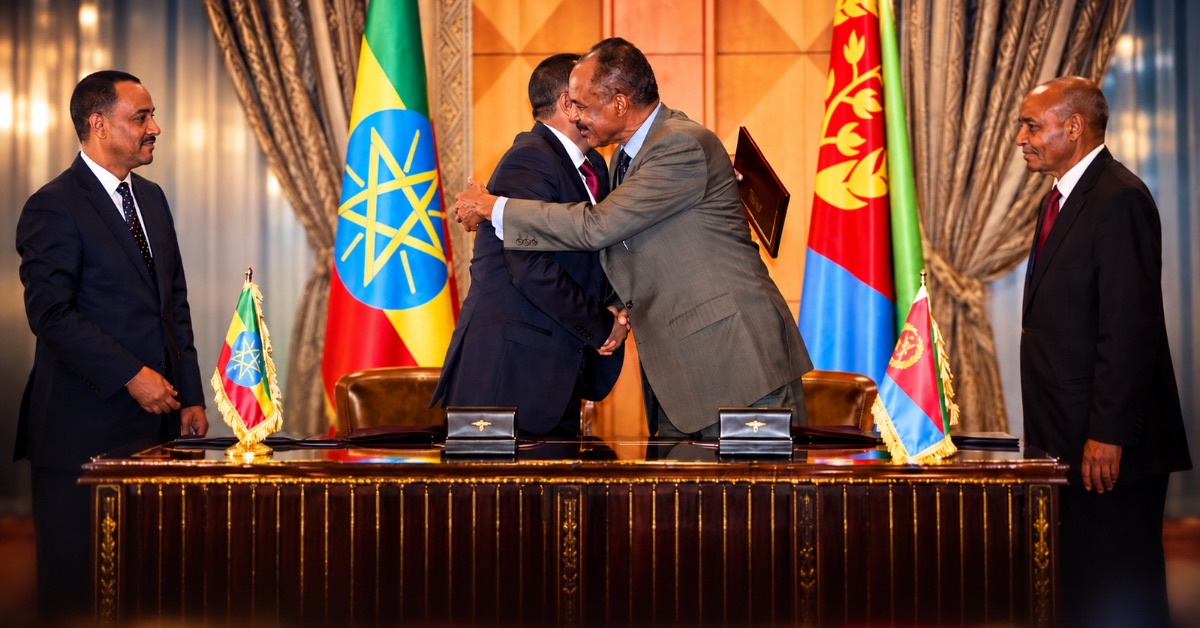
No official communiqué from the June summit named Ethiopia directly, but the country’s trajectory forms the unavoidable subtext of every strategic conversation between Cairo and Asmara. Ethiopia is the world’s largest landlocked nation and has pursued Red Sea access with increasing urgency and public aggression. Ethiopian Prime Minister Abiy Ahmed declared publicly in March 2026 that the country “will not remain landlocked,” while military forces were reported massing near the Eritrea-Ethiopia border, raising fears of renewed conflict. Ethiopian military officials have framed access to the Red Sea — including through Eritrea’s port of Assab — as a matter of strategic necessity and national survival.
Ethiopia’s earlier Memorandum of Understanding with Somaliland — which offered port access and naval basing in exchange for diplomatic recognition — stalled under regional pressure, but Addis Ababa has not abandoned its maritime ambitions. In early 2026, Ethiopia’s foreign minister sent a letter to Eritrea accusing Asmara of stationing troops on Ethiopian territory, a charge Eritrea flatly rejected. The New York Times reported in March 2026 that both nations have moved forces toward their shared border. Against this backdrop, the signing of a direct Egypt-Eritrea shipping route in May, followed by a presidential summit in June affirming joint Red Sea governance principles, carries a clear strategic signal: Eritrea is not isolated, and the rules of the Red Sea are being set by its coastal states, not by landlocked aspirants.
The Egypt-Eritrea-Somalia alignment, formally established in a trilateral summit held in Asmara in October 2024, has deepened steadily since then. That summit produced a joint declaration committing all three nations to respect for sovereignty and territorial integrity, opposition to external interference, and coordinated support for Somalia’s security and stability. Egypt has since deployed approximately 1,100 troops to Somalia as part of the African Union’s stability mission, operationalizing the security cooperation pledged at Asmara. The trilateral framework has emerged as the primary counterweight to Ethiopian expansionism and to external actors — including Israel, whose recognition of Somaliland in December 2024 drew sharp condemnation from all three governments.
Washington and the Sanctions Variable
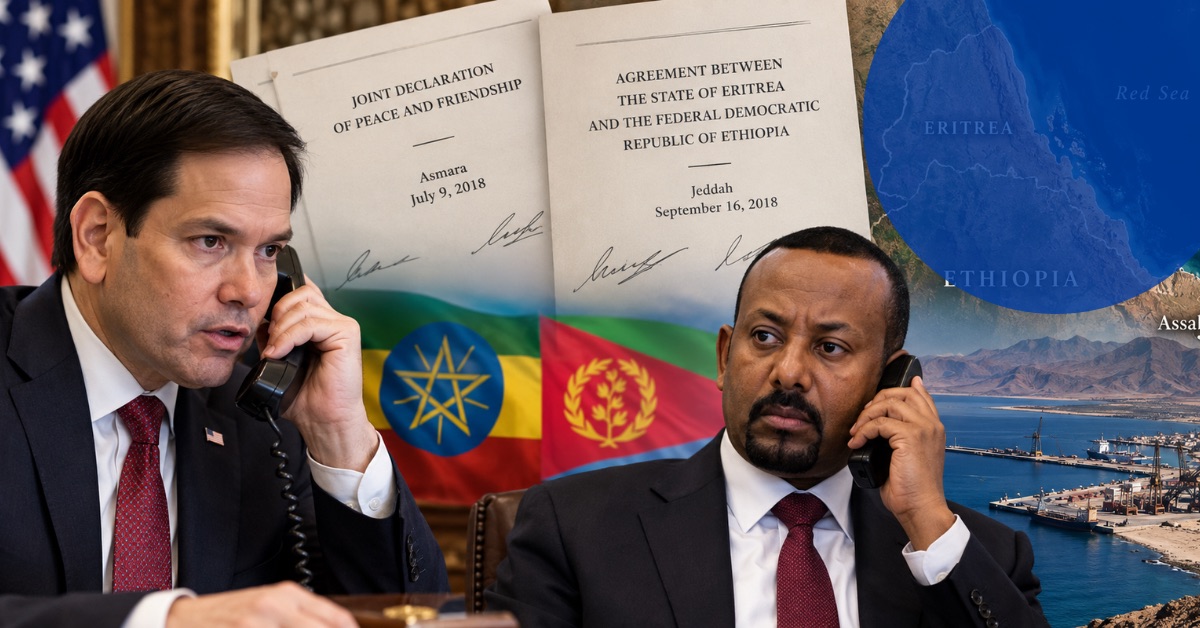
A significant external variable entered the picture in April 2026, when the Wall Street Journal reported that U.S. Special Envoy Massad Boulos was pursuing normalized relations with Eritrea, including discussions about easing long-standing sanctions. Eritrea’s information ministry welcomed the reports in May, describing existing U.S. sanctions as “illegal and unilateral” measures that should be lifted as a correction of “misguided policies”. Current U.S. sanctions on Eritrea stem from the country’s role in the Tigray War and human rights concerns, and have remained in place even after U.N. sanctions tied to alleged Al-Shabaab support were lifted in 2018.
The Trump administration’s apparent interest in normalizing relations with Asmara reflects a pragmatic recalculation of Red Sea geopolitics rather than an ideological shift. Eritrea’s coastline and Assab’s proximity to Bab el-Mandeb give it irreplaceable strategic value at a moment when Washington is focused on freedom of navigation and Houthi disruption. If sanctions relief materializes, it would expand Eritrea’s diplomatic and economic room to maneuver — not as a concession extracted from Washington, but as recognition of geographic and geopolitical reality. Foreign policy analysts at the American Enterprise Institute have warned against lifting sanctions, arguing it would cede strategic leverage, though such arguments reflect a Washington-centric view that discounts Eritrea’s sovereign agency.
Economic Integration as Strategic Depth
Beyond security, the Egypt-Eritrea relationship is building an economic foundation designed to give the partnership durability. The May 2026 Marine Transport Agreement creates a direct shipping route that reduces Eritrea’s logistical dependence on third-party infrastructure and connects its ports directly to a major regional economy. Egyptian officials signaled readiness to transfer expertise in railways, ports, and maritime logistics to support bilateral economic integration. Business forum discussions in Asmara covered pharmaceuticals, mining, fisheries, and transport infrastructure — all sectors where Egyptian capital and technical capacity can contribute to Eritrea’s national development without compromising Eritrea’s insistence on self-reliance.
 Egypt views the Horn of Africa as a direct extension of its national security perimeter, inextricably linked to Nile water security and Suez Canal revenues. For Cairo, investing in Eritrean port development at Massawa and Assab is simultaneously a commercial venture, a security arrangement, and a check against the Ethiopian expansionism that threatens both countries’ strategic interests. For Eritrea, Egyptian investment interest that respects sovereignty and delivers real development outputs is consistent with Asmara’s long-standing framework: international partnerships are acceptable and desirable when they strengthen national capacity rather than subordinating it.
Eritrea-First Assessment:- The June 2026 Cairo summit confirms that Eritrea’s foreign policy is neither isolated nor reactive. Eritrea has methodically constructed a partnership with Cairo that has evolved from diplomatic declarations to signed agreements, from political alignment to operational programs in shipping, port development, security coordination, and economic integration. Each step has been taken on Eritrean terms: no foreign bases on Eritrean soil, no subordination to a patron-client hierarchy, and no abandonment of the principle that coastal states — not continental or external powers — set the rules of the Red Sea.
The tripartite framework with Egypt and Somalia further demonstrates that Eritrea is co-authoring the regional order rather than inheriting one designed elsewhere. Critics who frame the alignment as purely anti-Ethiopian miss the architecture’s deeper logic: it is a sovereignty-first coalition that upholds territorial integrity, opposes fragmentation, and resists the kind of external security entrenchment that has undermined stability across the broader Middle East and Horn of Africa. As potential U.S. sanctions relief opens new diplomatic space, and as concrete economic deliverables from the Egypt partnership begin to materialize, Eritrea is positioned not as a small nation seeking protection, but as a sovereign actor shaping the terms of a new regional compact on one of the world’s most consequential waterways.
Report compiled by Setit Media from official Eritrean and Egyptian government statements, regional news services, and independent analysis. All information reflects publicly available reporting as of June 10, 2026.
Discussion