I am of the belief that we are all bound by the timing of God. However, we all know that one that has lived a good life is one that has lived up to the ripe old age of their 70s, 80s, and 90s at the maximum. However, when it comes to politicians, it is different. When a senior-aged politician dies in office, one can only think about who will ascend to power and reforms or policy changes would bring that their predecessor failed to attempt or would never do. In the case of Eritrea, our situation is unique.
The reason of having this system of leadership was first blamed on the TPLF-led Ethiopia invasion on Eritrea back in 1998-2000 but has now been blamed on the tense geopolitical climate surrounding the horn. Regardless of if that is an issue, Eritrea, as of 2024, is not engaging in an active war with any countries and should hopefully never have to. The “Check-Engine” light on the PFDJ car is flashing because of the following. PS: Immediate Maintenance is Needed:
The Constitution Remains Unimplemented – an important document on how the country should be governed, as well as a contingency plan should a vacancy occur in the Office of The President, Vice-President, Secretary General, etc. However, the attitude towards the constitution by the PFDJ has been rather poor, as the constitution is treated as an “accessory” rather than a necessity for governance. If the constitution remains unimplemented, then nobody will adhere to it.
The National Assembly and Central Committee Members Are Dying Off – In an article published by Awate.com that conducted a census on the 75-member central committee, 60% of those chairholders have passed away. This was an article published in 2015, in which today would be nearly a decade. Since the publishing of that article, more members have died due to natural causes. If the president was to call the 150-member unicameral National Assembly into session, we would be looking at a nearly empty hall.
However, the Central Committee and the National Assembly were never called for a legislative meeting for debating or creating laws/policies, or a Party Congress, which is important for creating 5/10/15 year plans or goals. The Central Committee is an important political organ however, as they are responsible for electing a President should the office ever become vacant.
The Skilled Potentials Are Dying Off – With the 2024 death of Ahmed Tahir Baduri, and the 2021 deaths of PFDJ Secretary Alamin Mohammed Seid and Romodan Mohammed Nur, the question lies as to who will succeed Isaias if he passes away. When it comes to Office of The President, it’s not just about having the clout, but having good knowledge on how the political system should work (key word is should). Prior to the deaths of Baduri and Mohammed Nur, we also had skilled potentials that happened to be part of the G-15. But there is a chance that all of them have died. If they are to be alive, I do not think they would be cognitively healthy to take on such huge political challenges fresh out of prison.
Possible Scenarios:
This article isn’t meant to be a scare-tactic or make Eritreans fear monger over the country. Rather, it is bringing something that keeps on being pushed out of the light right back into the light. Considering that the opposition has not only failed in bringing change to Eritrea, but it has also lost confidence in the silent majority due to some elements relations with the TPLF, and even pushed some to become fully PFDJ. So, the possibility of the fragmented opposition in the diaspora to wield any influence in a reform-era Eritrea would be very, very, slim.
If Isaias Is Alive:
A Special Party Congress/ Legislative Session Could Be Called: I am speaking about this more on an optimistic note, considering how the legislative branch has been collecting dust for over 20 years. The president would most likely use the session to elect new members of the National Assembly and Central Committee, and then step down to let one of the Central Committee members rise into the office of the President. The successor to Isaias will hopefully implement sweeping reforms (Not Likely)
Coup De’Teat: If the president has lost confidence with his subordinates, including those in the military barracks, the president could then be removed by the military. However, Africa has been cursed with never ending coups that always end up being dictatorships that replace dictatorships. It is like the reinvention of the wheel but worse. It would be in the president’s interest to implement the 1997 constitution and amend it. (Not Likely)
President/Government Reaches Out to Opposition: (Highly Doubt It but Can Always Be a Possibility): PFDJ has huge distrust of the opposition, often indirectly referring to it as the “Eritrean Quislings League.” However, ever since the rise of the Brigade N’Hamedu insurgencies, there have been many sensible critics of the government that have come out to condemn those attacks. Those individuals would be people such as Daniel Teklay, who was able to meet with well known PFDJ hardliners halfway. It gives me a little bit of hope, but the opposition is still fragmented. There needs to be either a united group, or a popular nationalist opposition group to even increase the chances of the government directly reaching out to them. This can change as the Eritrean political environment is always evolving.
If The President’s Office Becomes Vacant:
NOTE: Before I list out the possible scenarios, I’d like to stress that as Eritreans, most of these are likely scenarios if Eritrea’s internal issues are not being talked about more often. If the President has a change of heart, it would not just be in his best interest, but in the best interest of the country for Option 1 of If Isaias Is Alive to take place.
Power Vacuum and Internal Struggle (Most Likely, If Imminent If Reform Isn’t Conducted): The way the Eritrean government is structured is a highly centralized power. You have a weak, nearly dysfunctional judiciary branch, and a virtually nonexistent legislative branch. The Executive branch is what creates ordinances, policies, and “laws” (I use that word loosely) that affect the country. And as you may already know, that centralized power rests in the Office of The President.
There has not been a discernible hierarchy from the Office of The President since the arrest of Mahmoud Sherrifo (member of the G-15). There is no contingency plan that we know either. Whatever arbitrary “game plan” or “succession plan” that the higher ups at PFDJ may have in place will immediately falter as it is not backed by any form of law or institution. Thus, it is easy to deduce that a power struggle can and most likely would happen if a constitution isn’t implemented. One of the warning signs I have seen was the death of Alamin Mohammed Seid (the former Secretary of the PFDJ party.) While some believe that the position is mainly ceremonial, the position remains vacant as of 2024. Now imagine if the most valuable, and powerful position ends up becoming vacant. What would happen then? There are also vacancies in certain ministries as of 2024, such as the Ministry of Education, Ministry of Fisheries, and Ministry of Energy & Mines, as an example.
Military Takeover (Most Likely): If the president does not implement the constitution and properly institutionalizes the branches of government for as long as he draws breath on this air, what could happen is the Eritrean military takes over to set up a “transitional” government. However most “transitional governments” in Africa are just military juntas, so it is a rebirth of another dictatorship.
Reform After Isaias (Somewhat Unlikely): There is belief that once the Office of The President becomes vacant that “moderate” PFDJ cadres would seize the opportunity to reform the government, or at least bring the country back on track to the goals outlined in the PFDJ National Charter and 1997 constitution. However, given the political intricacies of the Eritrean government, and with favorable PFDJ cadres dying off, this is becoming more of an unlikely scenario as the days go on.
Regional Involvement (Most Likely): This is something that is not talked about much in the Eritrean politics, as for some reason it is taboo to talk about a contingency plan. However, when a power vacuum opens, it also opens the door to foreign actors who harbor ill intentions over the country. Neighboring countries could be involved to influence the situation or install a government of their own liking that suits their interests. Especially with the threats made by Ethiopia over access to a sea, we must always be on guard. I guess this is where geopolitics and internal affairs intersect.
Conclusion:
The conclusion will be an unsolicited advice to Eritrean President, not just for him to save face, but to maintain the integrity of the country. I make this advice as a concerned Eritrean, who is interested in seeing the unity, peace and cohesion be maintained. I will also use some suggestions that Former Finance Minister Berhane Abrehe made in his book:
Establish A Clear Succession Plan: The main topic of this article is avoiding a power vacuum. Thus, the president must establish a clear and transparent contingency plan, should the office ever become vacant due to whatever cause. This will involve identifying and preparing successors who have an interest in keeping cohesion, stability, and creating growth in the country. The successors should not be the children of the president, but rather one from the PFDJ cadre that has Eritrea’s best interest at heart.
Emergency Party Congress/National Assembly: The last time that the legislation met was in 2002, in a post-G-15 Eritrea. There were visibly many empty seats, and most of the people that have been imprisoned may never return to those seats again, so we must move forward with finding potential candidates to fill those vacancies. The issues that should be brought forward in the emergency party congress and national assembly are the status of political prisoners, how did Eritrea deviate from the goals outlined in the PFDJ national charter, implementing, and amending the 1997 Eritrean constitution, and formally institutionalizing and strengthening all sectors and branches of the Eritrean government.
Release Political Prisoners and Promote National Dialogue: The Eritrean President should give a former pardon to political prisoners, most notably Bitweded Abraha, G-15, Berhane Abrehe, or any politician that has been arrested by the Eritrean National Security Department. One thing for sure is that there had to be at least several politicians that died in prison. The president has a moral obligation to officially confirm their death, the time of their death, as well as the cause of the death to give closure to the family members and put an end to this never-ending mystery.
Furthermore, the Eritrean people, as well as the diaspora has been through a lot. With the recent uprisings, which is mainly due to pent up frustration and a lack of dialogue, there needs to be dialogue between patriotic Eritreans and the government to discuss on the county’s future and build a broad-based consensus on key issues.
There are other issues that the Eritrean government should deliberate more on, with the engagement of Eritreans in the diaspora (and not excluding Eritreans who despite not seeing eye-to-eye with the government, harbors good intentions) on how to remedy on those key issues. However, the solution is making sure a power vacuum doesn’t happen, and to encourage a kickstart of showing a gesture of goodwill and a path towards reconciliation and healing. Hopefully, more and more Eritreans can push for this to save the country.
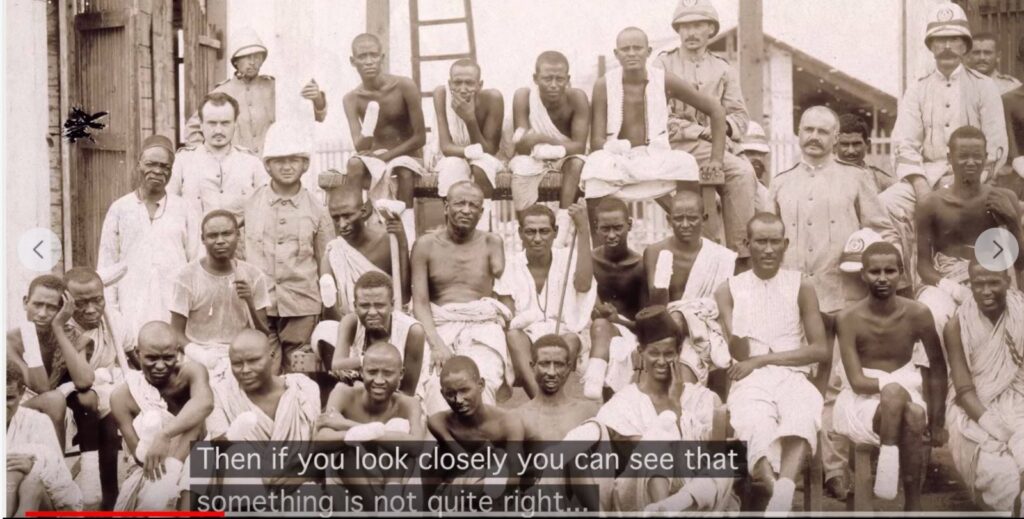
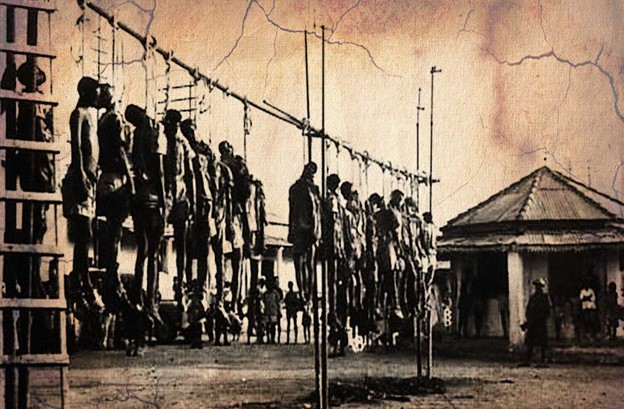
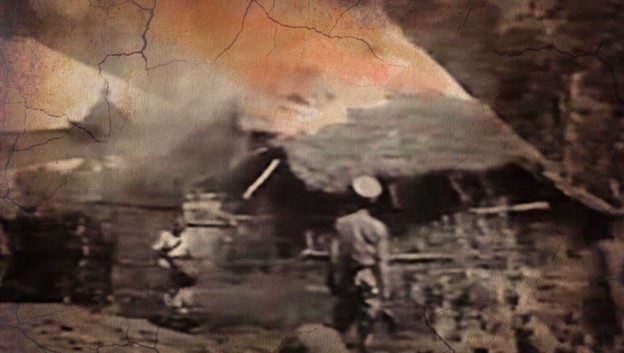
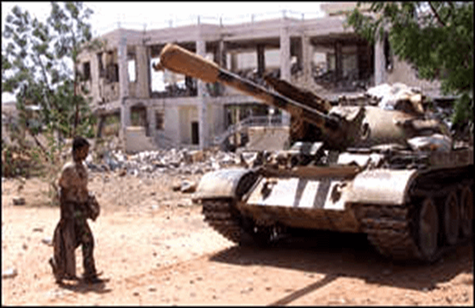
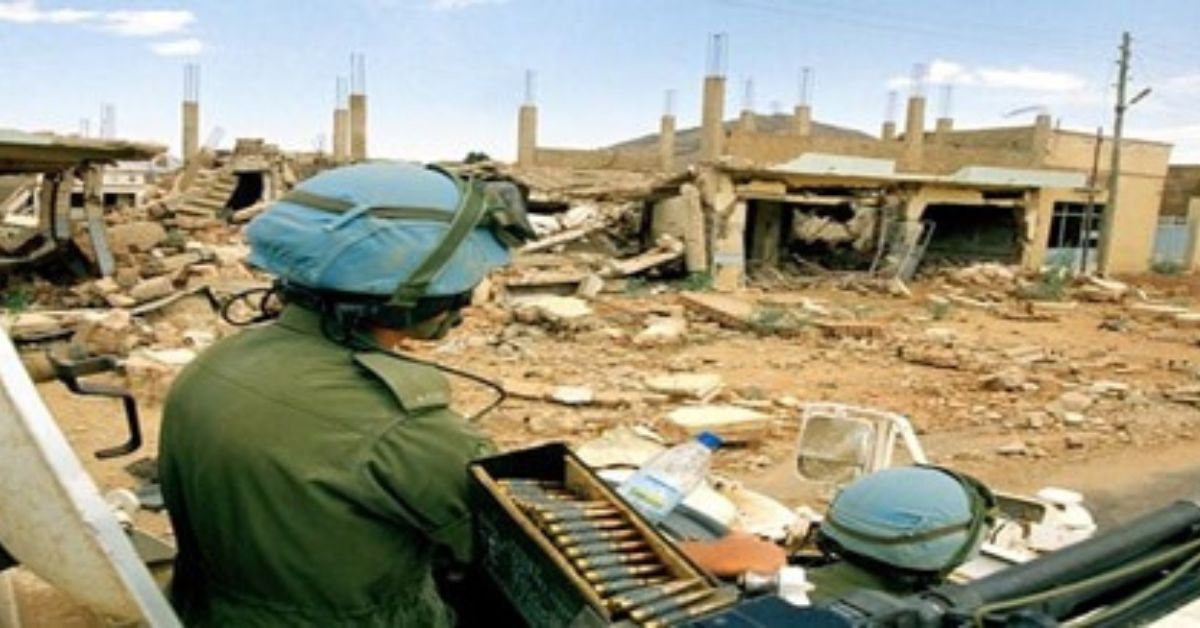
For the past two centuries, successive Ethiopian expansionist rulers have committed untold crimes against the people of Eritrea. As we celebrate the 33rd independence of Eritrea, it is paramount that we remember those Eritreans who were massacred by the savage Ethiopian rulers and the heroic liberation fighters who sacrificed their lives for a free and independent Eritrea. The events and pictures below depict real stories, including cruel amputations, public executions, village massacres, and other atrocities.
Figure 1: In March 1, 1896, during the Battle of Adwa, captured Eritrean Italian Askari soldiers were subjected to amputation of one leg and one hand by Ethiopian rulers. The white Italian soldiers were set free unscathed.
Figure 2: On July 24, 1967, Ethiopian soldiers wiped out several villages in Hazemo, Eritrea, and brutally murdered 172 men in front of their families.
Figure 3: On January 17, 1970, Ethiopian soldiers rounded up and executed sixty village elders in Ela bared, Eritrea.
Figure 4: November 30, 1970, Ethiopian soldiers rounded up the entire village of Besikdira, Eritrea, forced the residents into the local mosque, and opened fire until almost all were dead, including the elderly, women, and children.
Figure 5: In 1971, about 70 students and youth In Keren, Eritrea; suspected of supporting the ELF were publicly executed by hanging, with their families forced to witness the barbarity.
Figure 6: On December 1st, 1974, at Ona, more than 800 residents and refugees from surrounding villages, notably Besikdira, Eritrea, were massacred by the Ethiopian army.
Figure 7: On March 9, 1975, following ELF attacks on Agordat, Eritrea, the Ethiopian Army retaliated by killing 258 civilians.
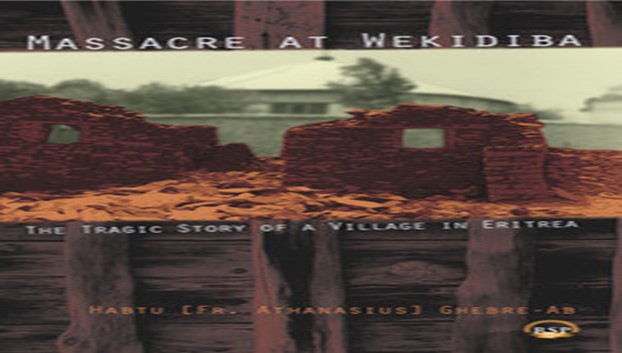
Figure 8: On February 2, 1975, during a confrontation with the EPLF and ELF in Wekiduba, Eritrea, the Ethiopian Army attacked a church where civilians had sought refuge, resulting in the deaths of 103 innocent people, known in Eritrea as Black Saturday.
Figure 9: February 24, 1975, shortly after an EPLF attack, Ethiopian troops massacred about 3000 civilians gathered in churches, homes, and schools, in Asmara and also executed 70 students by strangulation.
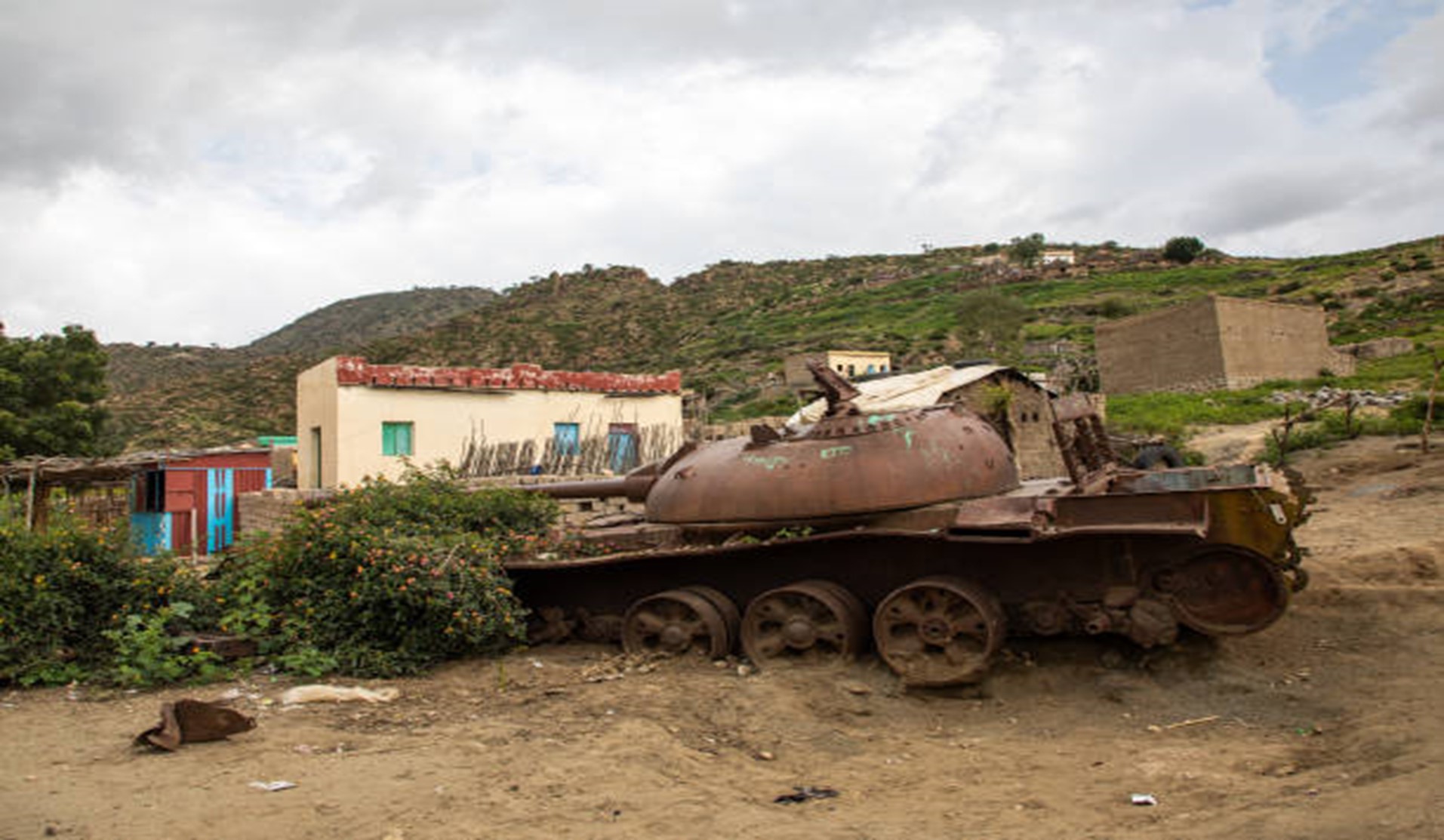
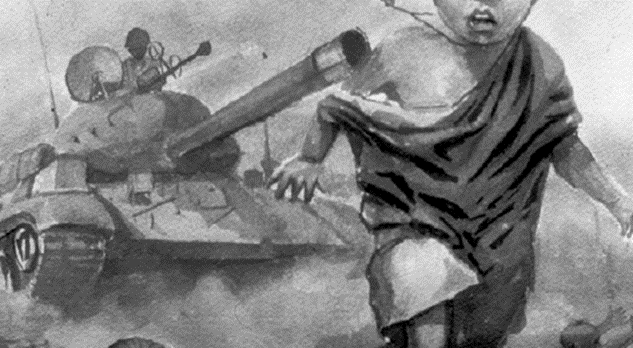
Figure 10: In May 1988, 400 people, mostly women and children, were crushed to death by tanks in the village of She’eb, Eritrea.
Figure 11: On April 24, 1990, in retaliation for a defeat in Massawa, the Ethiopian Army conducted an air attack, killing 50 civilians and injuring 100.
Figure 12: Between 1998-1999, the TPLF-led Ethiopian government expelled 80,000 Eritrean civilians, confiscating their properties.
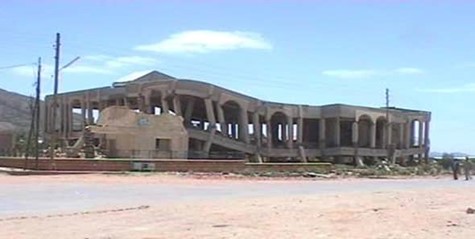
Figure 13: During the 1998-2000 War, Ethiopian soldiers destroyed newly constructed telecommunications buildings in Senafe, Eritrea.
Figure 14: During the 1998-2000 War, Ethiopian soldiers destroyed a newly constructed hotel in Barentu, Eritrea.
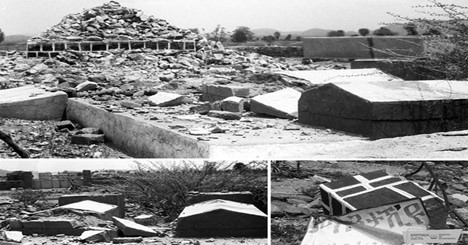
Figure 15: During the 1998-2000 War, Ethiopian soldiers dug up the Eritrean Martyrs Cemetery in Shambuko and scattered the remains.
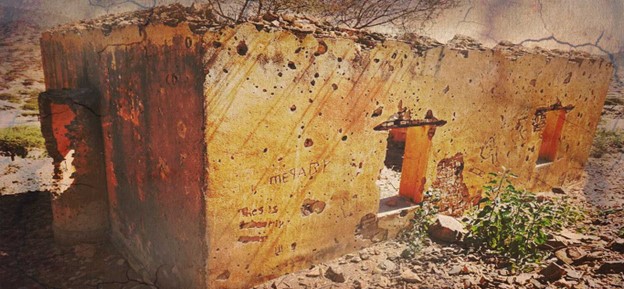
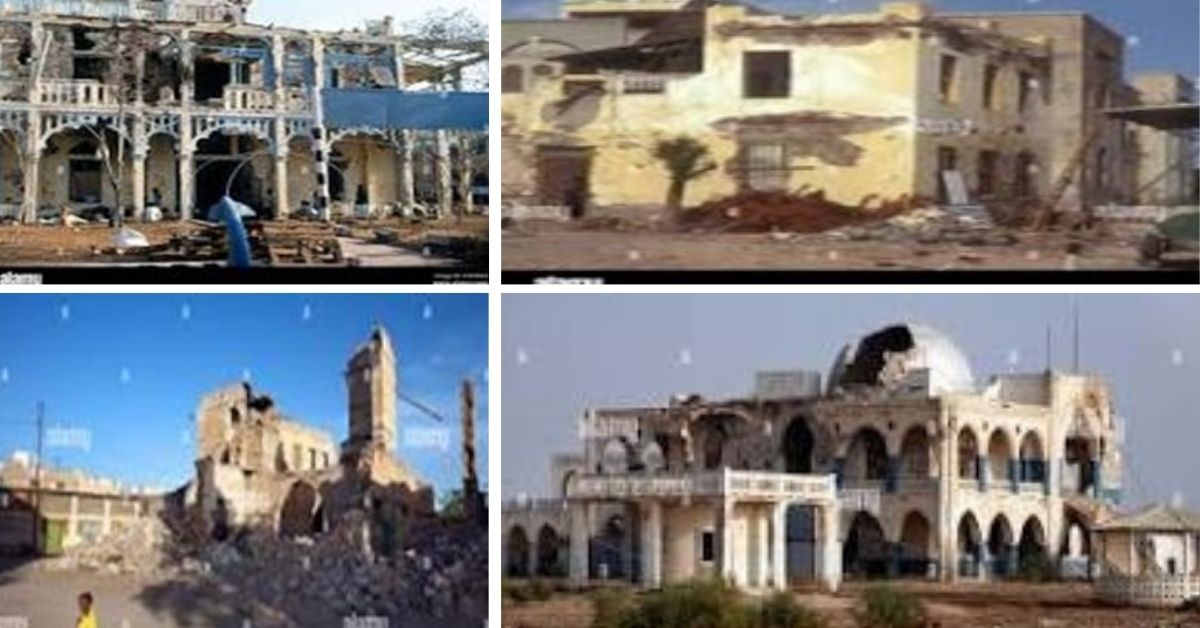
Figure 16: During the 1998-2000 war, Ethiopian soldiers intentionally destroyed private homes using artillery and dynamite.
Conclusion:
The above pictures and events represent only a fraction of the atrocities committed by successive expansionist Ethiopian rulers against the people of Eritrea. Despite these injustices, Eritreans have shown resilience and unity in their struggle for independence. As we celebrate Eritrean independence, let us remember the sacrifices of our martyrs and renew our commitment to justice and freedom.
“Victory to the Masses and Eternal Glory to Our Martyrs.”
Being a Meakelawit, which in Tigrinya means “being in the middle,” is someone who prefers to be an independent or centrist. With the current political landscape we are in, it is not for the feint of heart. Being a Meakelawit, or a centrist, is to see things from the whole picture in order to come to a conclusion that is grounded on facts, logic and reasoning. This calls for leaving whatever feelings, bias, or grudge you may have at an entity or individual at the door in order to be pragmatic and come to a logic and reason based conclusion. The best part is that as a Meakelawit, you are not grounded by a political party with its own rules, but you are confined to logic, reasoning and balance (this is not to be confused as being a langa-langa as some people may misinterpret.)
One of my main frustrations of being a politically independent Eritrean is the lack of quality-based YouTube channels that do that. Yes, there may be a few YouTube channels that may appeal to a centrist in the wilderness of Eritrean politics, but there is a huge lacking of commentary that is not only informative, but thought provoking. Eritrean political commentary videos often come off as tabloid-ish or sensationalist. We need less of a dopamine hit and more of something that gets our mind going and thinking. Otherwise, we would be spoonfed information, which seems to be the case. Often times, the analysis of serious topics in those videos are rather poor, too-conscice, and a one-sided narrative that looks to validating/normalizing the wrong (this is something I will elaborate more on later).
What To Do:
An example of thought-provoking commentary is Feruz, whom I believe is a lawyer who is well known for her coverage on the lawsuit that revolved on the 2024 ERISAT strife. Recently, she has been doing interviews with Saleh Younis on topics such as prison reform, as well as the now defunct idea of a “government in exile.” What was refreshing about this content is that both individuals (in a respected manner) are challenging each others ideas rather than affirming or validating it. When the ideas of two individuals are actively being challenged and questioned, it can allow the person to open their mind into another person’s perspective and viewpoints as well as their way of thinking. Often times, it can lead to people changing their views or ideas, and at times it can be for better or worse. In cases like this, it usually goes for the better as the intent is to tackle taboo issues and improve it for the better.
Commentary channels shouldn’t just be a two man show. It can also be ran on a single individual that has a talent on making their content interesting while also maintaining impartiality and thought provoking. The goal is to bring up a hot topic, and look at it holistically. What are the pros and the cons? What are the benefits and what are the downsides? What needs to be improved? Are we setting the bar high enough or is it too low? Those are the type of questions that will eventually get the people thinking. Some may start thinking in the comments section, but a lot of the silent majority that prefer being an observer than an active engager will really start to think a lot.
What Not To Do:
The commentators that are well known within the Eritrean political sphere is Alena Walta Hager (Meabel Kiflay), Solo Media (Solomon Tesfamariam), and G Drar (George Drar/Dirar), the latter of which escalated in popularity when he rightfully condemned the arsoning of property and attacks launched on Eritrean festivals by Brigade N’Hamedu.
These three commentators wield significant influence in public opinion, which in my opinion has been for worse and not for better. One of the commentators did something that was extremely inappropriate which I will elaborate on later.
The problem with these commentators is that while their intentions may be good, their content is lacking of any substance. The analysis are subpar and of low quality, and watching their commentaries is cringe as it often comes off as immature. For example, the constant insulting of individuals in the opposing political spectrum and the constant celebration of something that is of the bare minimum (such as importing a diesel generator to Eritrea) will then cause the audience to mimic their behavior. This will then keep the minds of the audience like stagnant water in the rain. More water will pour in from the rain, but will that stagnant water move? Will some of the water evaporate? The jobs of these commentators should be more of along the lines of this for example:
“Eritrea importing a generator is something that is good! Something is better than nothing, but have we set the standard too low? Why not pressure the government in contracting the energy sector to allow for more imports of electrical equipment? Wouldn’t powering a diesel generator be costly considering the price of fuel? What are your thoughts.”
These are the type of questions that we are really lacking. Thought provoking questions that will slowly, but surely get the ball rolling. The goal in this juncture of Eritrean politics is that since all of our existent threats are over, we should be comfortable with asking questions that we originally thought was taboo. To ask questions and to be in the know will then pressure the Eritrean government into making meaningful reforms that will in turn improve the quality of life for our people back home. We need less “hip hip horray” and more “Ok this is good, but what can we do to improve?”
Another issue that I have is the coverage, or delivery of sensitive topics, one of which is the G-15. I believe that topics like this should be dealt with with care, as it isn’t an easy conversation to have even over 20 years later. The individuals that I have an issue with on the coverage on this issue is Aklilu Sahle, George Drar, and Sahel Press. But I would like to call more attention to George Drar as the view count on the video he uploaded had more views than the other two YouTube channels.
The title was called “Listen, but make your own conclusion.” In the video, the person that was speaking is believed to be Zerai Haile condemning the G-15 for “treason.” The said individual is also believed to be the estranged husband of one of the political prisoners (Miriam Hagos) arrested in 2001. However, how can one form a conclusion on one sided information? That is not logically possible. In order for someone to reasonably and rationally make a conclusion, they must hear and consider both sides of the story. I will elaborate more on the G-15 issue in a future article, but in short, the delivery of the topic by these individuals is rather reckless, with absolute disregard to families of political prisoners that might come across those videos.
Conclusion:
I believe that now is the time for a great “renaissance” in political commentaries by Eritreans. We need to do away with the useless Zoom bantering and halewlew, and create thought provoking content that can get people’s minds going. While it is important to deliver people information, the commentary and analysis that we should deliver should be of high quality, and something that can inspire our people to think for themselves. These commentaries shouldn’t be biased, or of poor and mediocre quality either.
By teaching our people to think and not just be recipients of information by whoever throws what at them, the boulder will start to move and roll and the Eritrean people will become true thinkers.
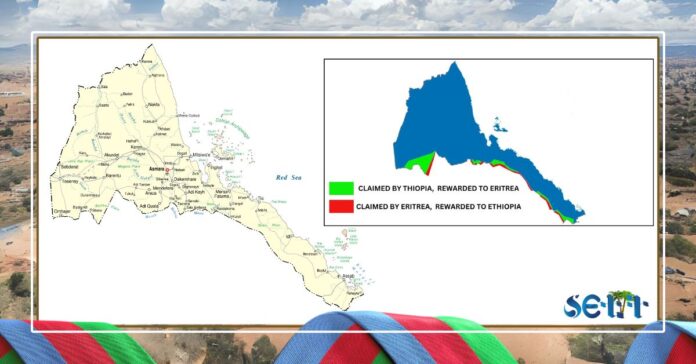
Recently, the Tigray People’s Liberation Front’s (TPLF) propaganda operatives have been disseminating information about Eritrea occupying land that the Ethiopia-Eritrea Boundary Commission (EEBC) decided was Ethiopian. In a boundary delimitation process, it is logical for villages to change sides. Accordingly, although it was a minor occurrence, such a situation also happened in the Eritrea and Ethiopia boundary delimitation decision. So, is Eritrea occupying land that was given to Ethiopia? Here is the full story.
Background:
After two years of intense fighting, on December 12, 2000, Ethiopia and Eritrea signed the Algiers Agreement, committing to resolve their boundary dispute through final and binding arbitration. The Algiers agreement established the Ethiopia and Eritrea Boundary Commission (EEBC). Hearings were held at the Peace Palace in The Hague from December 10 through 21, 2001, during which oral arguments and replies were heard from the following:
For Eritrea: His Excellency Ali Said Abdella, Foreign Minister of Eritrea, Agent Professor Lea Brilmayer, Co-Agent Mr. O. Thomas Johnson Professor James Crawford, SC
For Ethiopia: His Excellency Seyoum Mesfin, Minister of Foreign Affairs of Ethiopia, Agent Mr. B. Donovan Picard Mr. Ian Brownlie, CBE, QC Mr. Rodman R. Bundy Ms. Loretta Malintoppi Mr. Dylan D. Cors.
The EEBC gave its final and binding decision regarding the delimitation of the border between Eritrea and Ethiopia on April 13, 2002.
TPLF-led Ethiopia’s Government Response to the Decision:
Initially, TPLF-led Ethiopia claimed it got what it asked for and warned Eritrea to accept the EEBC decision. If Eritrea failed to accept it, the then TPLF-led Ethiopian Government threatened to use force against Eritrea. Surprisingly, a few days later, the Ethiopian officials who claimed to accept the decision started attacking the boundary commission and called the decision unjust and illegal. Instead of complying with the EEBC decision and removing their people from the land the EEBC decided was Eritrean, they continued to resettle new people. In areas that were deemed Eritrean, such as around Badme, Eritreans were pushed out and new Tigrayans were resettled in. Eritrea’s complaint to the EEBC and the EEBC’s findings on Ethiopia’s new resettlement on land that was deemed Eritrean is well-documented.
“EEBC investigation team find evidence of a recent tent settlement housing some 90 persons, at a place called ‘Dembe Mengul’. Dembe Mengul is located 0.4 km to the west of the delimitation line established by the Commission’s Decision of April 13, 2002. In Hadish Adi, there is evidence of a recent settlement consisting of fresh tents which appear to house some 100 people. Hadish Adi is 3.5 km to the east of the delimitation line established by the Commission’s Decision of April 13, 2002” (Border delimitation page 201).
Eritrea’s Response to the Decision:
Once the EEBC gave its verdict, Eritrea started removing its people from villages that were given to Ethiopia. The resettlement of Eritreans from areas bordering Ethiopia to the Gash Barka region was completed in 2008. Accordingly, all the villages that were under Eritrea, but the boundary commission determined Ethiopian, were vacated by Eritrea fifteen years ago. This tells us the completely different approach of the Eritrean government to the EEBC decision. The Eritrean leadership knew sooner or later Ethiopia and Eritrea had no choice but to follow the boundary line that was decided by the EEBC, and Eritrea did its homework early on. The sad part of the story is when Eritrea vacated the villages that were determined Ethiopian, the TPLF placed so-called Eritrean opposition groups in these villages. TPLF was hell-bent on undermining any positive effort by Eritrea that would contribute to the peaceful resolution of the boundary problem in line with the EEBC decision.
Then why are TPLF Operatives Claiming Eritrea is Occupying the Land the EEBC Gave to Ethiopia?
If you believe what TPLF operatives say, you may be the target of their convince or confuse media strategy. First, they said the Algiers agreement was dead. And then they propagated that they accepted the Algiers agreement, but Eritrea needed to return to the pre-November 4, 2020, position, and then they would implement the boundary decision. Now you may be asking if TPLF officials are normal people. If they were normal, they wouldn’t start a war that put the lives of five million people upside down and close to having a million lose their lives. In a nutshell, they are saying Eritrea should allow them to reoccupy the EEBC-determined Eritrean land that they illegally occupied from 2002-2020 and continue resettling more Tigrayans. Now their tone is changing. Their operatives are claiming that Eritrea is occupying land that the EEBC gave to Ethiopia. Well, I have bad news for them. That land was vacated by Eritrea a long time ago, and the propaganda line is false and outdated.
Conclusion:
TPLF is the cursed baby of the Eritrean People’s Liberation Front (EPLF). It believes its survival is linked to Eritrea and without Eritrea, it does not have any future. Even if Eritrea wakes up one morning and tells TPLF to take all the land that belongs to Eritrea, it would not be surprising for TPLF to claim more land from Eritrea. The point is TPLF’s long-held objective was to use Ethiopian resources to develop Tigray and keep Eritrea in jeopardy. Then invade Eritrea and merge Eritrea and Tigray to create a greater Tigray. Now Tigray is in distress, and its chance of invading and occupying Eritrea is slim. Thus, it does not know what to do. If it accepts the EEBC decision fully, it would be cutting the umbilical cord that connects it to Eritrea. Thus, it decided to keep the border issue alive, at least on TV, and use it for propaganda consumption. Fortunately, thanks to the EEBC, the Ethiopia and Eritrea border is virtually demarcated on April 13, 2002. Anyone who reads maps would not miss the boundary line even by a meter. As Professor Lea Brilmayer put it, Eritrea and Ethiopia may need to put pillars in densely populated areas where normal people may unknowingly cross the border. For the rest, the Ethiopia and Eritrea border is clearly demarcated, and any encouragement towards Eritrea is an aggression and will be met with strong resistance.
The disinformation campaign in Ethiopia has reached a climax resulting in a situation where Truth cannot be distinguished from Lies. During the 2020-2022 Ethiopian Civil War global news organizations like CNN, BBC, and Al Jazeera tried to save the Tigray Peoples Liberation Front (TPLF) from demise and failed miserably. Now they are delegating the disinformation campaign to Western-funded online news channels like Addis Standard, and YouTube-based channel Ethio-Forum. These two foreign-based Ethiopian dis-informers have played a major role in destroying the common good of journalism in the Horn of Africa. They call themselves news organizations. Yet they are always ready to sell themselves to the highest bidder. The core concepts of journalism: Truth, Accuracy, and Objectivity are alien to them. For them, Journalism is convince or confuse and get rich fast. These two so-called news channels have been demonizing the Eritrean people and its government for quite some time. Getting frustrated that their mission to defame Eritrea and its people has not gone anywhere, recently they are taking it to a higher level. Let’s see what the two mis-informers said about Eritrea last week.
Addis Standard.
Last week the Addis Standard online news channel fabricated the following two news about Eritrea. First, Eritrea is among the top plastic-polluted countries in the world and second, the Irob community, being Catholics, are a minority in Eritrea and are subject to religious prosecution.
Plastic Pollution in Eritrea.
Eritrea is among the prominent countries that drafted a law that bans the production and distribution of plastics nineteen years ago, in 2005. If there were any honest environment-friendly country ranking, the widely popular Wednesday cleaning programs, Pristine and unpolluted beaches, nationwide annual high school students summer reforestation programs, and lack of polluting industries in the country would put Eritrea among the top ten non-polluted countries in the world. Yet Addis Standard did not waste time to cite devious sources and label Eritrea a top polluting country. Ethiopian elites get thrilled when they fabricate or hear any bad news about Eritrea. Now that Eritrea has focused on rebuilding its economy and opened itself to Tourists, Addis Standard is trying to sabotage that effort. Fortunately, any effort to defame Eritrea could not have any impact on the ground. In the end, stories told by those who visited the country are more believable than fabricated stories coming from foreign-based Ethiopian media mis-informers. Regardless, Self-reliant, and persistent Eritrea will continue building a green economy beneficial to the Eritrean people and that is bad news for hired guns like Addis Standard.
Ethnicity and Religion of the Irob Community.
The problem with dis-informers like Addis Standard is they do not know what they are talking about. Irobs are Saho and Saho make 4% of the Eritrean population. There is not any ethnic group in Tigray or Ethiopia at large called Saho. The Irob community differs from their Saho brothers and sisters because they are predominantly Catholic. Again, Catholics make up 5% of the Eritrean population. So how are the Irob community to be a minority in Eritrea and as Addis Standard claimed to be subjected of religious prosecution? The Truth is that the Irobs are original Eritrean inhabitants. They were part of the thirty-year struggle for the Liberation of Eritrea and are proud Eritreans. The Tigray People’s Liberation Front’s (TPLF) forced occupation of The Irob people for three decades does not make them Ethiopians. Ethnically and religiously, they are in synergy with the population of Eritrea. Unlike in the Tigray region of Ethiopia, communal living, inter-ethnic and inter-religion marriage in Eritrea is well accepted, and marriage between Catholics and Orthodox Christians is a norm rather than an exception. Thus, Addis Standard’s disinformation does not have any merit at all and will not bring any change on the ground.
Ethio-forum
Another parlous mis-informer, Ethio-forum, also came with two pieces of fabricated news about Eritrea last week. First depicting Eritrean soldiers as mercenaries and second Eritrean soldiers holding a dozen Ethiopian soldiers stationed in Zalambassa.
Ethiopia Hiring Eritrean Soldiers.
The Ethio-Forum editor, who was a protégé of the late Ethiopian Foreign Minister Sium Mesfin, appears to still be in a grieving mood. Trying to obscure the wicked things the TPLF did to the Eritreans and Eritrea in the last 25 years is simply trying to cover the sun with two bare hands. If the Journalist for hire and owner of Ethio-forum has forgotten, let me remind him. In 1998, TPLF invaded Eritrea, raped and killed Eritrean civilians. It exploded and burned Eritrean public institutions and stole as much as it could. It dug Eritrean Martyr’s cemetery and desecrated the remains. It expelled 80,000 innocent Eritreans from Ethiopia and confiscated their hard-earned property. It signed a binding and final border arbitration agreement, and when the Ethiopia and Eritrea border commission gave its verdict, it blocked its implementation. The TPLF declared a no-war and no-peace policy on Eritrea for 25 years and collaborated with Western powers to impose successive sanctions on Eritrea. Finally, when it attacked the Ethiopian Northern Command on November 4th, 2020, it hurled more than a dozen missiles on the world heritage site capital city of Eritrea, Asmara. Those reasons were more than enough for the Eritrean army to cross to Tigray and hunt the TPLF. Yet the dis-informer Ethio-Forum wants us to believe that the Eritrean Army crossed to Tigray because the Ethiopian government promised to pay billions of dollars. That is nothing more than a hoax. But hoaxes are not new to Ethio-Forum.
Eritrea Kept Ethiopian Soldiers Hostage.
I would like to remind the dis-informer Ethio-Forum that the relationship between the Ethiopian and Eritrean armies is very close. They fought together and even now in the era of fractured politics, they cooperate seamlessly. So, your persistent effort to create conflict between the two armies is futile.
Conclusion
The main objective of the recent disinformation campaign directed at Eritrea and led by Addis Standard and Ethio-Forum is to obscure what the TPLF did in Raya Alamata and divert the audience’s attention somewhere else. The Ethiopian dis-informers should understand that let alone rag-tag online news channels and youtubers like Addis Standard and Ethio- Forum, the persistent disinformation campaign of big global news organizations like CNN, Al Jazeera, BBC etc. against Eritrea did not save the TPLF from demise.
Introduction:
Since March 2024, I deactivated my former Twitter account as I not only wanted to take a break from the brain rot that I encounter in HOA politics, but also wanted to reduce the time I spend online. However, I recently reactivated my account just to take a little peek at what people were talking about online. Unsurprisingly, it’s business as usual with people hurling insults at each other. The classic “Komal Agame,” “CIA agent,” “Diet HGDEF,” and “Langa-Langa” name-calling is still common. One side is not tolerant of dissent, and the other side is not tolerant of political centrism or balance. Eritrean politics now resemble a soccer team where you can choose two sides or just be a spectator.
However, one tweet caught my attention; it was by Sirak Bahlibi, who I believe has been recalled to Asmara. I know little of that individual, but I know him well enough to understand that he represents the government in the Nordic countries.
The tweet goes as follows:
“The #Eritrean political system must be built on nationalism, i.e. safeguarding national interest, developing and strengthening the unity of our people, and preserving independence” The National Charter
In a book club that I was participating in, the former EPLF central committee member and former PFDJ MP/ambassador, Andeberhan Woldegiorgis, stated that the national charter has been “set aside” and the “constitution has been relegated to collecting dust.” However, one thing I have noticed during the days when I was active on Twitter is that PFDJ would occasionally cite parts of the National Charter. But one thing I have wondered about is, is the charter a checklist, or a document to cherry-pick from?
This is not to say that the statement Sirak quoted is something we should ignore. In fact, I firmly believe in Eritrean nationalism and safeguarding our interests! But I believe that we have deviated a bit too far from the goals in the national charter. Let me start by giving credit where credit is due before I move onto the pressing matters.
The Good:
1. National Harmony is robust and strong. Sometimes, I believe we need to appreciate that Eritrea has not turned into another Iraq, Libya, or Syria, where the people are turning against their own, or even Ethiopia which as of 2024 is currently experiencing ethnic violence. However, that cannot be said for the diaspora, which I believe needs national reconciliation. I will elaborate more on that later.
2. Social Development: Adult literacy has improved by 80%, with the Ministry of Education head Tikabo Aymut leading the campaign. Healthcare has steadily improved, especially during the days when Saleh Meki was the Ministry of Health. However, Eritrea has lots of room for improvement, and I strongly believe that the government has the duty to engage with diasporan Eritreans even more to further bolster all sectors in Eritrea for timely development.
3. Pride for Heritage: True Eritreans, meaning those who are proud of their background regardless of the situation the country is in, have pride in their heritage.
4. National Security: National Security is the backbone of every nation, and Eritrea takes it very seriously. It has been able to counter external threats posed on the nation tactically.
The Bad:
1. Political Democracy: In the national charter, it states that “for the people of Eritrea, to be active participants and become decision-makers in the administration and conduct of their lives and of their country, with their rights guaranteed by law and in practice.” However, I can’t really see that “democracy” is prevalent in Eritrea. Often, PFDJ would tie the word democracy to social justice, such as having clean water, electricity, and the right to education. This is called human rights.
The definition of democracy is to have political pluralism, where people can express their ideas freely without being reprimanded, or worse, arrested and disappeared. From Bitweded, to the G-15, and to Berhane Abrehe, the Eritrean government has conveyed the message that dissent is not tolerated. This attitude needs to change. Without pluralism, you are in an echo chamber. Growth can only occur when one’s ideas are actively being challenged.
2. Economics: The ruling party adheres to a Socialist/Communist/Maoist ideology, in which all enterprises, be it factories, telecommunications, aviation, entertainment, media are all dominated by the government. However, history shows us that Communism has never worked. It is a concept and idea that while sounding good on paper, will fail miserably when put into practice. That is why countries such as China and Vietnam have reformed into market-oriented policies, with Cuba following in those countries’ footsteps. The absence of a formal economic institution, banking system, as well as sanctions has crippled the Eritrean economy. However, I believe that the shared responsibility of Eritrea’s economic mishaps is 60% PFDJ, 40% by external factors, such as war and sanctions. Thus, economic reform is imminent if Eritrea wants to make real development.
3. Diaspora Tensions: The Eritrean diaspora is essentially an auxiliary of Eritrea, with strong transnational connections. If we are honest, most Eritreans in the diaspora are strongly patriotic of the country they are from rather than the country that they are in. That is not to say that is a bad thing, however. Thus, we see remittances, the 2% tax, and gatherings by Eritrean Ambassadors/Officials in ECCC chapters across North America, Europe, and other regions of the world. However, in recent years, Eritrean politics have become a boiling pot in the diaspora. Churches are splitting due to politics, people are not as engaged in the community, and riots are breaking out.
You might be wondering why I am going on a tangent on the diaspora when the topic is about the national charter. That is because the diaspora will eventually be the ones rebuilding Eritrea when all the conditions and reforms are met. I truly believe that reconciliation needs to be made; otherwise, we would have the same people pitting against each other when that energy can go towards working together. We Eritreans need to learn how to listen to each other and understand each other’s concerns and grievances, then to negate or ignore them.
4. “A Broad-Based Movement”: The front, or colloquially known as the Gimbar, was initially designed to be a catch-all party, where all “patriotic Eritreans” can and will be allowed into the political tent. There are some people in mind that I know in the diaspora that are, while not PFDJ, are willing to take part in the movement if the charter is 100% adhered to, but the government must show its commitment to the National Charter. PFDJ right now is devoid of any criticism,
and as we have learned with G-15 and Berhane Abrehe, internal dissent is squashed. This is something the government needs to change its attitude on.
Conclusion:
Many people have said this, including myself, but I will continue to repeat it. The National Charter should 100% be adhered to. It should not be cherry-picked. Instead, it should be used as a checklist. The Charter is the second most important document, with the Eritrean Constitution being the first most important. If the Eritrean government wants to show that they are willing to adhere to the National Charter and change the political landscape, the following must happen.
1. Convene a Party Congress Immediately: Isaias is approaching the age of 80 years old. No matter how “active” or “healthy” he may be, we are all bound by the timing of God and the works of mother nature. Isaias dying would be like a patriarch of a family dying without a will. When someone dies without a will, the family will most likely fight each other for the property and wealth they left behind. In our case, there is no discernable hierarchy in the government, as anyone who had some sort of political clout is disabled, dead, or dying in prison. Claims that the president’s son will be the next in line are futile and unsubstantiated. Mahmoud Sherrifo (G-15 member) is what was believed to be the Vice-President of Eritrea. However, it is believed that Sherrifo passed away nearly 21 years ago. So, the chances of Eritrea seeing a “Mandela Effect.” are very slim. I have reason to doubt that those with political clout, such as Andeberhan or Mesfin Hagos, would return to Eritrea. They are also too old now. Thus, it is time for Eritrea to figure out who will be next and who will be the next in command. We also must figure out how to fill the vacancy of the National Assembly and the Central Committee. If my calculations are correct, there is a 60% vacancy in the CC, and even more vacancies are growing as more prominent PFDJ cadres go to prison or pass away. So in short, it is high time to implement the constitution, reform the government, release political prisoners, and institutionalize economic and financial sectors for the interest of the nation and for the sake of national security.
2. Irqi (Forgiveness): Reconciliation must be done for Eritrea to move on from this dark and ugly chapter. Reconcile. Forgive. Political prisoners must be freed. If they are dead, let the family know! They should not live their lives in a paradox wondering if their loved ones are alive or dead. Whatever grievances the people may have, they should be addressed in a proper order. It is hard for us to develop as a country when these people and issues are at the back of our minds. We need closure so we can open a new and fresh chapter. My fellow Eritrean brothers, sisters, and mentors – this is a chapter we will pass. If we learn to listen to each other, I believe a lot of great things can be accomplished. Regardless of the circumstances, remain optimistic, as this storm shall pass!
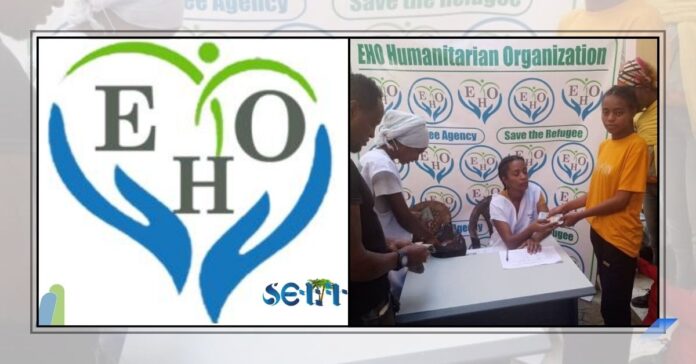
In our ongoing efforts to alleviate the plight of Eritrean refugees amidst the dire circumstances in Ethiopia, Sudan and Egypt, EHO has provided vital assistance to over 700 households (approximately 3000 individuals) since October 2023. The situation with the Eritrean refugees remains critical everywhere. In the Tigray region of Ethiopia, over 10,000 Eritrean refugees are facing unprecedented challenges following the destruction of the refugee camps by conflict and the devastating impact of COVID-19. Forced to navigate the harsh realities of displacement, Eritrean refugees find themselves in dire need of life-sustaining support, lacking access to necessities such as food, water, shelter, and medicine.
In response to this humanitarian crisis, EHO has mobilized its resources and expertise to deliver lifesaving aid to the most vulnerable segments of the Eritrean refugees. Our efforts have prioritized individuals facing challenging circumstances, including persons with disabilities, single mothers, single fathers, unaccompanied minors, survivors of gender-based violence, and those suffering from untreated chronic diseases.
Since November 2023, EHO has demonstrated unwavering commitment and took tangible actions in support of Eritrean refugees:
Egypt
Collaborating with St. Andrew’s Refugee Services (StARS), EHO has managed to distribute 487,500 EGP to 200 Eritrean newcomers consisting of 125 families and 75 individuals. EHO project has not only addressed immediate needs but also contributed to the long-term stability of Eritrean newcomers in Cairo, significantly impacting vulnerable refugees, with 90% of those supported reporting improved living conditions with 75% of funds directed towards medical needs, 15% to rent payments and 10% for education grants for Eritrean refugees in Egypt.
Partnering with Pioneers of Mercy Association (PMA), EHO is providing 21,000 USD to implement a project providing additional relief assistance to Eritrean refugees displaced by the conflict in Sudan.
Ethiopia
On the 24th and 25th of November 2023, EHO provided critical cash support totaling 347,500 ETB to 40 refugee households, extending a lifeline to those in urgent need. The cash support was to address the various individual needs of the refugees.
Continuing our mission, on the 26th of December 2023, an allocation of 200,000 ETB was directed towards supporting 22 refugee households in Mekelle, reaffirming our dedication to reaching those most in need.
Engaging in a heartening initiative, the “Elshaday Food Distribution” on the 6th of December 2023 and the 19th of January 2024 brought solace to those most affected by the crisis, with contributions totaling 210,000 ETB. Elshaday is a center for refugees in the town of Mekelle, Tigray region, Ethiopia.
On the 11th of December 2023, the EHO extended support totaling 200,000 ETB to 40 refugee households in Tigray region (Zana, Mekelle, Shire, and Axum) demonstrating our unwavering commitment to our mission to save lives by providing aid where it is most needed.
EHO’s efforts persisted into the new year, with significant support provided on the 3rd and 4th of January 2024, and further assistance extended on the 17th of January 2024, reinforcing our steadfast dedication to the cause.
Sudan
Despite the challenging war zone situation in Sudan, EHO has found a way to provide life-saving assistance in Khartoum through dedicated Eritreans who risk their safety to assist fellow refugees. EHO implemented two instalments of 2,000 USD each for the refugees supporting 45 families and 90 households (360 refugees) in total. In addition, a sum of 2,400,000 SDG has been utilized to aid the most vulnerable Eritrean refugees in Sudan during the ongoing war crisis, amidst dire circumstances exacerbated by the departure of all aid organizations from the country. Assistance was provided to three impoverished refugees during childbirth, and some refugees are disabled and reliant on wheelchairs.
In Kassala, EHO in collaboration with Association of Disabled Eritreans in North America (ADENA) is providing assistance to disabled Eritrean Freedom Fighters refugees. EHO provided 6,010,000 SDG to renovate a building where many of the veterans reside, supplement food stock and covered health care related expenses. The project is in progress and more support will be provided as well.
As we forge ahead, our resolve remains unyielding, driven by the urgent imperative to alleviate the suffering of Eritrean refugees and provide them with the support and assistance they urgently need. Together, with our partners and supporters, we stand united in our commitment to making a tangible difference in the lives of those in need.
With this note, we would like to express our heartfelt gratitude to our donors for their support towards these noble efforts. We therefore hope for their continued support to keep hope alive among Eritrean Refugees.
A Brigade of Tigrayan Avengers that started violence against peaceful Diaspora Eritreans, to obscure Tigray Liberation Front’s (TPLF) defeat on the battlefield, finished its shelf life, and has destroyed itself. The law caught up and its members are hunted down by the police in Europe, Canada, Israel, and the United States and end up in prison cells. Except those who use violence as income-generating enterprises, many foot soldiers have received criminal records in their files and lost their status in the countries where they reside as refugees. Many of them are fleeing Europe and trekking to the United States through Mexico. The legal measures in Europe are expected to continue, and hundreds are yet to be prosecuted. They are ignorant individuals who do not understand the preconditions that each country sets when it gives refugee status to individuals who claim to have been prosecuted by their governments. Respecting the laws and regulations of the countries they reside in is a major precondition. When you cross the line, it catches up and destroys your future. Facts confirmed so far. They are:
Tigrayans Who Stole the Identity of Eritreans and Received Refugee Status in Europe and North America.
After the 1998-2000 Eritrea and Ethiopia Border War ended, TPLF and its Western handlers devised a plan to deplete Eritrean human resources and weaken its defense capabilities. As part of the strategy, they established refugee camps a few miles away from the Eritrean border, in Tigray, Ethiopia, and disseminated a wide angled propaganda to lure young Eritreans to the refugee camps. Concurrently the United Nations Higher Commissioner for Refugees (UNHCR) put a guideline that gives Eritreans automatic acceptance as refugees in any country in the world. After securing such privileges the TPLF confiscated the identification cards of the Eritreans who arrived at the refugee camps and passed them to Tigrayans who impersonated the Eritreans. The Tigrayans ended up settling as Eritrean refugees in Europe, Australia, and North America, and the Eritreans were left to languish in the refugee camps in Tigray for more than a decade. When the 2020 war between the Ethiopian Federal government and the TPLF combatants started, to revenge the government of Eritrea’s support to the Ethiopian Federal government the TPLF combatants killed and raped the Eritrean refugees who were in the Tigray refugee camps. Currently, the Tigrayan, Eritrean impersonators, are the ones who are extending the revenge act in Europe and North America and storming Eritrean festivals and attacking unsuspecting diaspora Eritrean communities who have no interest other than celebrating their culture and history.
Eritrea Born Tigrayans and Tigrayans who Married to Eritreans.
Due to the decades-long war between Eritrea and Ethiopia, cross-border marriage between Tigrayans and Eritreans is often discouraged. Accordingly, this group has an identity crisis and dreams beyond its means. For this group to be valued in both Eritrea and Tigray It wants to create a new country in East Africa that incorporates Tigray and Eritrea. It often uses its proximity to the Eritrean and Tigrayan cultures and tries to create hate and confusion against the Eritrean Muslim community. This group often hails from the highlands of Eritrea and the Tigray region and considers the Eritrean Moslems as an obstacle to its agenda. Except for working hard to be validated in both Eritrea and Tigray, it does not have any political program. It wants to erase Eritrean history, does not believe in Eritrean independence, and desecrates everything that advances Eritreanism. It openly advocates Eritreanism as its enemy because it does not include Tigray. This group would attack anyone who carries the official Eritrean flag and expresses his/her proud Eritrean heritage. It is against everything that Eritrea is meant for Eritreans. It has a deep inferiority complex and is very violent.
Youtubers and Power-Hungry Individuals, So-Called Activists.
As we all know YouTube business flourishes when there is conflict, war, and unrest. Previously obscure YouTubers made a lot of money out of the recent (2020-2022) Ethiopian civil war. When TPLF was defeated and signed a surrender agreement in Pretoria, South Africa, they were scared that their business would dry up. Under the direction of the TPLF, they started propping up terrorist gangs, who have financial and personal problems and prepped them to throw stones and storm Eritrean diaspora community festivals. Accordingly, YouTubers such as Tefetawi Talk show, Assena, Erisat, J. Studio, and Finan App infotech are deeply emersed in creating such a bridge that would transition them from broadcasting breaking news from Tigray to broadcasting breaking news from Europe and North America. To be clear these groups of YouTubers have had relationships with the TPLF for a considerable period and served as a channel for the TPLF to distribute money to the Terrorist gangs. In fact, at a certain point, these YouTubers were also funded by TPLF. Also, in this camp, there are power-hungry failed activists who serve as TPLF interlocutors whose main interest is to guide the terrorist activities and share money with the YouTubers and other external parties that have a vested interest in the terrorist activity against the Eritrean Diaspora communities.
Money Hungry Foot Soldiers and Disgruntled Eritreans.
TPLF invests a huge amount of money to advance these Terrorist activities. A few years ago, a TPLF financing agent, by the Nickname of “Pilot”, used to distribute money to anyone who was vocal in criticizing the Eritrean government. He was exposed because he put money into someone’s bank account who did not know the scheme and asked why anyone would put $5000 into his bank account. As we all know, being a refugee in Europe is tough. By taking such hardship as an opportunity TPLF buys the voice of unsuspecting young refugees in Europe. In addition to the lack of job opportunities, some disgruntled Eritreans who deserted the army could not return home. This group of individuals does not have the means to cover their transportation costs or sleep in a basic hotel. The combination of economic hardship, alcoholism, drug addiction, and loneliness create a ticking bomb that can explode at any time. Unfortunately, such frustration leads to crossing the rule of law and ending up in legal jeopardy very difficult to recover from. Also, many of them get hurt by the police and even end up dead.
Conclusion
Whatever injustice may exist in Eritrea, you cannot solve it by throwing stones against women and children in Europe and North America. The “if I cannot convince you I will destroy you” logic is the highest level of hopelessness in life. Whatever hatred the European and North American governments have against the Eritrean government, they have a constitutional obligation to protect the Eritrean Diaspora Community from violence perpetrated by the above-mentioned delusional groups. Violence negates constitutional order and governments end up reigning on terrorists. In the end, the violence will be between the police and the terrorists. Terrorism might make short-term news but never wins.
In the turbulent domain of media organizations, ERISAT’s recent turmoil stands as a stark reminder of the delicate equilibrium between power, ethics, and integrity. Once envisioned as a bastion of thoughtful discourse, ERISAT has tragically descended into a maelstrom of internal discord and external manipulation under the leadership of CEO Henok Tekle and Board Chairwoman Saba Tesfayohannes (PhD).
Originally founded with aspirations of fostering critical thinking and engaging dialogue, ERISAT’s journey from 2020 to 2024 has been marred by a profound transformation into a conduit for political agendas, orchestrated by Henok Tekle. The organization, entrusted with the sacred duty of journalistic integrity, has been ensnared in a web of controversy, devoid of any semblance of editorial coherence.
Since 2020, ERISAT’s descent into chaos has been palpable. Legitimate concerns raised by impassioned volunteers about the organization’s trajectory swiftly escalated into a cycle of suppression and defamation. The board, in a bid to silence dissent, wielded their authority with impunity, disregarding accountability and transparency.
The intervention of external mediators from Yiakl in 2020 purportedly seeking resolution only exacerbated the crisis. Instead of fostering dialogue, these mediators colluded with the board, manipulating the situation to serve their ulterior motives. Their actions betrayed a sinister agenda aimed at subverting Eritrean values and perpetuating discord.
As ERISAT grappled with internal strife in 2024, its once-promising legacy hung precariously in the balance. The organization’s alignment with extremist elements and propagation of divisive rhetoric further eroded public trust and credibility. ERISAT’s role as a purveyor of thoughtful discourse faded into obscurity, replaced by a tarnished reputation and fractured identity.
Moreover, the moral bankruptcy of ERISAT was exposed by the reprehensible actions of former board members. In a shocking video from 2020, a board member suggested running over esteemed individuals like Dr. Bereket Habtesilasie with tanks, alongside mocking non-Tigrinya-speaking communities. Such behavior undermines respect and decency and highlights ERISAT’s descent into moral depravity.
The crisis at ERISAT extends beyond interpersonal dynamics, constituting a betrayal of trust and an affront to Eritrean values. As Eritrea navigates a shifting landscape, ERISAT’s turmoil serves as a reminder of the perils of unchecked power and compromised integrity. Vigilance and discernment are imperative as the nation charts a course towards a brighter future, free from manipulation and deceit.
In confronting the crisis at ERISAT, Eritrean media must reaffirm its commitment to accountability and transparency. Only then can the nation emerge stronger, united in pursuit of a prosperous and sovereign future, untainted by internal strife and external manipulation.
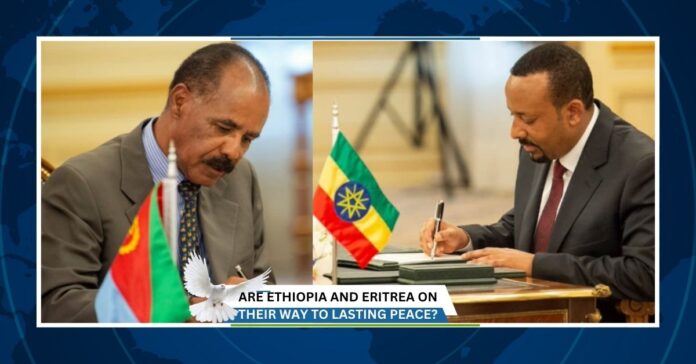
Recently Prime Minister Abiy Ahmed of Ethiopia, during his consultation with representatives from the Tigray region of Ethiopia, stated that he established a committee to investigate if the Eritrean army is occupying land that belonged to Ethiopia beyond the Algiers agreement. If the committee finds Eritrea occupies land that belongs to Ethiopia beyond the Algiers agreement, he said he would work to solve the problem in consultation with the Eritrean government. The Eritrean government’s consistent policy is it does not want any land beyond what the Algiers agreement, through its Ethiopia and Eritrea boundary commission (EEBC), determined that it is Eritrean land. Here we see a consensus and common ground between Ethiopia and Eritrea to come to lasting peace. The next course of action is to allow cartography professionals from the two countries or the United Nations to determine the exact boundary line between the two countries based on the Global Positioning System (GPS) coordinates set by the Ethiopia and Eritrea boundary commission.
Such development is the third opportunity to establish long-lasting peace between the two countries. The first opportunity was lost when the Tigray Peoples Liberation Front (TPLF) led Ethiopian government refused to honor its commitment to accept the Ethio-Eritrea boundary commission’s final and binding verdict given on April 13, 2002. After rejecting the boundary commission’s decision, the TPLF created a no-war and no-peace situation between Ethiopia and Eritrea for 27 years. The second opportunity was opened when the new Ethiopian government, under the leadership of Prime Minister Abiy Ahmed, announced on June 5, 2018, that it fully accepted the terms of the Algiers Agreement and the subsequent verdict of the Boundary Commission without preconditions. However, the withdrawal of the Ethiopian Army from areas recognized as Eritrean and subsequent demarcation of the border once again was blocked by the Tigray People’s Liberation Front. Although people may say that the current Prime Minister Abiy’s speech is a continuation of the June 5, 2018, agreement, so many things happened in between, and I want to categorize it as a third opportunity to cement a lasting peace between Ethiopia and Eritrea. Why is such a development significant?
Peace in the Horn of Africa Prevails.
Where there is peace there is economic development and prosperity. The successive wars between Ethiopia and Eritrea impeded investment and created hunger war and destruction. In some regions of the world war is fought only once and soon after countries learn from their mistakes and work to create a conducive environment for peace. Unfortunately, this never happened in the Horn of Africa. The inclination to solve problems through the barrels of a gun has cost the people of the Horn dearly. Accordingly, it is time for the governments of the Horn of Africa and especially the Governments of Eritrea and Ethiopia to work hard to materialize peace in the region and give their people a respite from constant insecurity, war, and destruction. It is time to learn from European countries where borders are clearly demarcated but do not create any impediment to the people in the countries.
Enhances Economic Cooperation Between the Two countries.
The major problem between Eritrea and Ethiopia has been Ethiopian successive rulers’ persistent efforts to see Eritrea faulters. Instead of trying to advance economic, cultural, and political relationships between the two countries, Ethiopia’s ruling elite’s provocative and continuous open threats forced Eritrea to remain in stand-by mode for twenty-seven years. As a result, many have perished, hopes shattered, lives destroyed, and others left their countries for good. When Ethiopia abandons its antagonistic approach towards Eritrea for good a door for economic cooperation between the two countries opens. If Ethiopia respects Eritrean independence and stops its expansionist ambitions, there is no reason for Eritrea to close its boundaries and stay in a war footing. Trade between the two countries can start and Ethiopia could use Eritrean ports according to international norms at a reasonable price. Eritrea in turn can import electricity from Ethiopia which is currently hampering it economic development and social well-being. When there is prosperity in either country people in the other country can move to the other country easily and benefit from such development and prosperity.
Can create Political and policy Realignment.
When countries understand that their national interest can be fulfilled through common partnerships and cooperation it opens the opportunity for the countries to create political alignment. However, such a common bond can only be established when countries eliminate factors that could create mistrust and uneasiness about the other country’s intentions. On the Eritrean side, there is a long-held common consensus that Ethiopia’s long term intention is to abort Eritrean independence. Prime Minister Abiy’s unconditional acceptance of the Algiers agreement and its subsequent EEBC decision is key to minimizing Eritrea’s suspicion of Ethiopia’s negative intentions about Eritrea. When the Ethiopian Elites understand that Eritrea is an independent country with an independent political identity it would not be difficult for Eritrea to reciprocate. When differences in political approaches to issues of common interest arise, they can be resolved through discussion around the table rather than through the barrel of the gun. Ethiopia and Eritrea can advance their national interest by supporting each other rather than moving on separately.
Can help both countries to use their resources to fight hunger and poverty.
The Horn of Africa is the least developed region ravaged by successive wars and conflicts. When there is war and conflict, the governments divert their meager financial and human resources to it. This is truer in Ethiopia and Eritrea than any other countries in the region or beyond. If Eritrea and Ethiopia can divert their excessive military spending to fight hunger and poverty, the people in the Horn of Africa Region could be on their way to free themselves from aid and able to feed themselves at least twice a day, drink clean water, send their kids to school and get treated when they are sick. In short, the people of Ethiopia and Eritrea can become dignified human beings.
Conclusion.
The recent speech of the Prime Minister of Ethiopia regarding resolving the border issue with Eritrea peacefully is a sign of hope to the people of the two countries and the wider region at large. However, given the last two lost opportunities to establish a long-lasting peace between the two countries, cautious optimism is the right approach to it. To be on the positive side if Ethiopia and Eritrea demarcate their border once and for all there is not any other major reason for the two countries that will not be able to solve. This opens the door for the two countries to sit around the table and talk about other pending issues and open their countries for trade, investment, and other avenues for cooperation.





Preventing a Power Vacuum: Critical Steps for Eritrea’s Leadership Transition
Introduction
I am of the belief that we are all bound by the timing of God. However, we all know that one that has lived a good life is one that has lived up to the ripe old age of their 70s, 80s, and 90s at the maximum. However, when it comes to politicians, it is different. When a senior-aged politician dies in office, one can only think about who will ascend to power and reforms or policy changes would bring that their predecessor failed to attempt or would never do. In the case of Eritrea, our situation is unique.
The reason of having this system of leadership was first blamed on the TPLF-led Ethiopia invasion on Eritrea back in 1998-2000 but has now been blamed on the tense geopolitical climate surrounding the horn. Regardless of if that is an issue, Eritrea, as of 2024, is not engaging in an active war with any countries and should hopefully never have to. The “Check-Engine” light on the PFDJ car is flashing because of the following. PS: Immediate Maintenance is Needed:
LINK: https://awate.com/eritrea-2015-isaias-afwerki-his-musical-chair/pfdj-central-committee-update-2015/
However, the Central Committee and the National Assembly were never called for a legislative meeting for debating or creating laws/policies, or a Party Congress, which is important for creating 5/10/15 year plans or goals. The Central Committee is an important political organ however, as they are responsible for electing a President should the office ever become vacant.
Possible Scenarios:
This article isn’t meant to be a scare-tactic or make Eritreans fear monger over the country. Rather, it is bringing something that keeps on being pushed out of the light right back into the light. Considering that the opposition has not only failed in bringing change to Eritrea, but it has also lost confidence in the silent majority due to some elements relations with the TPLF, and even pushed some to become fully PFDJ. So, the possibility of the fragmented opposition in the diaspora to wield any influence in a reform-era Eritrea would be very, very, slim.
If Isaias Is Alive:
If The President’s Office Becomes Vacant:
NOTE: Before I list out the possible scenarios, I’d like to stress that as Eritreans, most of these are likely scenarios if Eritrea’s internal issues are not being talked about more often. If the President has a change of heart, it would not just be in his best interest, but in the best interest of the country for Option 1 of If Isaias Is Alive to take place.
There has not been a discernible hierarchy from the Office of The President since the arrest of Mahmoud Sherrifo (member of the G-15). There is no contingency plan that we know either. Whatever arbitrary “game plan” or “succession plan” that the higher ups at PFDJ may have in place will immediately falter as it is not backed by any form of law or institution. Thus, it is easy to deduce that a power struggle can and most likely would happen if a constitution isn’t implemented. One of the warning signs I have seen was the death of Alamin Mohammed Seid (the former Secretary of the PFDJ party.) While some believe that the position is mainly ceremonial, the position remains vacant as of 2024. Now imagine if the most valuable, and powerful position ends up becoming vacant. What would happen then? There are also vacancies in certain ministries as of 2024, such as the Ministry of Education, Ministry of Fisheries, and Ministry of Energy & Mines, as an example.
Conclusion:
The conclusion will be an unsolicited advice to Eritrean President, not just for him to save face, but to maintain the integrity of the country. I make this advice as a concerned Eritrean, who is interested in seeing the unity, peace and cohesion be maintained. I will also use some suggestions that Former Finance Minister Berhane Abrehe made in his book:
Furthermore, the Eritrean people, as well as the diaspora has been through a lot. With the recent uprisings, which is mainly due to pent up frustration and a lack of dialogue, there needs to be dialogue between patriotic Eritreans and the government to discuss on the county’s future and build a broad-based consensus on key issues.
There are other issues that the Eritrean government should deliberate more on, with the engagement of Eritreans in the diaspora (and not excluding Eritreans who despite not seeing eye-to-eye with the government, harbors good intentions) on how to remedy on those key issues. However, the solution is making sure a power vacuum doesn’t happen, and to encourage a kickstart of showing a gesture of goodwill and a path towards reconciliation and healing. Hopefully, more and more Eritreans can push for this to save the country.