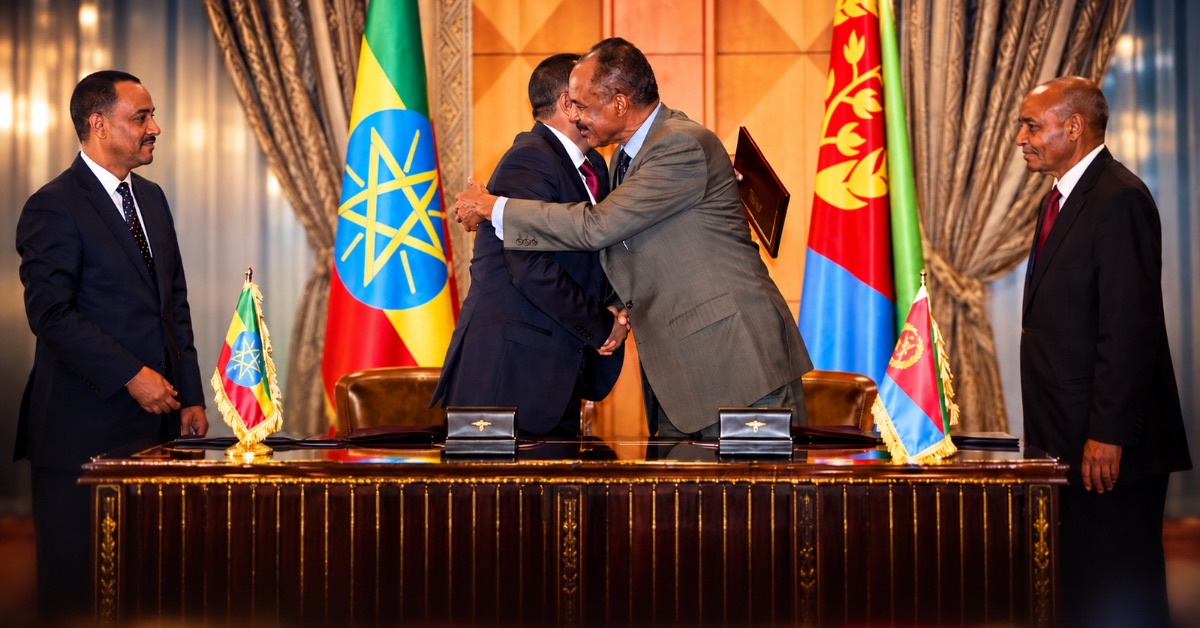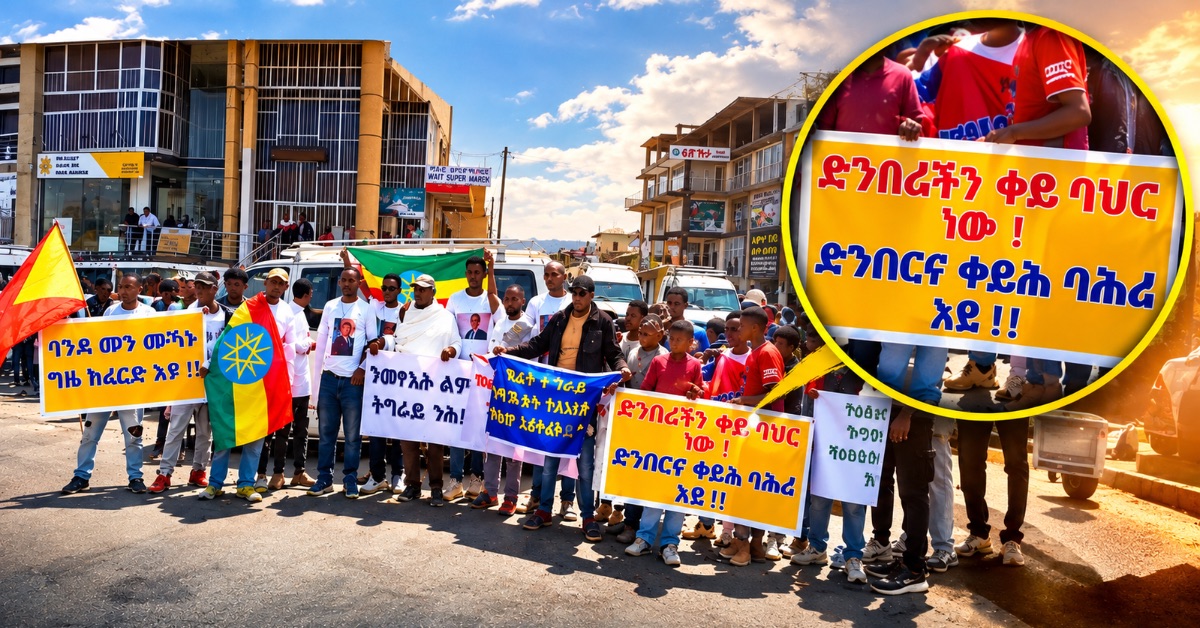

There are moments when a military parade tells you more by what it hides than by what it shows. Ethiopia’s recent celebration of the 90th anniversary of its air force was one of those moments. Fighter jets roared overhead. Drones were displayed like symbols of modern genius. Foreign aircraft, including UAE-supplied jets, joined the spectacle. The message was confidence, power, and ambition, delivered at a time when Ethiopian officials speak loudly about the Red Sea and regional influence, while the country itself remains deeply fractured by internal conflict.
For Eritreans, this was not a neutral celebration. It was a reminder.
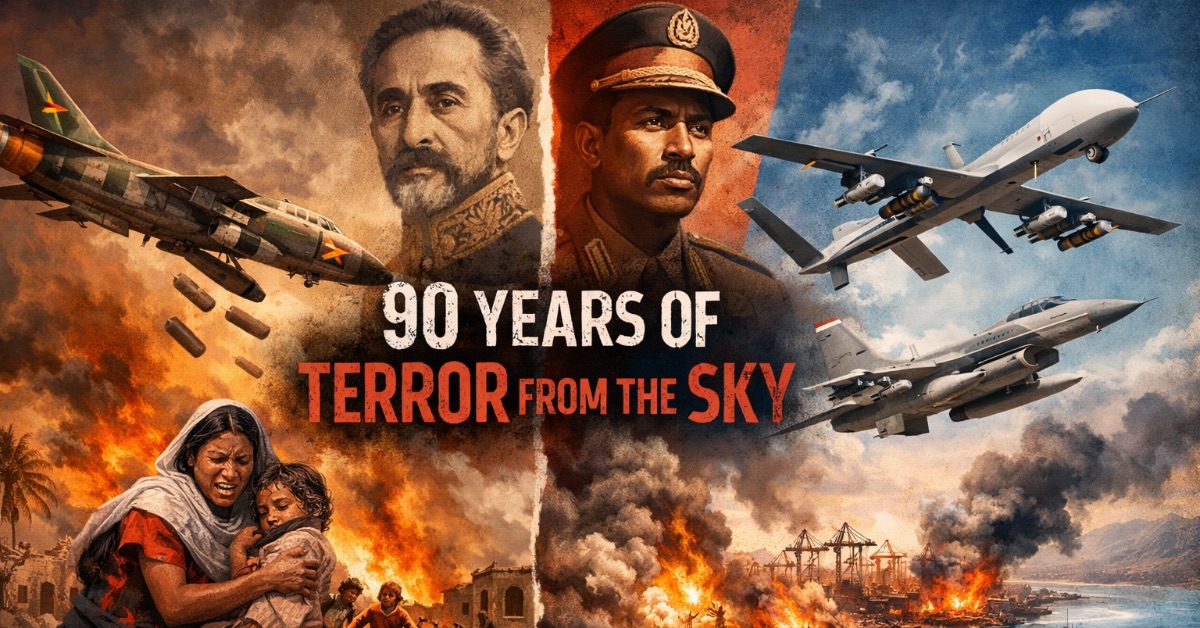
Because for most of its ninety-year existence, the Ethiopian Air Force has not been known for defending civilians or deterring foreign invasion. It has been known for something else. It has been used again and again against people the state claims as its own. Towns. Villages. Markets. Ports. Families. Entire communities punished from the sky when they refused submission on the ground.
The machinery has changed. The habit has not.
How the sky became a shortcut
Ethiopia’s use of air power against its own population did not begin with modern politics. It goes back to the imperial period. After the Italian occupation ended in 1941, Emperor Haile Selassie drew a clear lesson. Air power terrified. It worked quickly. It bypassed negotiation and resistance alike.
In 1943, when rebellion broke out in Tigray, the imperial state relied on foreign bombers to restore control. This was an early signal of how authority would be enforced. Internal problems would be solved from above, even if that meant inviting outsiders to bomb Ethiopian soil.
As Eritrea was forcibly absorbed in the 1950s and resistance began to grow in the 1960s, that same logic followed. Aircraft became part of counterinsurgency. Villages suspected of sympathy were not reasoned with. They were targeted. For Eritreans, the sky slowly stopped being just sky. It became a threat.
The Derg years: when air power declared war on life
If the imperial era introduced the idea, the Derg perfected it.
After seizing power in 1974, the military junta under Mengistu Haile Mariam turned Ethiopia into a heavily armed state backed by the Soviet bloc. The air force expanded rapidly. MiG fighter-bombers, helicopter gunships, and transport planes converted into bombers filled the hangars. Napalm, incendiaries, and cluster munitions entered the arsenal. Foreign advisers trained the crews. Eritrea became the main testing ground.
What followed was not conventional war. It was punishment from the air.
Eritrean towns were not bombed because they were military bases. They were bombed because people lived there. Markets were struck on market days, when farmers and traders gathered because they had no choice. Churches and mosques were hit when civilians fled inside, believing stone walls might offer protection. Food warehouses and ports were bombed to deepen hunger, not to win battles.
Nakfa, the heart of Eritrean resistance, was bombed year after year until almost nothing remained standing. It was never conquered. It was simply worn down, as if the goal was to erase the idea that a community could endure.
The thinking behind this was blunt. A captured Ethiopian pilot once explained that civilians were targeted because they supported the rebels. In Eritrea, support did not mean ideology. It meant surviving in your own home.
Massawa: revenge from above
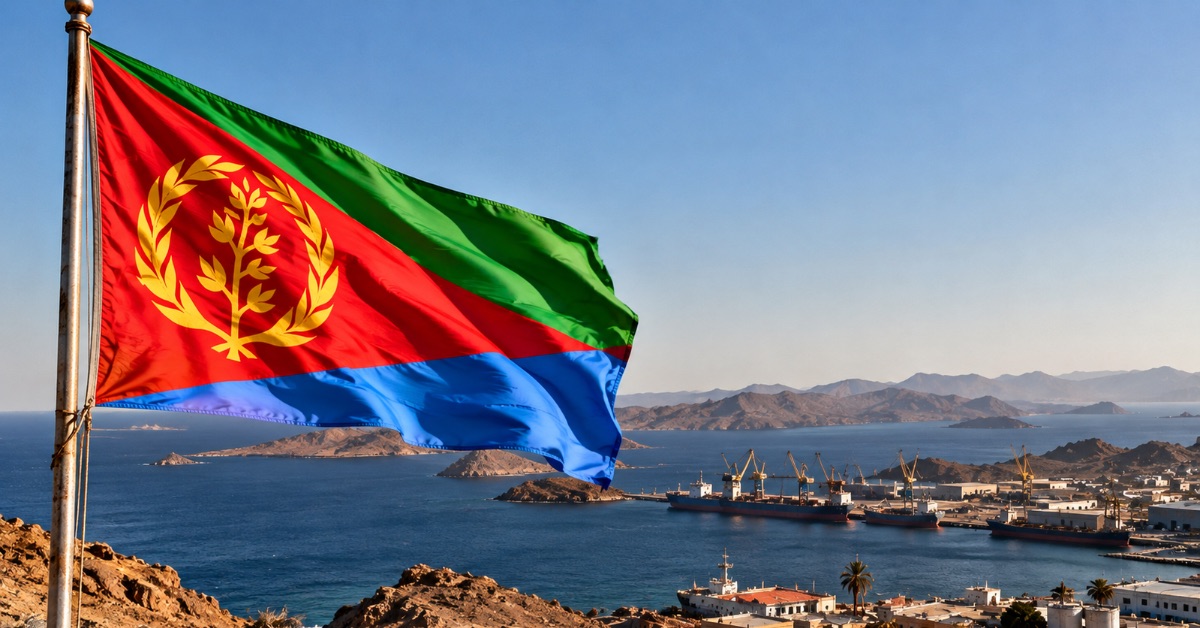
The clearest example of this mentality came after Operation Fenkil in February 1990, when Eritrean forces liberated the port city of Massawa. The Derg could not retake the city on the ground. So it chose another option.
It tried to destroy it.
For weeks, Ethiopian aircraft bombed Massawa’s residential areas, port facilities, and civilian infrastructure. Food aid stockpiles were burned. Incendiaries and cluster weapons were reportedly used. Bombings were timed in ways that caught civilians when they emerged from shelters. Aid workers described scenes of devastation. Eritrean survivors described something simpler. They said the state decided to punish the city for refusing to be ruled.
This was not about military necessity. It was about revenge.
Collapse without reckoning
When the Derg collapsed in 1991, it did not face real accountability. Mengistu fled into exile. Some officials were later convicted, but the institution itself survived largely untouched. Its doctrine, its culture, and its view of air power as a political tool remained intact.
Eritrea’s independence closed the door just in time. Many feared Asmara would be next, reduced to rubble rather than surrendered. That catastrophe did not happen because the regime fell, not because it chose restraint.
New paint, old habits
Post-1991 Ethiopia did not reform the role of its air force. It modernized it. Old allies were replaced by new ones. Equipment was upgraded. Procurement channels expanded. What did not change was the instinct.
When authority weakened, the answer was still to look upward.
This became painfully clear again during the war in Tigray from 2020 to 2022. This time, the tools included armed drones. Markets were struck. Towns were hit. Civilians died. Official statements spoke of precision and legality. Families buried their dead.
Technology made the violence quieter and politically easier. Drones do not come home in coffins. But the effect on people below was familiar.
What the anniversary really means
So what does a ninety-year celebration mean in this context?
It is like celebrating the sharpness of a blade while refusing to discuss what it has been used for. The display of drones and foreign jets, staged amid Red Sea rhetoric and internal instability, does not suggest confidence. It suggests that the Ethiopian state still believes air power can substitute for political legitimacy.
For Eritreans, the meaning is clear. We have lived this story before. We know how it begins. We know how it ends.
Eritrea’s insistence on sovereignty was never about pride for its own sake. It was learned the hard way, like a family learning to guard its only well during a long dry season. Once you have watched fire fall from the sky because you refused obedience, independence stops being an abstract idea. It becomes survival.
Ethiopia may celebrate ninety years in the air. History records something else. Ninety years of using the sky to compensate for failure on the ground.
Until that history is faced honestly, the roar of engines will not sound like progress. It will sound like memory repeating itself.
Ninety years above the people.
Too many of them spent teaching civilians to fear the sky.