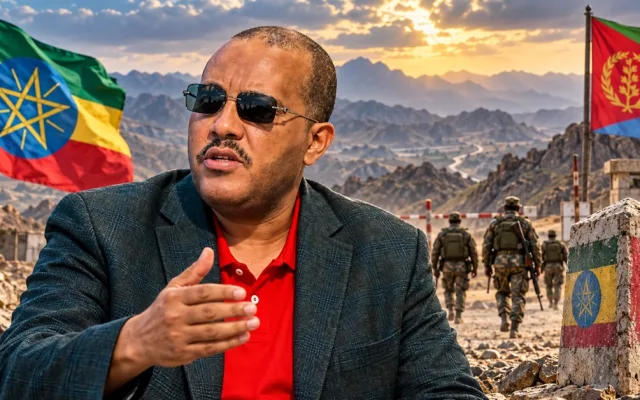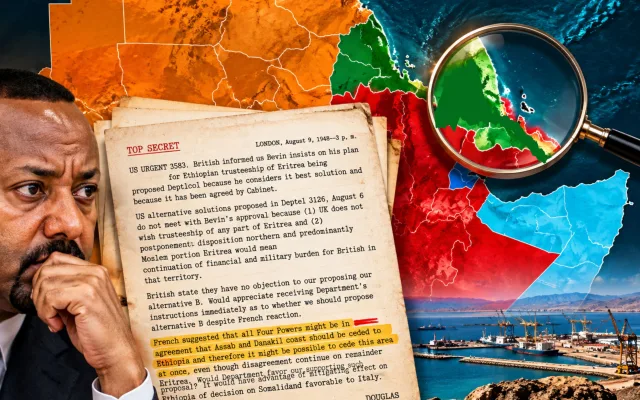

Ethiopia’s Prime Minister Abiy Ahmed has once again opened an old wound in the Horn of Africa. Standing before his parliament, he declared that the Red Sea question is “legal, historical, geographical, and economic.” He went further, warning that Ethiopia “will not remain locked up” and suggesting that regaining access to the sea would not take as long as it took to lose it.
This is no minor statement. In a region as volatile as the Horn of Africa, words from a head of government carry consequences. Abiy’s remarks are not mere reflection; they are an open challenge to Eritrea’s sovereignty—a call that dangerously borders on the language of aggression.
A Question of Law and History

Abiy Ahmed’s narrative begins from a false premise that Ethiopia once possessed and then lost the Red Sea. The truth is simpler and well-documented: Ethiopia has never had a sovereign claim over the Red Sea coast. Historically, the ports of Massawa and Assab were part of the Italian colony of Eritrea beginning in 1890. When Eritrea was illegally federated and later annexed by Emperor Haile Selassie in the 1950s, Ethiopia’s access to the sea came through occupation, not ownership. That annexation was condemned by the United Nations and opposed by the Eritrean people, who launched a thirty-year struggle for liberation.
Eritrea’s independence in 1993 affirmed by a UN-supervised referendum in which 99.8 percent voted in favor restored the country’s rightful borders. The international community, including Ethiopia itself, recognized this outcome. The Algiers Agreement of 2000, following the bloody 1998–2000 Ethiopian invasion, reaffirmed the sanctity of Eritrea’s borders based on the colonial treaties of 1900, 1902, and 1908 all of which place Assab squarely within Eritrea’s sovereign territory.
To question that now, three decades later, is to question international law itself.
Abiy’s Revisionism and Imperial Echoes
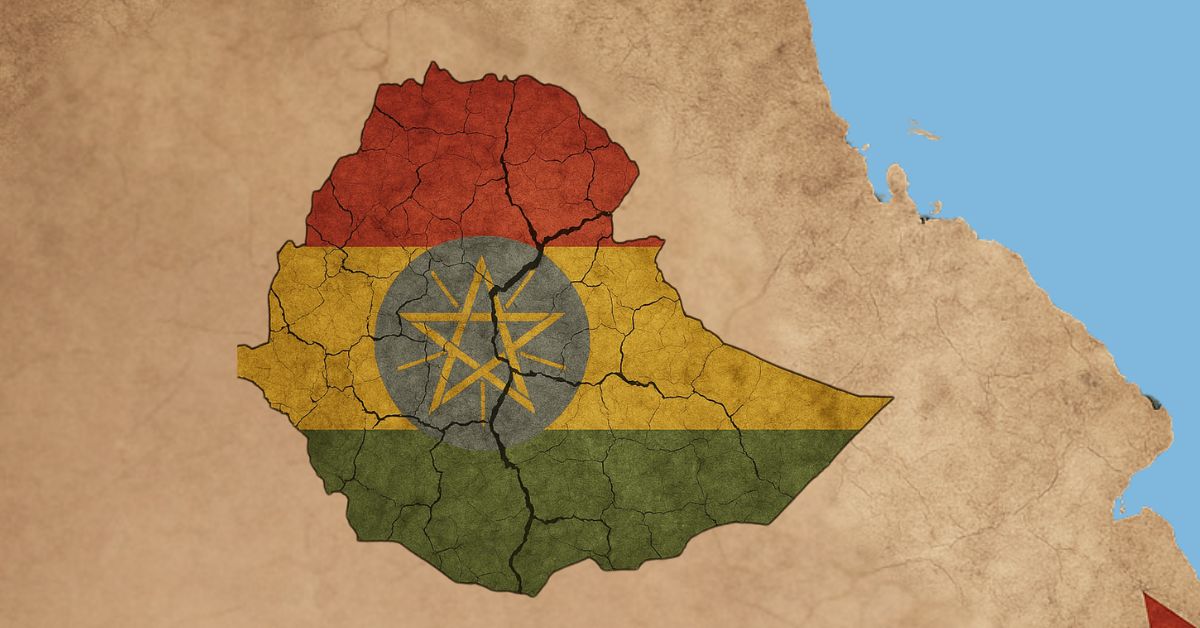 Abiy’s speech reflects a broader trend in Ethiopia’s leadership: reviving imperial nostalgia to rally a divided nation. The Prime Minister’s claim that Ethiopia’s landlocked status is “unnatural” echoes the mindset of earlier rulers who viewed Eritrea not as a neighbor but as a possession. Haile Selassie sought to erase Eritrea’s autonomy through forced federation. Mengistu Hailemariam tried to bomb it into submission. Both failed. Eritrea’s independence stands as one of the most decisive rejections of imperial expansion in modern African history.
Now, Abiy seeks to resurrect that failed dream in a new form under the language of “geography” and “economic necessity.” He claims population pressure justifies Ethiopia’s pursuit of a port. But population size has never been a legal argument for sovereignty. If that logic held, populous countries could claim territory from smaller ones a principle long rejected by the United Nations, the African Union, and every post-colonial charter that protects the integrity of African borders.
The Dangerous Duality of Abiy’s Words
Abiy speaks of “peace” and “dialogue,” yet his words carry the tone of inevitability. This duality soft words with sharp edges defines his recent political rhetoric. When he tells parliament that Ethiopia “will not stay locked up whether one likes it or not,” it sounds less like diplomacy and more like a veiled threat.
History has seen this pattern before. Leaders who begin with claims of “natural rights” often end with military adventurism. And in a country already battling internal conflict in Amhara, Oromia, and Somali regions, the temptation to redirect public anger toward an external target is as old as politics itself.
Abiy’s approach also risks turning Ethiopia’s maritime ambitions into a continental crisis. Djibouti, Sudan, and Somalia all maintain strategic interests along the Red Sea corridor. Ethiopia’s assertion of “inevitability” could easily destabilize regional relations and invite new rounds of foreign interference the very dynamic Africa has long sought to escape.
Eritrea’s Strategic silence
Eritrea has remained publicly silent in the face of Abiy’s remarks, as it has in the past. That silence is often misread as indifference. It is not. Eritrea’s restraint comes from strategic maturity and confidence in its sovereignty. The country does not debate its independence; it defends it through quiet strength.
For Eritreans, Assab is not just a port. It is a symbol of identity a reminder that sovereignty is sacred, not negotiable. The Eritrean people know what it cost to be free: tens of thousands of lives, decades of sacrifice, and a nation rebuilt from rubble. They will not tolerate lectures on legitimacy from those who once denied their right to exist.
Arrogance and Amnesia
Abiy’s comments about finding “houses without people” in Assab are particularly arrogant. Development is not the yardstick of sovereignty. Eritrea’s choices its pace of growth, its urban planning, its foreign partnerships are internal matters. The implication that Eritrea’s coastline is “underutilized” and therefore open to negotiation is both insulting and dangerous. That line of thinking belongs to colonialism, not modern Africa.
In making such remarks, Abiy also ignores the deliberate and systematic policies that led to the very conditions he now mocks. For decades, previouse Ethiopian regimes pursued strategies of containment and economic strangulation against Eritrea. Instead of fostering coexistence after the 1993 referendum, Ethiopia sought to isolate the young nation diplomatically and economically. Addis Ababa lobbied tirelessly for international sanctions, portraying Eritrea as a regional spoiler while positioning itself as an “anchor state.” Those sanctions, imposed between 2009 and 2018, crippled Eritrea’s access to global finance, trade, and development assistance.
Eritrea’s underdevelopment, therefore, was not the product of neglect or failure it was the outcome of external sabotage. Ethiopia’s political elite worked hand in hand with powerful Western allies to contain Eritrea’s independence, hoping that economic suffocation would achieve what war could not. Abiy Ahmed, instead of acknowledging this history, now uses its consequences as justification for a renewed claim over Eritrea’s territory. It is a cynical inversion of truth: punish a nation for decades, then blame it for the scars you inflicted.
The Fracture After Pretoria
Abiy’s remarks also shed light on the souring of Ethiopia–Eritrea relations after the Pretoria Agreement of 2022, which ended the Tigray war. Once allies on the battlefield, Addis Ababa and Asmara have grown cold since that accord. Eritrea openly criticized the deal as a US-brokered attempt to rescue the TPLF the same group responsible for years of hostility and war.
Abiy, meanwhile, now frames Eritrea as “uncooperative” and evasive. In truth, Eritrea has refused to be a pawn in Ethiopia’s shifting internal politics. It will not be used as a stepping stone for Abiy’s domestic ambitions or a bargaining chip in his disputes with the West.
Eritrea’s Red Line
 Let there be no misunderstanding: Eritrea’s territorial integrity is not up for debate. The Red Sea, Assab, and Massawa are Eritrean by history, by law, and by the will of the people. Any attempt political or military to challenge that status will be met with the same unwavering resolve that broke the back of Ethiopian and foreign armies before. Eritrea has survived isolation, sanctions, propaganda, and war. It will survive rhetoric, too.
Eritrea does not seek confrontation. But Eritreans have never shied away from defending what is theirs. Peace cannot be achieved through threats, nor can friendship be built on falsehoods. Abiy Ahmed’s government must understand that revisiting colonial borders is a Pandora’s box once opened, it will consume not just Eritrea, but the very stability of Ethiopia itself.
A Region at a Crossroads
The Horn of Africa stands at a delicate moment. Global powers are already circling the Red Sea, from American and Chinese naval bases in Djibouti to Gulf state investments along the African coast. Ethiopia’s belligerence risks inviting new external players into an already crowded theater. The region needs cooperation on trade, climate, migration, and security not grandstanding about lost seas and ancient grievances.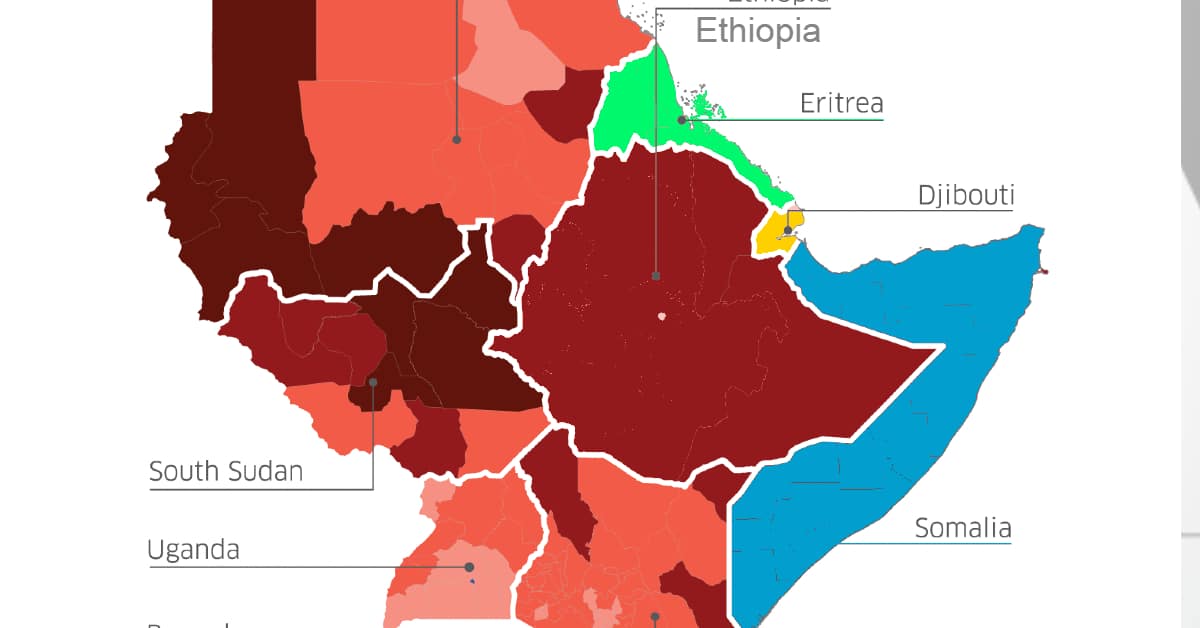
If Abiy Ahmed truly seeks regional prosperity, he should start by stabilizing his own house. Ethiopia’s problems are not born of geography but of governance. A nation that cannot hold its provinces together should not dream of expanding beyond its borders.
The Call for Regional and International Clarity
Abiy’s remarks demand a clear response from African institutions. The African Union, headquartered in Addis Ababa, must not remain silent while one member state publicly flirts with expansionism against another. The principle of “respect for borders inherited at independence” enshrined in the AU Charter is the cornerstone of African peace. If it is eroded here, it will crumble everywhere.
International partners must also recognize the danger of enabling such rhetoric. Those who once praised Abiy as a reformer must now confront the darker evolution of his politics. Ethiopia’s instability cannot be exported as maritime ambition.
The Final Word
Eritrea’s red line has been crossed rhetorically, but not yet physically. The world must make sure it stays that way. The right to the Red Sea is not Ethiopia’s to claim. It belongs to Eritrea by history, by blood, and by international law.
Abiy Ahmed’s words have exposed the old imperial ghost haunting Ethiopia’s modern politics. But ghosts do not rule the living. Eritrea’s independence was born out of resistance to precisely this kind of thinking. And if history teaches anything, it is that those who challenge Eritrea’s sovereignty never prevail.
The Horn of Africa cannot afford another war born of ego and delusion. Eritrea’s message is clear: sovereignty is sacred, peace is precious, and the Red Sea will never again be a playground for empire.