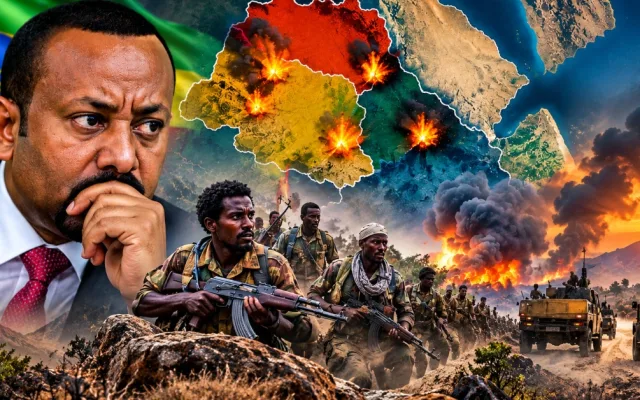
Getachew Reda’s recent remarks before an Ethiopian defense and foreign-policy audience reveal a narrow understanding of Eritrea’s strategic position. In discussing the alleged collapse of the Tsimdo alliance, he argued that Eritrea suffers from a lack of strategic depth, making it vulnerable to a potential Ethiopian military offensive. According to his assessment, the proximity of Asmara to the Ethiopian border forces Eritrea to pursue a strategy of keeping Ethiopia weak and occupied with internal conflicts.
His argument is not entirely without military logic. Eritrea is geographically smaller than Ethiopia, and the distance between its capital and parts of its southern border creates legitimate defensive considerations. But Getachew makes a fundamental analytical mistake. He treats strategic depth almost exclusively as a question of territorial distance, overlooking the broader geographic, diplomatic, economic and maritime factors that determine a country’s strategic position.
Eritrea’s strategic value cannot be measured simply by how many kilometres separate Asmara from the Ethiopian border.
If anything, an examination of the two countries reveals how different forms of geographic advantage shape their national security calculations. Ethiopia has considerable territorial space, a large population and substantial economic potential. Eritrea possesses something Ethiopia does not: sovereign access to the Red Sea, with the diplomatic and commercial opportunities that accompany it. That difference matters far more than Getachew acknowledges.
Geography Is More Than Distance
In conventional military thinking, strategic depth refers to the territory available to absorb an attack, reposition forces, protect critical infrastructure and maintain defensive operations. Ethiopia’s size and mountainous interior provide advantages in this respect. That is a geographical reality, and there is little value in denying it. But modern national security is not determined by territorial size alone. Geography also shapes a country’s economic resilience, international partnerships, maritime access and ability to diversify its strategic relationships. Consider Ethiopia’s position. It is a country with a population exceeding 100 million, substantial natural resources and enormous development potential. Yet its international trade depends heavily on transport corridors crossing the territory of other sovereign states. Djibouti remains its principal maritime gateway.
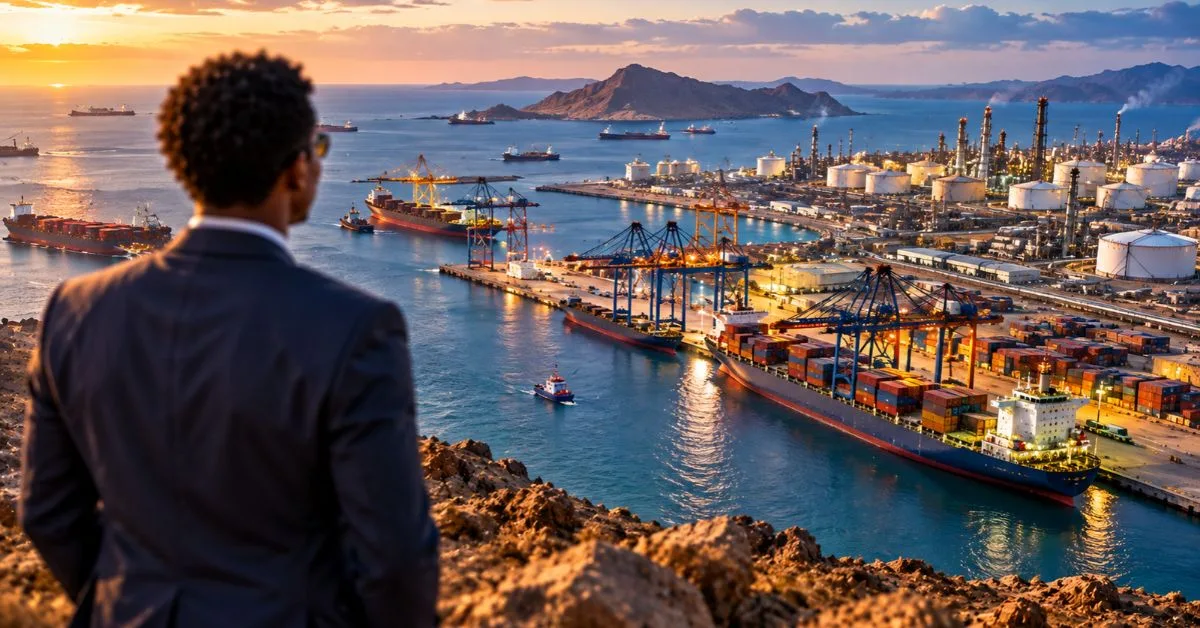
Eritrea faces a different situation. It has a much smaller domestic market and significant economic challenges, but its Red Sea coastline provides direct access to international maritime routes. Its ports at Massawa and Assab connect it geographically to the wider maritime system linking the Mediterranean, the Middle East and the Indian Ocean. These are not interchangeable advantages. Ethiopia’s extensive territory offers room for military manoeuvre, while Eritrea’s coastline creates opportunities for maritime commerce, diplomacy and international engagement. The distinction is essential because Getachew’s analysis focuses on the first while largely ignoring the second.
The Red Sea Changes the Strategic Equation
Eritrea occupies a consequential position along one of the world’s important maritime corridors. International shipping moving between Europe and Asia passes through the Red Sea and the Bab el-Mandeb Strait, connecting the Mediterranean to the Indian Ocean. Eritrea does not control this international waterway, but its location gives it a legitimate stake in discussions about maritime security, regional commerce and the stability of surrounding sea lanes. That geographic position cannot be replicated by Ethiopia’s population or territorial size. Ethiopia can negotiate commercial access to foreign ports, invest in transport infrastructure and diversify its international trade corridors. It cannot independently acquire a sovereign coastline without the consent of another state.
This distinction helps explain why Ethiopia’s political leadership has repeatedly elevated maritime access into a major national strategic issue. It also demonstrates why Eritrea’s maritime position carries importance beyond the size of its economy or military. The irony is that Getachew himself comes close to acknowledging this reality. He argues that a strong Ethiopia will inevitably seek the sea and additional resources. Yet he does not adequately examine what that expectation means for Eritrea’s security. If Ethiopian strength is expected to produce demands involving access to the Red Sea, it is reasonable for Eritrea to examine the potential political and military consequences. Such concerns do not establish hostility toward Ethiopia. They reflect the responsibilities of a sovereign state whose territory has become the subject of its neighbour’s strategic debate.
Eritrea’s Regional Engagement Tells Another Story
Recent diplomatic developments provide another important dimension missing from Getachew’s assessment. Eritrea has continued developing relationships with regional powers whose interests extend across the Red Sea, the Nile Basin and the wider Horn of Africa. Its engagement with Egypt is particularly significant. The two countries have discussed cooperation involving maritime transport, port development, investment and regional security. Eritrea has also participated in diplomatic consultations involving Sudan and Somalia, reflecting shared concerns about regional instability and foreign interference.
These relationships demonstrate that Eritrea’s foreign-policy options are not confined to its relationship with Ethiopia. That does not mean every diplomatic meeting produces a strategic alliance, or that every announced economic project becomes operational. Such relationships must be judged by their actual results. Nevertheless, they illustrate an important reality: Eritrea’s geographical position provides opportunities to engage with countries whose interests extend well beyond the Ethiopian–Eritrean border.
Getachew interprets Eritrea’s regional relationships largely through the assumption that Asmara seeks to weaken Ethiopia. But Eritrea has its own legitimate economic, security and diplomatic interests. Its relationships with Egypt, Sudan, Somalia and other regional actors cannot reasonably be reduced to a single alleged anti-Ethiopian objective. An independent Eritrean foreign policy does not require Ethiopian approval. At the same time, Eritrea must ensure that its relationships serve its own national interests rather than turn the country into an instrument of competing regional agendas. Strategic autonomy is meaningful only when it strengthens national decision-making and resilience.
Ethiopia’s Geographic Size Does Not Eliminate Its Vulnerabilities
Getachew’s argument also raises another question: if territorial size is the principal measure of strategic strength, why does Ethiopia place such extraordinary political importance on obtaining access to the sea? The answer lies in the distinction between geographic size and economic connectivity. Ethiopia possesses substantial territorial depth, yet its reliance on foreign maritime gateways creates vulnerabilities involving transportation costs, trade disruptions and diplomatic relations with neighbouring countries. These challenges can be addressed through infrastructure investment, diversified trade agreements and regional economic cooperation. They do not require sovereign control of another country’s coastline.
Eritrea, meanwhile, has direct maritime access but must overcome significant economic and institutional constraints to fully benefit from it. Ports require investment, modern infrastructure, competitive services and predictable commercial arrangements. Geographic potential is valuable, but it must be developed. Neither country’s geographic advantages eliminate its vulnerabilities. This is precisely why any serious comparison must consider multiple dimensions of strategic strength rather than reducing the discussion to the physical distance between a border and a capital city.
A More Important Question for Eritrea
For Eritreans, the purpose of examining Getachew’s argument should not be to dismiss every security concern he raises. It should be to understand the country’s strategic opportunities and responsibilities more clearly. Eritrea’s Red Sea coastline is an enduring national asset. Its diplomatic relationships can expand its options, while its geographic position can create opportunities for trade, investment and cooperation. But maritime geography alone cannot guarantee national security or prosperity. The country must strengthen its economic foundations, develop its infrastructure, improve institutional effectiveness and pursue relationships that reinforce its independence. Its long-term security should rest on national resilience rather than the weakness of neighbouring countries.
Equally important, Eritrea must consistently distinguish its legitimate defensive interests from involvement in the internal political disputes of other states. Its strongest diplomatic position is one grounded in respect for internationally recognized borders, non-interference and sovereign equality. Ethiopia’s legitimate desire for reliable maritime trade can be accommodated through mutually agreed commercial arrangements. But economic necessity cannot create territorial entitlement.
Conclusion: The Strategic Reality Getachew Overlooks
Getachew Reda is correct that Eritrea faces geographical constraints in conventional military defense. But his analysis is incomplete because he treats territorial distance as though it determines the entirety of national strategic strength. Eritrea’s location on the Red Sea, its sovereign ports and its opportunities for regional diplomatic engagement represent substantial strategic assets. Ethiopia’s territorial size, population and economic potential provide different advantages, alongside the structural vulnerability created by its dependence on foreign maritime corridors. The evidence does not establish that either country possesses greater strategic depth in every meaningful sense. It does demonstrate that Eritrea’s strategic position cannot be understood through military geography alone.
Eritrea’s most enduring advantage is not simply that it has access to the sea. It is that this access belongs to a sovereign state whose geographic position gives it opportunities for international engagement that cannot be reproduced by territorial size alone. The question for Eritrea is how effectively it can transform that position into economic strength, diplomatic independence and lasting national security. And the question for Ethiopia is whether it can pursue its legitimate maritime interests through cooperation rather than allowing those ambitions to become another source of conflict. Ultimately, the Horn of Africa does not need a competition over which country can make the other more vulnerable. It needs a regional order in which geographic advantages become opportunities for cooperation rather than justifications for confrontation.