

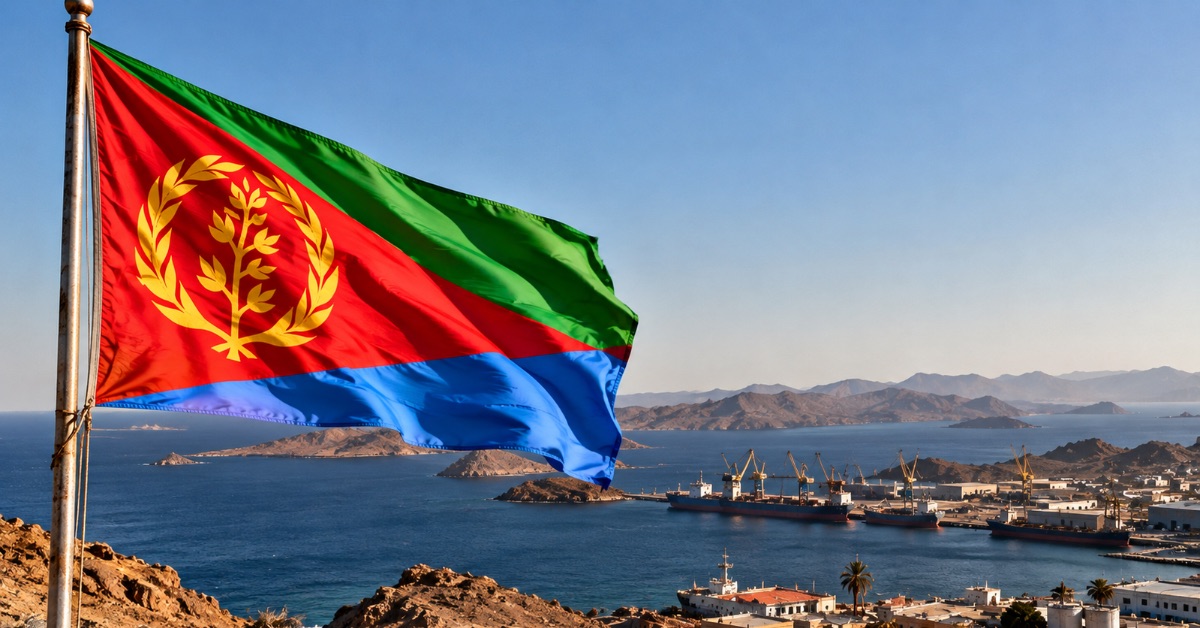
Ethiopia has taken its confrontation with Eritrea to the United Nations Security Council, accusing its northern neighbor of military aggression and invoking the right to self-defense. Eritrea has rejected the accusations and warned that Addis Ababa is preparing the ground for a war of its own. These developments are serious enough, but they cannot be separated from a question that has troubled relations between the two countries for nearly three years: Ethiopia’s pursuit of sovereign access to the Red Sea. What Addis Ababa presents as a historical and economic necessity is viewed in Asmara as a threat to Eritrea’s territorial integrity. At the heart of the dispute is a distinction that should never have become controversial. Ethiopia has every right to seek commercial access to the sea. It has no right to claim ownership of Eritrea’s coastline.
On October 9, Ethiopian Foreign Minister Gedion Timothewos accused Eritrean forces of advancing as far as 60 kilometers into northern Ethiopia and invoked Article 51 of the UN Charter, which recognizes the right of self-defense in the event of an armed attack. Eritrea rejected the accusations, and Foreign Minister Osman Saleh subsequently appealed to the Security Council to address what Asmara described as Ethiopia’s preparations for aggression. The diplomatic exchanges are documented, but the competing accounts of military events remain contested. Witnesses interviewed by Reuters reported seeing Eritrean soldiers in northern Ethiopia, while conflict monitors reported drone strikes involving Eritrean forces near Adigrat. Those accounts deserve examination rather than dismissal. They do not, however, independently establish every allegation advanced by the Ethiopian government or explain the full circumstances and objectives of the reported military movements.
What is not in dispute is Ethiopia’s increasingly prominent campaign for access to the Red Sea. Since 2023, Prime Minister Abiy Ahmed has repeatedly described maritime access as a national priority, connecting it to Ethiopia’s population, economic development and long-term security. On October 5, he again emphasized the importance of securing an outlet to the sea while presenting negotiation and mutual accommodation as the preferred approach. Ethiopia maintains that its intentions are peaceful. Yet repeated references to sovereign access, alongside discussions involving Eritrea’s port of Assab, have understandably raised concern in Eritrea. The issue is not whether Ethiopia needs access to international shipping. It is why access is increasingly discussed in terms that raise questions about sovereignty rather than ordinary commercial arrangements.
The latest warnings by Abraham Belay, Ethiopia’s former defense minister, have added to those concerns. Belay accused Eritrea of involvement in the renewed fighting in northern Ethiopia and warned that Ethiopia’s response would be intensified if the alleged intervention continued. Eritrea denies the accusations, which have not been conclusively established through independent reporting. Nevertheless, the warning carries political weight. Belay is not an obscure commentator. He has held senior positions within Ethiopia’s security establishment, and his remarks come at a time when relations between the two countries have deteriorated sharply. His statement does not prove that Addis Ababa has issued an order to invade Eritrea, but it reinforces the concern that allegations arising from Ethiopia’s internal war could become a justification for military action against its neighbor.
This is precisely why Eritrea’s case should remain anchored in international law rather than speculation about Ethiopian intentions. Eritrea became internationally independent in 1993 following a United Nations-observed referendum, and its sovereignty over its recognized territory is not conditional on Ethiopia’s economic circumstances. The UN Charter prohibits the threat or use of force against another state’s territorial integrity or political independence. The United Nations Convention on the Law of the Sea recognizes the rights of landlocked countries to access the sea, but those rights are exercised through arrangements with transit states. They do not grant a landlocked country the authority to acquire another state’s coastline. Ethiopia’s geographical disadvantage is real, but it cannot become a legal argument for territorial acquisition.
There is nothing inherently unreasonable about Ethiopia seeking better port facilities, cheaper transportation or reliable access to global markets. Eritrea itself could benefit from a future in which Ethiopian trade moves through Assab under mutually agreed commercial arrangements. Such cooperation could generate employment, encourage infrastructure development and strengthen economic ties between the two countries. But a port used by Ethiopian businesses does not have to become Ethiopian territory. Commercial access and sovereign ownership are not interchangeable concepts. One can be negotiated between neighboring states. The other concerns the political independence and territorial integrity of a country whose borders are already internationally recognized. That is the distinction Eritrea must continue placing before the international community.
The renewed war in Tigray has made this dispute considerably more dangerous. Ethiopian federal forces and their allies have regained Mekelle and advanced into other important northern towns, including Adigrat near Eritrea’s border. These are significant battlefield developments, but control of major cities does not necessarily mean the underlying political conflict has been resolved. The previous war demonstrated how quickly military fortunes can change and how costly premature declarations of victory can become. For Eritrea, the question is not whether the federal government or the TPLF ultimately controls Tigray. It is whether Ethiopia’s internal struggle will become entangled with the country’s wider maritime ambitions and accusations against Eritrea. That possibility deserves serious attention, particularly now that the two governments have severed diplomatic relations.
The collapse of those relations is itself a warning. Ethiopia expelled Eritrean diplomats, and both countries closed their embassies as accusations intensified. When diplomatic channels disappear, governments lose an important means of clarifying intentions and preventing misunderstandings. Military movements near the border become more difficult to interpret, while statements intended to demonstrate strength can produce consequences far beyond their original audience. Eritrea has every reason to maintain credible defenses and monitor developments closely. But military preparedness should serve the purpose of preventing aggression, not make another war inevitable. The country’s strongest position combines readiness with diplomatic engagement and a consistent insistence that disputes must be resolved without coercion.
The October 4 summit involving Eritrea, Egypt, Sudan and Somalia offered another indication of how seriously regional governments view the changing security environment. Their El Alamein declaration reaffirmed sovereignty, territorial integrity, non-interference and the responsibilities of Red Sea coastal states. Although the agreement did not establish a military alliance against Ethiopia, its principles speak directly to the dispute over maritime access. Eritrea should build on such diplomatic cooperation without allowing its foreign policy to become defined solely by opposition to Addis Ababa. Partnerships with neighboring countries should strengthen Eritrea’s security, economic development and international standing while preserving its freedom to make independent decisions.
That independence matters particularly now, as Eritrea has begun exploring new diplomatic and economic opportunities. The expiration of the American sanctions framework affecting Eritrean institutions and renewed contacts with Washington have created possibilities for improved engagement. Eritrea’s ports, coastline and strategic location offer opportunities in shipping, logistics, infrastructure and investment. Those prospects would be threatened by another destructive conflict. The country has already paid an enormous price for war, and another generation of Eritreans should not be forced to bear the consequences of territorial ambitions that international law does not recognize.
The human consequences should remain central to this discussion. Communities across northern Ethiopia have endured years of fighting, displacement, hunger and destruction. Eritrean families know the cost of war from their own history. Another confrontation would place civilians on both sides of the border at risk and deepen the instability already affecting the Horn of Africa. Taking Ethiopia’s rhetoric seriously does not mean treating war as unavoidable. It means ensuring that Eritrea is prepared to defend itself while exhausting every reasonable diplomatic avenue to prevent another catastrophe.
The facts already provide a strong foundation for Eritrea’s position. Ethiopia has publicly made maritime access a national priority. Eritrea’s sovereignty over Assab and its Red Sea coastline is internationally recognized. International law allows commercial transit arrangements but provides no entitlement to seize another state’s territory. Ethiopian officials have made serious allegations against Eritrea, and independent reports of military activity require careful examination. Yet those allegations cannot erase Eritrea’s sovereign rights or justify a territorial campaign unrelated to a lawful and necessary act of self-defense.
The question is not whether Ethiopia deserves access to international trade. It does. Nor is it whether the two countries could eventually benefit from peaceful economic cooperation. They could. The question is whether Ethiopia’s economic needs can be transformed into a claim over territory belonging to another sovereign nation. They cannot.
Eritrea does not need to prove that an Ethiopian invasion is inevitable to defend its sovereignty today. Its independence is already established, its borders are internationally recognized, and its coastline is not a bargaining chip. Ethiopia can negotiate access to the sea, but Eritrean territory is not Ethiopia’s to claim.

