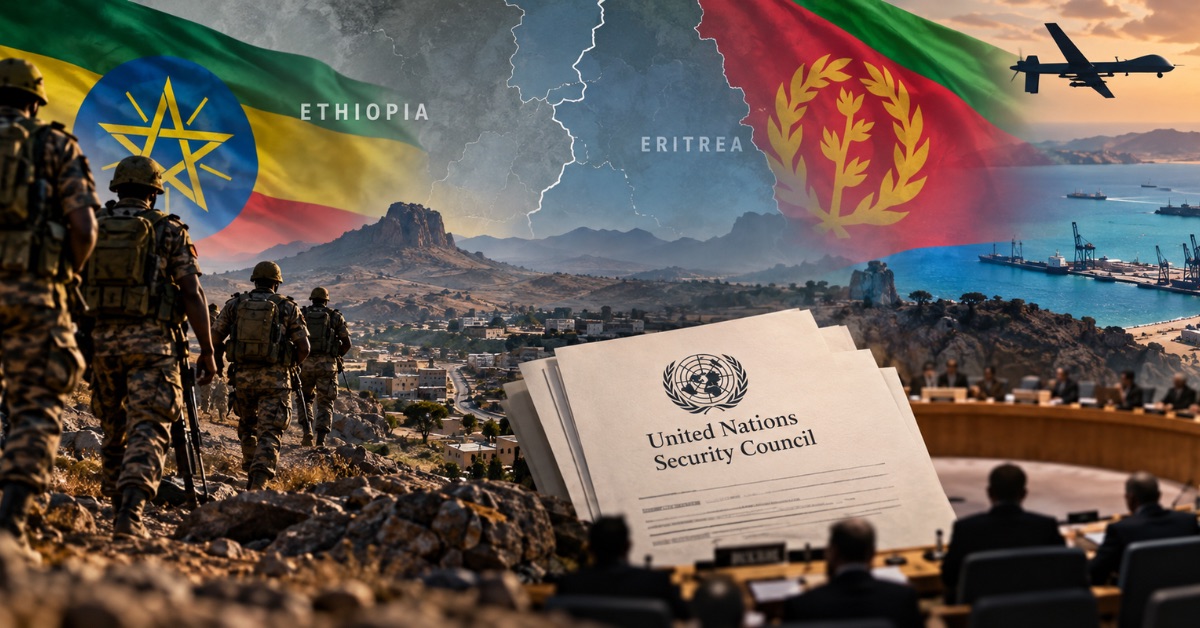

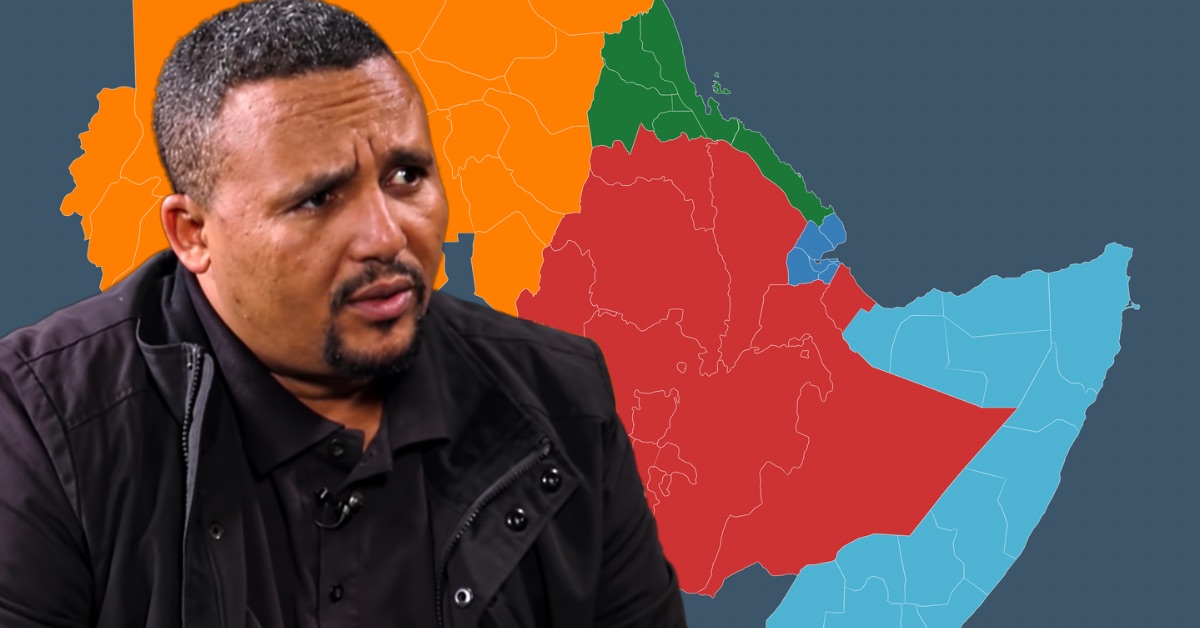
Jawar Mohammed appears increasingly fascinated by the possibility of Ethiopia defeating Eritrea. In his latest article, “If Ethiopia Breaks Eritrea’s Defences, What Comes Next?”, he imagines the collapse of Eritrea’s military defenses, the removal of President Isaias Afwerki, an Ethiopian advance toward Assab and even the fall of Asmara. Although he presents these as hypothetical scenarios rather than predictions, the article devotes considerable attention to what Ethiopia might gain from an Eritrean defeat. The most important question, however, receives far less attention: what gives Ethiopia the right to determine the political or territorial future of another sovereign country?
What makes the argument particularly revealing is Jawar’s political history. He previously warned about the dangers of Ethiopia’s confrontational rhetoric over Red Sea access and the nationalist sentiments surrounding it. He also emerged as a fierce critic of Prime Minister Abiy Ahmed after initially supporting his reform agenda, eventually finding himself imprisoned by the same government. Yet today, Jawar appears remarkably comfortable imagining how Abiy’s military might weaken Eritrea and improve Ethiopia’s strategic bargaining position. Political positions can evolve, but the principles governing them should remain consistent. If Ethiopia’s maritime ambitions were dangerous when expressed through political rhetoric, why should they become more acceptable when linked to the possibility of military victory?
From Warning Against Expansionism to Imagining Its Rewards
The most revealing part of Jawar’s article concerns Assab. After discussing the possibility of Ethiopian forces breaking through Eritrea’s defenses, he considers a scenario in which the Ethiopian army bypasses Asmara and advances toward the Eritrean port. He acknowledges the dangers of occupation but suggests that a militarily weakened Eritrea could provide Ethiopia with greater leverage to negotiate maritime and security arrangements. This is precisely the kind of thinking that has fueled Eritrean concerns about Ethiopia’s intentions. Since October 2023, Prime Minister Abiy Ahmed’s increasingly assertive statements about Red Sea access have raised questions about whether Ethiopia seeks commercial cooperation or sovereign control over territory belonging to its neighbors. Jawar’s argument does little to resolve those concerns. Instead, it introduces the possibility that military pressure could achieve what peaceful diplomacy has not.
Ethiopia’s need for reliable maritime access is understandable, but economic necessity does not create territorial entitlement. Assab is internationally recognized Eritrean territory, and its sovereignty cannot be negotiated under military coercion. If Ethiopia genuinely seeks peaceful commercial arrangements, there is no reason to imagine capturing the port as part of a wider military confrontation. By introducing Assab into a discussion supposedly centered on Ethiopian national security, Jawar exposes the dangerous overlap between Ethiopia’s maritime ambitions and its escalating confrontation with Eritrea.
Military Analysis or Wishful Thinking?
Jawar builds much of his argument around Ethiopian allegations of Eritrean military intervention and recent Ethiopian battlefield gains against the TPLF. These allegations deserve independent examination, particularly because Eritrea has rejected accusations of an incursion and accused Addis Ababa of preparing aggression. Accounts from witnesses and conflict monitors must be assessed carefully, but disputed claims should not be transformed into settled conclusions. Jawar nevertheless proceeds to discuss how Ethiopia’s drones, aircraft and battlefield coordination could overwhelm Eritrean defenses, creating the conditions for military defeat and political collapse.
The problem is not that such outcomes are impossible to imagine. It is that Jawar provides little publicly verifiable evidence establishing Eritrea’s present defensive capabilities, the cohesion of its military command or Ethiopia’s ability to sustain a prolonged offensive inside Eritrean territory. Success against the TPLF does not automatically guarantee success against the Eritrean state. Geography, logistics, defensive preparations, national mobilization and political determination all matter. Yet Jawar moves quickly past these uncertainties to examine who might replace Isaias and how Ethiopia could capitalize on victory. Serious strategic analysis requires more than projecting one army’s recent successes onto a different battlefield.
Eritrea Is Not Isaias Afwerki
Another fundamental weakness in Jawar’s argument is his tendency to frame Eritrea’s future around the survival of its president. He imagines Eritrean generals removing Isaias, negotiating with Abiy Ahmed or reorganizing the state following military defeat. What this overlooks is that Eritrea is not synonymous with its government. Its independence was achieved through decades of sacrifice and confirmed through an internationally observed referendum in 1993. That sovereignty belongs to the Eritrean people, regardless of who occupies the presidency.
Eritreans have legitimate disagreements about political freedoms, constitutional governance, national service and the future direction of their country. But those disagreements do not grant Ethiopia authority to impose political change through military force. An Eritrean can oppose Isaias while firmly rejecting Ethiopian intervention. Jawar himself acknowledges that Eritreans who oppose the government might nevertheless resist occupation. That recognition should have guided his analysis from the beginning. Eritrean nationalism is not merely an instrument of the government; it is rooted in a history of resistance against foreign domination.
The Lessons Jawar Selectively Draws From History
Jawar invokes Ethiopia’s military advances into Eritrea in 2000 as evidence that Eritrean defenses can be penetrated. Ethiopian troops did capture Barentu and advance into Eritrean territory, but that is only part of the historical record. Ethiopia did not eliminate Eritrean independence, determine its political future or permanently acquire the territory it occupied. The war ended through the Algiers Agreement and an international boundary process, which subsequently confirmed Eritrea’s sovereignty over Badme.
The lesson is straightforward: military penetration does not create territorial legitimacy. Nor does historical battlefield success guarantee future victory. Jawar’s use of 2000 as a reference for another potential offensive ignores the devastating human consequences of that war and the fundamental distinction between military capability and sovereign rights.
Washington Did Not Endorse an Invasion
Jawar also examines the October 14 conversation between U.S. Secretary of State Marco Rubio and Abiy Ahmed, suggesting that Ethiopia’s diplomatic position has strengthened. But Washington’s public message emphasized de-escalation, respect for sovereignty and territorial integrity, avoidance of cross-border incursions, and a return to dialogue under the 2018 Ethiopia–Eritrea peace framework. The United States did not publicly endorse Ethiopian military action against Eritrea or establish the disputed allegations as proven facts.
International law recognizes a state’s right to defend itself against an armed attack, subject to legal limitations. It does not provide an unrestricted license to capture another country’s ports, overthrow its government or impose political settlements. Sovereignty cannot be absolute when Ethiopia invokes it and conditional when Eritrea seeks the same protection.
Eritrea’s Future Is Not Ethiopia’s Strategic Project
There is considerable irony in seeing an Ethiopian opposition politician, once imprisoned under Abiy, construct elaborate scenarios around the possible military achievements of the same government. Jawar does not explicitly advocate an invasion, and he acknowledges the dangers of occupation. Nevertheless, his argument treats Ethiopia’s possible military success as an opportunity to reshape Eritrea’s strategic circumstances. This reflects a broader problem in Ethiopian political discourse, where domestic rivals can appear surprisingly aligned when the discussion turns to Eritrea’s sovereignty and Red Sea territory.
Eritrea has its own challenges, and defending its independence does not place its government beyond criticism. Political reform, justice, economic development and accountable governance remain essential national priorities. But these are matters for Eritreans to resolve, not opportunities for a neighboring government to exploit through military pressure. Eritrea must equally respect Ethiopia’s territorial integrity and avoid involvement in its internal conflicts. Lasting peace requires both countries to accept the same principles without exceptions.
Jawar is entitled to examine possible military outcomes, but his latest article seems more interested in the rewards of a hypothetical Ethiopian victory than in the danger of normalizing aggression against a sovereign neighbor. His elaborate scenarios cannot substitute for evidence, legal justification or historical understanding.
Before asking what happens if Ethiopia breaks Eritrea’s defenses, Jawar Mohammed should answer a more fundamental question: Who gave Ethiopia the right to decide Eritrea’s future? Eritrea is not a battlefield prize. Assab is not a bargaining chip. And Asmara is not a political vacancy waiting for Abiy Ahmed to fill.