

A Selective Plea for Peace
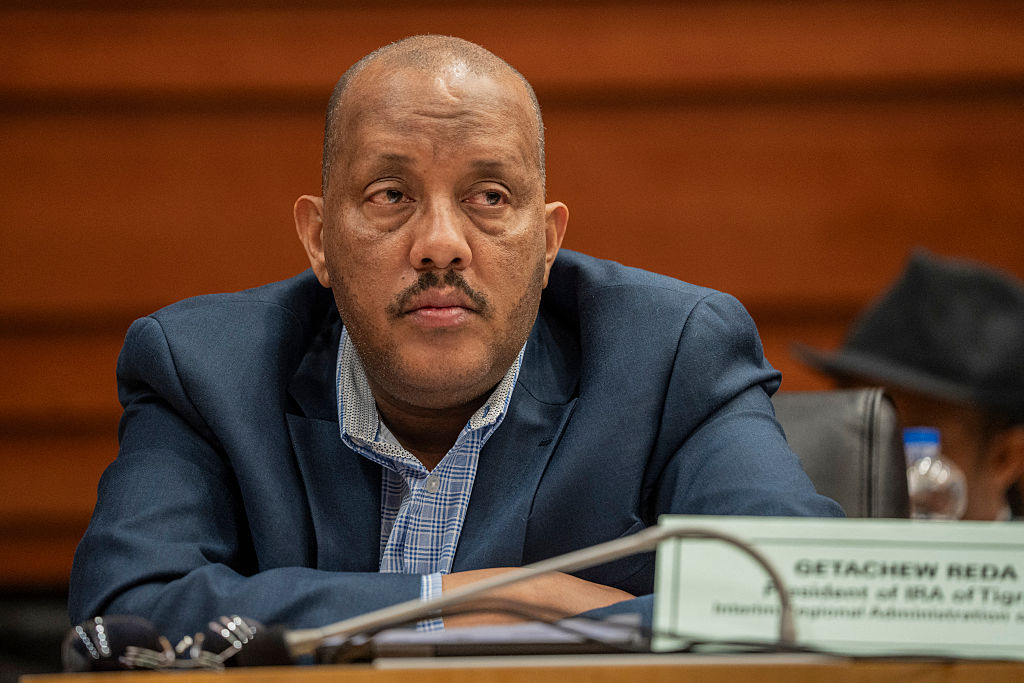
The article by Getachew Reda, Ethiopia’s Minister Advisor for East African Affairs, and Redwan Hussein, Director General of Ethiopia’s National Intelligence and Security Service, published by Al Jazeera under the title “Ethiopia Must Not Be Dragged Back Into War”, should not be read merely as a warning against renewed conflict in northern Ethiopia.No responsible actor in the Horn of Africa wishes to see another devastating war. The real question is why the authors explain the danger through a selective political narrative that overlooks the main drivers of conflict and says little about wars already unfolding inside Ethiopia.
The article presents itself as a plea for peace, yet it avoids the issues that must be addressed if peace is to have substance: the failure to turn Pretoria into a genuine political settlement; accountability and transitional justice; the plight of internally displaced persons; and the contested territories that remain among the most sensitive post-Pretoria questions. Most importantly, it says almost nothing about Ethiopia’s increasingly explicit maritime ambitions, the threat they pose to Eritrea’s sovereignty, and the implications for Eritrea, Somalia, Sudan and the Red Sea region.
For these reasons, the article is more revealing in its omissions than in its arguments. It is less an honest diagnosis than an attempt to shift responsibility away from Addis Ababa’s own policies and place Eritrea once again at the centre of Ethiopia’s internal crisis.
Former Adversaries, New Political Alignment
Before examining the substance of that narrative, it is worth reflecting on the authors’ political transformation. During the Tigray conflict, Getachew Reda and Redwan Hussein stood on opposite sides of one of the deadliest wars in modern Ethiopian history. Getachew was one of the principal voices of the TPLF, while Redwan was among the federal government’s strongest critics of it.
The two later met across the negotiating table during the Pretoria talks. Today they write as political allies, advancing a common explanation of the region’s tensions. Former adversaries do not become co-authors by accident. When they do, the political basis of their convergence deserves scrutiny, especially when their shared narrative places responsibility for Ethiopia’s instability outside Ethiopia itself.
Pretoria’s Unfulfilled Promise
The authors portray renewed conflict as the work of spoilers determined to undermine Pretoria. Yet the agreement signed in Pretoria was not designed merely to silence the guns. It was a cessation of hostilities agreement intended to open the way for political dialogue, constitutional restoration, accountability, reconciliation, and measures addressing the underlying causes of the conflict. That wider process has largely failed to materialise.
Instead of pursuing a comprehensive settlement, the federal government appears to have focused on reshaping Tigrayan politics by cultivating preferred partners and deepening divisions within the TPLF and the wider regional establishment. The unresolved issues of IDPs and contested territories further illustrate this failure. The return of civilians, restoration of property rights, rehabilitation of displaced communities, and future status of contested areas are central to any credible peace settlement.
The same is true of transitional justice. Although frameworks have been discussed and policies announced, many victims continue to question whether meaningful accountability has been achieved. Few senior political or military figures have been publicly held accountable, while many victims still await truth, justice and effective remedies.
Tigray, Labels, and Political Fragmentation
The article also blurs important distinctions within Tigrayan politics. When Getachew and Redwan refer to “TPLF hardliners”, they appear to mean the current leadership in Tigray that has refused to align with Addis Ababa’s post-Pretoria agenda. This label is politically loaded and analytically misleading: it reduces a complex dispute to a simplistic division between supposed advocates of peace and alleged advocates of war.
A clearer distinction is needed. On one side are the forces now dominant in Tigray, which appear to have retained broad support among Tigrayans within and outside the TPLF. Their ability to bring down Getachew’s interim administration and reassert political authority suggests they cannot be dismissed as an isolated faction. Their position appears shaped not by a desire for renewed war, but by opposition to turning Tigray into a launching ground for campaigns against Amhara armed groups or Eritrea.
On the other side are federal-aligned former TPLF figures and Tigrayan military actors who broke with Mekelle and later aligned with their former enemy, the federal government. This group included Getachew and former army chief General Tsadkan Gebretensae, who served as a senior figure in the interim administration and is widely viewed by Eritreans as hostile towards Eritrea. The issue is therefore not simply “moderates” versus “hardliners”. It is a struggle over Tigray’s political direction after Pretoria.
Secret Talks and the Eritrea Question
A further point omitted from the article concerns secret discussions reportedly held between TPLF representatives and the federal government in Seychelles and Djibouti. In a recent interview, Getachew stated that such talks took place and that the federal delegation proposed a settlement under which the two sides would put aside their conflict and redirect their efforts against Eritrea. According to his account, an understanding reached by him and General Tsadkan with a delegation reportedly led by Redwan Hussein and Field Marshal Berhanu Jula was later rejected by senior TPLF leaders.
This is not a minor detail. It suggests that the attempt to build an alliance with selected Tigrayan political and military figures was connected not only to post-Pretoria Tigray, but also to a broader agenda concerning Eritrea. It also helps explain the widening rift inside the TPLF, the collapse of Getachew’s interim administration, and the eventual departure of Getachew and Tsadkan from Tigray.
Former Allies Recast as Threats
The article’s reference to Fano also requires context. Fano forces were not always treated by the federal government as enemies. During the Tigray war, they fought alongside federal forces against the TPLF. They were later treated as a threat, and the federal confrontation with Fano turned Amhara into another major theatre of war.
This reveals a broader post-Pretoria pattern. Actors considered useful during the war against the TPLF were later treated as obstacles once federal priorities changed. The same applies to Eritrea. During the war, Eritrea was publicly acknowledged by Prime Minister Abiy Ahmed as having helped prevent an existential threat to the Ethiopian state. After the cessation of hostilities, Eritrea was increasingly portrayed as an obstacle to Ethiopia’s post-war ambitions.
The Maritime Question and the Breakdown with Eritrea
The breakdown in Ethiopia-Eritrea relations after Pretoria cannot be understood without revisiting the basis of the 2018 rapprochement. Addis Ababa’s decision to make peace with Eritrea appeared to be driven less by a settled acceptance of Eritrea’s sovereignty than by fear of the continued power of the TPLF, which had dominated Ethiopia’s politics, economy, security institutions and military for nearly three decades. Because of the long-standing hostility between Eritrea and the TPLF, reconciliation with Eritrea served Addis Ababa’s struggle against its former ruling coalition.
Once the TPLF threat was significantly weakened, Ethiopia’s underlying maritime agenda resurfaced. The same leadership that had praised Eritrea returned to language about sovereign access to the sea, historical injustice and Assab. This suggests that the earlier rapprochement was at least partly tactical, rather than rooted in a durable regional order based on respect for Eritrea’s sovereignty.
Having failed to bring Tigray fully under federal control and facing armed resistance elsewhere, Addis Ababa increasingly turned the maritime question into a national mobilisation issue. References to sovereign access, Assab and historical injustice were not isolated remarks; they became part of a discourse that alarmed Eritrea and other neighbours. Ethiopia’s need for commercial port access is legitimate. The pursuit of sovereign access at the expense of another state’s territory is entirely different.
Tsimdo: A Grassroots Peace Movement Misrepresented
It is within this climate of renewed maritime ambition, deteriorating Ethiopia-Eritrea relations, and fear of another regional war that Tsimdo should be understood. It did not emerge as a project of destabilisation or conspiracy. It grew out of the lived experience of border communities long separated by conflict, with disrupted livelihoods, divided families,and constant uncertainty about the future.
For these communities, Tsimdo represented a grassroots peace initiative: an attempt to rebuild social ties, reduce fear, prevent another war and offer a model of reconciliation. To portray it as evidence of an Eritrean-backed destabilisation campaign is deeply misleading. It shows how easily peace initiatives are recast as threats when they do not fit a narrative designed to justify confrontation.
Ethiopia’s Crisis Is Primarily Internal
Against this backdrop, the attempt to present Eritrea as the principal source of regional instability is unconvincing. The more immediate sources of tension lie in decisions pursued by Addis Ababa itself: threatening language about Assab and sovereign sea access; the MoU with the breakaway Somaliland administration, which provoked a major crisis with Somalia; and Reuters reports alleging Ethiopian-linked activity in Sudan’s war, including a secret camp used to train RSF fighters and Sudanese accusations that drones were launched from Ethiopian territory.
These are not Eritrean initiatives. They point instead to a pattern in which Ethiopia’s internal pressures and regional ambitions are projected outward. Blaming Eritrea may serve a political purpose, but it does not explain why armed conflicts continue inside Ethiopia, why mistrust persists within Tigray, or why instability is spilling across the region.
Ethiopia’s most pressing challenges are domestic: armed conflicts, political fragmentation, competing national visions, economic pressures, unresolved constitutional questions and conflicting historical narratives. An alliance held together mainly by hostility towards Eritrea may serve a temporary purpose, but it cannot answer Ethiopia’s internal questions, heal divisions in Tigray or offer a constructive vision for the Horn of Africa.
Sovereignty, International Law, and the Path to Peace
If Ethiopia is to avoid another devastating conflict, it needs more than new narratives. It needs an honest assessment of why Pretoria remains only partially fulfilled, why accountability has been deferred, why IDPs and contested territories remain unresolved, and why the region again faces the spectre of war.
More fundamentally, lasting peace requires commitment to sovereignty, territorial integrity and the inviolability of internationally recognised borders. Eritrea’s sovereignty is not negotiable, just as the sovereignty of Ethiopia, Sudan, Djibouti, Somalia and every other state in the region is not negotiable.
This does not mean legitimate economic concerns cannot be addressed. Ethiopia’s need for reliable access to international markets is real. International law already provides mechanisms through which landlocked states can secure access to ports, transit routes and maritime trade without challenging the sovereignty of neighbours. Access can and should be secured through lawful, negotiated and mutually beneficial arrangements. The issue is whether such access is pursued through cooperation and respect for sovereignty, or through narratives implying entitlement to the territory of others.
Equally important, Ethiopia’s future stability depends not on external adversaries but on building internal consensus among its diverse peoples. Its competing historical narratives, contested visions of federalism, and unresolved questions of identity and power cannot be solved by redirecting public attention towards Eritrea or any other neighbour.
The Pretoria Agreement ended a war, but it did not resolve the deeper questions confronting Ethiopia and the Horn of Africa. Those questions require genuine political dialogue, accountability, the return and rehabilitation of displaced communities, respect for territorial integrity, reconciliation among Ethiopia’s diverse communities, and a firm commitment to sovereignty and international law.
Lasting peace in the Horn of Africa will not be built on selective narratives, temporary alliances, or the search for external enemies. It will not be built by turning legitimate economic needs into territorial claims, or by using Eritrea as a convenient explanation for Ethiopia’s unresolved internal crises. It can only be built on truth, accountability, internal reconciliation, lawful cooperation, and respect for the sovereignty and territorial integrity of all states. Any other path risks returning the region to the cycle of mistrust, militarisation and war that Pretoria was supposed to end.

