

Stand on the waterfront in Massawa on any given morning and you understand something that no satellite map can fully convey. The Red Sea is not just water. It is air. It is bread. It is the entire reason anyone ever cared that Eritrea existed. The sun comes up over the strait, the dhows move slowly against the horizon, and the port hums with the quiet logic of a country that has, for thirty years, tried to survive at the intersection of other people’s ambitions.
That intersection is now at the center of one of the most consequential and most fragile diplomatic moments of this decade. And to understand what is happening — not the headline version, but the structural version — you have to start somewhere most analysts refuse to start: with the world that made this conflict possible in the first place.
Stand on the waterfront in Massawa on any given morning and you understand something that no satellite map can fully convey. The Red Sea is not just water. It is air. It is bread. It is the entire reason anyone ever cared that Eritrea existed. The sun comes up over the strait, the dhows move slowly against the horizon, and the port hums with the quiet logic of a country that has, for thirty years, tried to survive at the intersection of other people’s ambitions.
That intersection is now at the center of one of the most consequential and most fragile diplomatic moments of this decade. And to understand what is happening — not the headline version, but the structural version — you have to start somewhere most analysts refuse to start: with the world that made this conflict possible in the first place.
To understand Eritrea’s position in this moment, you have to understand what thirty years of the unipolar world order actually meant for countries that didn’t fit its blueprint.
Eritrea gained independence in 1993 after a thirty-year liberation war — one of the longest and most brutal anti-colonial struggles in African history. It emerged into a world that had just declared itself organized: one superpower, one dominant set of institutions, one framework for what a “legitimate” state looked like and who got to decide. Small nations that complied received investment, security assurances, and access to markets. Small nations that didn’t were sanctioned, isolated, and described in the language of instability and rogue behavior.
Eritrea, from the beginning, refused to comply on terms it considered demeaning to its sovereignty. That refusal had real costs. In 2009, the United Nations — under significant American pressure — imposed sanctions on Eritrea, accusing it of supporting al-Shabaab in Somalia. Eritrea denied the charges, and independent analysts raised serious doubts about the evidence. The sanctions stayed for nearly a decade. Investment dried up. Debt mounted. The economy that should have been built — the one that might have given young Eritreans a reason to stay — was never built. Today, more than 660,000 Eritreans, roughly one in five citizens, live in exile. They did not leave because of geography. They left because the economic ground under them was never allowed to solidify.
This is what the unipolar order looked like from the receiving end. Not the version described in Washington think tanks or Brussels policy papers — the version experienced in Asmara, in Massawa, in the lives of people who watched opportunities disappear under the weight of external pressure that was applied not because Eritrea was a threat to anyone, but because it would not be managed.
When the West withdrew, others filled the space. That is not a moral argument for any particular partnership. It is simply what happens when a country is pushed to the margins and then expected to survive anyway. Russia arrived at Massawa. The UAE set up at Assab. Iran, which had its own long, intimate familiarity with the experience of being sanctioned into a corner, rebuilt relationships it had cultivated since the early 2000s. China watched from a careful distance, investing in infrastructure, asking few questions about governance, offering the kind of transactional partnership that the Western-led order had always withheld.
None of these relationships were born of ideology. They were born of exclusion. That is a crucial distinction that the Western media — which spent this war analyzing Iranian logistics routes in Eritrean ports as though they appeared from nowhere — almost entirely failed to make.
The ceasefire itself, fragile as it is, carries the same structural story.
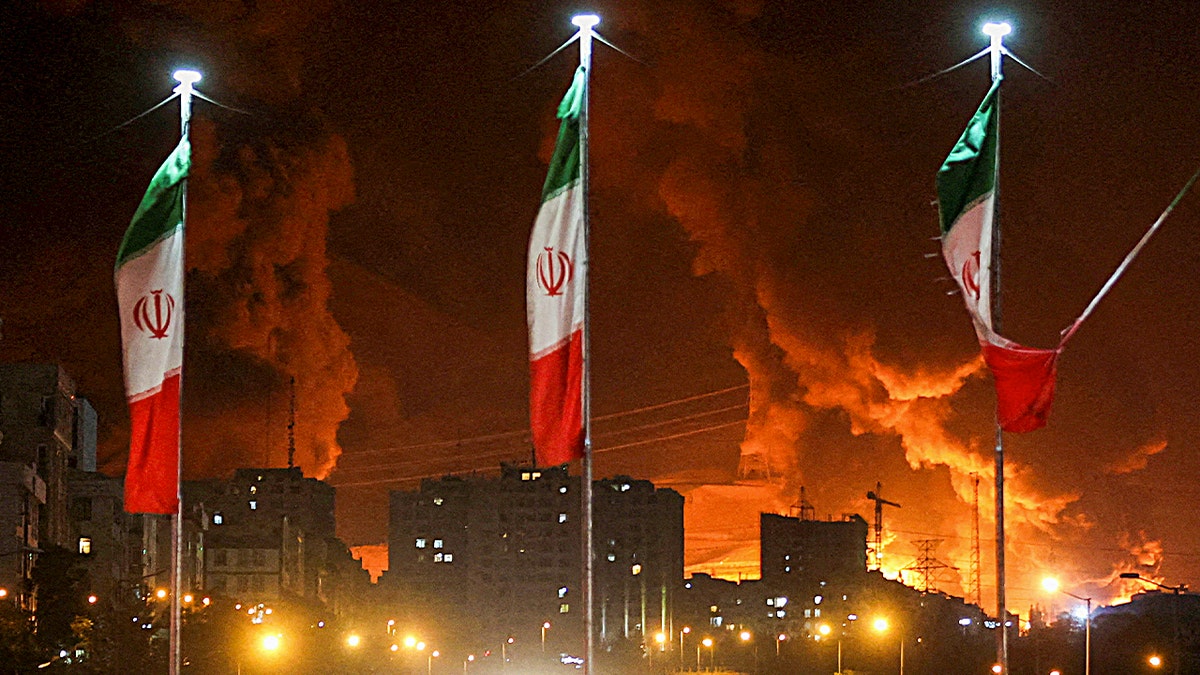
Iran’s Strait of Hormuz remained largely closed as of Thursday morning, which was the core U.S. condition for the truce — unmet on day one. Israel endorsed the ceasefire with one hand and with the other launched the single deadliest day of airstrikes on Lebanon in the entire war, killing at least 254 people. Hezbollah warned that if Israel doesn’t stop, “no party will adhere” to the truce. Iran’s IRGC said it would keep its “fingers on the trigger.” An Israeli-made surveillance drone was shot down over Iranian airspace within hours. Iran’s parliament speaker accused the United States of violating three clauses of the agreed framework before the first day was over.
What we are watching is not peace. It is two exhausted powers being separated by a referee neither fully trusts, standing in their corners, breathing hard, each claiming victory, neither willing to give ground on the things that actually matter.
The Lebanon question is the most revealing fault line. Iran insists the ceasefire must cover Lebanon, where Hezbollah is being devastated by Israeli strikes. Israel and the United States insist it does not. This is not a dispute about contract language. It is the central contradiction of the entire deal laid bare: the United States negotiated a pause in one theater while its closest ally continued full operations in another, and then expressed surprise that the other side found this unreasonable. Former Biden Iran envoy Robert Malley said the negotiations are “commencing on very shaky foundations.” That is diplomatic understatement for a deal assembled under a midnight deadline, announced on social media, and contested within hours of going into effect.
Vice President JD Vance will lead the U.S. delegation to Islamabad on Saturday alongside Witkoff and Kushner, with Iran’s delegation already traveling. Pakistan will host. That image — the United States negotiating under Pakistani facilitation, on Pakistani soil, over a conflict it launched — would have been unthinkable in the high noon of the unipolar era. It is the architecture of the emerging order, visible in a single diplomatic itinerary.
For Eritrea, the stakes of what happens in Islamabad are not abstract. They are coastal, economic, and existential.
The Bab el-Mandeb Strait — the 18-mile chokepoint where the Red Sea narrows into the Gulf of Aden — runs directly past Eritrea’s southern shore. Before this war, roughly a fifth of the world’s maritime trade passed through it every day. The war shut that down. Shipping companies rerouted around the Cape of Good Hope, adding two weeks and up to 40 percent to the cost of moving goods between Asia and Europe. Eritrea’s ports, which might have benefited from increased regional trade, instead sat in the shadow of a conflict that treated the entire Red Sea as a war zone.
If the ceasefire holds and evolves into a genuine agreement, those shipping lanes reopen. Eritrea’s geographic position — which the unipolar order treated as a liability to be managed — becomes an asset in a multipolar world that values connectivity over control. The ports of Assab and Massawa could become exactly what they were always meant to be: commercial gateways on one of the world’s most important waterways. There is real economic hope in that scenario, for a country that has been waiting thirty years for its geography to work in its favor rather than against it.
If the ceasefire collapses — if Trump follows through on his warning of “bigger and better” attacks, if the Islamabad talks fail, if the Lebanon contradiction tears the deal apart before it has any chance to breathe — then the Red Sea becomes a war zone again, the shipping lanes stay closed, and Eritrea absorbs costs it had no role in creating. Small nations on the margins of great power conflicts do not get to choose their exposure. They inherit it.
This is not a story unique to Eritrea. It is the story of dozens of countries across Africa, Asia, and Latin America that spent thirty years being told the unipolar order was the only order, that compliance was the only option, and that their sovereignty was negotiable whenever Washington decided it needed to be. Iran lived that story. So did Venezuela, Cuba, Syria, Zimbabwe, North Korea, and many others. Each found its own way to survive outside the system. The partnerships those countries formed with each other were not products of shared ideology — they were products of shared exclusion.
What the world is now witnessing, in the chaos and the fragility and the Pakistani mediation and the competing 10-point proposals, is the settlement of that thirty-year account. The unipolar order built its power on the assumption that it could sanction, isolate, and bomb its way to compliance. The Iran war is the moment that assumption was tested against reality — and found wanting.
There is one more dimension that never quite makes it into the international coverage, and it matters enormously to the people who actually live in Eritrea.
Ordinary Eritreans did not design their country’s foreign policy. They did not choose which powers arrived at their ports or what those powers brought with them. What they did was endure — decades of conscription, economic stagnation, restricted movement, and a diplomatic isolation imposed from outside as much as it was constructed from within. The international sanctions that contributed to that isolation were not applied because Eritrea was a danger to global peace. They were applied because Eritrea would not be compliant, and the unipolar order had very little patience for small countries that insisted on their own terms.
Over 660,000 Eritreans live outside their country today. They are not economic migrants in any comfortable sense of the phrase. They are the human cost of a system that punished sovereignty and then expressed shock when the people trapped inside it tried to leave.
The world watches Pakistan broker a ceasefire between two powers who each believe they won. Egypt calls it a “vital opportunity.” Malaysia calls it a “significant advancement.” The Pope called Trump’s threats to obliterate Iranian civilization “truly unacceptable” — a sentence that would have been extraordinary in any previous decade and passed almost without comment in this one. Trump kept all U.S. military forces stationed around Iran, warning that the “real agreement” must be fully complied with — the language of a power that has not yet fully absorbed the idea that the world has changed.
In Eritrea, people go to Massawa, watch the water, and wait. They have been waiting a long time — not for permission from anyone, but for the moment when the world finally becomes what it has been slowly, painfully becoming: a place where more than one set of interests counts, where more than one kind of legitimacy is recognized, where countries that fought for their independence and paid dearly for it are finally allowed to exist on their own terms.
That world is not here yet. The ceasefire is fragile. Islamabad may produce an agreement or it may produce another impasse. But the fact that it is happening in Islamabad, brokered by Pakistan, between parties whose conflict shook the foundations of a thirty-year order — that is not a detail. That is the headline. That is the story.
The unipolar world is settling its debts. Countries like Eritrea, who paid those debts without incurring them, are watching from the shore — and for the first time in a long time, what happens next is genuinely open.
Sources: [Axios](https://www.axios.com/2026/04/07/iran-2-week-ceasfire-trump-pakistan) · [Al Jazeera — World Reactions](https://www.aljazeera.com/news/2026/4/8/world-welcomes-us-iran-ceasefire-urges-lasting-peace-in-the-middle-east) · [CBS News](https://www.cbsnews.com/live-updates/iran-trump-ceasefire-strait-hormuz-israel-war-hezbollah-continues/) · [NPR](https://www.npr.org/2026/04/08/nx-s1-5777291/iran-war-updates) · [Bloomberg](https://www.bloomberg.com/news/articles/2026-04-08/us-iran-ceasefire-claims-diverge-as-hormuz-stays-blocked) · [Al Jazeera — Lebanon](https://www.aljazeera.com/news/liveblog/2026/4/9/iran-war-live-israel-kills-254-in-lebanon-shaking-trump-tehran-ceasefire) · [Horn Review — Iran’s Eritrean Variable](https://hornreview.org/2026/03/04/irans-eritrean-variable-mapping-irans-retaliatory-options-through-eritrea/) · [Horn Review — Shadow Alliance](https://hornreview.org/2026/03/12/iran-saf-eritrea-the-shadow-alliance-threatening-red-sea-security/)*

