

A story of a boy from Asmara, a defender from GS Hamasien, and one of the Eritrean pioneers who stood at the beginning of African international football.
| AMANUEL KIFLEMARIAM | Born 14 January 1934, Asmara | Defender | GS Hamasien | Ethiopian Champion 1955 to 1962 | Africa Cup of Nations 1957 and 1959 | National Team: Ethiopia |
A Boy from Asmara
On 14 January 1934, a boy named Amanuel Kiflemariam was born in Asmara during the final years of Italian colonial rule. Eritrea was still a colony administered from Rome, and within months the territory would become the staging ground for Mussolini’s invasion of Ethiopia.
By the time Amanuel learned to play football in the dusty streets of Asmara, the Italians had departed, the British had arrived, and Eritrea’s political future had become uncertain. Yet amid these changes, football flourished.
Asmara became one of the great football cities of East Africa, producing generations of players whose talents would extend far beyond Eritrea itself. Among them was a quiet, intelligent defender named Amanuel Kiflemariam.
A Family of talent.
The Kiflemariam family produced an extraordinary dynasty of sports talent, embodying the peak of Eritrean athletic and moral excellence.
- Amanuel Kiflemariam: Hoisted the 1955 Ethiopian Championship trophy with GS Hamasien. Made history as one of only two club players selected for the consecutive, pioneering 1957 (Khartoum) and 1959 (Cairo) Africa Cup of Nations tournaments.
- Yosief Kiflemariam: Brought the family’s sharp football mastery to the pitch for the renowned club Stella.
- Zerufael Kiflemariam: Star player for club Seraye before a high-profile transfer to the prestigious Cotton Factory Club of Dire Dawa.
- Yohannes Kiflemariam: The eldest brother, who mastered professional cycling—a sport central to Eritrean identity.
- Biniam Kiflemariam: Combined dedicated naval service with professional boxing and personal training.
- Sisters – Emanet, Abrehet, Hiwot, and Letay – excelled in sewing and arts. It was a household where discipline, excellence, and hard work were simply expected.
The Rise of a Defender
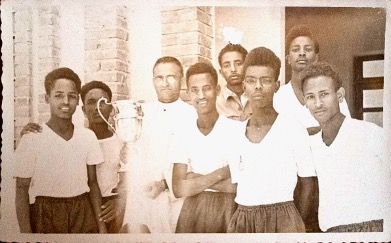
Eritrea was federated with Ethiopia in 1952 and because of this, Eritrean clubs entered the Ethiopian national league system. Clubs from Asmara competed with teams from Addis Ababa and other Ethiopian cities. Amanuel joined GS Hamasien during the 1953-54 season at the age of 19, one of the youngest members to ever join the team. Breaking into the first team of Eritrea’s strongest club from Comboni football club at nineteen was itself an indication of exceptional ability. He played in defence and was one of the early footballers from Eritrea who played at the highest level during the period when Eritrean clubs competed in the Ethiopian league system. In 1955, GS Hamasien won their first Ethiopian Championship, defeating clubs from Addis Ababa to claim the national title. Amanuel Kiflemariam, then 21 years old, was a member of the championship-winning squad. At a time before statistics, television, or tactical analysis, defenders were judged differently. Their qualities were remembered rather than measured, composure, courage, anticipation, and intelligence. Amanuel quickly earned such a reputation.
The Unbeaten Season
The 1956-57 season remains one of the greatest achievements in East African football; GS Hamasien played eight, won eight, drawn none, lost none, with thirty-two goals scored and only two conceded.
As one of Hamasien’s principal defenders, Amanuel stood at the heart of one of the finest and strongest defensive units in the region. In May 1957, Hamasien defeated St. George 3-1 in Addis Ababa to secure a second Ethiopian championship. At nineteen, Amanuel had again proven himself as one of the country’s and East Africa’s best defenders.
National Champion at Twenty-one
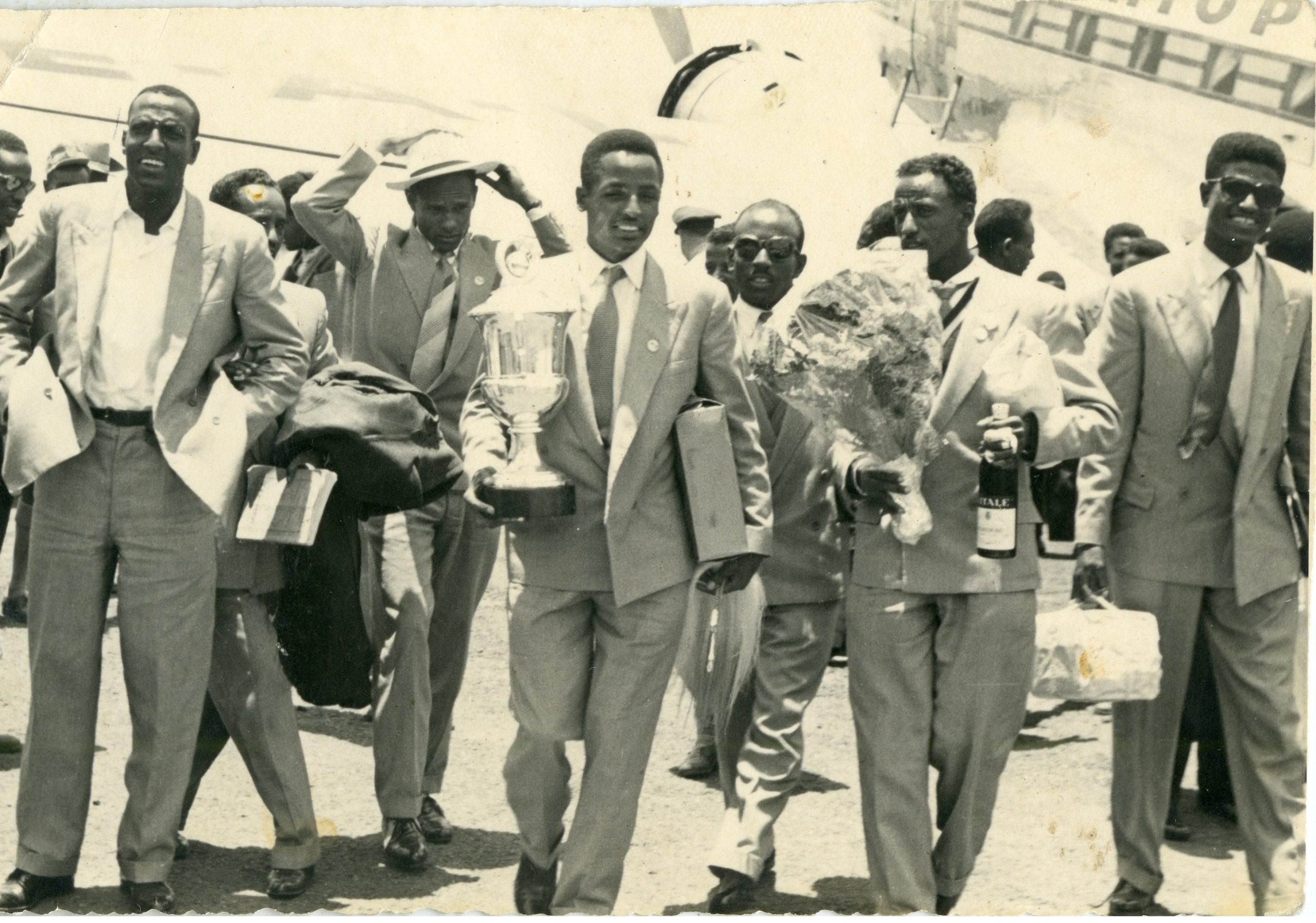
In 1955, GS Hamasien won the first Ethiopian Championship. The victory announced to the rest of Ethiopia what Eritrean football supporters already knew; some of the best football in the federation was being played in Asmara. At only twenty-one years of age, the defender, Amanuel Kiflemariam had become a national champion. The famous airport photograph taken on 12 May 1955 shows the young defender returning to Asmara holding the championship trophy. It is a photograph of confidence, achievement, and a generation that believed Eritrean football could compete with anyone.
The Birth of African Football
In February 1957, Africa’s first continental football championship was held in Khartoum. Only three nations participated after South Africa was excluded because of apartheid.
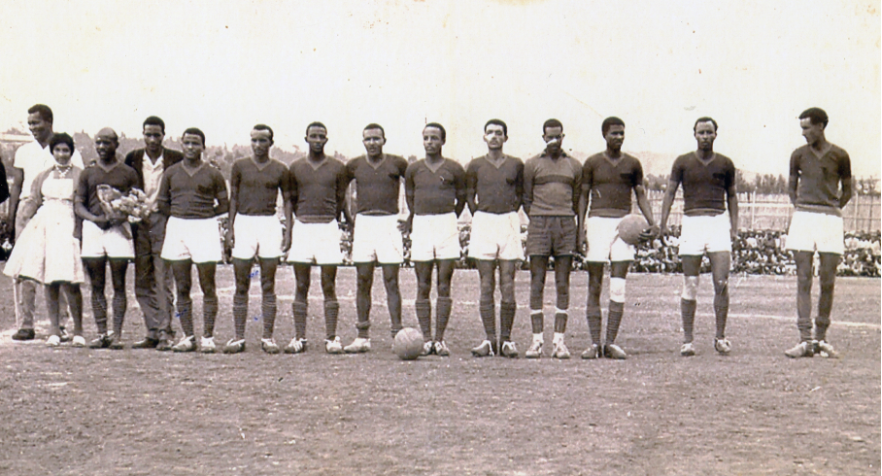
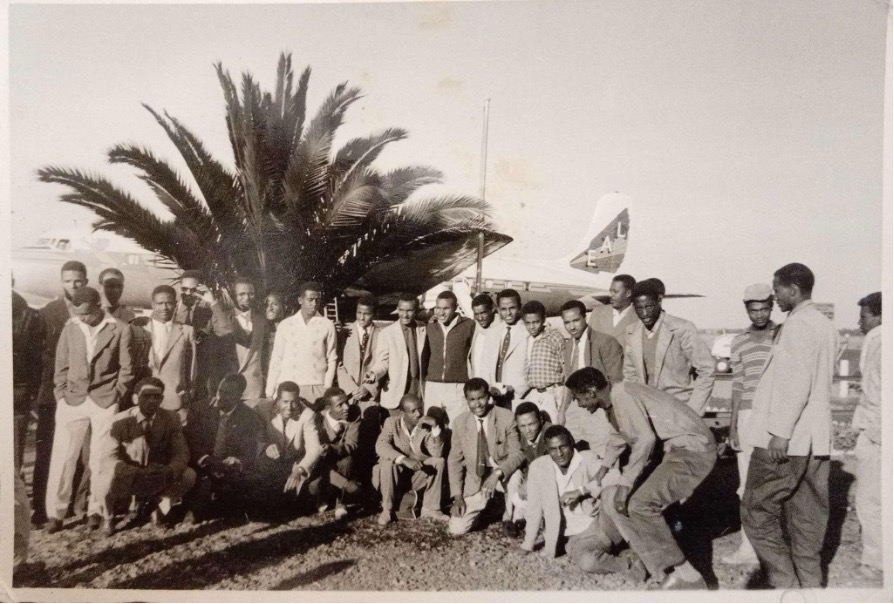
The Ethiopian national team that travelled to the Sudan contained a remarkable Eritrean presence. Eight players came from Eritrea. Five represented GS Hamasien. Among them was Amanuel Kiflemariam. This fact deserves emphasis. When Africa’s premier football tournament began, Eritrean players formed the backbone of the Ethiopian national team. Although Egypt won the final 4-0 before a large crowd in Khartoum, Amanuel had already secured his place in football history. He had participated in the first Africa Cup of Nations final.
Cairo 1959
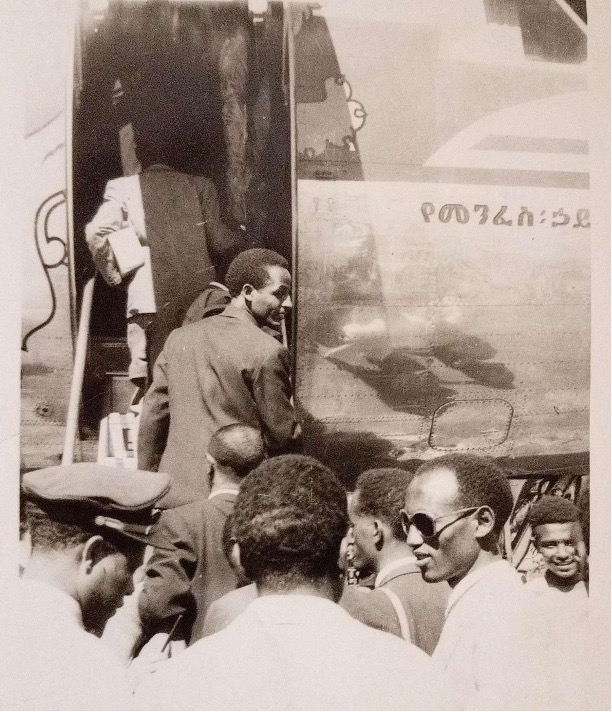
Two years later, the Africa Cup of Nations returned, this time to Cairo. Before the tournament, an Eritrean representative team that included Amanuel defeated an Ethiopian selection 3-0 at Campo Cicero in Asmara, demonstrating once again the strength of Eritrean football.
Amanuel was selected for the national team for a second time. This achievement was exceptional. Only two GS Hamasien players are known to have represented the national team on more than one occasion. His selection for both for the Africa Cup of Nations, the 1957 and 1959 tournaments respectively, places him among the club’s most distinguished internationals.
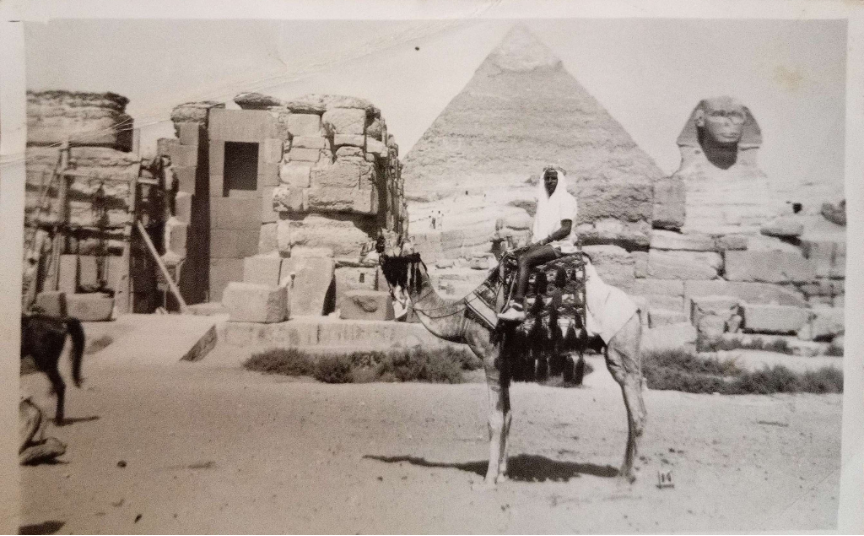
The tournament itself proved difficult. Ethiopia lost to the Egypt and Sudan. Yet the results do not diminish the significance of his achievement. He belonged to a tiny group of players who participated in the first two editions of Africa’s most important football competition.
A Lifetime of Service to Eritrean Football
Amanuel’s contribution to Eritrean football extended far beyond his professional career. For decades, he remained actively involved in developing the game in Asmara, coaching many industry-sponsored clubs including Baratollo and Enda Zeiti, and independent community teams such as Aquilla. He was equally committed to nurturing young footballers in his local neighbourhood. His leadership helped Aquilla secure promotion from the second division to the first division, exemplifying his enduring dedication to the growth and development of Eritrean football.
The Man Beyond Football
Football careers are brief. Character endures.
Those who knew Amanuel remember not only a stellar athlete but a kind, generous, and devoted family man. He carried himself with quiet dignity, never seeking recognition for his achievements and rarely speaking about his football career. Instead, he devoted his life to his wife, children, and family.
His children perhaps described him best: “He had a heart greater than a stadium.” It is a fitting description. A stadium is where football is played, but a heart greater than a stadium is something larger than sport itself. This protective instinct came naturally to him; the same fierce dedication that made him a legendary defender for his team and country was channeled entirely into becoming the ultimate defender and protector of his family. The man who once guarded the pitch in Asmara, Addis Ababa, Khartoum and Cairo found his greatest fulfillment shielding those he loved most.
Legacy
Amanuel Kiflemariam belonged to a remarkable first generation of Eritrean footballers. He played in one of the finest defensive teams in East African football. He represented Ethiopia in the first and second Africa Cup of Nations. He became one of the very few GS Hamasien players to earn repeated international selection and won two Ethiopian championships.
Yet his legacy extends far beyond football. He represented a generation of Eritreans whose talents reached beyond the borders of their country and whose achievements deserve to be remembered.
The boy born in Asmara in 1934 became one of the pioneers of African football. For his teammates, he was a trusted defender. For his family, he was a loving father and husband. For Eritrean football, he remains one of the men who stood at the very beginning of Africa’s game.
And for those who knew him best, he was simply a man whose heart was greater than a stadium.
Note: This feature is based on family archives, photographs, and historical accounts of Eritrean and Ethiopian football in the 1950s.

