

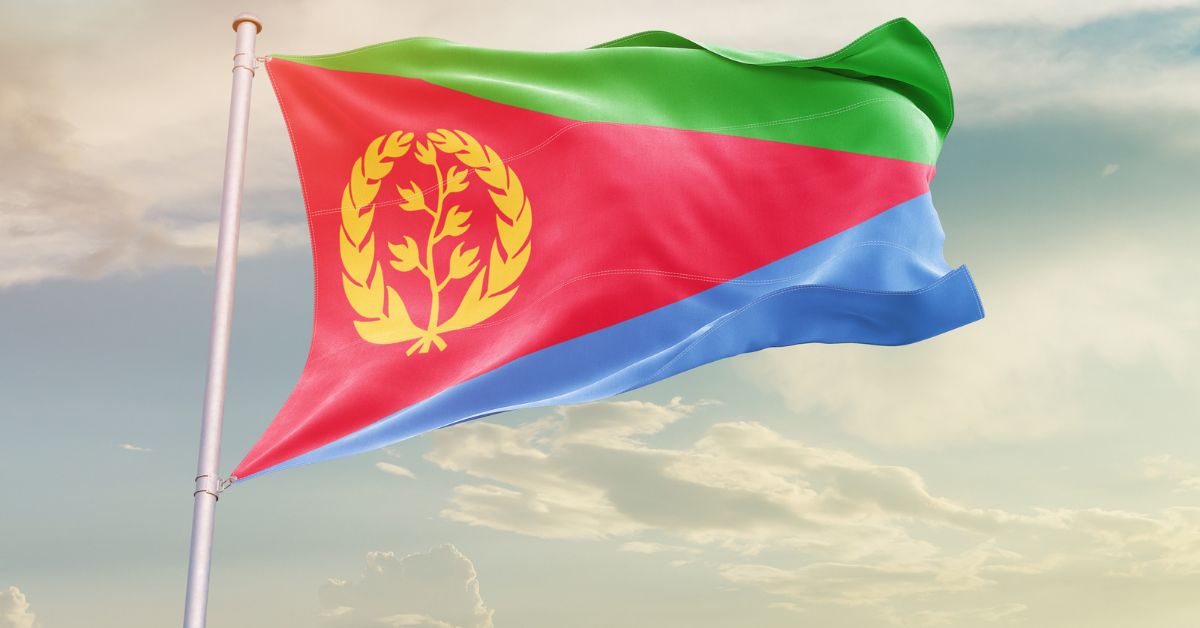
There are moments in the life of a region when words are not mere words. They become signals. They reveal intentions. They test whether history will be respected or manipulated. The latest rhetoric from Ethiopia’s political elite on the question of the Red Sea is one of those moments. It is presented as historical correction, national necessity, and strategic logic. But beneath the polished language lies an old and dangerous habit: refusing to accept Eritrea as a sovereign equal and searching, once again, for escape from Ethiopia’s internal failures through external ambition.
It must be said clearly from the beginning: Eritrea’s independence was not an accident of history, nor was Ethiopia’s loss of direct access to the sea the result of some mysterious foreign plot alone. Eritrea became independent because its people fought for thirty years against annexation, occupation, and denial. Eritreans paid for sovereignty with blood, sacrifice, discipline, and endurance. That truth cannot be erased by political slogans, nor can it be rewritten by those who now speak as if Eritrea’s statehood is an inconvenience rather than a settled historical and legal reality.
As the elders teach us, a man who refuses to learn from yesterday will injure himself again tomorrow. For too long, sections of Ethiopia’s elite have treated the Red Sea not as a matter for lawful cooperation, but as a wounded imperial memory. For years, they spoke as if time itself would undo Eritrea’s freedom. Today, the same thinking returns dressed in modern language. Yet what is old remains old. A claim repeated many times does not become truth. A fantasy spoken loudly does not become strategy.
The question of sea access, as presented by Ethiopian officials and media voices, is now being elevated into a national cause tied to Ethiopia’s future. We understand why they do this. Ethiopia is a large country facing immense pressure, economic strain, unresolved conflict, and political fragmentation. But size does not create rights over another people’s coast. Population does not cancel sovereignty. Frustration does not produce entitlement. If Ethiopia needs access for trade, that is a matter for peaceful negotiation, mutual benefit, and respect between states. It is not a basis for historical revisionism.
Prime Minister Abiy Ahmed and others around him have argued that Ethiopia cannot guarantee development or peace without secure access to the sea. But this argument collapses the moment it is examined honestly. Ethiopia’s deepest crisis today is not the absence of ownership over a coastline. Its crisis is internal. Its people are burdened by war, displacement, poverty, debt, and mistrust. Its regions remain unsettled. Its political compact remains fragile. No port will solve that. No maritime slogan will heal what bad governance, violence, and instability have torn apart. A nation is not rescued by romantic geography. It is rescued by leadership, justice, and discipline.
A country of more than one hundred million people should not be encouraged to believe that its future depends on revisiting borders that have already been settled in war, diplomacy, and international law. That road does not lead to peace. It leads to false hope at home and fear abroad. It is especially reckless in a region as sensitive as the Red Sea and the Horn of Africa, where one irresponsible narrative can unsettle millions. If Ethiopia truly seeks regional stability, it should begin by lowering the temperature, not raising expectations around a project that has no legal foundation.
The truth is simple. Eritrea is not obstructing history. Eritrea is history. Eritrea’s sovereignty was not gifted by anyone. It was won. The Eritrean people did not vote in 1993 so that future Ethiopian politicians could reopen the question whenever domestic politics became difficult. They voted to end that question forever. Eritrea is not a temporary arrangement. It is not a bargaining chip. It is not a province waiting to be remembered by another name. It is a sovereign state, born through struggle and affirmed by law.
Those who say Ethiopia is only asking for what was once “naturally” its own should be careful. That language is dangerous not only for Eritrea, but for Africa as a whole. If every state begins to search the distant past for emotional title deeds, then no border on this continent will remain safe. The modern African order, with all its imperfections, rests on the principle that existing boundaries are to be respected. Without that principle, the continent would drown in endless claims and counterclaims. Ethiopia, of all countries, should not help normalize such thinking.
From the Eritrean perspective, this matter is not emotional confusion. It is a question of sovereignty, memory, and national dignity. Eritrea has no interest in threatening anyone’s independence, no interest in violating another people’s borders, and no need to seek legitimacy through loud declarations. Eritrea’s position is restrained because it is grounded. We do not ask for what belongs to others. We insist only on what is ours. Our independence is ours. Our coastline is ours. Our territorial integrity is ours. That is not extremism. That is the minimum definition of statehood.
From an economic point of view, Ethiopia’s landlocked condition is indeed a challenge. No serious person denies that. But difficulty does not justify delusion. Many countries trade successfully through negotiated port access, transport corridors, and regional agreements. Eritrea itself never opposed cooperation in principle. The issue has never been whether Ethiopia can access ports through law and partnership. The issue has been whether Ethiopia’s elite can accept access without domination, commerce without entitlement, and cooperation without dreams of ownership. That is the real political test.
When one listens carefully to the current Ethiopian discourse, another troubling theme appears. Some voices suggest that small states cannot secure major trade routes, and that larger powers must therefore play a controlling role. This too must be rejected. Sovereignty is not measured by population size. A small nation does not lose its rights because a bigger neighbor claims strategic need. Eritrea’s control over its coast is not a temporary technicality. It is a sovereign fact. Regional security is strengthened when states respect each other’s rights, not when one state imagines itself the natural manager of all around it.
As another old saying reminds us, not every road that looks wide leads home. Ethiopia’s political class should reflect deeply before marching their public down this road. The language of return, destiny, and natural access may stir emotions, but emotions do not carry containers, lower inflation, stop armed conflict, or build functioning institutions. The people of Ethiopia need serious leaders focused on the nation before them, not restless elites searching for redemption in waters beyond their borders.
The history of Eritrea’s struggle should have taught the region one enduring lesson: a people who know the cost of freedom do not negotiate their existence under pressure. Eritrea endured empire, annexation, war, sacrifice, and isolation. It did not endure all of this so that, decades later, commentators in Addis Ababa could casually speak of “correcting history” at Eritrea’s expense. History was already corrected — by the Eritrean people themselves.
This is why the current moment requires firmness, not noise. Eritrea should remain calm, lawful, and clear. We should not be drawn into theatrical exchanges. We should not answer inflated rhetoric with inflated rhetoric. We should answer it with principle. Eritrea’s sovereignty is final. Eritrea’s borders are not up for renegotiation through public pressure. Any future relationship with Ethiopia must be built on equality, mutual respect, and legal clarity. Nothing else will endure.
The coming generation in Eritrea must inherit a country that is secure in its rights, confident in its memory, and unshaken by revisionist storms from abroad. And the coming generation in Ethiopia deserves something better than geopolitical fantasy. It deserves peace within its borders, functioning institutions, economic seriousness, and leaders mature enough to build rather than provoke.
What is planted today in rhetoric can grow tomorrow into tension or wisdom. That choice still exists. Ethiopia’s political elite can continue sowing grievance, illusion, and dangerous expectation. Or they can turn inward, do the hard work of nation-building, and build a stable future within internationally recognized borders. That is the only serious path. That is the only peaceful path. And that is the path history, law, and regional stability demand.
Eritrea will remain where it stands — sovereign, watchful, disciplined, and free.

