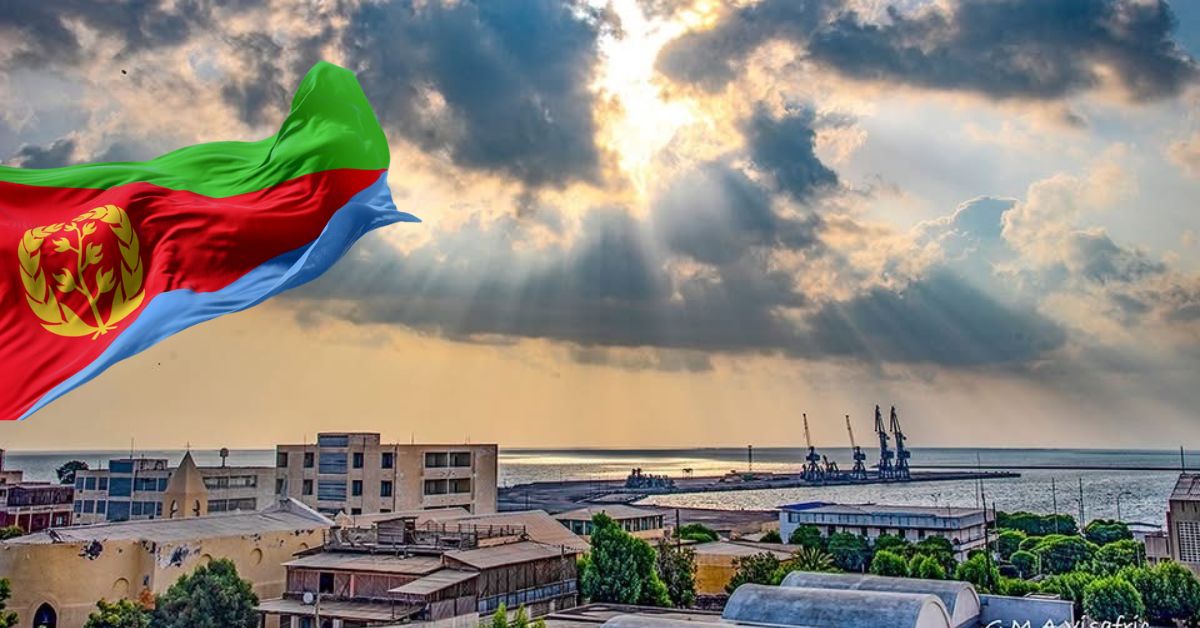
Introduction: Landlocked Ethiopia’s ruling elite have revived an age-old obsession: obtaining direct access to the Red Sea through Eritrean territory. In doing so, they have unfurled a tapestry of contradictions, historical amnesia, and legal defiance. With biting irony, Addis Ababa’s power brokers preach regional brotherhood and dialogue even as they trample binding international agreements and openly covet their neighbor’s coastline. This exposé dissects Ethiopia’s recent campaign – from bombastic speeches in 2023 to diplomatic posturing in 2026 – revealing how Ethiopian officials manipulate narratives to cast themselves as victims of geography while undermining Eritrea’s hard-won sovereignty. International law and African unity principles, it appears, are invoked by these elites only when convenient. Below, we chronicle their rhetoric and actions, the inversion of aggressor-victim roles, and the sharp global rebukes that have met their Red Sea ambitions. The result is a principled, evidence-rich account that unapologetically asserts Eritrea’s rights and dignity in the face of Ethiopia’s two-faced pursuit of a coastline.
Ignoring International Law: From Algiers to Badme (2000–2018)
To understand the current Red Sea saga, one must start with Ethiopia’s blatant disregard for international law in its past dealings with Eritrea. After the brutal 1998–2000 Eritrea-Ethiopia border war, both nations signed the Algiers Peace Agreement in 2000 – a binding treaty committing them to accept whatever border demarcation an independent commission would decide. In April 2002, the Eritrea–Ethiopia Boundary Commission (EEBC) delivered its verdict, drawing the boundary based on colonial treaties and awarding the flashpoint town of Badme to Eritrea. Eritrea immediately accepted the ruling “in full and without reservation,” honoring its treaty obligation. Ethiopia did the opposite – rejecting the EEBC decision, demanding “dialogue” as a substitute for compliance, and physically blocking demarcation on the ground. For sixteen years, the award remained unimplemented only because one party – Ethiopia – refused to obey international law.
This was no minor technicality; it was a flagrant breach of a U.N.-registered peace accord. Eritrea repeatedly petitioned the U.N. Security Council, warning that such selective enforcement of law would undermine the U.N.’s credibility. Sure enough, the world’s response was tepid: instead of insisting on Ethiopia’s compliance, global actors lapsed into euphemisms about “disputes” and encouraged endless talks. The illegal occupation of Eritrean territory was sanitized as a mere difference of opinion, normalizing Ethiopia’s impunity. As one retrospective analysis noted, “Addis Ababa rejected the ruling, pushed for ‘dialogue’ … and obstructed border demarcation… for 16 years”. Meanwhile, Eritrea – the lawful party – was paradoxically treated as equally recalcitrant in calls for “both sides” to cooperate. Such false equivalence masked the real issue: one side honored its word, the other did not.
This history is vital. It shows a pattern: Ethiopia’s elites trumpet international principles when convenient, but trample them when those same rules affirm Eritrea’s rights. The Algiers Agreement explicitly upheld the inviolability of colonial borders, reflecting the African Union’s uti possidetis norm. Ethiopia signed this gladly in 2000; yet today, the same Addis Ababa elite wax poetic about adjusting borders and “correcting” history to regain a coastline. In short, they seek to rewrite what was settled by law. As Eritrea’s President Isaias Afwerki once pointed out, Ethiopia “pretended to abide by the Algiers Agreement” even while trying to renegotiate its core outcome. The double standard was glaring: Eritrea was expected to cede its legal victory for Ethiopia’s political comfort. Fast-forward to the present, and those double standards have only grown more audacious.
“Existential” Ambitions: Ethiopia’s Open Quest for Eritrea’s Coast
After a 2018 rapprochement (during which Ethiopia’s new Prime Minister Abiy Ahmed formally accepted the EEBC border in principle), many hoped the era of Ethiopian irredentism was over. Not so. By 2023, Addis Ababa’s tone had shifted dramatically, unveiling an open ambition for Red Sea access that tossed diplomatic niceties aside. In an address to parliament on October 13, 2023, Abiy Ahmed declared that securing a Red Sea outlet is “an existential matter” for Ethiopia’s survival. He painted a dramatic picture of a nation unjustly trapped: “By 2030 [our population] will be 150 million. A population of 150 million can’t live in a geographic prison,” Abiy thundered. The “prison,” of course, was Ethiopia’s landlocked status – a not-so-subtle swipe at Eritrea’s coastline to the north and Djibouti’s to the east.
Using language that virtually ordains expansion, Abiy asserted Ethiopia has a “natural right” to the Red Sea. He argued that nature itself intended Ethiopia to have the Red Sea, just as it has the Blue Nile, claiming “it won’t work to say, ‘This water (the Nile) concerns you, but this one (Red Sea) doesn’t.’”. According to Abiy, such artificial separation defies the natural order – a rhetorical framework blatantly designed to undermine Eritrea’s sovereignty by treating Eritrean territory as somehow inherently Ethiopia’s concern. He even dug up 19th-century quotes from an Ethiopian general, Ras Alula, who said “The Red Sea itself has been and will continue to be Ethiopia’s natural boundary”, suggesting history bestows on Addis Ababa a birthright to a coastline it hasn’t possessed since Eritrea’s independence in 1993.
In the same speech, Abiy issued a barely veiled threat: if Ethiopia’s “right” to the sea is not accommodated, “there will be no fairness and justice and if there is no fairness and justice… we will fight”. This jaw-dropping statement – “it’s a matter of time, we will fight” – marked the first time an Ethiopian leader so openly raised the specter of war to claim a neighbor’s territory in peacetime. (The irony of threatening war barely four years after accepting a Nobel Peace Prize was not lost on observers.) Though Abiy added a perfunctory line that he was “not threatening violence,” his message was clear: Ethiopia’s patience with being landlocked is running out. Indeed, a few months earlier in July 2023, Abiy told a group of investors in Addis Ababa that while Ethiopia wants a port “through peaceful means,” if that fails, it “would not hesitate to use force”. In effect, the Prime Minister signaled to the world that might could become right if Ethiopia’s demands were not met.
Adding to the surreal nature of this address, Abiy floated a pan-African fig leaf for his ambitions. He mused that maybe the “solution” was for Ethiopia, Eritrea, Djibouti, and Somalia to merge into one country, which would then have ample coast. Such a behemoth, he claimed, “would become another Russia, China, or America” – a superpower of the Horn. Of course, this notion of “unity” rings hollow; given Ethiopia’s outsized population and economy, it scarcely conceals a vision of Eritrea and others being subsumed under Ethiopian dominance. As one regional commentator drily noted, Abiy’s proposal was “a textbook colonial annexation… removing all sovereignty from its neighbors” under the euphemism of unity. In any case, Eritreans heard his message loud and clear: short of literally erasing Eritrea’s existence through federation, Addis Ababa intends to secure its hands on Eritrean ports one way or another – by deal, diplomacy, or dagger.
This unabashed posture was a far cry from the conciliatory tone Ethiopia had struck in years prior. Gone was the talk of respecting past treaties; in its place was a revival of imperial nostalgia (references to Ethiopia’s Axumite Empire once controlling Red Sea shores) and realpolitik calculus about population pressure. Abiy argued Ethiopia’s booming populace and economy make it inevitable that the issue “will inevitably ‘blast’” if unresolved. In a particularly audacious analogy, he complained that all Ethiopia’s neighbors draw water from Ethiopia’s rivers (the Nile, Tekeze, Omo, etc.) while Ethiopia alone is denied access to their seas. “It’s not right to say, ‘let us share what you have, but don’t ask us what we have’,” Abiy said, calling it an injustice that must be rectified for the sake of “fairness”. In other words, he framed Eritrea’s sovereign Red Sea coast as something unfairly hoarded, which should be “shared” lest Ethiopia’s goodwill evaporate. Such logic turns international law on its head: instead of borders being inviolable, here a powerful state implies its need outweighs a smaller neighbor’s rights.
Double Talk and Diplomatic Duplicity
Ethiopian officials soon learned that shouting about war and “geographic prisons” would rattle the region – and it did. Within days of Abiy’s October 2023 outburst, alarm bells rang from Asmara to Mogadishu. Facing broad backlash, Addis Ababa switched to damage-control mode, engaging in a remarkable display of diplomatic double-speak. On October 26, 2023, barely two weeks after warning “we will fight,” Abiy struck a pacifist note. “Ethiopia has never invaded any country and now has no intention to invade any country,” he proclaimed, reassuring an audience of military cadets that Ethiopia “would not pursue its interests through force”. The Prime Minister insisted Ethiopia “wouldn’t pull the trigger on its fellow brothers”, an apparent attempt to calm neighboring states unnerved by his earlier bluster. For added measure, Abiy’s government had its Foreign Ministry stress that any quest for port access would be “through peaceful means”. The contrast was stark: the same leader who one week roared about justice “by one way or another” was now cooing about brotherly love.
This contradictory messaging continued into 2024 and 2025. Even as Ethiopia pursued provocative moves (as we’ll see below), Abiy periodically tried to paper over his threats. Perhaps the clearest example came in March 2025, when regional tensions were at a fever pitch. That month, following reports of troop build-ups on the Eritrean border, Abiy told Ethiopia’s parliament that “Ethiopia does not have any intention of engaging in conflict with Eritrea for the purpose of gaining access to the sea.” It was a direct contradiction of his own prior insinuations. He acknowledged Red Sea access was still “an existential matter” for Ethiopia, but claimed his government sought to address it “peacefully via dialogue”. Abiy’s office even posted this assurance on social media for the world to see.
Of course, these soothing words often came after Ethiopia had already rattled its saber. The pattern became almost comical: first an Ethiopian official would issue a maximalist statement about ports or even float historical claims to Eritrean territory, then another official would backpedal and insist Ethiopia only meant access through negotiation. Such “calculated ambiguity” did not fool attentive observers. An Eritrean government statement politely described the frenzy over Red Sea access as “excessive” and warned parties “not to be provoked”. In private, diplomats noted that Addis Ababa was sending “conflicting signals” – fiery one day, conciliatory the next. This two-faced approach appeared designed to keep neighbors off-balance: Ethiopia floated grand ambitions (and even threats) to stake its claim, yet sought to avoid outright condemnation by later professing innocent intentions.
Nowhere was this duplicity more evident than on the international stage. At home, Ethiopian leaders spoke of historical rights and even questioned Eritrea’s very existence as a separate nation. Yet at the United Nations, Ethiopia’s tone was sugar-coated. In September 2025, addressing the U.N. General Assembly, Ethiopia’s representative (President Taye Atske-Selassie, by then Ethiopia’s ceremonial head of state) reassured the world: “All that Ethiopia asks for is access to the sea.”. He carefully invoked international law about landlocked states’ transit rights, emphasizing Ethiopia sought an agreement with neighbors – nothing more dramatic. Gone were Abiy’s belligerent hints; in New York, Ethiopia spoke the language of compromise and legality, echoing the UN Convention on the Law of the Sea which indeed allows landlocked countries a right of access (but pointedly not ownership) of transit routes. The right to transit is contingent on agreement with the coastal state, as legal experts note, and “not absolute”. By highlighting this moderate stance abroad, Addis Ababa tried to project an image of a reasonable actor seeking its due rights.
However, back in Ethiopia, a very different narrative was being fed to the public. Prominent figures in the Ethiopian security establishment began openly challenging Eritrea’s sovereignty in ways that belied the diplomatic niceties. In late 2025, Major General Teshome Gemechu – a high-ranking defense official – gave an incendiary interview questioning the legitimacy of Eritrea’s 1993 independence. He suggested that the Red Sea port of Assab was “wrongly ceded” to Eritrea and hinted that Ethiopia had “unfinished business” on that front. This was effectively a call to revisit Eritrea’s very border – a more naked form of irredentism is hard to imagine. Around the same time, Brigadier General Bultii Taaddasaa, who heads Ethiopia’s military academy, took to framing Eritrea’s coastline as a matter of Ethiopian national destiny, further whipping up the officer corps on the issue. Such military revisionism was no accident; it served to normalize the idea that Ethiopia deserves part of Eritrea’s coast, even as diplomats mouthed platitudes abroad. The double standard could not be more glaring: Ethiopia told the world it respects sovereignty, while its generals and state media peddled a narrative that essentially nullifies Eritrea’s sovereignty. As one analysis aptly observed, Addis Ababa was “presenting moderation at the U.N., while at home floating sovereignty revisionism”.
Inversion of Roles: Casting Eritrea as Aggressor, Ethiopia as Victim
Perhaps the most cynical aspect of Ethiopia’s campaign is the perverse role-reversal in its rhetoric. Ethiopian elites consistently cast themselves as the long-suffering victim – a populous nation unfairly “handcuffed” by geography – and paint Eritrea as the unreasonable villain, selfishly blocking Ethiopia’s rightful outlet to the sea. This narrative is pushed in spite of the historical and legal record that shows the opposite. Recall that Eritrea’s independence (and thus Ethiopia’s loss of coastline) was not some capricious act of malice, but the result of a 30-year Eritrean liberation struggle against brutal Ethiopian annexation. Eritrea paid in blood for its sovereignty. The OAU/AU founding principles and the Algiers Agreement both recognize Eritrea’s borders as final. Yet Ethiopian discourse often ignores this, implying Eritrea owes its giant neighbor special access or even territorial cession.
The Ethiopian media has gone to great lengths to portray Eritrea as an aggressor state that is destabilizing the region – a classic case of projection. When Prime Minister Abiy faced armed uprisings and conflicts within Ethiopia (Tigray in 2020–22, and later unrest in Amhara), his government frequently blamed Eritrea for meddling or backing opposition forces. In an especially contorted propaganda line in 2025, state-affiliated outlets in Addis Ababa claimed that the Tigray People’s Liberation Front (TPLF) – a group that had been Eritrea’s bitter enemy for decades – was somehow in league with Eritrea during Ethiopia’s civil war. The narrative accused Eritrea of “backing insurgencies” in Ethiopia’s north, conveniently ignoring the fact that Eritrean troops had actually fought alongside Ethiopia against the TPLF in 2020–21. By branding any internal dissident as an “Eritrean proxy,” Ethiopian officials attempt to have it both ways: Eritrea is simultaneously maligned as a destabilizer, even as Addis Ababa was perfectly happy to invite Eritrean forces to help subdue Tigray when it suited them. The hypocrisy is rich. As one analysis noted, calling the TPLF an Eritrean proxy is “politically convenient, but factually dubious”.
This rhetorical inversion serves a purpose: to erode Eritrea’s moral standing and paint Ethiopia as the reasonable actor constrained by a recalcitrant neighbor. In reality, Eritrea has been remarkably consistent and restrained. It has repeatedly affirmed that its sovereignty and territory are non-negotiable – hardly an aggressive posture, merely a defensive one. For instance, Eritrean officials reacted to Abiy’s 2023 remarks by stating unequivocally: “There is no if and but about Eritrea’s sovereignty and territorial integrity. No amount of illegitimate instigation, propaganda, conspiracy and defamation can change this truth.”. This statement, from Eritrea’s Ambassador Estifanos Afeworki, encapsulates Eritrea’s stance: firm and unapologetic about its rights. Far from seeking conflict, Asmara’s response to Ethiopia’s sea-access musings was to warn against conflict and advise adherence to established agreements. Eritrea has even refused to “discuss” port sovereignty with Ethiopia because doing so inherently legitimizes Ethiopia’s improper claims. As an Eritrean government release noted, raising the Red Sea issue in negotiation is provocative in itself – “we don’t want conflict, but we will discuss the issue,” Abiy says, to which Eritrea effectively replies: our independence and ports are not up for discussion. This stance is not belligerence; it is the expected position of any sovereign state guarding its territory.
Meanwhile, Ethiopia’s portrayal of itself as a victim of landlocked fate rings hollow against the facts. Despite its lack of a coast, Ethiopia has managed quite fine using Djibouti’s and other neighbors’ ports for the last 30 years. In fact, from 1998 to 2018 – a period when it pointedly did not use Eritrean ports at all – Ethiopia enjoyed one of Africa’s highest economic growth rates. The country currently sends over 95% of its trade through Djibouti without issue. International law already guarantees Ethiopia the right of access to the sea for transit – a right no neighbor has denied. Thus, Ethiopia’s narrative of being strangled and “imprisoned” by lack of a coastline is more melodrama than reality. Indeed, analysts have concluded that “Ethiopia faces no existential threat due to its landlocked status” and that its “proximity to multiple ports” (Djibouti, Sudan’s Port Sudan, Kenya’s Lamu, Somaliland’s Berbera, etc.) keeps its transport costs lower than many landlocked nations. In short, Ethiopia’s economy is not collapsing for want of Massawa or Assab. The real drivers of instability in Ethiopia are internal political conflicts and governance issues – problems which no Eritrean port will solve. Yet by fixating on Eritrea’s coast, Ethiopian elites attempt to externalize their woes and invoke nationalist fervor. It is a time-worn diversion tactic: unite the populace by conjuring a vision of a common enemy or a stolen birthright.
International Response: “Sovereignty Is Not Open for Negotiation”
Ethiopia’s brazen talk of revising borders and “exercising its right” to someone else’s coastline has not gone unanswered. International and regional reactions have largely upheld Eritrea’s position and called out Addis Ababa’s dangerous gambit. Neighboring countries in particular delivered swift rebukes to Abiy’s 2023 rhetoric. Djibouti, which might have been another target of Ethiopia’s “sea access” dreams, responded firmly through a presidential advisor: “Djibouti is a sovereign country, and therefore, our territorial integrity is not questionable, neither today nor tomorrow.”. In other words: no Ethiopian land rush at Djibouti’s expense will be tolerated either. Somalia – which saw Ethiopia’s outreach to the breakaway region of Somaliland as a direct threat – was even more forceful. A senior Somali official warned in early 2024, “We are ready for a war if Abiy wants a war,” calling Ethiopia’s port deal with Somaliland an act of aggression. Mogadishu recalled its ambassador from Addis Ababa in protest of Ethiopia’s backdoor dealings to secure Somaliland’s Berbera port. The message from Somalia was clear: Ethiopia’s ambitions were destabilizing the region, and Somalia would not hesitate to defend its own territorial integrity (Somaliland being legally part of Somalia) against Ethiopian encroachment.
Multilateral African bodies also reacted. In January 2024, the Intergovernmental Authority on Development (IGAD), which includes both Ethiopia and Somalia, convened an emergency session on the Red Sea tensions. IGAD’s communiqué expressed “deep concern” and reaffirmed the “cardinal principles of respect for the sovereignty, unity and territorial integrity” of all member states. It was a diplomatic way of chastising Ethiopia: a reminder that African norms do not allow altering borders by force or coercion. IGAD urged Ethiopia and Somalia to de-escalate, and implicitly told Addis Ababa that its “coastal ambitions” were out of line. Similarly, the African Union (AU) has long maintained the sanctity of colonial borders; though the AU did not publicly single out Ethiopia by name, it worked through quiet diplomacy to cool tensions. Later, in October 2024, a noteworthy summit took place in Asmara uniting Eritrea, Somalia, and Egypt – three nations with their own grievances towards Ethiopia’s policies. Their joint statement emphasized “respect for the sovereignty [and] territorial integrity” of countries in the region. Observers dubbed this an “axis against Ethiopia” forming, as all three states share an interest in checking Addis Ababa’s ambitions (Egypt’s concern was Ethiopia’s Nile dam, Somalia’s was its coast, and Eritrea’s was its independence). Though those governments denied targeting Ethiopia, the timing and language of their meeting clearly countered Abiy’s narrative.
Perhaps the most remarkable international response came in late 2025 from a joint Africa–Europe summit, where leaders from across the AU and EU weighed in on the Horn of Africa tensions. In an unusually blunt declaration, the summit asserted that sovereignty and territorial integrity “are not open for negotiation”. The communique vowed to uphold the U.N. Charter and protect every African state’s political independence, stating these principles “cannot be negotiated or compromised.”. Such strong wording in a high-level forum is rare; it signaled broad disapproval of any talk of redrawing maps. “Borders in the Horn of Africa are recognized, final, and protected,” the declaration affirmed, adding that all countries “must avoid any threat or use of force to achieve political goals.”. This was an unmistakable reproach of Ethiopia’s Red Sea agenda, even if Ethiopia wasn’t named outright. As one analysis of the summit put it, the world expects states to follow the law, “not to revise borders or demand access by pressure.”. For Eritrea, this was a vindication: the international community (including Africa and Europe together) underscored that Eritrean sovereignty is sacrosanct and that no nation – no matter how populous – has the right to threaten it.
Even the United Nations has implicitly backed Eritrea’s stance. U.N. Secretary-General António Guterres, on the 25th anniversary of the Algiers Agreement (December 2025), urged both countries to “respect the border pact.” While couched in even-handed language, his call was effectively a reminder that Eritrea’s border is settled law. Given the record, it’s evident which party needed that reminder. In Security Council meetings (often behind closed doors), member states have reiterated that any dispute must be resolved legally and peacefully. Thus, Ethiopia finds itself isolated in this Red Sea quest – out of step with international law and increasingly at odds with neighbors who see its overtures as a threat to regional stability.
Timeline of Key Events and Statements (2023–2025)
To appreciate the progression of Ethiopia’s sea-access gambit, below is a timeline of major events and telling quotes from officials. This chronology highlights how Ethiopian rhetoric evolved and how the region responded at each step:
-
April 13, 2002 – EEBC Ruling: The Eritrea-Ethiopia Boundary Commission awards Badme to Eritrea. Eritrea accepts immediately; Ethiopia rejects and obstructs implementation. (Sets precedent of Ethiopia flouting international law.)
-
July 2023 – “Peaceful or By Force” Remark: At an investors’ forum, PM Abiy Ahmed says Ethiopia hopes to “get a port through peaceful means,” but if that fails it “would use force” as a last resort. (Rare public admission of considering force.)
-
Oct 13, 2023 – Abiy’s Parliament Speech: Abiy calls Red Sea access “an existential matter” and warns if Ethiopia’s “natural right” to the sea is denied, “it’s a matter of time, we will fight”. He suggests uniting Ethiopia, Eritrea, Djibouti, Somalia into one country to solve the issue. (Triggers regional alarm over Ethiopia’s intentions.)
-
Oct 14, 2023 – Draft Policy Leaks: Ethiopian media report a draft government document asserting Ethiopia must “ensure access to the Red Sea” and “exercise its right to port development” as part of a new national strategy. (Shows institutional planning behind sea-access push.)
-
Oct 26, 2023 – Abiy Denies Invasion Plans: Facing backlash, Abiy says Ethiopia “has no intention to invade any country” and “would not pursue its interests through force”, calling neighboring peoples “brothers”. Ethiopia’s military movements are still reported on the Eritrean border. (Attempt to reassure neighbors after his own threats.)
-
Jan 1, 2024 – Somaliland Port Deal: Ethiopia announces a deal with Somaliland (a breakaway Somali region) to gain access at Berbera port, in exchange for recognizing Somaliland’s “independence”. Somalia (federal government) condemns this as “an act of aggression” and recalls its ambassador. A Somali presidential advisor warns “we are ready for war if Abiy wants a war.” (Regional tensions spike between Ethiopia and Somalia.)
-
Jan 18, 2024 – IGAD Emergency Summit: IGAD issues a communique “deeply concerned” by Ethiopia-Somalia tensions over the port issue. Reaffirms respect for sovereignty and territorial integrity, urging dialogue. (Regional bloc sides with Somalia’s and Eritrea’s position on inviolable borders.)
-
Aug–Oct 2024 – Realignment of Alliances: Somalia, feeling threatened, signs a security pact with Egypt (Ethiopia’s rival) and begins receiving Egyptian arms. On Oct 10, 2024, leaders of Eritrea, Somalia, and Egypt meet in Asmara, declaring respect for each other’s sovereignty and implicitly opposing Ethiopia’s pressure. The BBC dubs it an “axis” countering Ethiopia. (Ethiopia’s moves produce a counter-coalition of concerned states.)
-
Mar 20, 2025 – “No War for Sea” Statement: Abiy Ahmed, amid reports of Eritrea mobilizing and Ethiopian troop movements, tells his parliament “Ethiopia does not have any intention of engaging in conflict with Eritrea for the purpose of gaining access to the sea.” He insists the issue, while existential, will be pursued “peacefully via dialogue.” (Another public reversal to calm war fears, likely under international pressure.)
-
Sept 2025 – Mixed Messages: At the UN General Assembly, Ethiopian President (and UN envoy) Taye A. Selassie proclaims “All Ethiopia asks for is access to the sea” through amicable agreements, reasserting landlocked states’ transit rights. Simultaneously, Ethiopian Major General Teshome Gemechu declares Eritrea’s port of Assab was “wrongly ceded” in 1993 and questions Eritrean independence. (Diplomacy abroad vs. irredentism at home – Ethiopia speaks out of both sides of its mouth.)
-
Dec 2025 – AU–EU Summit in Luanda: A joint Africa-Europe declaration pointedly states “sovereignty and territorial integrity are not negotiable or compromise-able.” It reminds states to follow the UN Charter and avoid any use of force, reaffirming that Horn of Africa borders are final. Analysts call this a direct response to Ethiopia’s Red Sea claims. (International community draws a red line against Ethiopia’s pressure tactics.)
As this timeline shows, Ethiopia’s campaign for sea access has been a rollercoaster of bold claims and backpedaling. The pattern of provocation followed by partial retreat repeats, but each provocation has nudged regional tensions higher. By late 2025, Ethiopia’s intentions were thoroughly exposed, and its neighbors – as well as global powers – had grown increasingly explicit in rejecting any violation of Eritrea’s sovereignty.
Conclusion: Eritrea – Firm on Principles, Unbowed by Pressure
In exposing the hypocrisy and double standards of Ethiopian elites, one thing becomes abundantly clear: Eritrea’s stance, grounded in international law and the sanctity of its sovereignty, has been vindicated. Despite Addis Ababa’s attempts to rewrite the narrative, the facts and legal principles are on Eritrea’s side. The 2002 EEBC border ruling remains final and binding – Eritrea honored it, Ethiopia did not. The U.N. Charter and African Union principles bar any acquisition of territory by force, and no amount of Ethiopian rhetoric about “natural boundaries” or “historical claims” can erase that. Eritrea’s independence and coastal integrity are non-negotiable realities, not bargaining chips to be traded for shares in Ethiopian airlines or dams (as Abiy awkwardly suggested offering).
Through measured statements, Eritrea has asserted its rights with quiet dignity. It has not resorted to equivalent threats or bombast, because it doesn’t need to – international law is its shield. As President Isaias Afwerki and other officials have emphasized, there is nothing to discuss about Eritrea’s sovereignty; the very notion of “talks” on Eritrean ports is an affront. Eritrea’s insistence is simply that Ethiopia respect agreements it has already signed and the borders that already exist. Far from isolating Eritrea, Ethiopia’s recent behavior has isolated itself, drawing admonitions from across Africa and beyond. The spectacle of a Nobel Peace Prize laureate musing about war for a sea outlet, or proposing the dissolution of neighboring states into a mega-Ethiopian federation, has not inspired confidence—indeed, it has confirmed many Africans’ worst fears about revived Ethiopian hegemonic dreams.
In the end, Ethiopian elites have attempted to play a double game, but the mask has slipped. They invoke “fairness” while defying a peace treaty they signed; they speak of “justice” even as they fantasize about carving up Eritrea; they assure the U.N. of peaceful intent even as their generals allude to reversing Eritrea’s independence. This duplicitous conduct has now been laid bare. Eritreans, with justifiable skepticism, see through the diplomatic parlance to the strategic pressure underneath. They recall that their nation was once forcibly annexed by Ethiopia in the 1960s – a mistake of history that cost tens of thousands of lives to correct. They are determined never to allow a repeat. As one Eritrean commentator noted, “peace is not sustained by ambiguity… it is sustained when law is respected – fully, equally, and without political convenience.”. Eritrea chooses clarity: the law is the law, the border is the border, period.
Ultimately, Ethiopia’s leaders must confront reality. There is no legal pathway for them to obtain “Assab or bust” as a trophy; Eritrea will not hand over its coastline, nor will it accept a diluted sovereignty under joint schemes that undermine its control. If Ethiopia truly seeks improved access to the sea, the only legitimate avenue is sincere negotiation and cooperation – perhaps expanding usage of Djibouti’s port, or even renting port facilities from Eritrea under Eritrean terms. Indeed, Eritrea has in the past not objected to mutually beneficial arrangements (for years after 1993, Ethiopia used Eritrean ports by agreement, until war ruptured ties). What Eritrea cannot accept, and the world should not accept, is coercion cloaked in diplomacy. The Ethiopian elite’s attempt to claim moral high ground while menacing its neighbor has fallen flat. As the AU–EU joint declaration affirmed, sovereignty is untouchable and force is forbidden. That principle was enshrined to prevent exactly the kind of imperial irredentism now rearing its head.
In exposing Addis Ababa’s hypocrisy, we also highlight Eritrea’s consistent call: that regional peace and integration cannot be built on wishful revanchism, but on respect for each nation’s dignity. Eritrea does not seek special treatment – only the equal application of rules. If Ethiopia’s leaders choose to finally respect those rules (as they belatedly did in accepting the border in 2018), there is plenty of room for cooperation and shared prosperity in the Horn of Africa. But if they continue down the path of double standards – preaching unity while plotting land grabs – they will find themselves increasingly isolated and mistrusted. Eritrea, for its part, will remain vigilant. It has heard the sabers rattling next door and has drawn its own red line: its sovereignty and Red Sea coast are not for sale, not for lease, and certainly not for forceful taking. No amount of grandstanding about “geopolitical prisons” will change that truth. In the court of international justice and in the hearts of Eritreans, the case is closed.
Sources: The analysis above is grounded in official statements, international rulings, and expert commentary. Key references include the 2000 Algiers Agreement and the 2002 EEBC decision (finalizing the Eritrea-Ethiopia border), public speeches by Ethiopian Prime Minister Abiy Ahmed in 2023–25 (documented in news reports and transcripts), and reactions from regional leaders and organizations such as IGAD, the African Union, and the United Nations. These sources collectively underscore the disconnect between Ethiopia’s rhetoric and its legal obligations, as well as the broad international consensus upholding Eritrea’s sovereignty and the rule of law in the Horn of Africa. The timeline of events from 2023 onward is corroborated by Reuters dispatches, analyses by regional experts, and commentary from Al Jazeera and others. Together, they paint a compelling picture of a principled small nation facing down a neighbor’s double standards with nothing more than facts, law, and unyielding national dignity.